






Traditional Garden Scene Painting
These traditional garden scene painting examples capture quiet horticultural corners and pastoral afternoons on canvas and paper.
Traditional Garden Scene Painting
A traditional garden scene painting brings domestic horticulture and pastoral sunlight indoors through period oil and watercolour works.
Most examples originate from the Victorian era, the nineteenth century, and early twentieth-century decades up to nineteen twenty-eight.
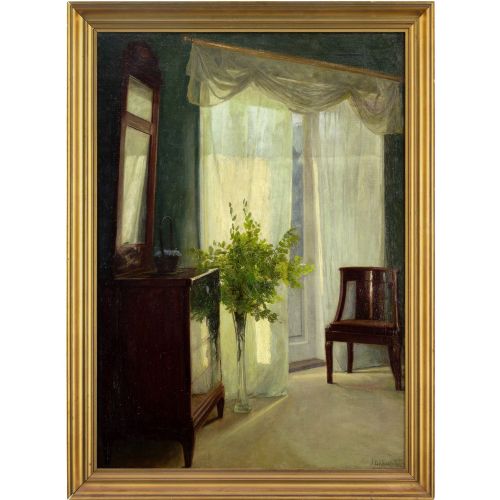
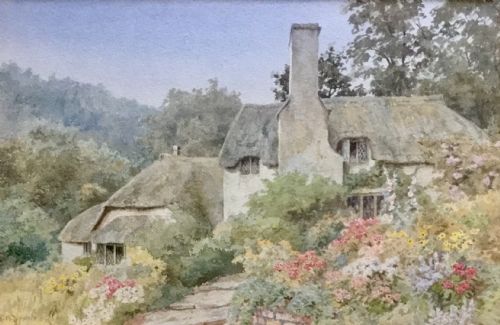
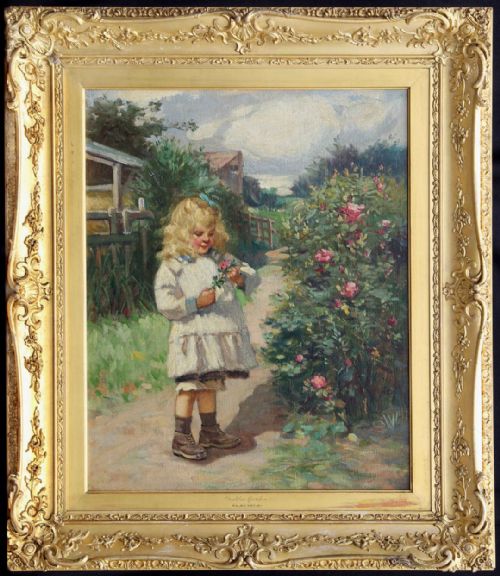
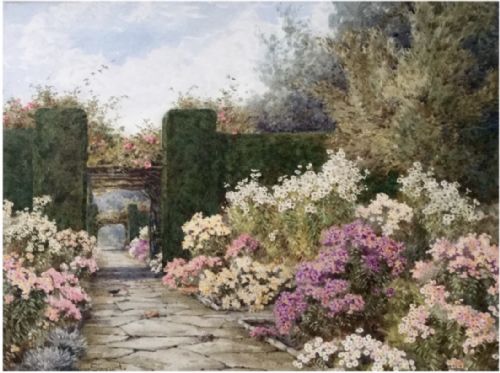
Compositions range from detailed watercolours of cottage flowers to impressionist oils depicting figures beside herbaceous borders.
Materials and construction
Artists painted primarily with oil paint on canvas or watercolour applied to paper, capturing natural light with fluid brushwork.
Many works retain their period framing, including wood surrounds finished with gold leaf or gilded details.
Qualities that distinguish the works
The sophistication of the handling distinguishes simpler depictions from works by recorded artists working within British impressionism and pastoral genres.
Depth of perspective and the precise rendering of botanical elements reveal the skill behind each brushstroke and wash.
John Lübschitz·Herbert Royle·Arthur Claude Strachan·Thomas Nicholson Tyndale·Jane Utley·Edgar Bundy·Ralph Hedley·Lilian Stannard·John F. Pasmore·Frank Moss Bennett
The Traditional Garden Scene Painting Glossary
- Watercolour
- A painting method where fine pigment is suspended in a water-based solution, typically applied to paper to create translucent washes.
- Oil on Canvas
- A medium utilising pigments bound in drying oil, stretched across a wooden frame to provide a durable and textured surface for rich colour application.
- Impressionism
- An artistic approach focusing on accurate depiction of light in its changing qualities, often featuring visible brushstrokes and open compositions.
- Gilded Wood
- Timber frames treated with a thin layer of gold leaf or metallic powder to create a decorative, reflective border around the artwork.
Traditional Garden Scene Painting: Frequently Asked Questions
What periods do these paintings date from?
The available selection spans the Victorian period, the nineteenth century, and early twentieth-century decades including nineteen hundred, nineteen ten, and nineteen twenty.
These dates reflect pastoral and impressionist movements across British and Scandinavian art.
How were these garden scenes originally displayed?
Works were framed in wood, often with gilded or gold leaf finishes, designed to hang in domestic interiors.
Their scale suits principal reception rooms and studies where natural light complements the composition.
What subjects appear alongside the gardens?
Common motifs include cottage doors, herbaceous borders, figures working with scythes, and quiet paths.
Scenes range from architectural settings like Somerset villages to intimate domestic garden enclosures.
How do watercolours differ from the oil paintings?
Watercolour works utilise paper supports to achieve delicate, translucent effects, whereas oil paintings on canvas present richer textures and deeper pigment layers.
Both mediums were favoured by artists documenting Edwardian and Victorian rural life.