

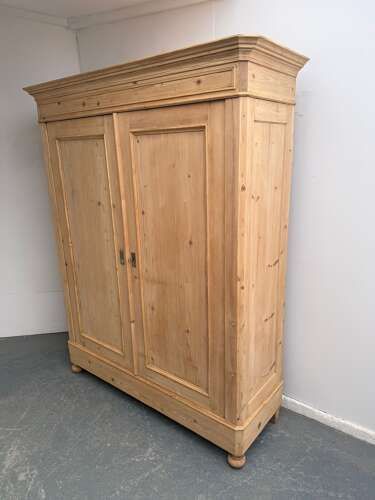
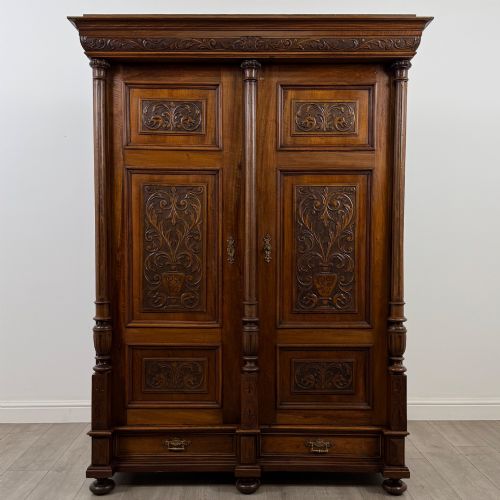
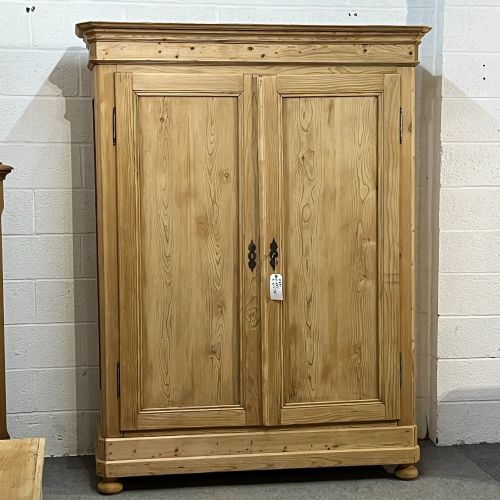
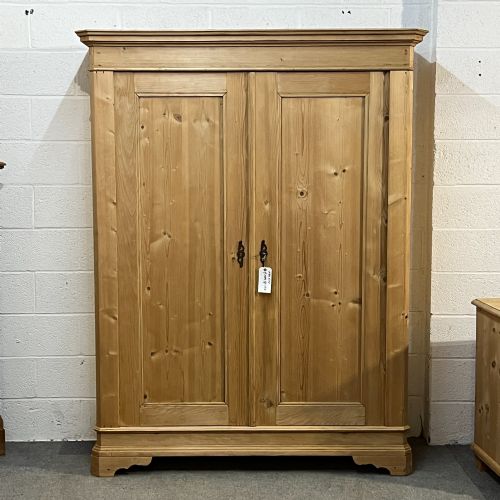


Traditional French Wardrobe
A traditional French wardrobe brings substantial presence and deep storage to a room through centuries-old joinery and generous proportions.
Traditional French Wardrobe
A traditional French wardrobe spans several distinct periods, including the eighteenth century, nineteenth century, and nineteen hundred, alongside Victorian examples. These pieces serve primarily as armoires, wardrobes, and linen cupboards designed for substantial garment and textile storage.
Buyers encountering this selection will frequently find pine, walnut, and oak constructions, often complemented by painted wood finishes, iron hardware, brass accents, and glass elements. Stylistic influences range from French provincial and French country to Dutch neoclassical, English country, and French Breton variants.
How They Were Made
Joinery relies heavily on solid hardwoods like walnut and oak, alongside durable softwoods such as pine, shaped through traditional timber-framing methods. Surface treatments vary from unadorned natural wood grains to original painted wood finishes and intricate hand carvings.
Functional hardware incorporates forged iron and polished brass for hinges, locks, and handles, ensuring structural integrity across large double-door panels and linen cupboards.
Traditional French Wardrobe Retail Price Guide 2026
Typical asking prices for traditional french wardrobe among the pieces listed under this phrase on Sellingantiques today, from the lower quarter to the upper quarter. They describe what is for sale here now, not the wider market.
The listings here include items from the eighteenth century, nineteenth century, Victorian era, and nineteen hundred, spanning pine, walnut, oak, and painted wood.
What Varies in Quality
Distinction in quality rests upon the choice of timber and the sophistication of the joinery, where dense woods like walnut and oak demand greater skill than softer pine. Elaborate hand carving and original painted surfaces elevate certain examples above simpler vernacular pieces.
The integration of authentic brass and iron hardware alongside well-preserved glass panels contributes to the overall coherence and architectural weight of the piece.
The Traditional French Wardrobe Glossary
- Armoire
- A large freestanding cupboard traditionally used for storing clothes. These pieces often feature double doors enclosing hanging space or shelving.
- Linen cupboard
- A tall storage unit designed originally for household textiles and bedding. They frequently appear in eighteenth and nineteenth-century country houses.
- French provincial
- A style reflecting regional furniture making outside Paris, favouring practical construction and modest ornamentation over courtly extravagance.
- Breton
- A regional French style originating from the northwest, typically distinguished by deep wood carvings and robust proportions.
Traditional French Wardrobe: Frequently Asked Questions
How do I use a traditional wardrobe today?
These large storage pieces adapt well to modern bedrooms as primary clothing closets, or to hallways for bulky linens and coats.
Interior configurations often require the addition of hanging rails or adjustable shelving to suit contemporary garments.
What woods are typical for these pieces?
Construction materials span native European timbers, with pine appearing frequently in country pieces and oak or walnut in formal ones.
Surfaces are finished either in clear polish to show the grain or with historic painted coatings.
How do I date a traditional wardrobe?
Dating relies on examining construction marks, timber shrinkage, and the style of iron or brass hardware fitted to the doors.
Pieces originating in the eighteenth century show different joinery techniques compared to nineteenth-century or nineteen-hundred examples.
Are these wardrobes easy to dismantle?
Many nineteenth-century and earlier examples employ knock-down construction with wooden pegs or wedges to allow transport through narrow doorways.
Checking the assembly method helps determine whether a specialist is needed for delivery and installation.