


Traditional French Table Lights
Traditional french table lights bring character to a room, offering brass and toleware illumination shaped by nineteenth and twentieth century hands.

Traditional French Table Lights
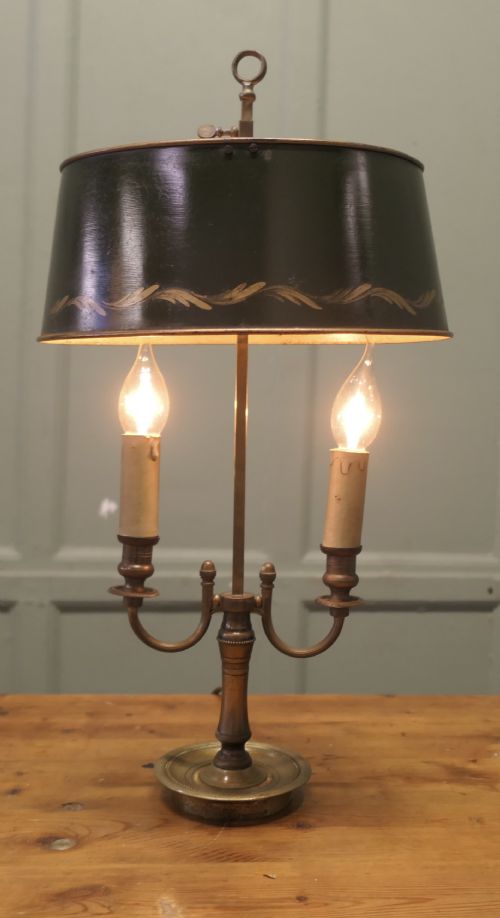
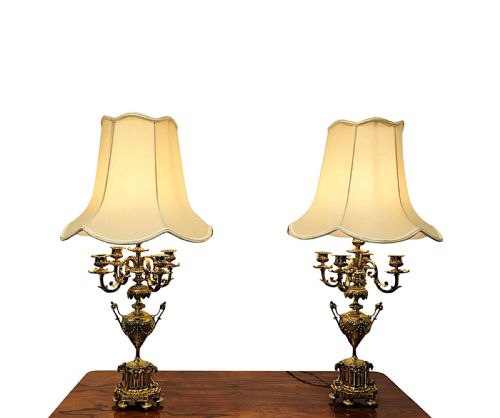
Traditional french table lights encompass bouillotte desk lamps, converted candelabra, and candlestick lamps spanning the nineteenth century and early twentieth century. Buyers searching for traditional french table lights encounter pieces styled in French Empire, Neoclassical, and French Provincial designs.
The selection ranges from green toleware and brass twin or triple desk lamps to monumental ormolu and bronze figures. Many items originate as nineteenth century candelabra or candlesticks subsequently converted into table lamps.
How they were made
Metalworking forms the core of these pieces, utilising cast bronze, brass, ormolu, and gilt metal alongside painted toleware. Artisans shaped these materials into vase forms, candelabra branches, and adjustable bouillotte shades.
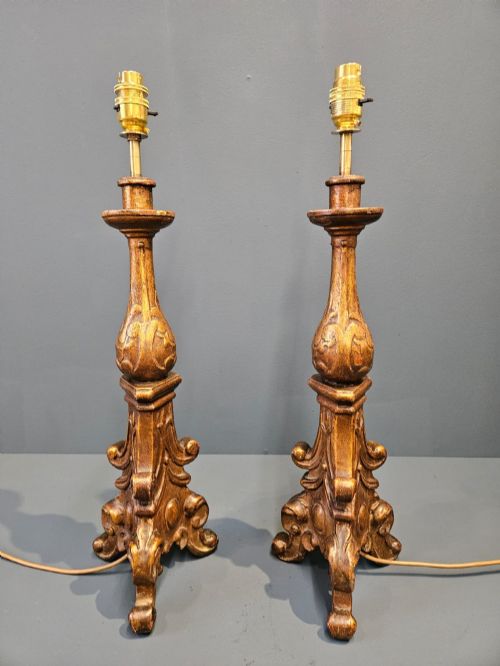
Detailing often involves carved giltwood, marble, and fabric components. Makers combined cast bronze elements with gilded mounts following traditional French styles like Louis XV and Louis XVI.
Listings feature items from the 1850s through to the 1930s, encompassing Victorian, Edwardian, and twentieth-century French provincial aesthetics.
What varies in quality
Quality rests upon the crispness of the metal casting and the depth of the gilding or ormolu. Finer examples display meticulous hand-chasing on bronze and well-preserved toleware paintwork.
The integrity of the conversion from candelabra or candlestick to lamp dictates the overall standard. Superior pieces retain their original proportions and balance despite the altered wiring.
Jean-Démosthène Dugourc
The Traditional French Table Lights Glossary
- Bouillotte lamp
- A traditional French desk lamp featuring a central shaft, multiple candle arms, and an adjustable metal shade. This design originally illuminated the card game of bouillotte.
- Ormolu
- Gilt bronze created by applying a finely ground high-carat gold-mercury amalgam to a bronze object. The piece was then fired to drive off the mercury, leaving a rich golden finish.
- Toleware
- Enamelled or lacquered sheet metal items, frequently painted in green or other colours with gilt accents. It appears often on French desk lamps.
- Candelabra
- A branched candlestick holding multiple lights. Many antique examples are later converted to electric table lamps.
- Neoclassical
- A style drawing inspiration from the classical art and culture of ancient Greece and Rome. It manifests in symmetrical, restrained lighting designs.
Traditional French Table Lights: Frequently Asked Questions
How do I identify French Empire style?
French Empire style lighting draws heavily on classical antiquity, incorporating motifs such as laurel wreaths, eagles, and urns. The metals used are typically heavy bronze or ormolu with a strong sense of symmetry and architectural dignity.
Pieces from this tradition feel grand and formal. They command attention on a large sideboard or desk.
What is ormolu?
Ormolu refers to gilded bronze mounts applied to decorative objects and lighting. The technique involves fusing gold to a bronze base using heat and mercury, creating a durable golden lustre.
High-quality ormolu retains a warm, non-shiny finish with sharp detail in the cast metal underneath. It distinguishes finer nineteenth-century pieces from simpler brass alternatives.
Were these always electric lamps?
Many traditional French table lights started life as candlesticks or candelabra. Artisans converted them to electricity later to suit modern homes while preserving their antique bases.
This conversion process means the wiring is modern even though the metalwork dates back to the nineteenth century or earlier.