
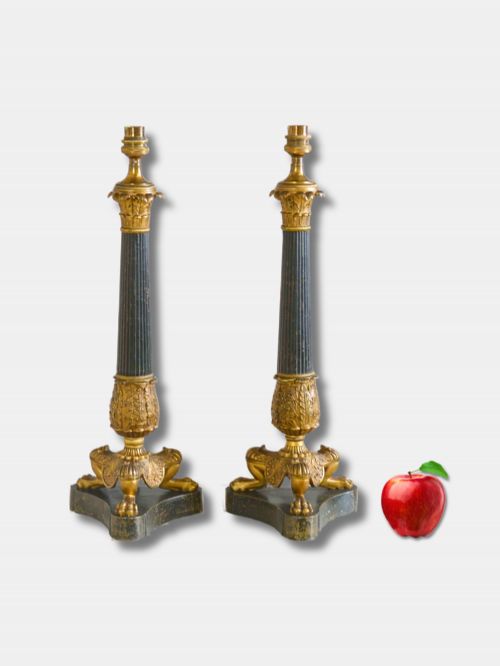


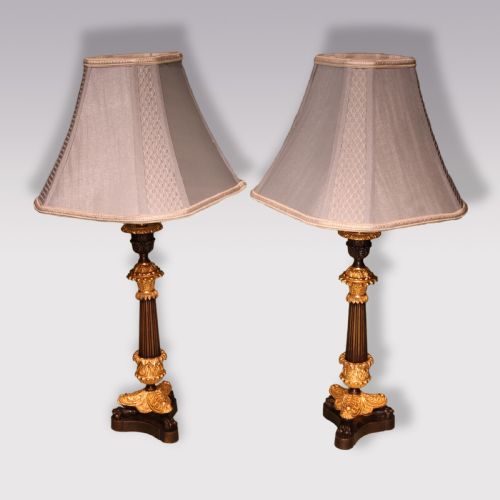


Bronze Column Lamp Pair
A bronze column lamp pair brings classical dignity to a room, cast in heavy metal and styled after ancient architecture.

Bronze Column Lamp Pair
A bronze column lamp pair consists of matched lighting fixtures formed from upright architectural shafts, predominantly styled after French Empire, Regency, and Neoclassical designs. These pieces originate across the nineteenth and early twentieth centuries, drawing heavily on ancient Greek and Roman column orders.
Most examples encountered here combine cast bronze or patinated bronze with gilt ormolu mounts, occasionally incorporating marble bases, crystal elements, or china supports. They function primarily as table lamps and lamp bases, adapting antique candlesticks or torcheres for modern electrical use while retaining their sculptural presence.
How they were made
Foundry workers cast these lamps in bronze and brass, utilising detailed moulds to create fluted columns, figural elements, and decorative bases such as lions' paws or Doric capitals. The metal surfaces received careful patination to darken the bronze, contrasted with bright gilt ormolu highlights applied to decorative enrichments.
Many designs incorporate sections of natural marble or ochre marble, turned and polished to anchor the metal shaft. Later conversions from the early twentieth century integrate electrical fittings while preserving the original cast metal and stone components.
Listings span the nineteenth century, Regency period, nineteen-tens, twenties, and thirties, utilising bronze, brass, ormolu, marble, and silk.
What varies in quality
Quality rests in the crispness of the metal chasing and the depth of the casting, where sharper fluting and distinct acanthus leaves separate superior work from softer secondary production. The weight of the bronze and the richness of the ormolu gilding indicate the original workshop investment.
The choice of secondary materials also alters the character of the piece, as solid marble plinths and heavy patinated bronze carry a greater architectural gravity than smaller or composite structures.
The Bronze Column Lamp Pair Glossary
- Ormolu
- Gilt bronze, created by applying an amalgam of gold and mercury to a bronze base and heating it to leave a rich gold coating. This finish defines the bright decorative highlights on classical column lamps.
- Patinated bronze
- Bronze that has been chemically treated to achieve a darkened, aged surface colour rather than left as bright polished metal. It provides a sombre contrast to gilt mounts.
- Regency
- An English design period spanning the early nineteenth century, heavily influenced by French Empire style and classical antiquity. It favours architectural columns and bronze mounts.
- Corinthian column
- A classical column style featuring an ornate capital decorated with acanthus leaves. This form frequently appears on lamp shafts and candlesticks.
- Torchere
- A tall stand or ornamental candlestick originally designed to carry a light. Large examples serve as the basis for substantial figural lamps.
Bronze Column Lamp Pair: Frequently Asked Questions
Are these original antique lamps?
The evidence shows these pieces date from the nineteenth and early twentieth centuries, encompassing periods like Regency, French Empire, and the nineteen-twenties. Many started life as candlesticks or torcheres before conversion to table lamps.
Makers utilised materials such as bronze, ormolu, marble, and crystal during these historical periods to construct the column shafts.
How do I identify a French Empire style lamp?
French Empire style pieces rely on classical architectural vocabulary, displaying bronze columns, ormolu mounts, and formal bases like lions' paw feet. They reflect the neoclassical tastes popular around eighteen hundred and the nineteenth century.
The combination of dark patinated bronze with bright gilt ormolu is a hallmark of this aesthetic.
What materials are used in these lamp pairs?
Listings feature combinations of bronze, patinated bronze, and brass, frequently enriched with gilt ormolu. Structural elements often incorporate marble, ochre marble, crystal, and china bases.
Fabric and silk components typically form the shades accompanying these sculptural bases.
How do I place a tall column lamp in a room?
A large pair of bronze and ormolu column lamps requires a sturdy surface such as a sideboard, heavy console, or large desk to support their architectural weight. Their height and gilt details draw the eye, making them suitable as focal points in a traditional interior.
They pair well with classical furniture and dark wood finishes.