
Traditional French Farmhouse Table
A traditional french farmhouse table is a sturdy, time-worn timber surface built for heavy daily use in rural kitchens and dining rooms.
Traditional French Farmhouse Table
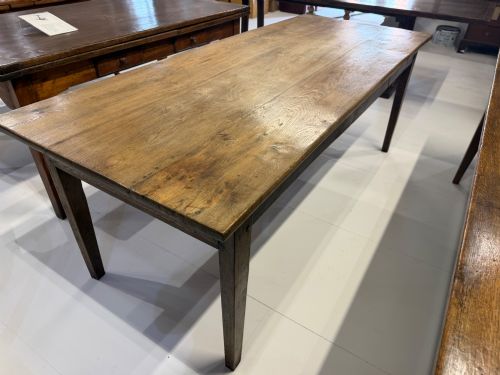
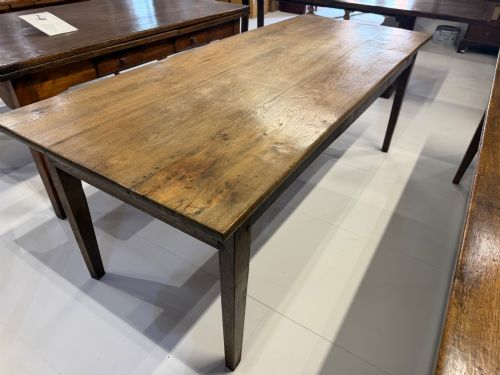
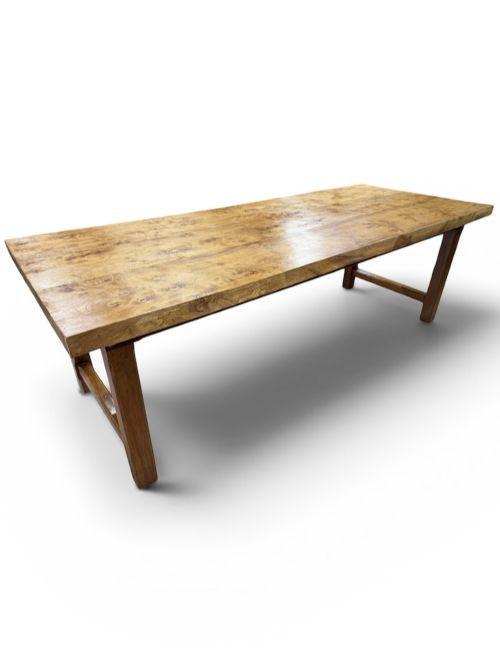
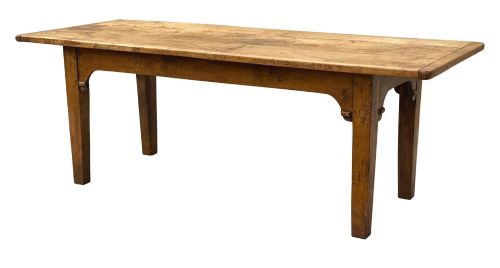
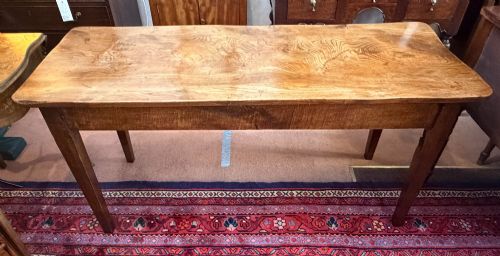
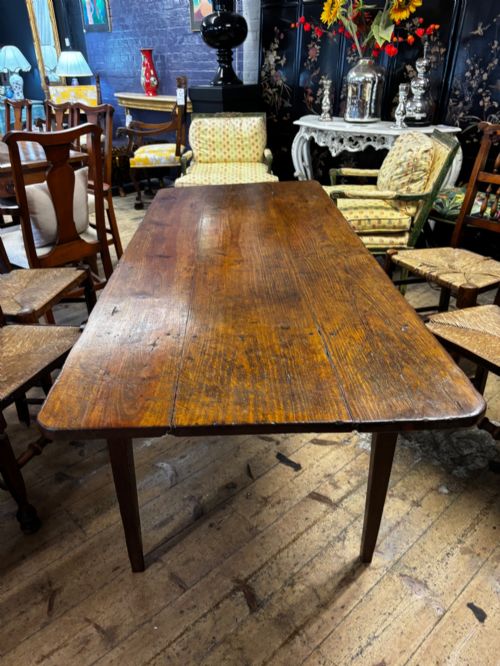
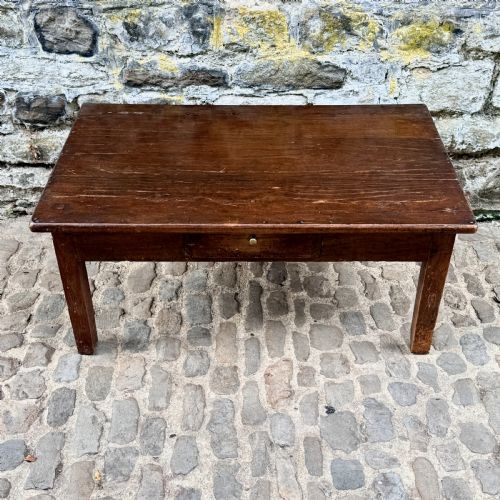
When you search for a traditional french farmhouse table, you are looking at large, functional surfaces designed originally for daily domestic life in rural homes. The versions you are most likely to meet on this page span the nineteenth century and the early twentieth century, appearing predominantly as dining tables, coffee tables, and serving tables.
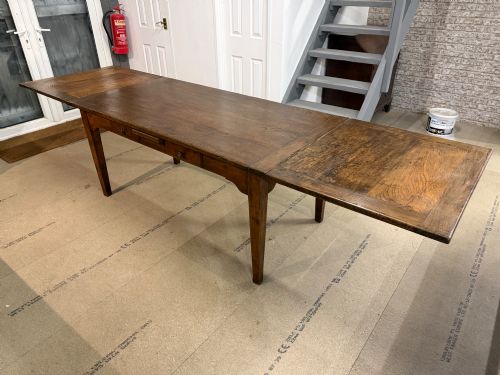
These pieces arrive in various formats, from standard dining lengths to extending tables and compact variants like benches or dough bins. Oak is the primary timber encountered here, alongside pine, fruitwood, cherrywood, sycamore, chestnut, ash, and walnut.
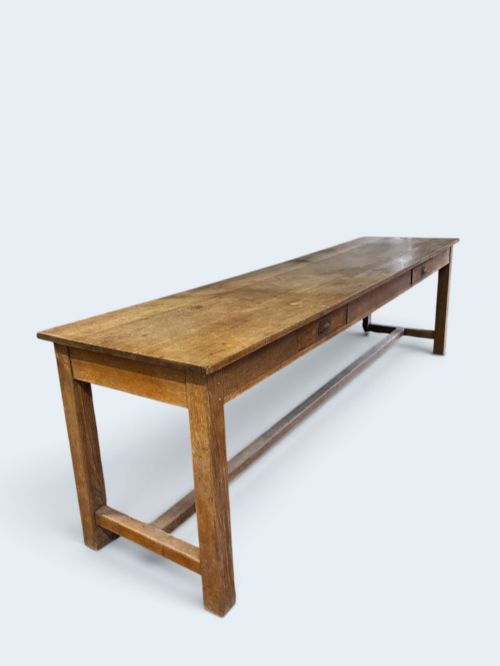
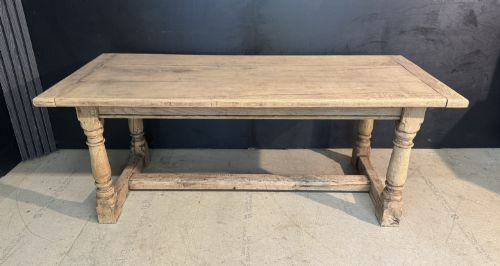
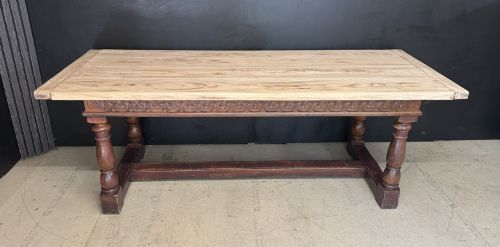
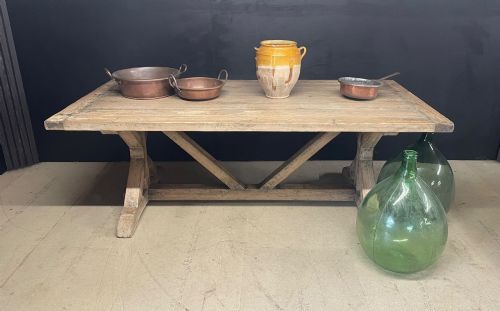
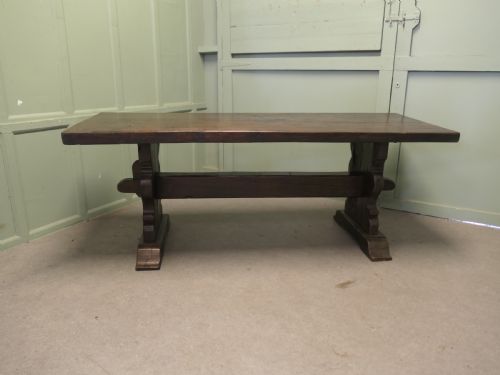
Stylistically, the pieces lean towards rustic farmhouse, French country, French provincial, and refectory forms. Many retain the honest proportions and utilitarian details dictated by their original purpose in provincial kitchens.
How they were made
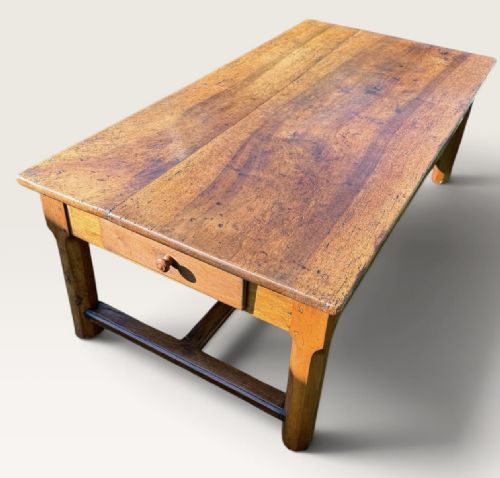
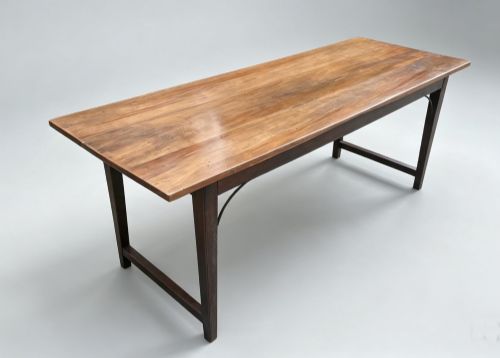
Makers constructed traditional french farmhouse tables using solid hardwoods and softwoods, frequently employing oak, pine, fruitwood, and cherrywood for structural integrity and heavy plank tops. Joinery methods prioritized everyday durability, utilising thick timbers and supportive stretcher bases to withstand heavy kitchen work.
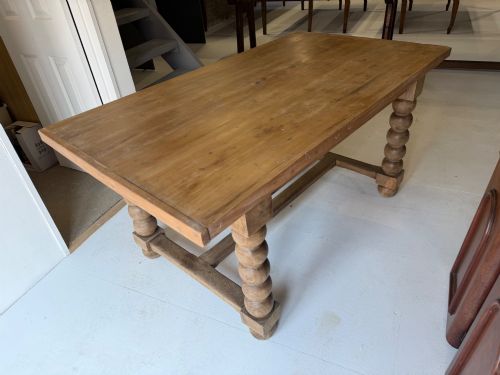
Leg designs vary widely across the inventory, incorporating tapered legs, bobbin legs, barrel legs, and ash end stretchers. Additional functional elements such as drawers appear in select fruitwood and oak variants to hold kitchen utensils.
The listings on this page span the Georgian era through to the 1920s, showcasing oak, pine, fruitwood, cherrywood, and walnut.
What varies in quality
The distinction between standard examples and superior pieces rests on the choice of timber and the complexity of the frame construction. Heavy oak and mature fruitwoods with well-figured plank tops command greater interest than simpler pine variants.
The Traditional French Farmhouse Table Glossary
- Refectory table
- A long, narrow dining table historically used in communal dining halls and adapted for large domestic kitchens. These pieces often feature prominent stretcher bases beneath thick timber tops.
- Plank top
- A table surface constructed from multiple wide boards joined together edge-to-edge. This method allows the natural grain of woods like oak and pine to form a broad work surface.
- Stretcher
- A horizontal wooden brace connecting the legs of a table to improve structural rigidity. Ash and oak variants frequently employ end stretchers for added support.
- Bobbin legs
- Turned table legs shaped with a series of rounded, spool-like swellings and depressions. This decorative turning technique appears on nineteenth-century beech and oak frames.
- French provincial
- A style reflecting the regional, country-made furniture of eighteenth and nineteenth-century France. These items combine practical utility with unpretentious local craftsmanship.
Traditional French Farmhouse Table: Frequently Asked Questions
What is a traditional french farmhouse table?
A traditional french farmhouse table is a heavy, practical wooden surface built in rural France for food preparation and communal dining. They reflect the unpretentious design needs of nineteenth and early twentieth-century country homes.
These pieces typically feature thick timber tops supported by sturdy legs and stretchers. Their generous proportions make them the focal point of modern country kitchens and dining rooms.
What woods were used for these tables?
Makers constructed these tables from whatever local timber was available, with oak and pine appearing most frequently. Fruitwood, cherrywood, chestnut, sycamore, and walnut were also utilised depending on the region and the period.
Hardwoods like oak provided exceptional durability for heavy daily tasks, while fruitwood and cherrywood offered a warmer tone and finer grain. Many tables combine different woods for the top and the base structure.
How do I tell different periods apart?
Dating these tables relies on observing the joinery methods, leg turning styles, and overall timber patination. Nineteenth-century examples often feature hand-planed plank tops and sturdy refectory frames.
Early twentieth-century variants may show standardised machine sawing or simpler stretcher arrangements. Details like tapered legs or bobbin turnings provide further clues to the exact era of manufacture.
How do I live with a farmhouse table?
Living with a farmhouse table involves embracing the existing dents, marks, and patination accumulated over generations of use. They are robust surfaces designed to handle active daily dining and family gatherings without needing excessive protection.
Their substantial size requires careful placement in a room to allow adequate clearance for seating. Regular dusting and occasional gentle conditioning help preserve the raw timber finish.