

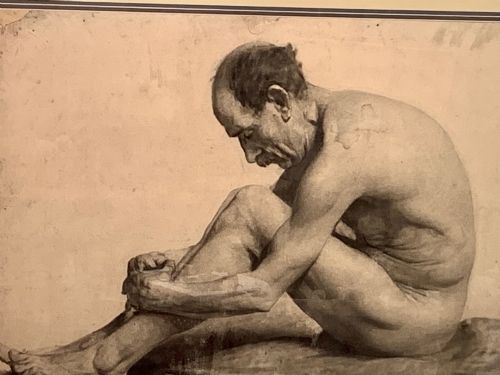
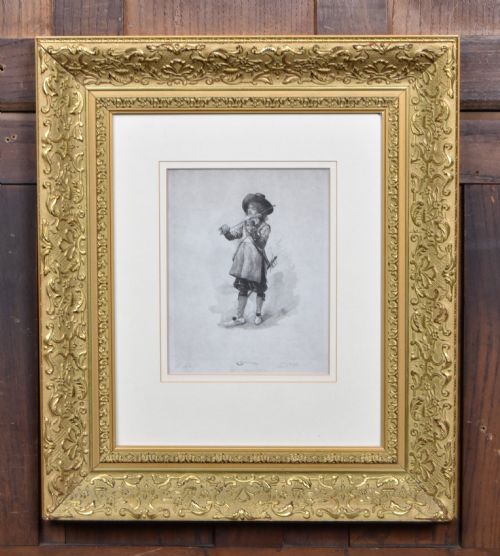


Traditional Framed Sketch
These traditional framed sketch pieces capture life and landscape on paper, offering immediate character and historical charm for your walls.
Traditional Framed Sketch
A traditional framed sketch encompasses original drawings, watercolours, and ink studies preserved behind glass in wood or gilt frames. These pieces span from the nineteenth century through the mid-twentieth century, capturing subjects ranging from rural landscapes and town views to equestrian scenes and portraits.
You will most frequently encounter nineteenth-century works and early twentieth-century British watercolours or pencil drawings on this page. Artists such as Fred Lawson and named figures like Frank Moss Bennett appear alongside anonymous topographical and sporting studies.
The assortment leans heavily toward traditional British art, Victorian topographical views, and sporting art. Each piece combines paper supports with hand-drawn or painted media, presented ready to hang.
How they were made
Makers utilised paper as the primary support, applying graphite, pencil, ink, chalk, or watercolour to build the composition. Many of these works began as quick field studies or finished compositional drawings before selection for framing.
Framing typically involves wood mouldings, often enhanced with gilt finishes to complement the artwork within. Protective glass covers the paper surface to shield the delicate pigments and graphite from atmospheric dust and moisture.
Traditional Framed Sketch Retail Price Guide 2026
Typical asking prices for traditional framed sketch among the pieces listed under this phrase on Sellingantiques today, from the lower quarter to the upper quarter. They describe what is for sale here now, not the wider market.
Several dogs and horses appear in these drawings with more distinct personalities than the humans standing beside them.
What varies in quality
Quality rests upon the sureness of the hand and the clarity of the composition, distinguishing hasty exercises from accomplished finished studies. Named artists and documented historical associations elevate certain drawings above anonymous examples.
The integrity of the original paper support and the harmony of the framing materials also determine the overall standard. Pieces retaining their period frames and stable, unfaded pigments represent the stronger examples of the genre.
P. Ruiz·Michael Lyne·Frank Moss Bennett·Tom Dudley·Snaffles·Fred Lawson·Dr Thomas Monro
The Traditional Framed Sketch Glossary
- Topographical
- Depicting a specific real place, such as a named street, churchyard, or mill. These works serve as visual records of past landscapes.
- Watercolour
- A paint consisting of pigment suspended in a water-soluble vehicle, applied to paper. It creates transparent washes of colour that define light and shade.
- Graphite
- A form of carbon used in pencils for drawing. It produces soft grey lines that vary in tone according to pressure.
- Gilt
- Covered thinly with gold leaf or gold paint. This finish frequently decorates the wooden frames enclosing nineteenth-century works.
- Equestrian
- Pertaining to horses, riders, and hunting scenes. This style forms a distinct subset within traditional sporting art.
Traditional Framed Sketch: Frequently Asked Questions
What periods do these sketches cover?
The selection spans from around eighteen hundred through the nineteenth century and into the nineteen-forties and fifties. Most pieces cluster in the Victorian and early twentieth-century eras.
Dates often derive from the artist's lifespan or the specific style and costume visible in the subject matter.
How should I hang framed works on paper?
Keep watercolours and pencil drawings away from direct sunlight to prevent fading of the delicate pigments and paper discolouration. Stable indoor humidity helps preserve both the paper support and the wooden frame.
Ensure wall fixings match the weight of the wood and glass assembly to secure the piece safely.
Are these works original or printed?
The listings comprise original drawings, watercolours, and ink studies executed by hand on paper. Each piece represents a unique creation rather than a modern reproduction.
Close inspection under magnification reveals hand-applied brushstrokes, pencil graphite, and ink lines rather than dot matrix print patterns.
What subjects are most common?
Landscapes, architectural views of churches and streets, portraits, and traditional sporting or equestrian scenes dominate the selection. These subjects reflect the prevailing tastes of British artists across the nineteenth and early twentieth centuries.
Many pieces capture specific regional locations with identifiable historical resonance.