



Traditional Floor Lamp Base
A traditional floor lamp base brings architectural height and warm illumination to a corner, grounding a room with period character.
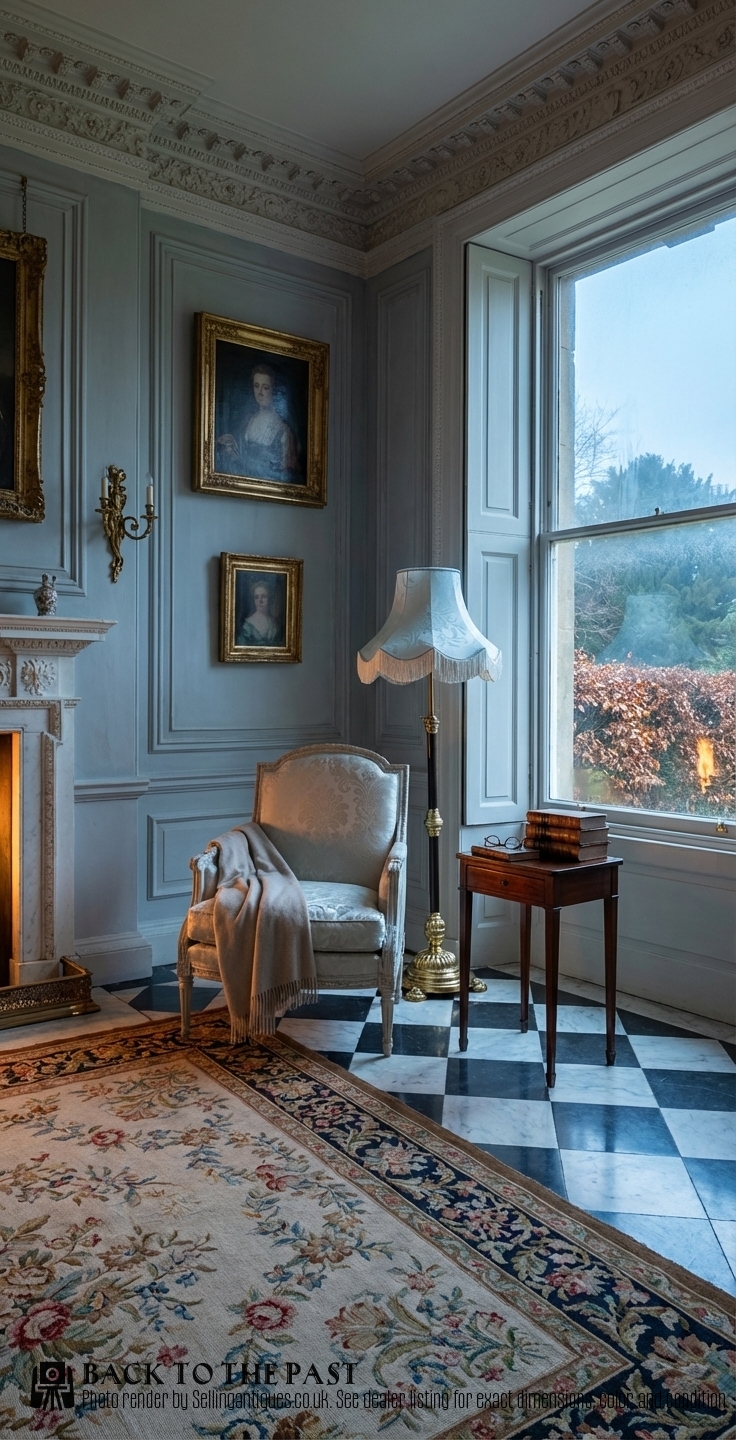
Traditional Floor Lamp Base
A traditional floor lamp base provides the vertical support and weighted foundation for upright lighting, often referred to in older contexts as a standard lamp. These pieces range from slender columns to heavier pedestals designed to hold a shade securely.
The selections available span from the Victorian era through the Edwardian period and into the 1930s, encompassing styles such as Neoclassical, Arts and Crafts, and William IV Revival. Many examples incorporate adjustable heights or articulating arms originally intended for reading or close work.
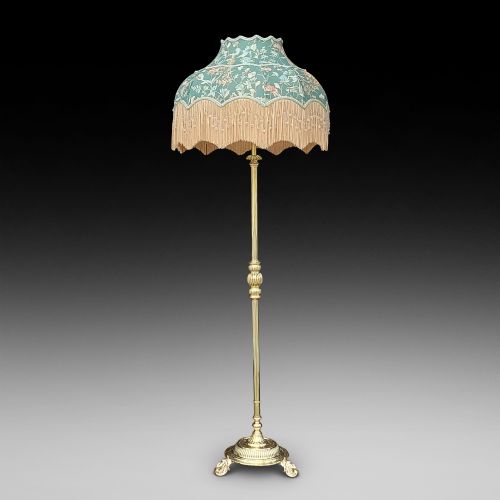
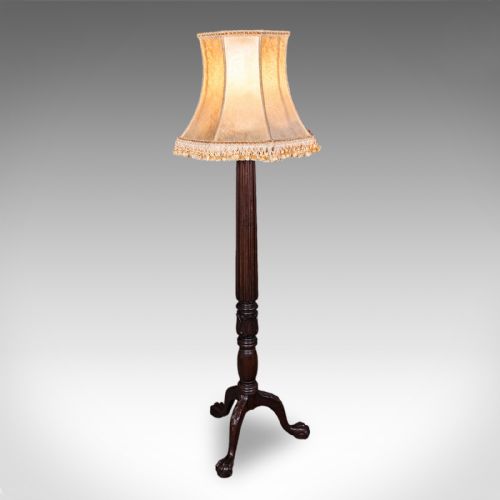
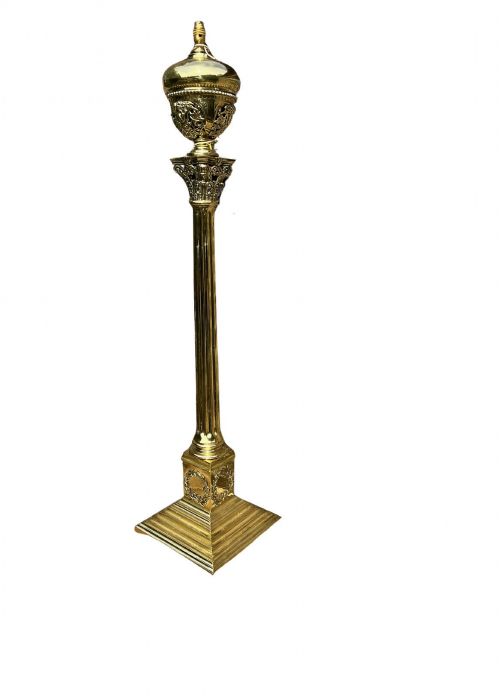
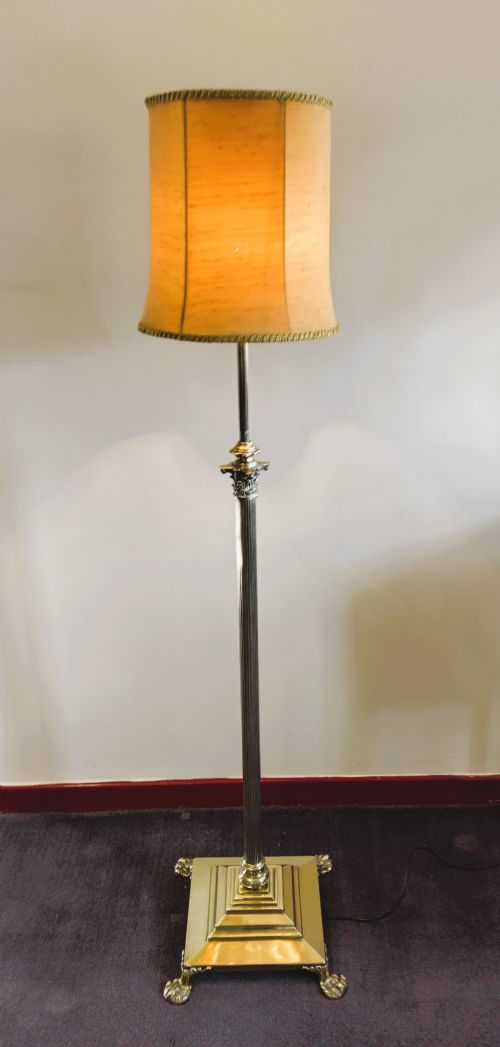
Forms vary from fluted brass columns and ornate floral openwork to carved wooden timbers and simpler cottage styles. Buyers encounter both utilitarian designs and more decorative standards intended for formal reception rooms.
How they were made
Metal standards rely primarily on brass, patinated brass, cast iron, and wrought iron, frequently shaped through casting, turning, and openwork detailing. Brass components often feature adjustable mechanisms that allow the upper shaft to extend.
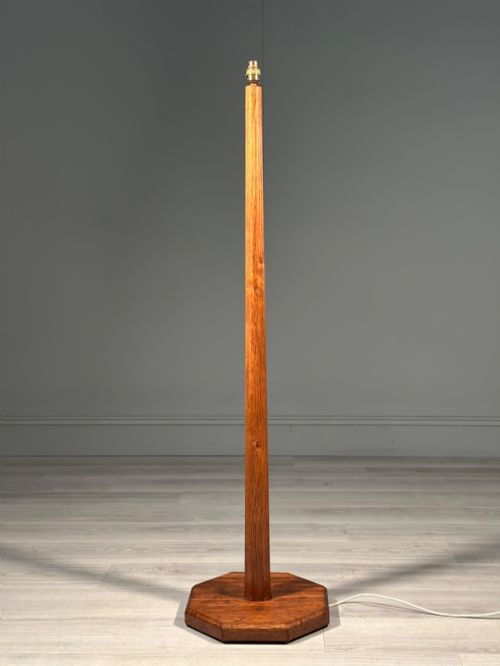
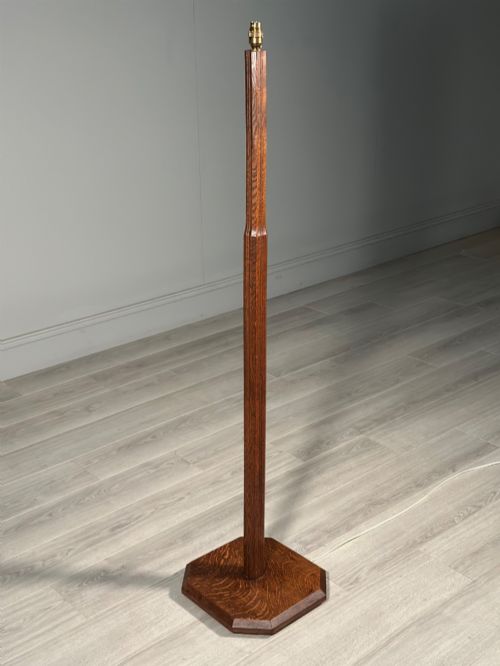
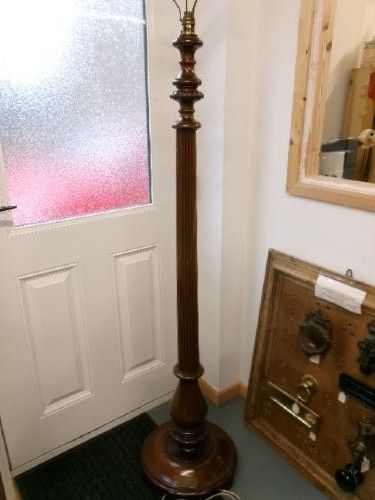
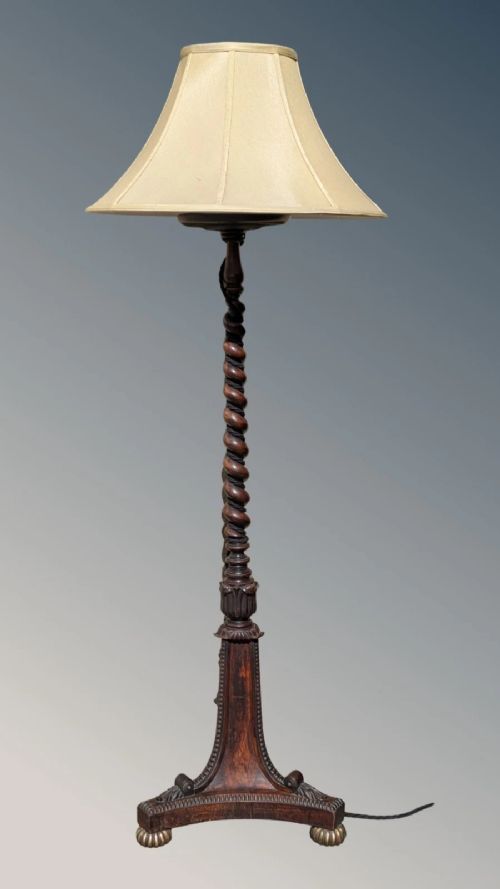
Wooden examples utilise timbers such as mahogany and oak, shaped by turning on a lathe or through hand carving. These wooden shafts provide sturdy structural support while displaying natural grain patterns.
Traditional Floor Lamp Base Retail Price Guide 2026
Typical asking prices for traditional floor lamp base among the pieces listed under this phrase on Sellingantiques today, from the lower quarter to the upper quarter. They describe what is for sale here now, not the wider market.
Some heavy brass standards feature ingenious sliding mechanisms that let a Victorian reader adjust the height with a single hand.
What varies in quality
Stability dictates the baseline quality of a floor lamp base, governed by the weight and distribution of the foundation. Heavy cast bases or solid metal footings keep the tall vertical shaft secure against tipping.
Artistic execution in the metalwork or timber carving separates standard production from finer examples. Crisp casting detail in Neoclassical columns or precise joinery in turned wooden shafts reflects the standard of workshop craftsmanship.
The Traditional Floor Lamp Base Glossary
- Standard lamp
- An older term for a floor lamp or tall upright light fitting designed to stand independently on the floor. This nomenclature appears frequently in historical descriptions.
- Neoclassical
- A style drawing inspiration from classical antiquity, featuring symmetrical forms, fluted columns, and restrained ornamentation. It remains common in early twentieth century metal lamp stands.
- Patinated brass
- Brass that has developed a subdued surface sheen and darker tone through age and handling. This coloration indicates undisturbed historical surfaces rather than bright modern plating.
- Arts and Crafts
- A design movement prioritising honest construction, visible material qualities, and handcrafted detail over industrial mass production. Standards in this style often emphasise simple geometric or structural forms.
Traditional Floor Lamp Base: Frequently Asked Questions
How do I choose the right height?
Consider the ceiling height and the furniture placement in your room. Adjustable models offer flexibility if you need to alter the focal point of the light.
Heavier bases provide better balance when the shaft is extended to its maximum height.
Can I use modern lamp shades?
Most traditional fittings accept standard modern shade carriers or spider fittings with the appropriate reducer ring. Check the diameter of the fitter to ensure compatibility with your chosen shade.
Proportions matter, so pair a heavy brass column with a sufficiently substantial shade to maintain visual balance.
How do I care for brass bases?
Dust regularly with a soft, dry cloth to prevent grime accumulation on metalwork. Avoid abrasive cleaners that strip the historical surface or patination.
Wooden sections benefit from occasional treatment with appropriate furniture wax to nourish the grain.