
Traditional Fireside Wing Chairs
Traditional fireside wing chairs offer deep seating and protective side panels, bringing period presence and comfort to any hearth.
Traditional Fireside Wing Chairs
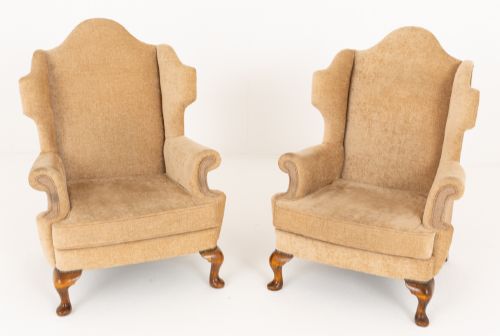
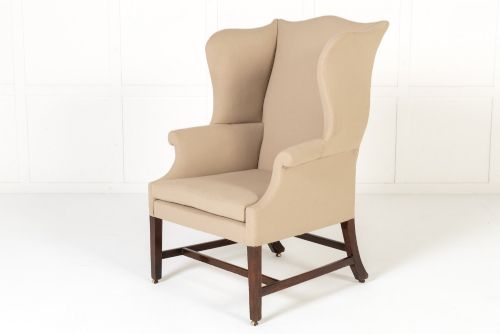
Traditional fireside wing chairs comprise upholstered armchairs designed to shield the sitter from draughts, featuring prominent side panels known as wings. These pieces span the eighteenth century, Georgian era, Victorian period, and early twentieth century.
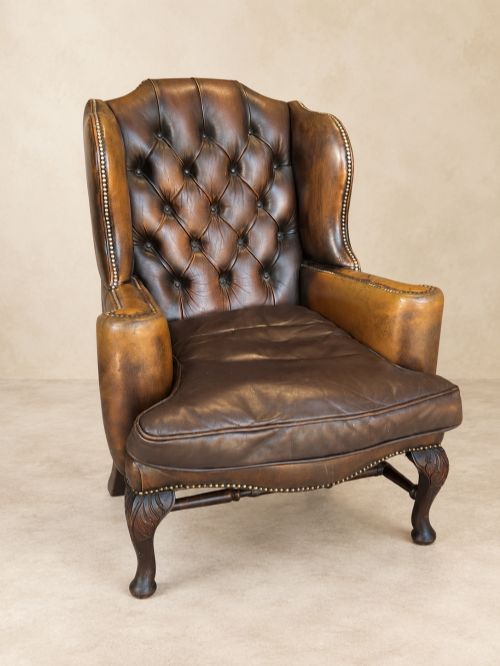
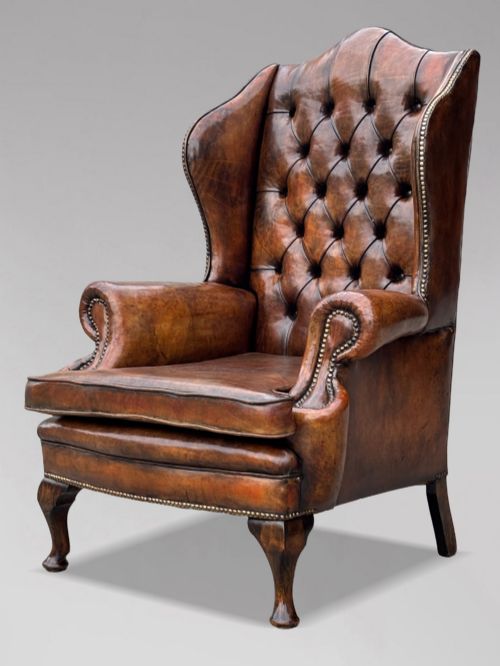
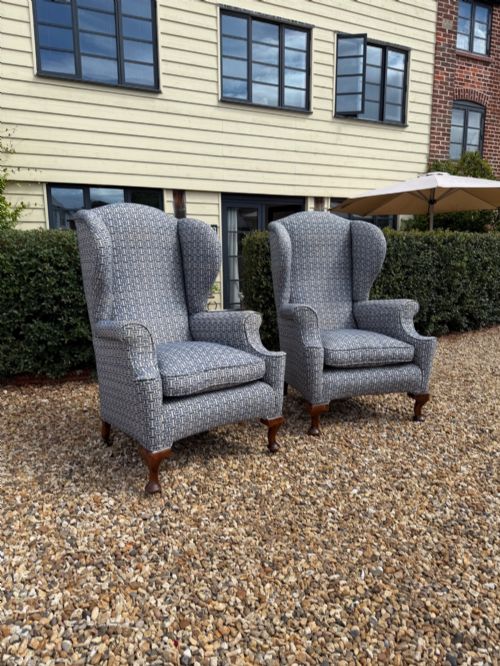
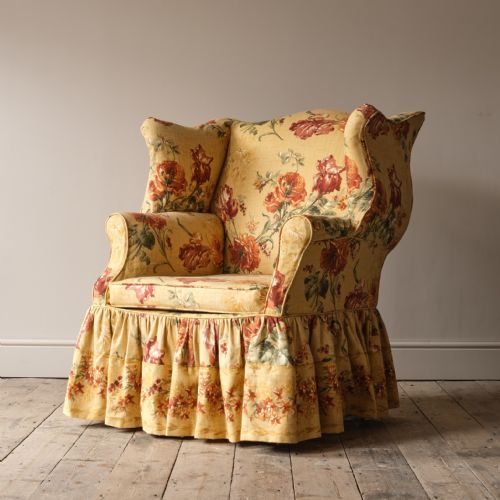
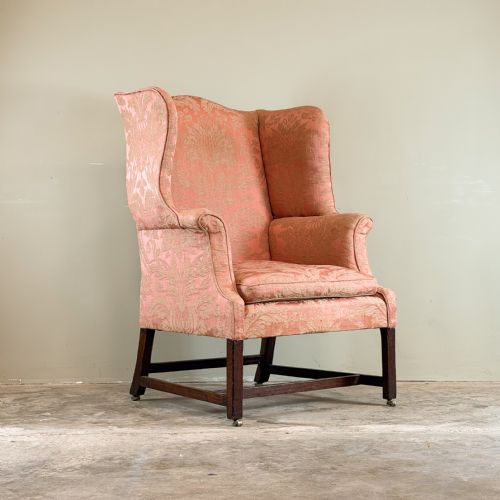
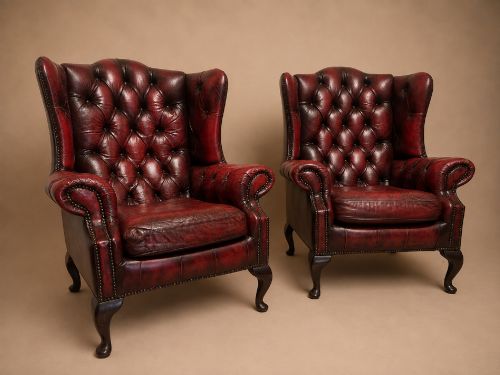
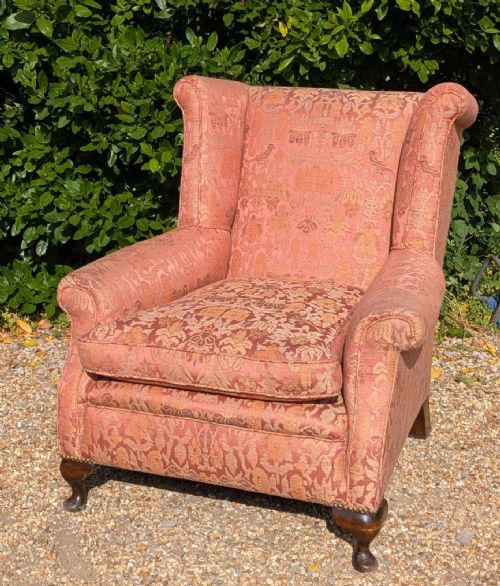
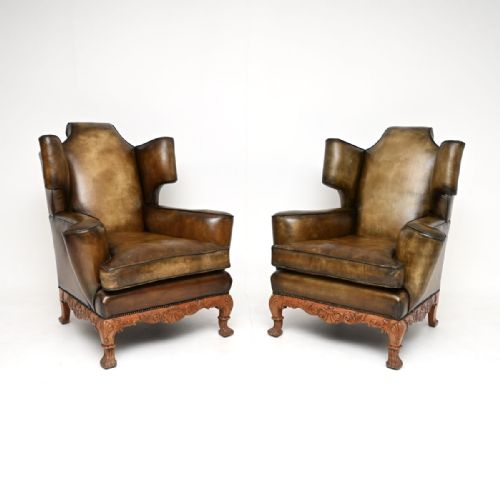
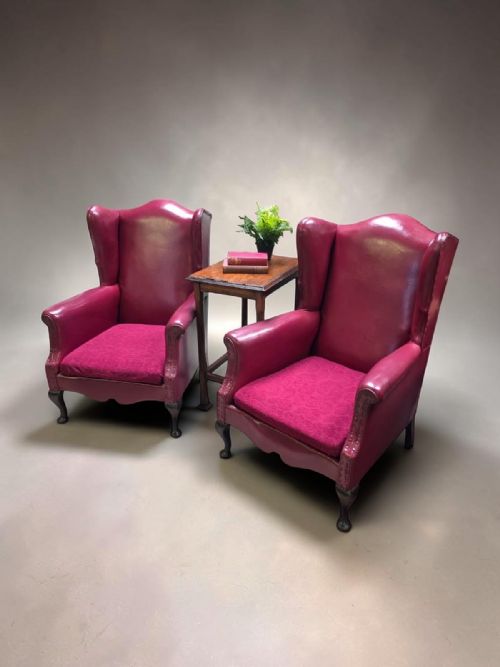
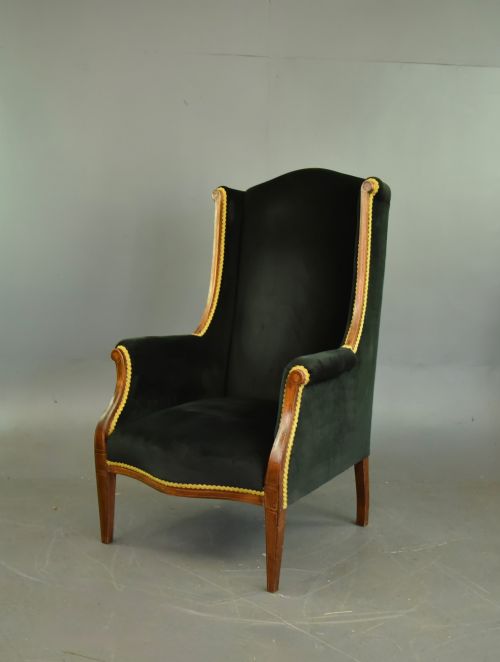
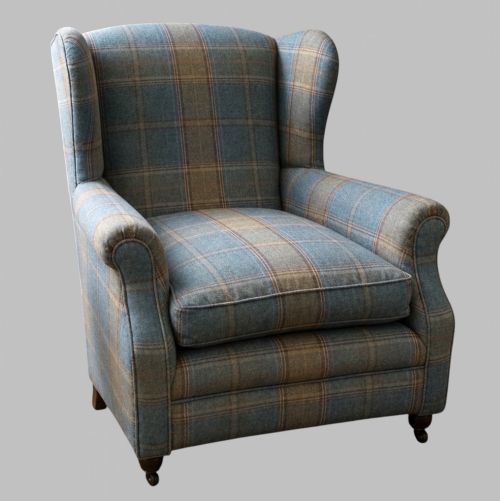
The selections available here range from large George III mahogany examples and eighteenth-century walnut forms to nineteenth-century leather buttoned pieces and Edwardian country house styles. Many items appear in pairs or sets, upholstered in leather, velvet, fabric, or plaid.
Buyers encounter forms displaying Queen Anne styling, barrel backs, and lambing chair variations constructed from oak or timber frameworks. These seating options serve domestic studies, libraries, and principal living spaces with distinct historical character.
How they were made
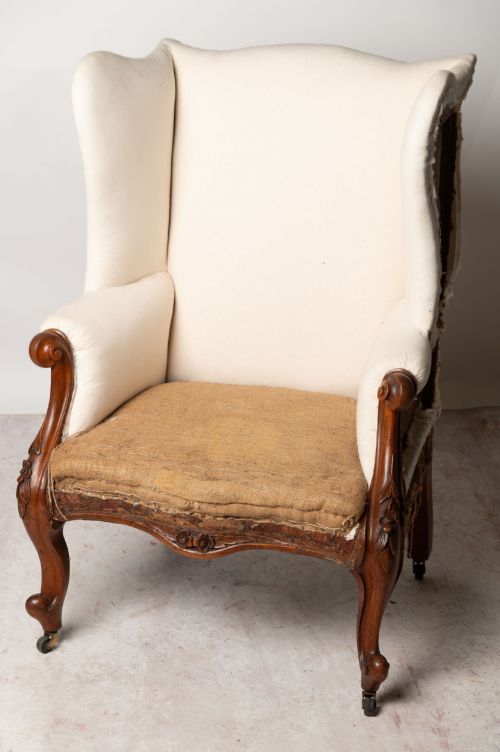
Frame construction relies upon hardwoods such as mahogany, walnut, oak, and timber, providing sturdy structural integrity beneath the upholstery. Joinery techniques reflect the period of origin, from eighteenth-century cabinetmaking standards to later nineteenth- and twentieth-century workshop practices.
Upholstery methods incorporate traditional fillings such as feathers, paired with outer coverings of brass-tacked leather, velvet, chenille twill, and woven plaid fabric. Wooden elements often showcase exposed cabriole or straight legs carved from the primary timber.
Periods represented span from the 18th century through the Victorian era to the 1930s.
What varies in quality
Subtleties of proportion and timber selection separate finer examples from standard workshop production, particularly in the sweep of the wings and the stance of the legs. Earlier pieces demonstrate superior joinery and cabinet-grade mahogany or walnut framing.
The integrity of the internal stuffing and the execution of the upholstery contribute significantly to the overall merit of the piece. Period leather upholstery showing patination contrasts with later fabric replacements, each carrying different aesthetic weights.
Howard And Sons
The Traditional Fireside Wing Chairs Glossary
- Wingback
- An upholstered armchair design featuring projecting side panels attached to the arms to deflect cold draughts. These wings also served to trap heat from an open fireplace.
- Cabriole leg
- A furniture leg that curves out and then in, resembling the leg of an animal. This form frequently terminates in pad or claw-and-ball feet on Georgian examples.
- Lambing chair
- An early form of fireside seating featuring a high wooden back and enclosed sides designed for warmth. Examples often incorporate upholstered seats within solid timber structures.
- Barrel back
- A seating form featuring a continuous semicircular backrest that merges smoothly into the arms. This enclosed design offers enhanced protection against room draughts.
Traditional Fireside Wing Chairs: Frequently Asked Questions
What period do these chairs date from?
The pieces span from the early eighteenth century through the Georgian and Victorian eras up to the 1930s. Construction details and wood types generally indicate the specific era of manufacture.
Earlier examples display distinct cabinetmaking traits of the Georgian period, whereas later pieces reflect Edwardian and 1930s revival aesthetics.
Are these chairs comfortable for daily use?
The deep proportions and supportive backrests make these armchairs suitable for relaxation by a hearth. Many incorporate generous padding and traditional feather fillings.
Upholstery materials range from supple leather to soft fabrics, accommodating different seating preferences for daily living spaces.
How do I identify a Georgian wing chair?
Georgian versions typically feature dense mahogany or walnut frames with characteristic stretcher arrangements and hand-carved leg details. Proportions tend to be generous with carefully shaped wing profiles.
Examining the underside and internal framing often reveals period construction methods distinct from later twentieth-century reproductions.
What is the difference between leather and fabric upholstery?
Leather options often develop a rich patina over decades of use and offer robust durability in traditional interiors. Such surfaces require specific conditioning to maintain their supple texture.
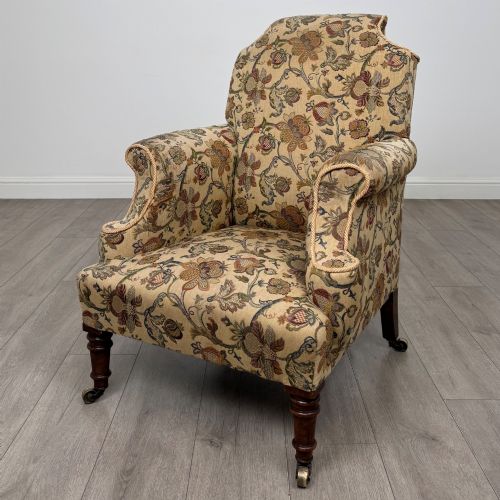
Fabric upholstery introduces patterns like plaid or textures such as velvet and chenille, bringing softer warmth and varied colour to a room.