


Traditional Fireplace Log Bucket
These traditional fireplace log bucket pieces bring centuries of metalworking and joinery directly to the hearth, serving as sturdy vessels for fuel storage.
Traditional Fireplace Log Bucket
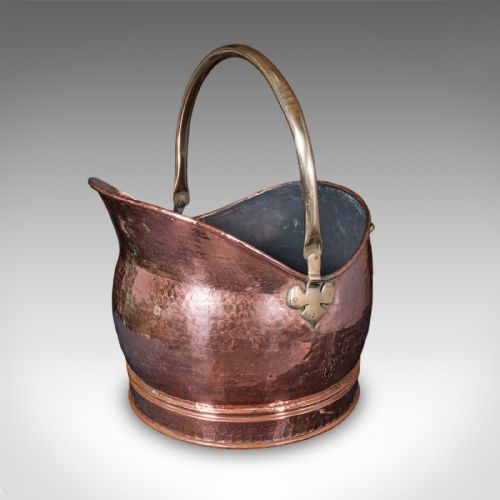
A traditional fireplace log bucket serves the practical purpose of holding solid fuel near the hearth while adding a distinct period aesthetic to the room. When exploring this selection, buyers frequently encounter helmet-shaped coal scuttles, riveted bins, and open buckets originating from the Georgian and Victorian eras.
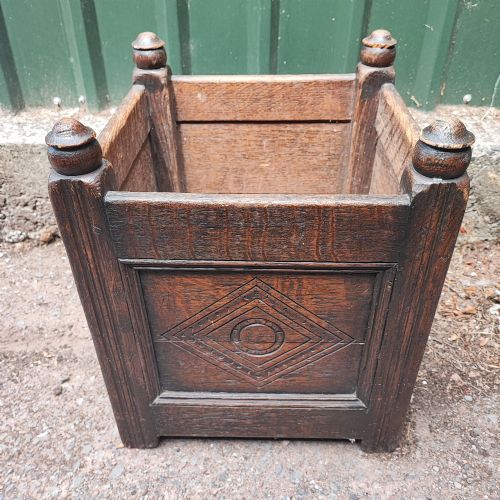
The objects span multiple centuries, incorporating designs from the eighteenth century through to the early twentieth century. Forms range from heavy copper log bins to oak and mahogany buckets bound in brass or iron, reflecting both formal drawing-room tastes and rustic farmhouse styles.
How they were made
Metal vessels rely heavily on sheet brass and copper, often joined with visible rivets and paired with swing handles for carriage. Smiths and coopers shaped these metals through hand-hammering and joining techniques to ensure durability beside open fires.
Wooden examples utilise traditional coopering methods, employing staves of oak, mahogany, or walnut secured by tight metal bands. These timber pieces demonstrate skilled carpentry, sometimes featuring ribbed forms or turned handles that complement the metallic fittings.
What varies in quality
The calibre of a piece rests upon the weight of its metal and the integrity of its construction. Heavier gauges of copper and brass maintain their structural rigidity better over generations of daily service.
Joinery and surface finish separate standard utility items from finer examples. Tight coopering in timber pieces and clean, secure riveting on metal bodies indicate superior craftsmanship by the original maker.
The Traditional Fireplace Log Bucket Glossary
- Coal scuttle
- A container specifically designed for holding and carrying coal to a fireplace. These often feature a sloping mouth and a pivoting handle to aid pouring.
- Coopering
- The ancient craft of making wooden containers using staves, hoops, and heads. This technique was essential for producing water-tight buckets and dry storage bins.
- Helmet scuttle
- A metal coal container shaped similarly to a classical helmet, featuring a wider opening at the front and a tall back. This profile directed the coal smoothly into the grate.
- Peat bucket
- A specialised container traditionally used in Ireland and Scotland to store turf or peat for fuel. They frequently appeared in fine timbers like mahogany with brass bands.
Traditional Fireplace Log Bucket: Frequently Asked Questions
What is a traditional fireplace log bucket?
These vessels are functional containers designed to hold logs, coal, or peat beside an open hearth. They combine practical fuel storage with period craftsmanship.
They appear in materials ranging from sheet copper and brass to solid oak and mahogany, spanning Georgian and Victorian periods.
How do I care for brass and copper?
Metal surfaces benefit from gentle cleaning to maintain their finish without stripping historical patina. Regular dusting keeps abrasive ash particles from settling into the grain.
Polishing frequency depends on personal preference for bright metal versus an aged, darker surface finish.
Where were these pieces used?
Such containers sat beside fireplaces in formal drawing rooms, country houses, and farmhouses alike. Their primary role was keeping solid fuel close at hand.
Sturdy construction allowed them to be carried outdoors to refill from larger coal bunkers or woodpiles.
How do I distinguish timber from metal bins?
Timber bins utilise stave construction with oak, mahogany, or walnut, often secured by iron or brass bands. Metal pieces rely on beaten copper or brass sheets.
Both materials served the same hearthside function but suited different interior decorative styles across the centuries.