




Traditional Fire Iron Set
A traditional fire iron set brings both function and period character to a hearth, uniting shovel, poker and tongs in brass, iron or steel.
Traditional Fire Iron Set
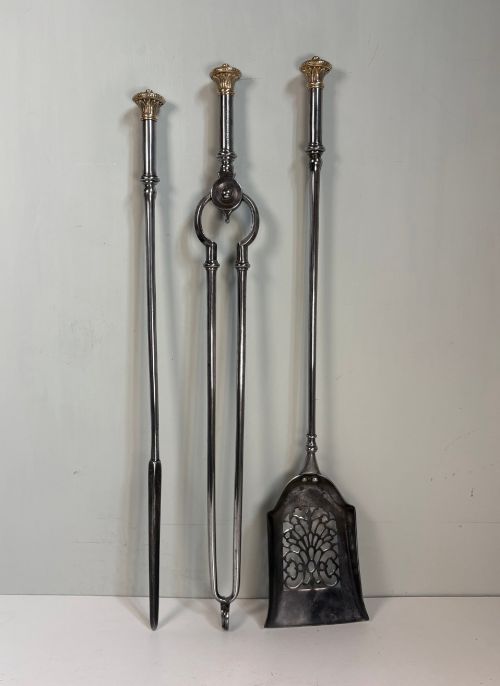
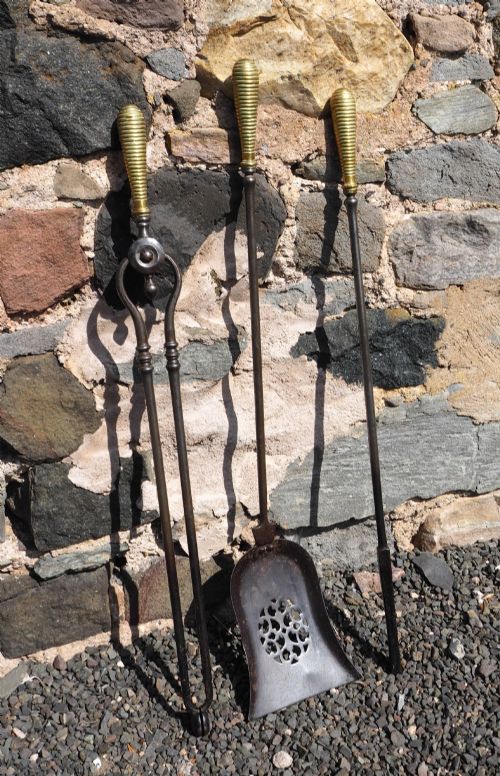
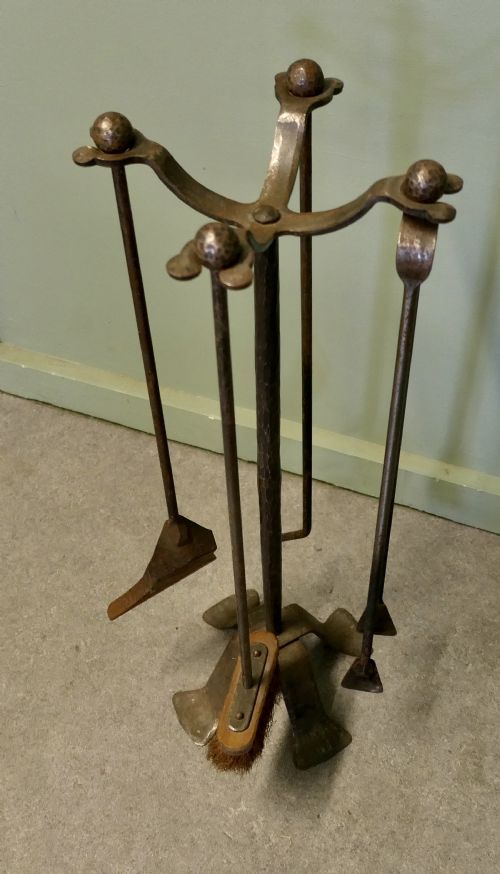
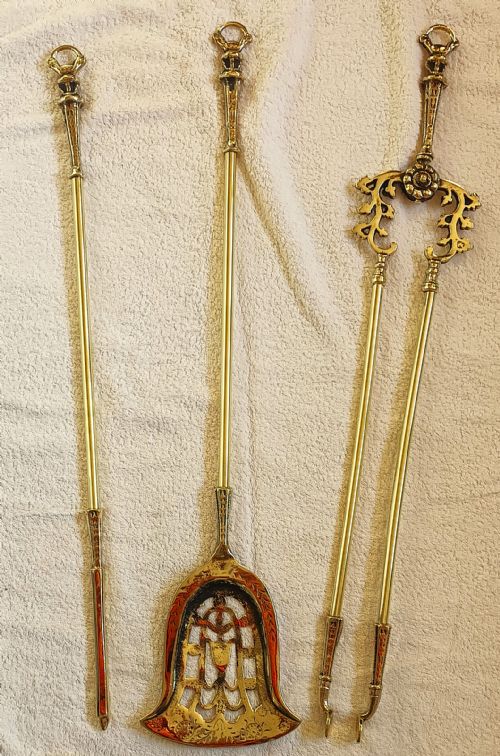
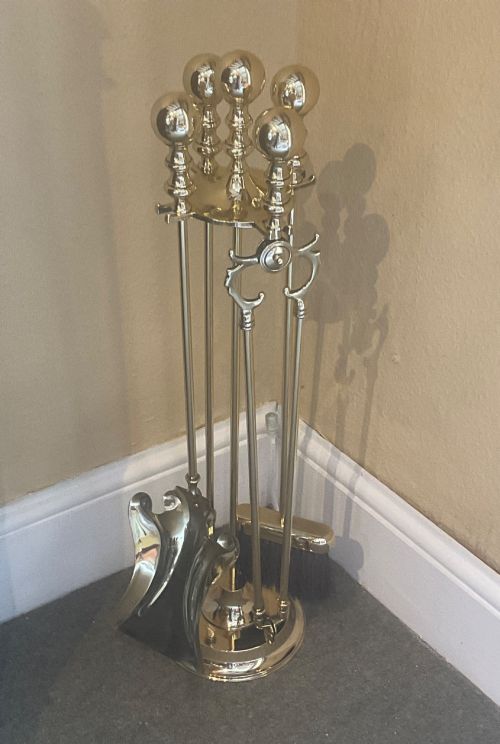
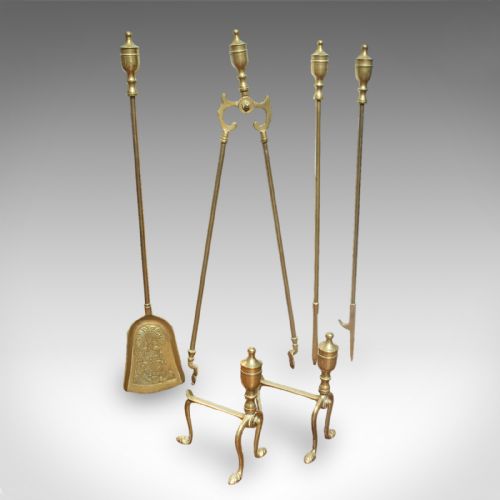
A traditional fire iron set comprises the essential tools required to manage a coal or wood fire within an open hearth. These suites typically include a shovel, poker and tongs, often accompanied by a stand or fire dogs to keep the hearth orderly.
The selections available span multiple eras, with Victorian and Edwardian examples appearing frequently alongside earlier Georgian and eighteenth-century pieces. Makers of these periods employed robust materials to withstand daily use by the fireside.
Configuration varies from simple country house sets to elaborate Rococo revival and Gothic revival designs. Buyers will encounter both standalone tools and complete companion sets designed to integrate with fire baskets and fenders.
How they were made
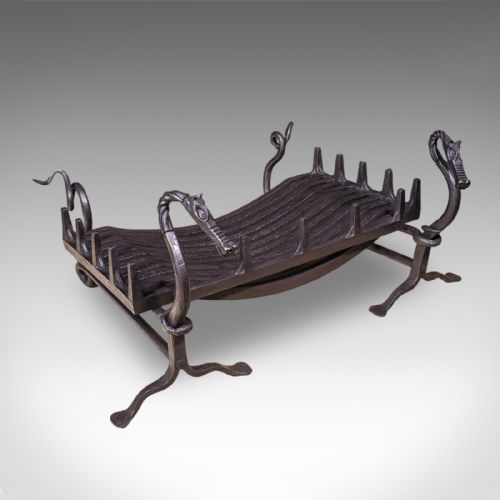
Blacksmiths and metalworkers shaped these implements primarily from iron, steel and brass using traditional forging and casting methods. Wrought iron and cast iron provided the heavy structure needed for grates and fire baskets, whilst brass lent a brighter decorative finish to handles and companion stands.
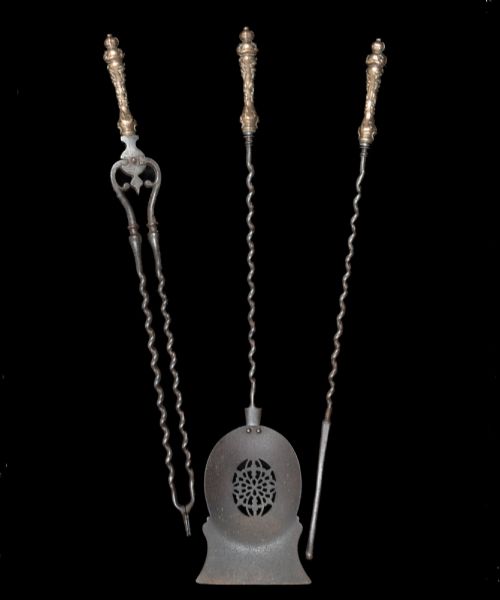
Polished steel and gun metal also feature, requiring careful finishing to achieve a reflective surface that resisted soot and ash. Handles often incorporated decorative elements such as rope twist patterns or cast brass motifs secured to the main shaft.
What varies in quality
Substance and weight separate robust hearth implements from lighter utilitarian pieces, with substantial brass and heavy wrought iron commanding greater presence. The integrity of the joins between handles and shafts dictates how well the tools endure regular stoking.
Finishing detail distinguishes superior sets, visible in the crispness of cast brass motifs and the careful turning of rope twist handles. Metal surfaces that retain a deep polish or original forged texture reflect a higher standard of period craftsmanship.
The Traditional Fire Iron Set Glossary
- Companion set
- A matched group of fireside implements, usually comprising a shovel, poker and tongs, often arranged on a dedicated stand.
- Fire irons
- The individual metal tools used for tending a hearth fire, including pokers, shovels and tongs.
- Fire dogs
- Horizontal iron bars supported on legs, used in pairs to elevate logs within a fireplace for better air circulation.
- Rope twist
- A decorative spiral pattern carved or cast into handles or shafts to resemble twisted cord.
- Andirons
- Upright metal supports placed on either side of a hearth to hold burning logs off the floor of the fireplace.
Traditional Fire Iron Set: Frequently Asked Questions
What is included in a traditional fire iron set?
A standard suite contains a poker for rearranging fuel, a shovel for clearing ash, and tongs for handling glowing embers. Many collections also include a stand or fire dogs to hold the implements neatly by the hearth.
Depending on the period, these implements might be forged from iron or cast in brass, sometimes forming part of a larger companion set that matches the surrounding fender and fire basket.
How do I date a brass fire iron set?
Dating relies on stylistic clues, manufacturing techniques, and the profile of the handles and mounts. Victorian and Edwardian examples often feature ornate cast brass work, whereas Georgian pieces tend to exhibit simpler, more restrained lines.
Material composition also offers guidance, as polished steel and wrought iron pairings shifted in popularity across different decades from the eighteenth century into the twentieth.
Can these tools still be used on an open fire?
Most historic fire irons are robustly constructed from iron, steel or brass and remain fully functional for everyday hearth management. Wrought iron and heavy steel tools easily withstand the heat and weight required to tend wood or coal fires.
Care should be taken with decorative brass components to avoid excessive thermal shock or scratching during vigorous stoking.
How should I clean antique brass fire tools?
Maintenance requires gentle cleaning with a soft cloth to remove dust, soot and ash accumulation after use. Avoid harsh abrasive compounds that can strip away historic patination or damage delicate cast details on the handles.
Leaving a modest level of aged patina is generally preferred by collectors to preserve the authentic character of nineteenth and early twentieth-century metalwork.