

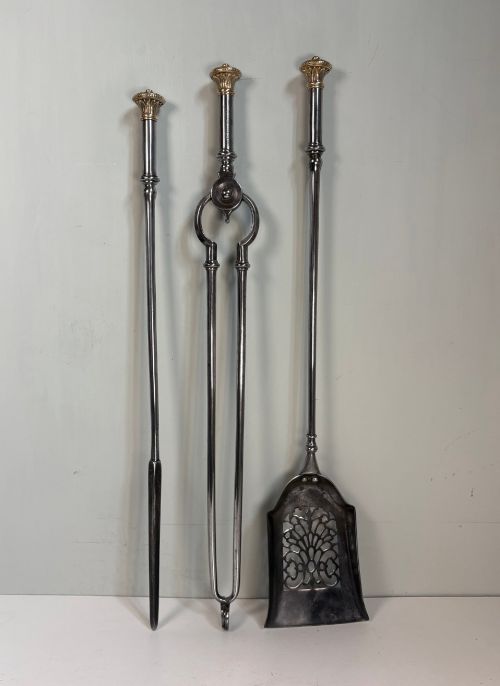


Period Brass Fire Tools
Period brass fire tools are hearth furniture built to tend coal fires, combining heavy metals with bright finishes to anchor a formal room.
Period Brass Fire Tools
Period brass fire tools are hearth implements designed for tending a domestic fire, encompassing shovels, tongs, pokers, and companion sets. These items serve both a practical function for managing coal and wood and a decorative purpose beside the mantelpiece.
The pieces on this page span the Georgian, Victorian, and Edwardian eras, with many examples originating from the eighteenth and nineteenth centuries. Alongside complete sets, buyers encounter individual fire irons and related hearth accessories like fenders.
Materials range from solid brass to combinations of steel and iron with gilt brass highlights. The forms reflect the shifting aesthetic tastes of English domestic interiors across successive design periods.
Materials and construction
Makers combined brass with ferrous metals like steel and iron to ensure the tools possessed both durability and visual appeal. Shafts of steel or iron provided the necessary strength for heavy hearth work while brass components added a polished decorative surface.
Gilt brass was utilised to create a brighter finish on select pieces, catching the light near the hearth. Metalworking techniques of the period involved forging iron and brass casting to shape handles, shafts, and shovel blades.
Period Brass Fire Tools Retail Price Guide 2026
Typical asking prices for period brass fire tools among the pieces listed under this phrase on Sellingantiques today, from the lower quarter to the upper quarter. They describe what is for sale here now, not the wider market.
Listings on this page encompass items from the eighteenth, nineteenth, and early twentieth centuries, spanning Georgian, Victorian, and Edwardian styles.
Evaluating the metalwork
The division between standard examples and superior pieces rests on the weight of the metal and the crispness of the handle casting. Heavier sets demonstrate better balance in the hand when lifting coals or adjusting fuel.
Finishing details such as finely turned grips and integrated decorative motifs distinguish finer sets from utilitarian workshop production. The integrity of joined components shows the original maker's skill in assembling mixed metals.
The Period Brass Fire Tools Glossary
- Companion set
- A collection of fireplace tools held together on a dedicated stand or resting in a fitted holder. These assemblies typically include a shovel, tongs, and a poker.
- Fire irons
- The individual rods and implements used to manage a hearth fire, including pokers and tongs. They are frequently found grouped as a matched trio.
- Gilt brass
- Brass coated with a thin layer of gold or a gold-coloured finish to enhance brilliance. This treatment brightens the appearance of decorative handles and mounts.
- Fender
- A low metal guard placed in front of an open fireplace to contain embers and ash. They often match the finish and period of the accompanying fire tools.
Period Brass Fire Tools: Frequently Asked Questions
What is included in a set?
A standard set generally comprises a shovel for ash, a poker for adjusting logs or coal, and a pair of tongs for handling fuel.
Some listings also include a hanging stand or companion rack to keep the implements organised beside the mantelpiece.
How do I clean brass tools?
Maintenance depends on the age and finish of the metal, though a soft cloth is usually sufficient for routine dust removal.
Harsh chemical polishes should be avoided on older items to preserve the patination accumulated over centuries of domestic use.
Can these tools be used?
Most period implements are robust enough for functional hearth use, particularly those forged with iron or steel shafts.
Buyers often select them for decorative display in non-working fireplaces or to complement a period mantelpiece.
How are periods identified?
Dating relies on the stylistic cues of the handles, the shaping of the shovel blades, and the manufacturing techniques visible on the metal.
Georgian examples tend to display restrained classical proportions, while Victorian items often feature heavier castings and more elaborate ornamentation.