


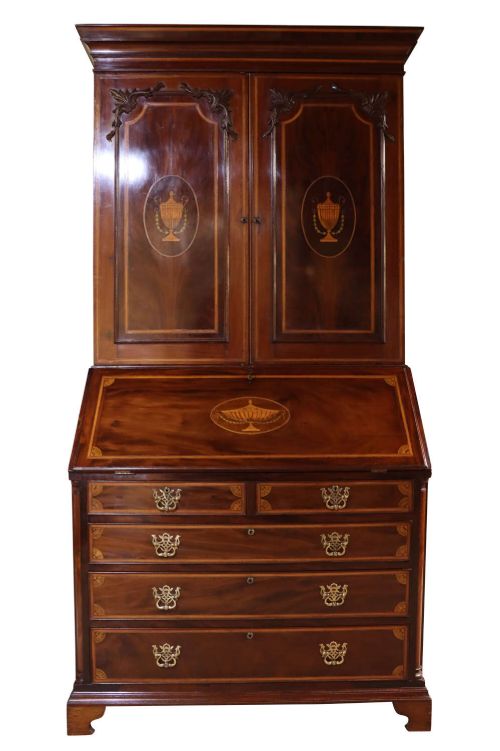
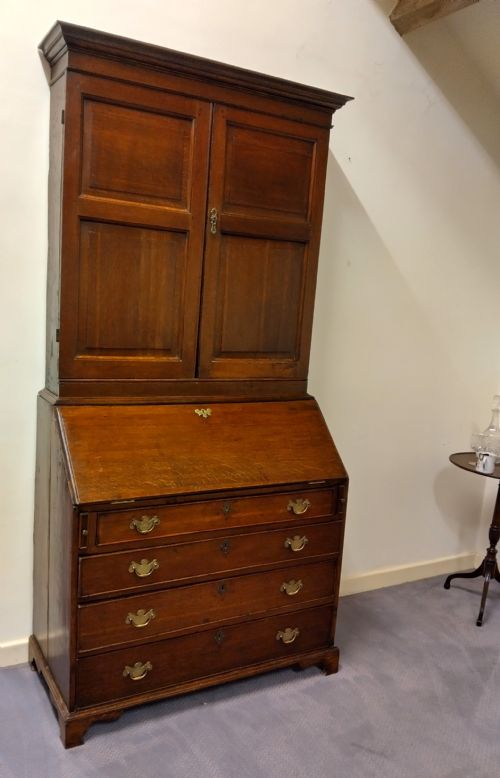
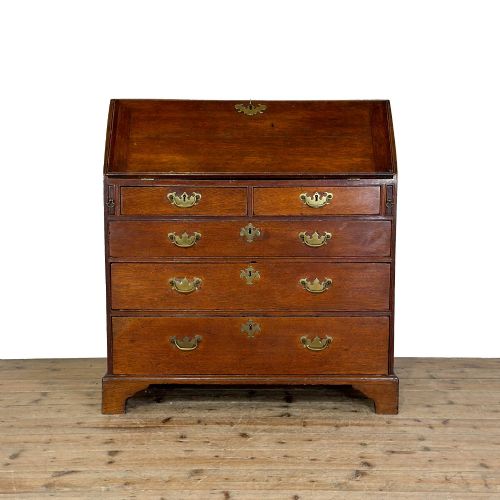
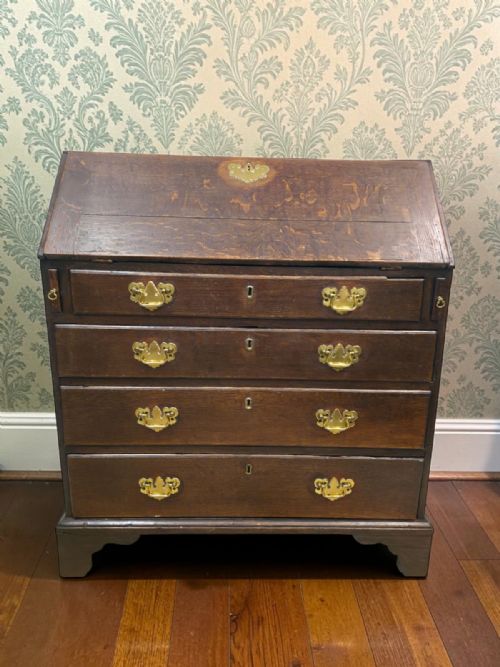
Traditional Fall Front Desk
A traditional fall front desk offers a practical writing surface that conceals fitted compartments when closed.
Traditional Fall Front Desk
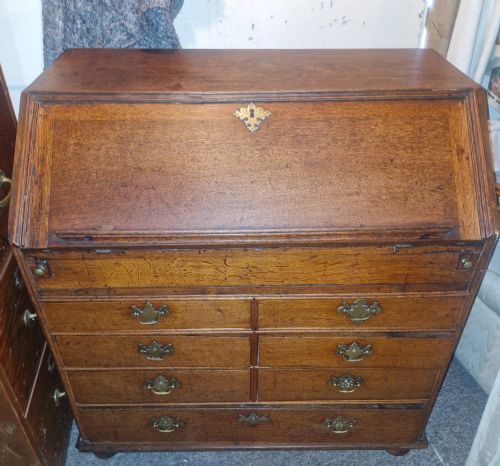
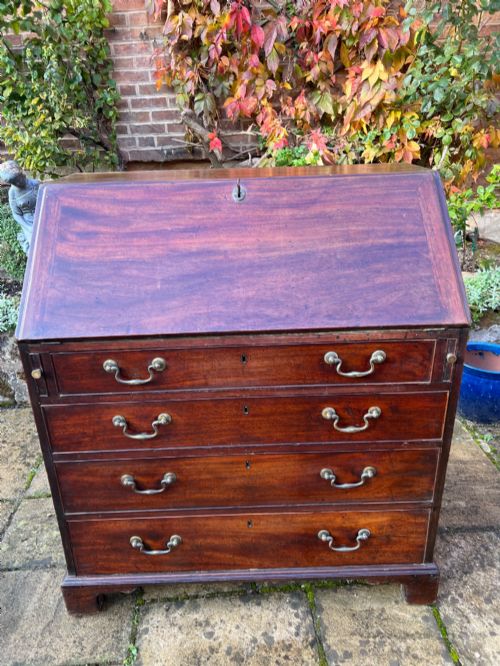
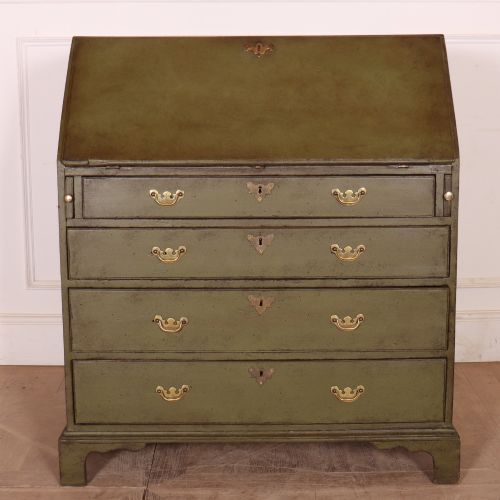
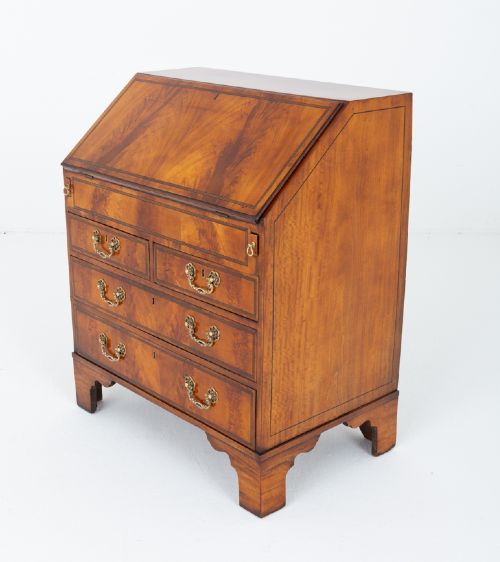
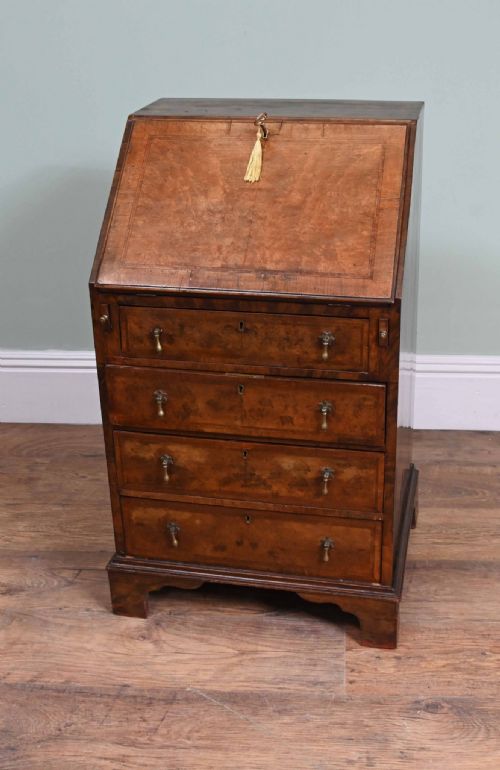
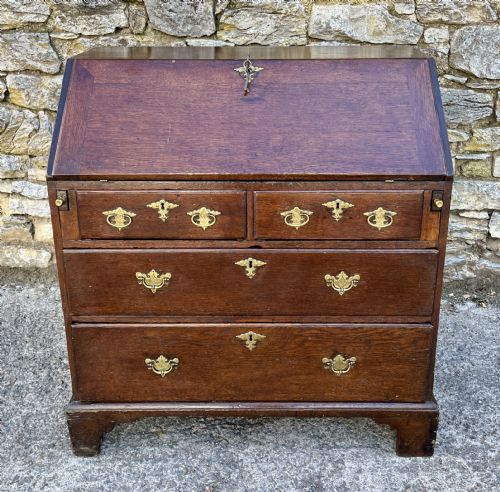
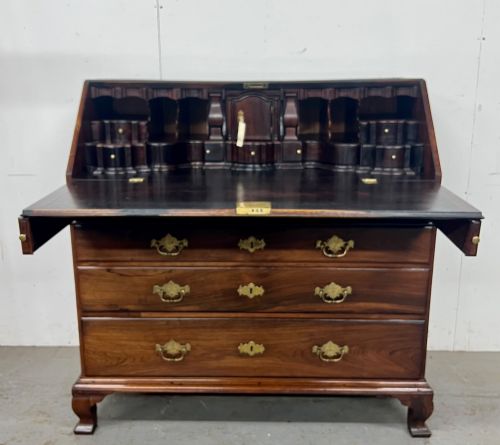
A traditional fall front desk functions primarily as a writing cabinet featuring a hinged writing flap that opens outward for use. When closed, this slope hides pigeonholes, small drawers, and secret compartments for correspondence and documents.
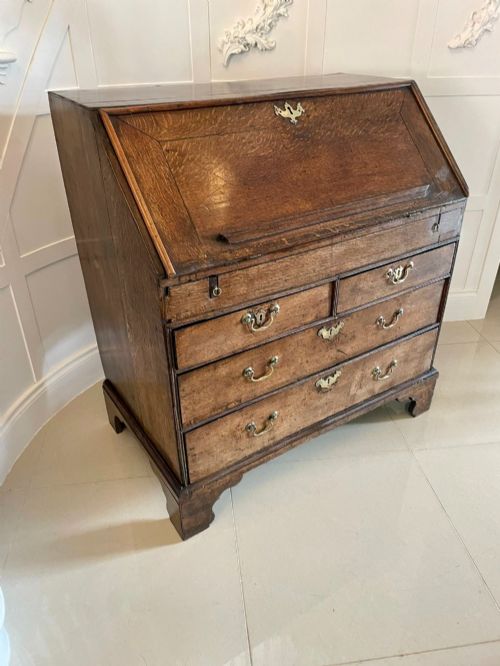
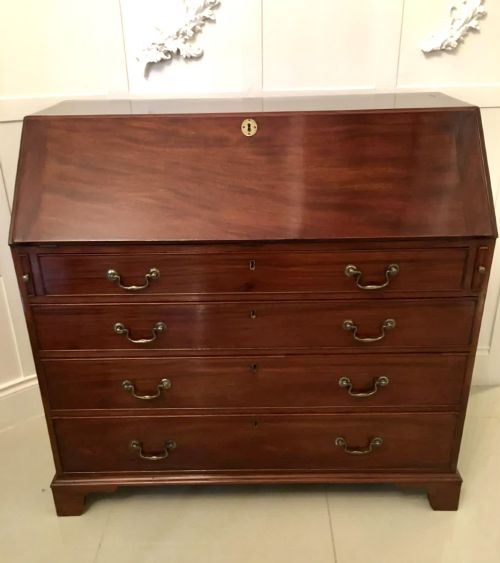
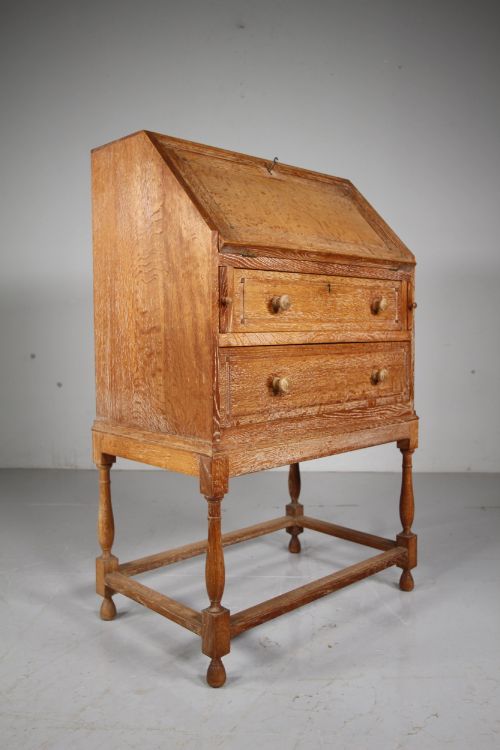
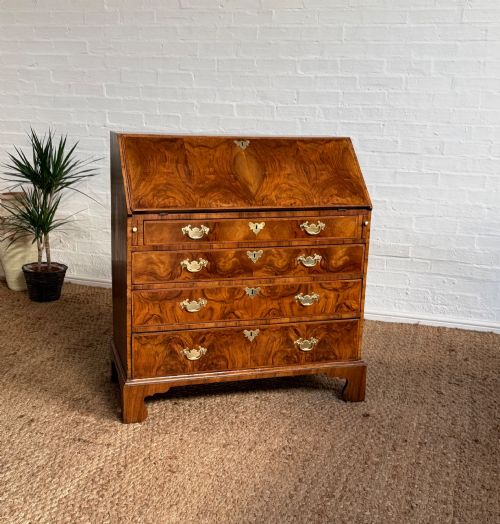
Examples on this page span several centuries, originating from the seventeen-hundreds through the Edwardian era and nineteen-twenty. These pieces take the form of simple writing slopes, freestanding bureaux, and taller bureau bookcases with glazed upper sections.
Oak and mahogany form the foundation of most pieces encountered here, alongside walnut, painted wood, and occasional rosewood. Stylistic influences range from robust Jacobean and Queen Anne designs to refined Georgian proportions and later revivals.
How they were made
Cabinetmakers utilised solid timbers such as oak and mahogany for structural integrity, often applying figured veneers of walnut or exotic woods to the exterior surfaces. Brass hardware, including drop handles and escutcheons, secures the drawers and fall fronts.
The writing flap relies on internal support brackets or lopers that pull out from the main carcase to bear weight during use. Interiors feature fine dovetail joinery on miniature drawers alongside delicately pierced pigeonhole dividers.
Traditional Fall Front Desk Retail Price Guide 2026
Typical asking prices for traditional fall front desk among the pieces listed under this phrase on Sellingantiques today, from the lower quarter to the upper quarter. They describe what is for sale here now, not the wider market.
What varies in quality
The refinement of the fitted interior dictates much of the standing, with superior examples offering secret compartments, sliding wells, and crossbanded detailing. Plain partitions suggest utilitarian workshops, whereas curved or stepped arrangements reflect skilled design.
Timber selection and grain matching across the fall front and drawer fronts separate standard items from exceptional ones. Figured walnut, burr mulberry, and intricate floral marquetry demonstrate a maker's ambition and command of materials.
Heals of London
The Traditional Fall Front Desk Glossary
- Fall front
- The hinged writing flap that drops down to form a horizontal desk surface. This panel conceals the internal compartments when shut.
- Bureau bookcase
- A combination furniture form featuring a writing desk base with a shelved cabinet top, often enclosed by glass doors. These tall units maximise storage within a single footprint.
- Loper
- A wooden slide that pulls out from the desk frame to support the opened fall front. Pairs of these runners prevent the hinge mechanism from bearing the full downward pressure.
- Marquetry
- Decorative veneer work created by fitting together thin pieces of wood or other materials to form pictorial patterns. Floral motifs appear frequently on eighteenth-century examples.
- Pigeonhole
- A small, open compartment within the desk interior designed for sorting letters and papers. These compartments sit above the primary writing surface.
Traditional Fall Front Desk: Frequently Asked Questions
How do I use a fall front desk?
Pull out the wooden lopers beneath the flap to support the weight before lowering the hinged front. This reveals the internal writing surface and compartments.
Close the flap when finished to protect correspondence and maintain a tidy room appearance.
How do I care for leather writing surfaces?
Dust the leather regularly with a soft, dry cloth to prevent grit accumulation in the grain. Avoid placing liquids or damp items directly onto the hide.
Apply specialised leather dressings sparingly to preserve suppleness if the surface shows signs of dryness.
How do I date an oak bureau?
Examine the construction methods visible inside the drawers and carcass, such as hand-cut dovetails and pegged joints. Earlier pieces from the seventeen-hundreds often display heavier timber scantlings and simpler interior layouts.
Later Edwardian and nineteen-twenty revivals borrow earlier styles but employ machine-sawn elements and standardised hardware.