

Traditional Fabric Sofa
A traditional fabric sofa brings decades of comfortable seating and classic English country house character into a sitting room.
Traditional Fabric Sofa
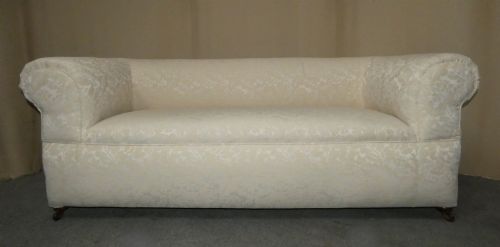
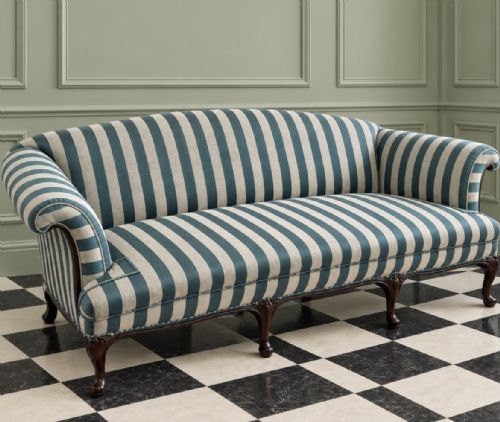
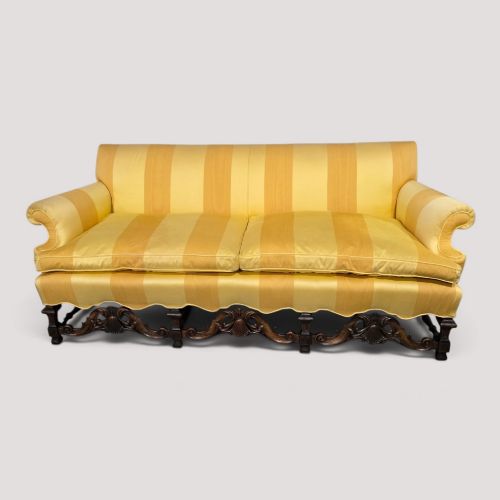
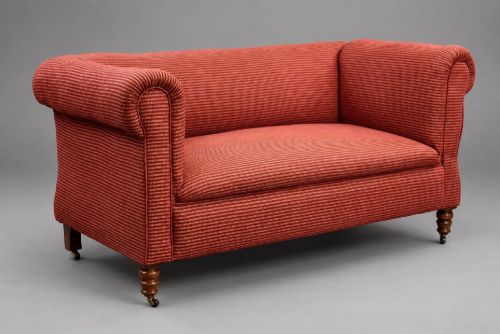
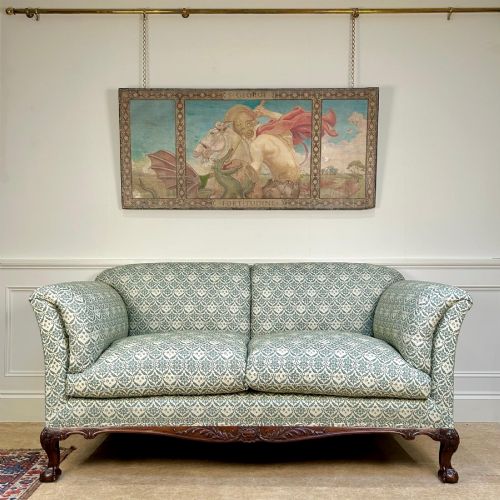
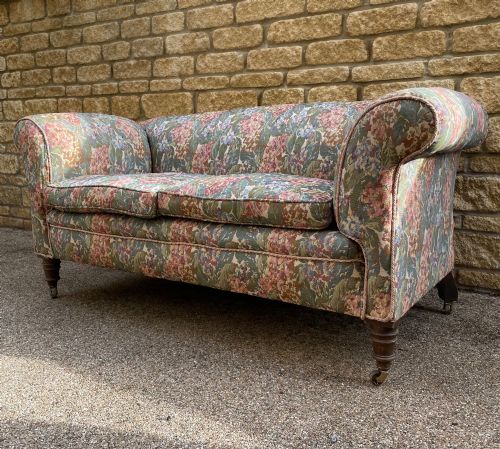
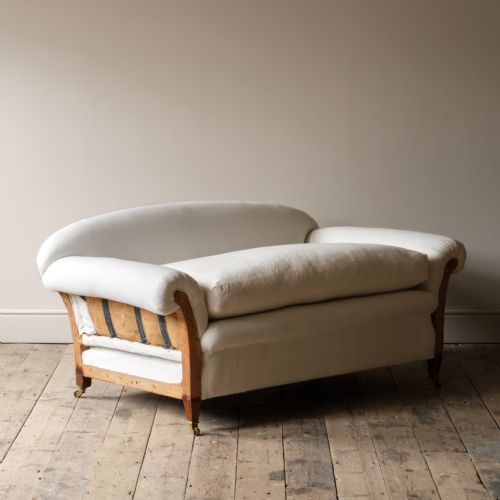
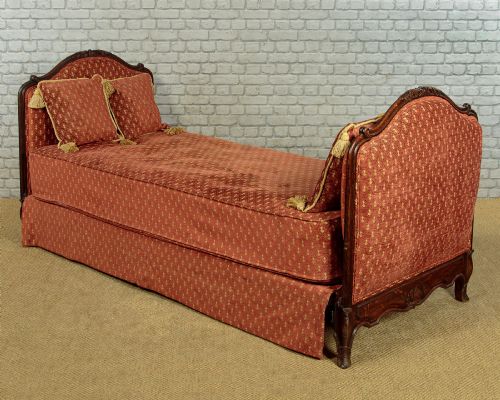
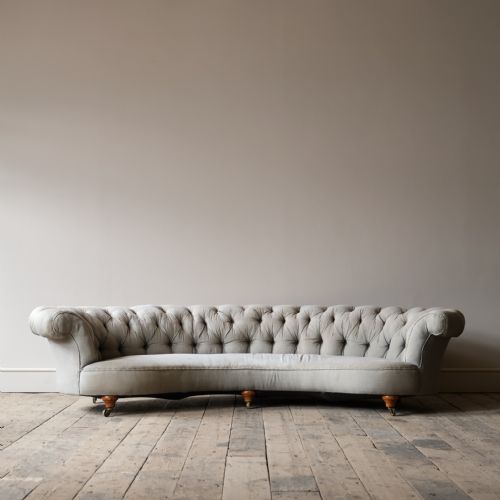
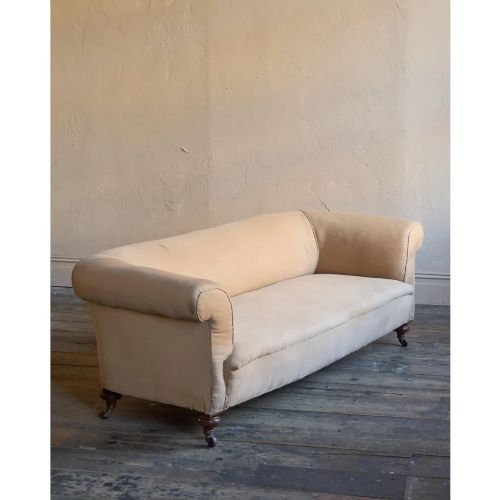
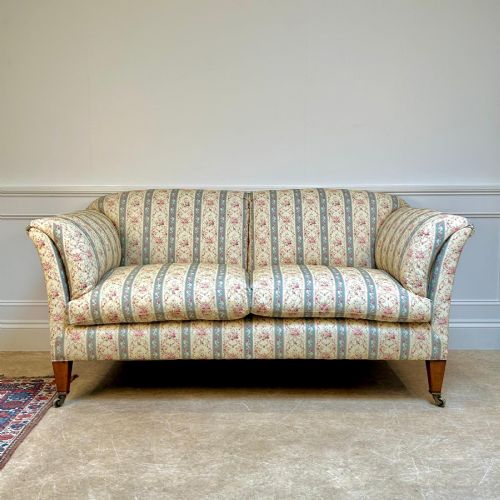
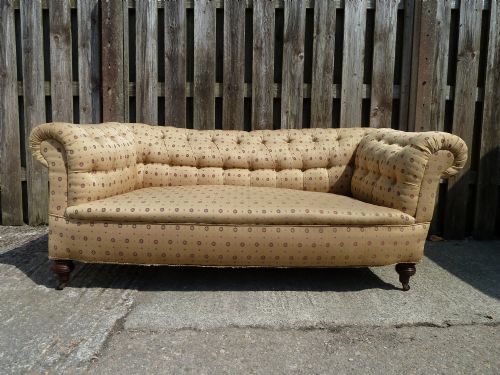
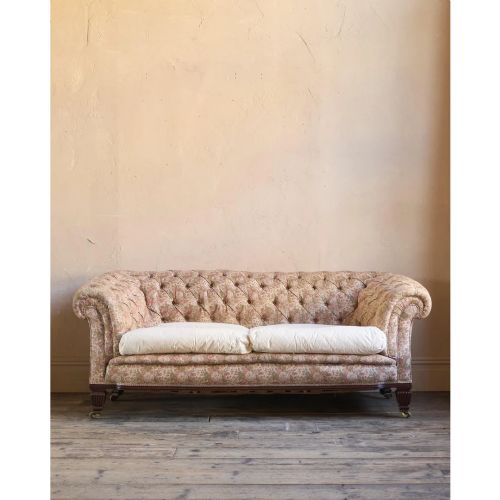
A traditional fabric sofa encompasses generous upholstered seating forms originating from the nineteenth and early twentieth centuries, including deep-seated Chesterfields and drop-end settees. These pieces range from Victorian button-backs to Edwardian country house designs covered in durable upholstery fabric and cotton.
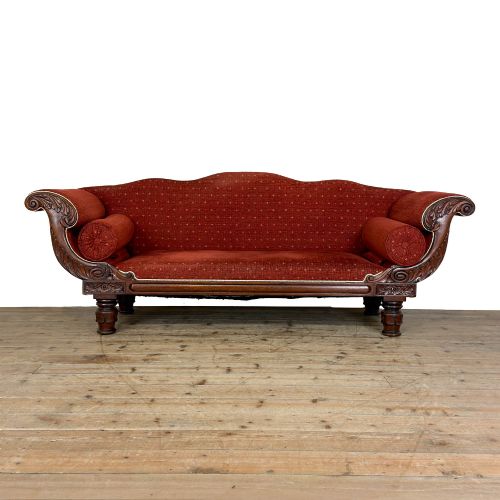
Buyers seeking a traditional fabric sofa will frequently encounter nineteenth century pieces alongside examples from the nineteen-twenties and nineteen-thirties. Forms extend beyond standard settees to incorporate chaise longues, daybeds, and camel back shapes.
How they were made
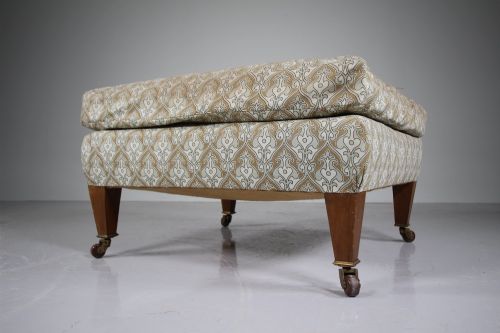
Frames rely on solid timbers such as mahogany, walnut, and oak, providing sturdy structural foundations beneath deep upholstery. Brass details often appear on castors supporting the legs of Victorian and Edwardian examples.
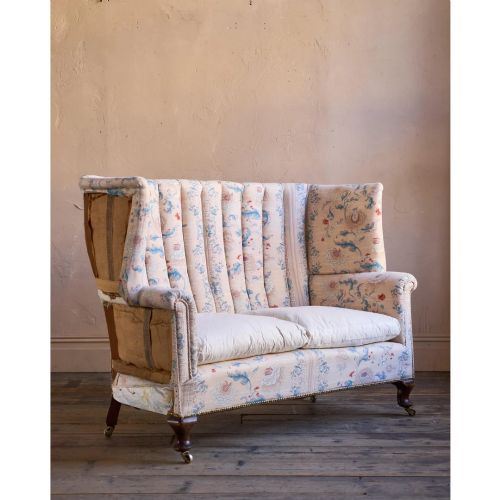
Upholstery techniques involve heavy fabric coverings secured over sprung or padded seats, sometimes paired with turned wooden legs.
Traditional Fabric Sofa Retail Price Guide 2026
Typical asking prices for traditional fabric sofa among the pieces listed under this phrase on Sellingantiques today, from the lower quarter to the upper quarter. They describe what is for sale here now, not the wider market.
Some nineteenth-century settees hide numbered brass castors that reveal secret workshop stamps when turned upside down.
What varies in quality
The integrity of the internal wooden frame and the precision of the joinery dictate the foundational longevity of each seating piece. Timber choice, from modest oak to finely figured walnut, marks the distinction between standard workshop production and high-maker attribution.
The sophistication of the upholstery work, including the tension of the springs and the choice of textile, separates standard commercial items from exceptional country house commissions.
Howard and Sons·Hampton and Sons
The Traditional Fabric Sofa Glossary
- Drop-end sofa
- A settee featuring one or both armrests hinged to lower flat for reclining. This mechanism allows the furniture to function as a daybed.
- Chesterfield
- A deep-tufted upholstered sofa traditionally featuring arms and back of the same height. This form remains a staple of nineteenth-century English seating.
- Camel back
- A sofa style featuring a graceful, undulating curved wooden frame along the top edge of the backrest. It draws inspiration from eighteenth-century design revivals.
Traditional Fabric Sofa: Frequently Asked Questions
How do I identify a Howard and Sons sofa?
Look for stamped maker marks on the wooden legs, numbered brass castors, and characteristic webbed upholstery foundations.
These maker details confirm origin and help distinguish workshop pieces from later copies.
What is a drop-end sofa used for?
The movable arm drops down to transform the settee into a convenient surface for resting.
Victorian drawing rooms utilised this clever mechanism for comfortable daytime lounging without needing a separate bed.
Are these sofas suitable for modern living rooms?
Deep proportions and sturdy timber frames make these traditional pieces exceptionally comfortable for everyday use.
Many buyers pair antique frames with contemporary fabric to suit modern interior colour schemes.
How do I date an antique upholstered sofa?
Examine the timber species used in the frame, the turning of the legs, and the style of the upholstery.
Victorian pieces often feature walnut or mahogany with brass castors, while later pieces show twentieth-century proportions.