





Traditional English Watercolour Art
Traditional English watercolour art brings the subtle light and gentle rural topography of past centuries straight onto your wall.
Traditional English Watercolour Art
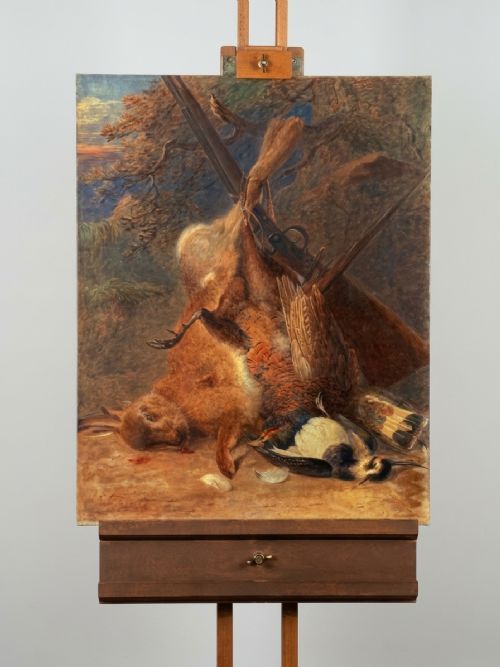
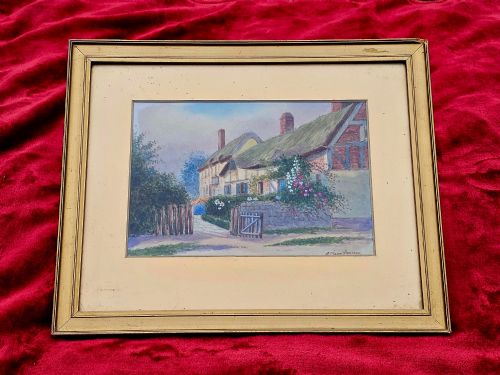
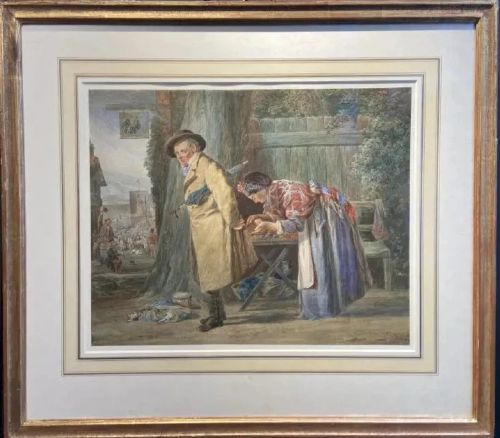
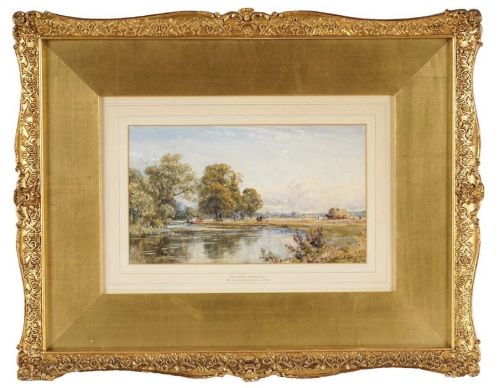
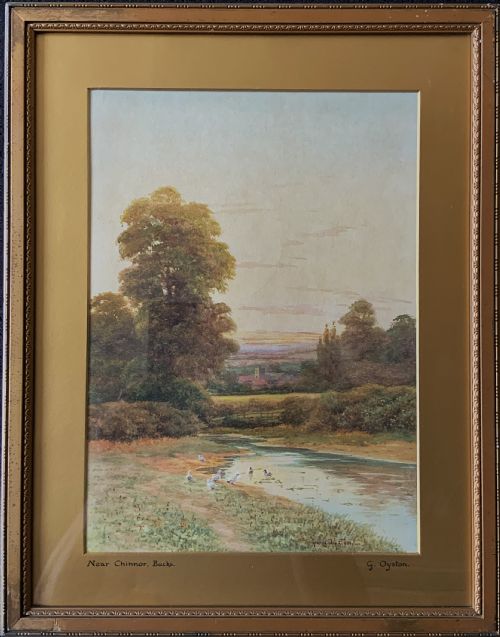
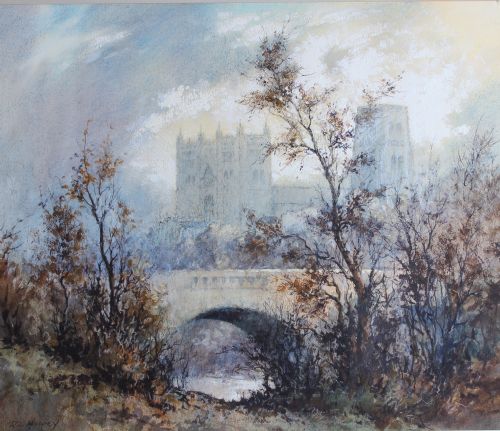
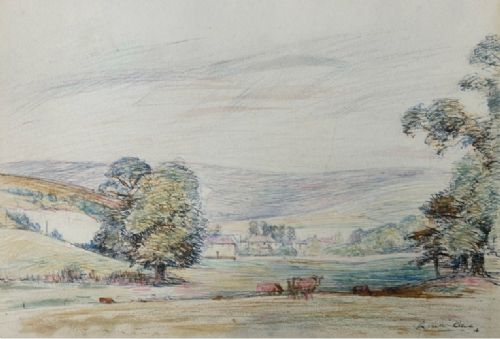
Traditional English watercolour art encompasses framed paintings on paper executed in watercolour pigment, often enhanced with bodycolour, depicting pastoral scenes, river landscapes, coastal harbours, and country cottages. These works capture the changing light of the British countryside through specific regional views ranging from Yorkshire and Cornwall to the Thames Valley and Dorset.
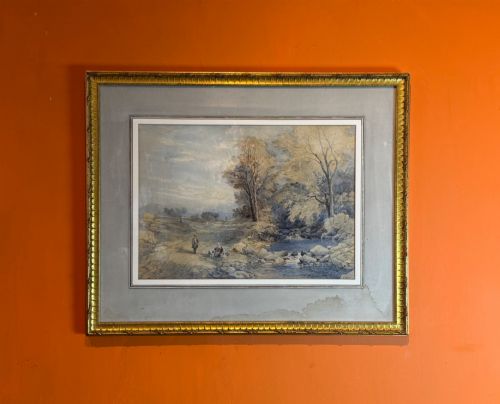
The pieces you meet on this page originate predominantly from the nineteenth and early twentieth centuries, spanning the Victorian and Edwardian eras down to the interwar period. They appear in styles including British Impressionism, pastoral landscapes, and naturalism, frequently housed in period wooden or gilt frames under glass.
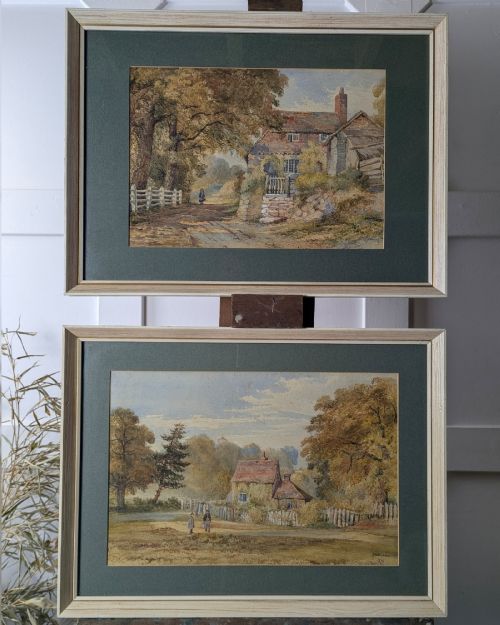
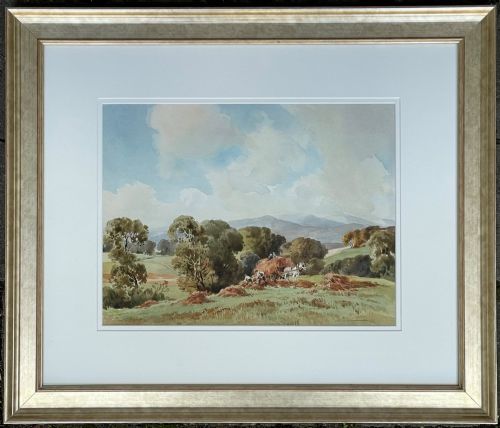
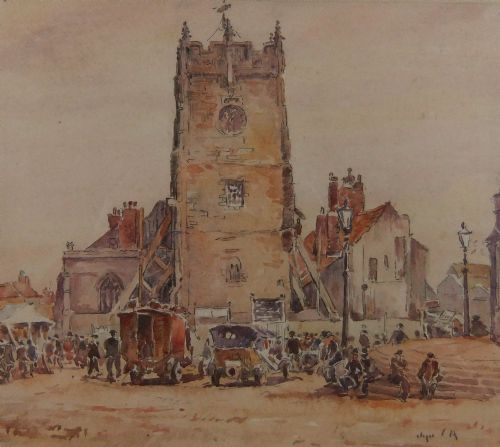
Subjects range from grand cathedral views and bustling harbour scenes to quiet rural lanes with figures, sheep, or horse-drawn carts. The medium relies on the luminosity of white paper shining through transparent washes of pigment to render skies, water, and foliage.
How they were made
Artists worked primarily with watercolour pigment suspended in water, applied in transparent washes onto sheets of paper to build up tone and depth. Many pieces incorporated bodycolour, which added opaque white or tinted pigments to create highlights and solid details.
Works were finished on paper supports and secured behind glass within wooden or gilt wood frames to protect the delicate medium from moisture and atmospheric damage. The physical construction relies upon the interplay between the absorbent paper substrate and the applied water-based pigments.
Traditional English Watercolour Art Retail Price Guide 2026
Typical asking prices for traditional english watercolour art among the pieces listed under this phrase on Sellingantiques today, from the lower quarter to the upper quarter. They describe what is for sale here now, not the wider market.
Pastoral scenes frequently feature ducks, sheep, and horses patiently observing the British weather alongside rural villagers.
What varies in quality
Quality rests upon the artist's command of light, atmospheric perspective, and brushwork control within the medium of watercolour. Masterful handling creates luminous skies and convincing depth, whereas lesser works remain flat and formulaic in composition.
The preservation of the paper and pigment integrity distinguishes finer examples, as exposure to light can cause fading in fugitive pigments. Original framing matching the period of execution also contributes to the integrity of the piece.
George Sydney Shepherd·Alfred Young Nutt·Percy Lancaster·A. Marie Parsons·William Banks Fortescue·Robert A. Nottingham·Robert Thorne Waite·John Smith Atherton·Joseph H Barnes·George Oyston·Russell Sidney Reeves·Robert Leslie Howey·David Cox·Henry Charles Fox·Robert Little·Henry John Kinnaird·Fred Lawson·George Graham·Arthur Tucker·J S Ainley·Frederick Septimus Lewis·James Orrock·James Hardy Junior·J Laporte·Theresa Stannard
The Traditional English Watercolour Art Glossary
- Watercolour pigment
- Finely ground colour particles mixed with a water-soluble binder for painting on paper. This medium allows artists to create transparent washes of colour that depend on the white paper beneath for their luminosity.
- Bodycolour
- Watercolour paint mixed with a white pigment to render it opaque rather than transparent. Artists utilised this technique to add highlights, solid shapes, and denser details to their landscape compositions.
- Gilt wood
- Timber framing coated with a thin layer of gold leaf or metallic gilt finish. These frames were commonly used during the Victorian and Edwardian periods to enhance the presentation of fine art paintings.
- British Impressionism
- A painting style that emerged in the late nineteenth and early twentieth centuries focusing on light, brushwork, and everyday subjects. Practitioners captured outdoor scenes with rapid strokes and attention to atmospheric conditions.
- Edwardian pastoral
- An artistic style celebrating rural life, countryside cottages, and farming scenes during the reign of Edward VII. These works often depicted a tranquil view of traditional English agriculture and village settings.
Traditional English Watercolour Art: Frequently Asked Questions
How should I hang watercolour art?
Watercolours require placement away from direct sunlight to prevent the pigments and paper from fading over time. Maintain a stable indoor environment sheltered from damp walls and excessive humidity.
Ensure the frame hangs securely from appropriate fixings to support the weight of the glass and wooden moulding. Professional framing with acid-free backing boards further protects the paper during long-term display.
What is the difference between bodycolour and watercolour?
Traditional watercolour relies on transparent washes where the white paper shows through to create luminosity and light. Artists use this technique to achieve soft skies and translucent water effects.
Bodycolour incorporates opaque white pigment mixed into the paint, allowing the artist to lay solid, lighter strokes over darker washes. This method provides greater opacity for highlighting figures, buildings, and foam on water.
How do I date a nineteenth century watercolour?
Dating relies upon artist signatures, exhibition labels, recorded working dates, and stylistic markers such as costume or architectural details. Many works carry inscriptions, dates, or titles written directly on the front or reverse of the paper.
The framing style and materials, including nineteenth-century gilt wood mouldings and early mount boards, also offer clues to the exact period of execution.
Why are most traditional watercolours framed under glass?
Glass protects the absorbent paper surface and water-soluble pigments from airborne dust, soot, and moisture damage. Without this barrier, atmospheric pollution and accidental spills would ruin the delicate medium.
Traditional framing methods incorporate a mount to keep the glass from touching the surface of the watercolour painting directly, preventing moisture transfer and sticking.