




Traditional English Countryside Painting
Traditional English countryside painting captures pastoral life through river views, rural cottages and grazing livestock across the nineteenth and twentieth centuries.
Traditional English Countryside Painting
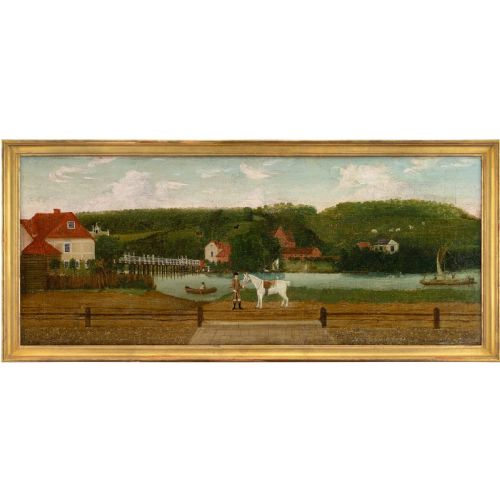
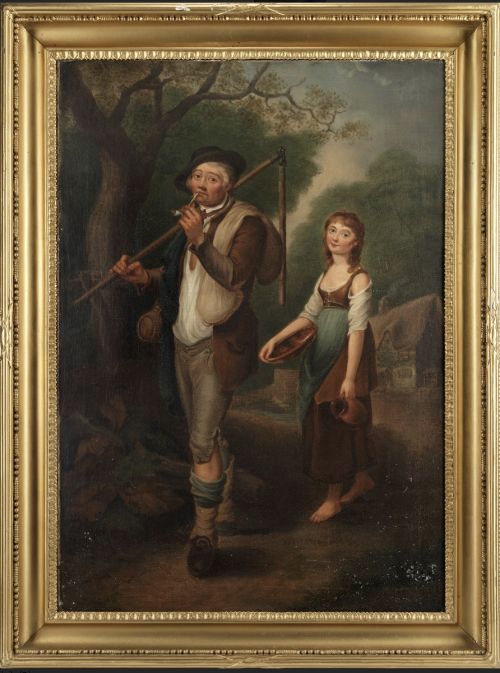
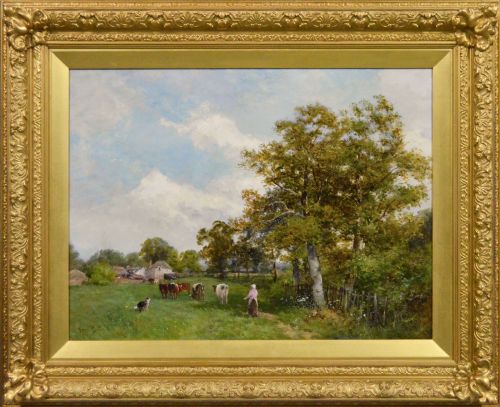
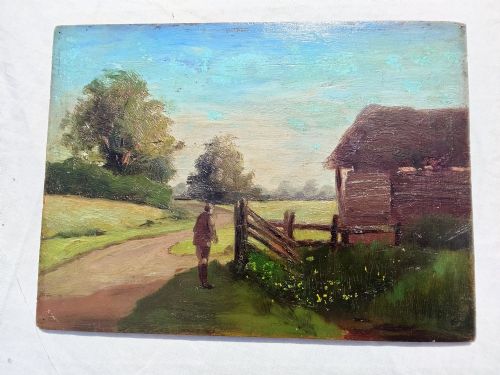
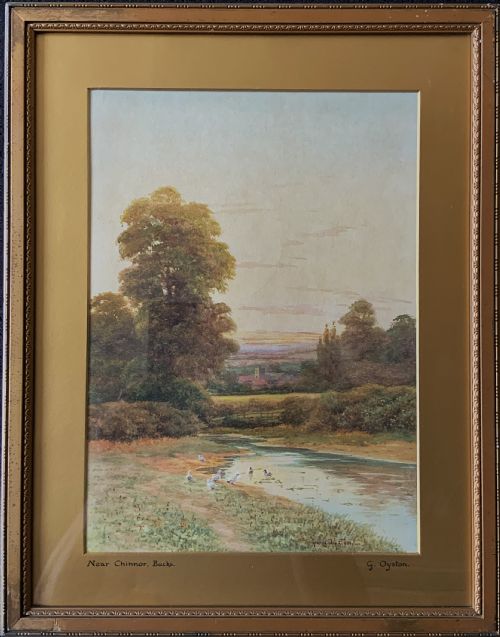
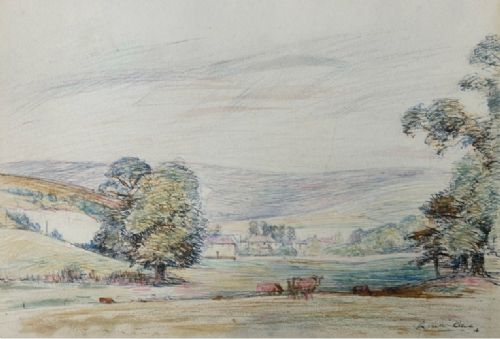
Traditional English countryside painting depicts rural vistas, agricultural labour, and pastoral river scenes created during the nineteenth and twentieth centuries. These artworks capture specific localities from the West Country to Yorkshire, often including thatched cottages, wandering livestock, and figures engaged in rural work.
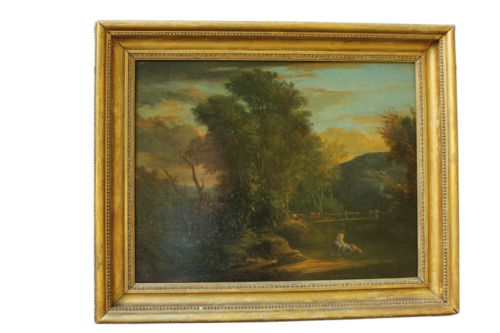
The selection on this page relies heavily on works from the Victorian era through the Edwardian period and into the early twentieth century. Buyers will encounter oil paintings on canvas and wood panel alongside delicate watercolours on paper, framed in period giltwood.
The regional scope extends across English and Welsh landscapes, recording local topography from Dorset lanes to riverbanks along the Severn and the Stour. These pieces provide a direct window into historical rural life through the eyes of the English School and British Impressionism.
Materials and Technique
Artists built these compositions primarily using oil paint on stretched canvas or wooden board, laying down pigments to capture shifting natural light across fields and waterways. Other works employ watercolour on paper, prized for its translucent washes that suit damp English skies and misty river valleys.
Canvases and panels rest within period frames fashioned from wood and finished with gilt, providing a structured border that defines the landscape within domestic interiors. These traditional supports and framing methods preserve the physical integrity of the artwork across generations of handling.
Traditional English Countryside Painting Retail Price Guide 2026
Typical asking prices for traditional english countryside painting among the pieces listed under this phrase on Sellingantiques today, from the lower quarter to the upper quarter. They describe what is for sale here now, not the wider market.
Listings feature works executed in oil on canvas, wood panel, and watercolour on paper, documenting the rural landscape across two centuries.
What Varies in Quality
Quality rests upon the artist's command of natural light and atmospheric perspective, distinguishing atmospheric depictions of open countryside from rigid topographical illustration. Masterly brushwork conveys movement in water, foliage, and grazing sheep with economy and precision.
Condition and originality also define the standing of a piece, particularly the preservation of the original paint surface and the historical frame. Works that retain their early framing and lack heavy restoration offer a more authentic encounter with the period.
David Bates·Benjamin Williams Leader·William Mellor·George Oyston·Sidney Richard Percy
The Traditional English Countryside Painting Glossary
- English School
- A loose designation for artists trained or working within the British tradition of painting, particularly those focusing on landscape and genre scenes.
- British Impressionism
- A late nineteenth and early twentieth-century painting movement influenced by French techniques yet retaining a distinct focus on British light and weather.
- Watercolour painting
- An artwork created using water-soluble pigments on paper, allowing for delicate transparency and rapid execution in the field.
- Giltwood
- Wood carved and coated with a thin layer of gold leaf or metallic gilt, commonly used for traditional picture framing.
- Provenance
- The documented history of ownership of an artwork, establishing its authenticity and passage through time.
Traditional English Countryside Painting: Frequently Asked Questions
What periods do these paintings cover?
The available artworks span from the early nineteenth century through the Victorian era and into the interwar decades of the twentieth century. This timeline covers shifting styles from traditional pastoral recording to early British Impressionist techniques.
Buyers will find dates stretching from the foundational years of the eighteen-hundreds up to mid-twentieth-century interpretations of rural scenery.
How should I hang an oil painting?
Hang oil paintings on interior walls away from direct sunlight and steady heat sources to protect both the canvas and the traditional gilt frame. Stable humidity prevents the wood panels and canvas stretchers from warping over time.
Ensure the wall fixings match the weight of the framed piece, particularly for larger works executed on heavy wooden boards or thick canvas.
What subjects appear most frequently?
Common subjects include river landscapes, farmland with grazing sheep or cattle, and rural figures working near cottages or country lanes. Topographical views across specific counties like Dorset, Yorkshire, and Kent frequently anchor the compositions.
Artists also returned repeatedly to specific waterways such as the River Severn and the Stour to study reflections and changing weather.
Are these works signed by the artist?
Many of the paintings and watercolours feature visible signatures or inscriptions by the hand of the artist, sometimes noting the specific location on the reverse or front. Unsigned works are frequently attributed to particular regional schools based on technique and subject matter.
Documentation on the frame or stretcher often provides additional clues regarding the precise origin and date of the artwork.