


Traditional English Cottage Art
Traditional English cottage art brings together painted scenes of rural dwellings and countryside landscapes that capture historical rural life.
Traditional English Cottage Art
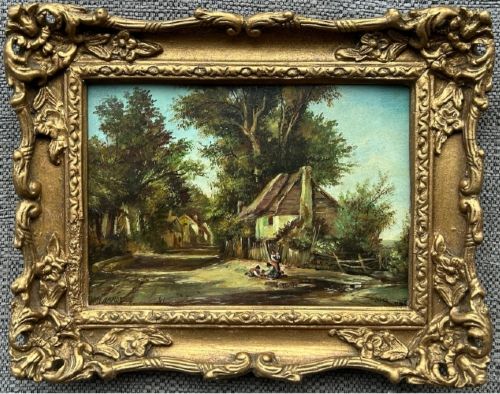
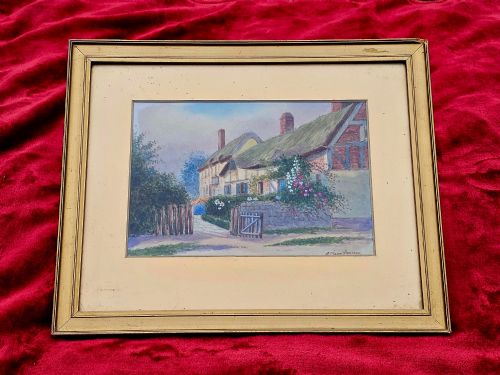
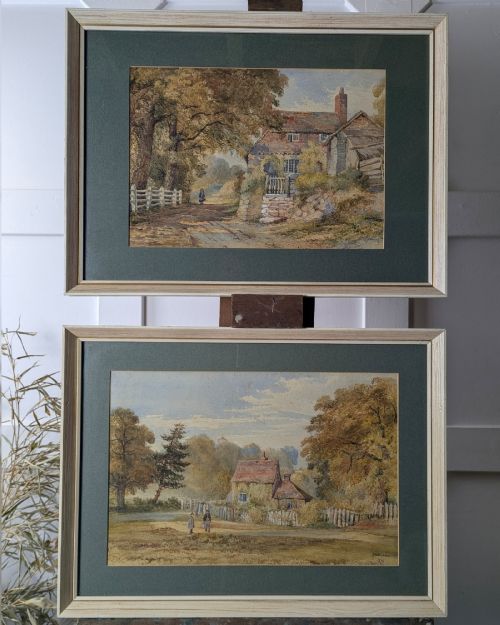
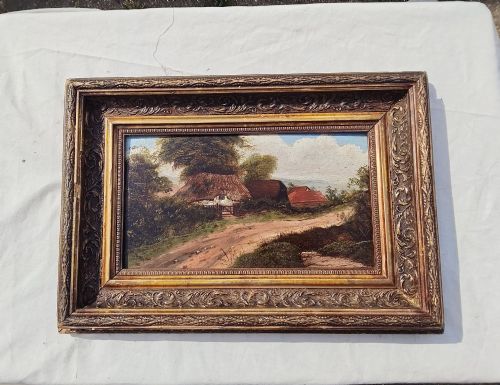
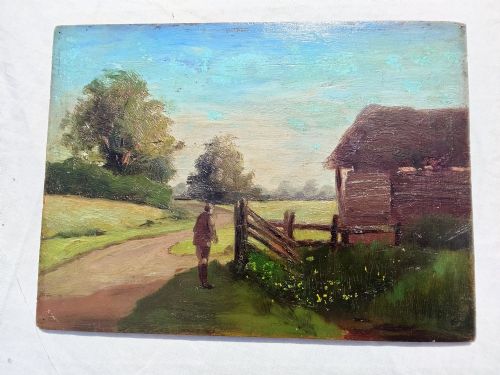
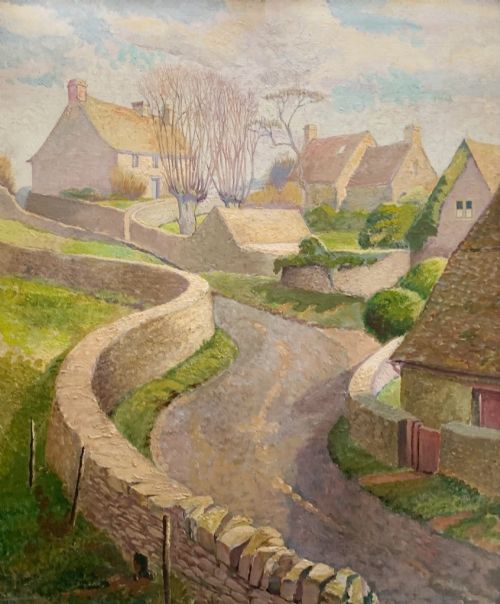
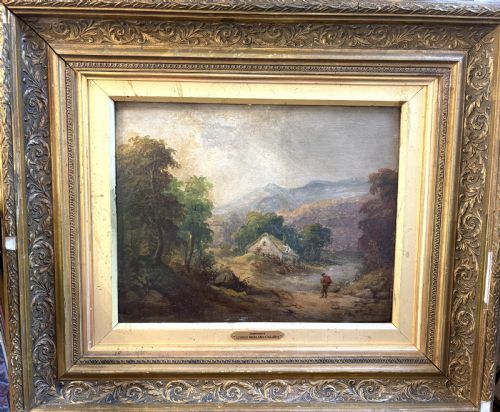
Traditional English cottage art comprises paintings depicting rural buildings, thatched homesteads, and pastoral landscapes across the British countryside. These works record regional architecture and country life from the nineteenth and early twentieth centuries, spanning periods from the Victorian era through the 1940s.
Buyers encounter framed watercolours and oil paintings on canvas, panel, board, and card. These pieces reflect artistic styles such as British Impressionism, Edwardian Pastoral, and the English School, focusing on domestic rural subjects.
The selections include depictions of specific locations from Yorkshire to Devon, alongside imaginative rural scenes. This variety provides a direct view into historical English village life as recorded by contemporary artists.
Materials and construction
Artists utilised traditional mediums including watercolour pigment on paper and oil paint applied to canvas, wooden panels, or card. These materials were chosen for their durability and ability to capture natural light and texture.
Works are typically presented in period frames constructed from wood, sometimes retaining original gilding. The physical support often reveals the age of the piece through the preparation of the canvas or the grain of the wooden board.
Listings feature works created between the Victorian era and the 1940s, executed in oil paint, watercolour, and pastel on various supports.
Distinctions in quality
Quality rests upon the artist's ability to render light, atmosphere, and architectural detail convincingly within the landscape. Works by established named painters demonstrate superior handling of pigment and composition compared to anonymous or follower pieces.
The preservation of the paint surface and the original relationship between the artwork and its period frame influence the integrity of the piece. Stronger examples maintain clear provenance and legible artist signatures or inscriptions detailing specific English locations.
William Howard Hardy·A. Marie Parsons·Robert A. Nottingham·George Morland·John Horace Hooper·Reginald Grange Brundrit·Fred Lawson·Arthur Tucker·J S Ainley·James Hardy Junior·William Greaves·Charles Vickers·Theresa Stannard·Robert Finley McIntyre·Lorenzo Headley·Henry Charles Fox·Will Anderson·Robert Hollands Walker·John Falconar Slater·Thomas James Lloyd·Abraham Hulk Junior·David Woodlock·Ernest Cox·Herbert Royle·Arthur Claude Strachan
The Traditional English Cottage Art Glossary
- Watercolour
- A painting method in which the paints are made of pigments suspended in a water-based solution. This technique creates translucent washes of colour on paper.
- Oil on Canvas
- A medium involving pigments bound with drying oils applied to stretched fabric. This allows for rich textures and deep tonal gradations.
- English School
- A classification for works produced by artists trained or working within Britain. It groups pieces sharing stylistic traditions without implying a single formal academy.
- Panel
- A rigid wooden support used by painters instead of canvas. Artists often selected panels for stability when working on smaller landscape studies.
Traditional English Cottage Art: Frequently Asked Questions
What subjects appear in traditional english cottage art?
These paintings depict thatched cottages, farmsteads, country gardens, and rivers across various English counties. They record rural dwellings accompanied by figures, livestock, and local inhabitants.
The focus remains on domestic rural architecture integrated into pastoral landscapes. Artists documented specific locations from Yorkshire and Nottinghamshire down to Devon and Somerset.
How should these paintings be displayed at home?
Display these artworks away from direct sunlight to protect watercolours and oil pigments from fading. Maintaining stable indoor humidity prevents wood panels and paper supports from warping.
Pairing them with period frames enhances their historical character within domestic interiors. They suit traditional rooms alongside period furniture and natural wood finishes.
How can I tell the period of a painting?
Dating relies upon stylistic markers, artist signatures, and framing materials characteristic of nineteenth and early twentieth-century production. Inscriptions on the reverse often record specific dates and locations.
Examining the physical support, such as prepared canvas or wooden board, helps confirm the era. Victorian and Edwardian works display distinct handling of light and pigment composition compared to later decades.
Were these works painted outdoors?
Many artists created initial studies and watercolours directly out of doors to capture immediate natural light. Finished oil paintings were frequently completed inside studios using those field sketches.
This method combined observational accuracy with composed studio practice. Painters recorded transient weather effects and seasonal changes across the English countryside.