






Traditional End Tables Nest
Traditional end tables nest offers a space-saving arrangement of graduating tables designed to slide neatly beneath one another when not in use.
Traditional End Tables Nest
Traditional end tables nest comprise sets of three or four graduating tables designed to stack together compactly. These multi-tiered units appear in forms such as quartetto sets and nesting coffee tables, offering a flexible surface arrangement for sitting rooms and parlours.
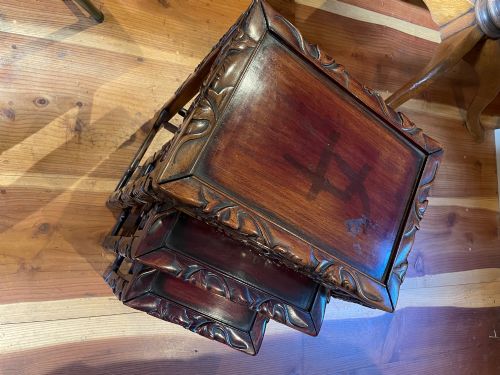
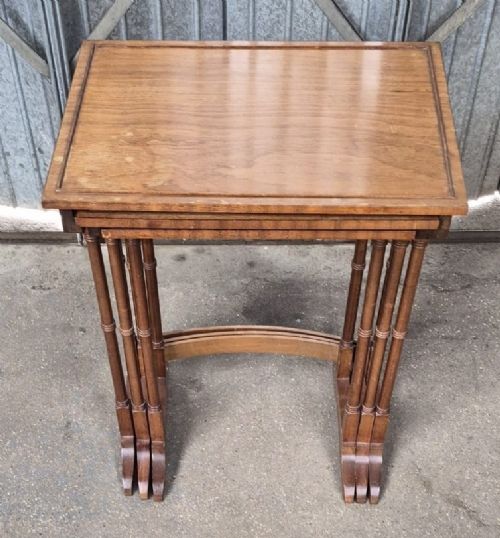
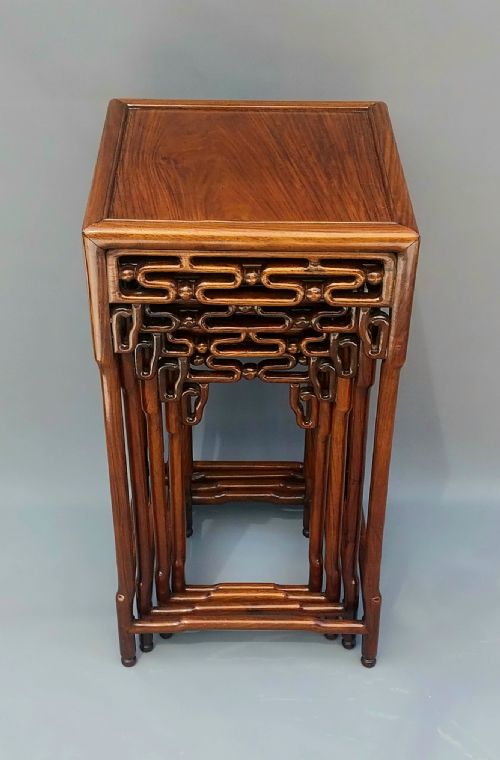
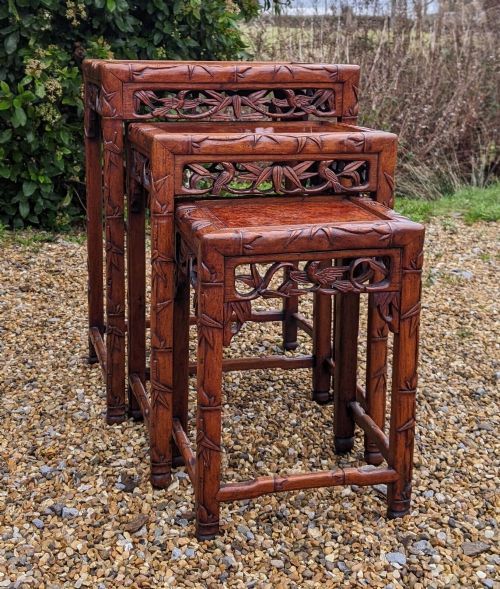
The versions most commonly met on this page span the Victorian and Edwardian eras alongside 19th-century Chinese export workshops. British iterations favour mahogany, walnut, and oak, while Asian examples utilise dense hardwoods including hongmu, huanghuali, and rosewood.
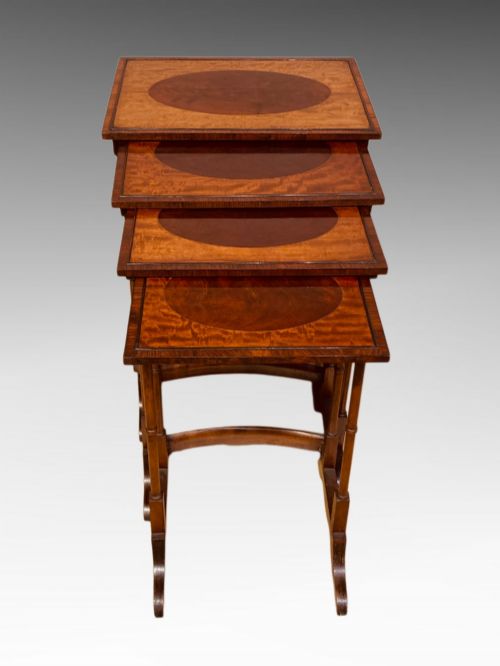
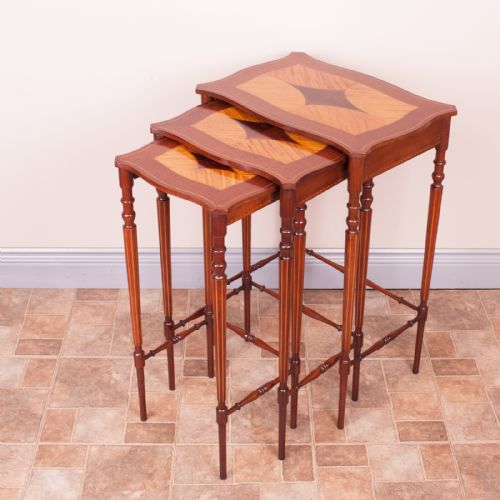
Makers produced these tables in various regional styles, ranging from English country house and Queen Anne to Jacobean Revival and Late Qing Dynasty. Each set balances functional utility with decorative cabinetwork, often incorporating parquetry, inlay, or intricate carvings.
How they were made
Cabinetmakers constructed these sets using a combination of solid timbers and fine veneers selected for structural stability and visual depth. Mahogany, walnut, and oak form the basis of British pieces, while Chinese workshops employed dense rosewoods and exotic hardwoods.
Joinery techniques focused on ensuring each table scaled down precisely to fit beneath the larger one without friction. Artisans applied surface decoration through parquetry, delicate string inlay, and hand-carved detailing across the tops and frames.
Traditional End Tables Nest Retail Price Guide 2026
Typical asking prices for traditional end tables nest among the pieces listed under this phrase on Sellingantiques today, from the lower quarter to the upper quarter. They describe what is for sale here now, not the wider market.
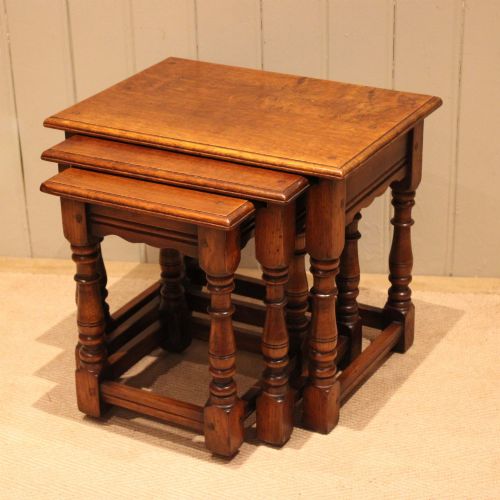
Tall oak barley twist legs bring a distinctly spirited flourish to an otherwise proper Victorian seating arrangement.
What varies in quality
The distinction between tiers of quality rests largely on the selection of timber and the precision of the graduated sizing. Superior sets display carefully matched grain patterns and tight, stable joinery that allows the smaller tables to glide smoothly into position.
Decorative ambition separates standard examples from exceptional ones, particularly in the finesse of inlaid stringing, parquetry, or hand-carved motifs. Better workshops paid equal attention to the finish of the smallest, lowest table in the stack, maintaining high standards across every piece.
The Traditional End Tables Nest Glossary
- Quartetto
- A matched set of four graduating tables designed to nest together. The term frequently appears in 19th-century and Edwardian descriptions for nesting tables.
- Parquetry
- A geometric mosaic of wood pieces used for decorative surfacing on tabletops. Artisans employ this technique to create patterned top surfaces on nested sets.
- Hongmu
- A traditional Chinese term denoting dense, dark hardwoods used in fine furniture making. These durable woods support intricate carving and polished finishes.
Traditional End Tables Nest: Frequently Asked Questions
What is a nest of tables?
A nest of tables is a set of graduating surfaces built to slide one beneath another into a single compact footprint. This arrangement provides extra table space for entertaining while occupying minimal floor area when stored.
Historically utilised as occasional or tea tables in drawing rooms, these sets offer flexible placement options around seating areas. Each piece scales down proportionally to fit snugly within the frame of the next table up.
How do I identify an Edwardian nest?
Edwardian nesting tables often feature light mahogany construction, frequently enhanced with delicate inlay or stringing. The proportions tend to be slender and refined, reflecting the interior tastes of the early 20th century.
These sets commonly include three or four graduated tables, sometimes referred to as quartetto sets in contemporary records. The turnings and leg profiles align with the lighter decorative vocabulary prevailing around 1900 to 1910.
Where were Chinese export nest tables made?
Chinese export nesting tables were produced in workshops responding to Western demand during the 19th and early 20th centuries. These pieces utilised native hardwoods such as hongmu, rosewood, and huanghuali wood.
Craftsmen combined traditional Chinese joinery and carving styles with formats suited to European and British drawing rooms. The resulting sets display dense timbers and deep finishes distinct from contemporary British cabinetmaking.
How should I care for antique nesting tables?
Antique nesting tables require placement away from direct heat sources and strong sunlight to protect the timber and polish. Maintaining stable indoor humidity prevents the wood and joinery from drying out or shifting.
Regular dusting with a soft, dry cloth preserves the surface sheen without the need for heavy chemical polishes. Care should be taken when sliding the tables in and out to avoid unnecessary friction on the inner legs and frames.