

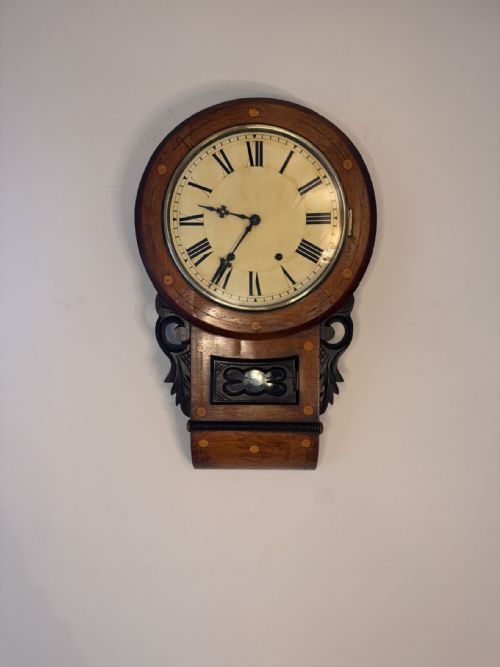
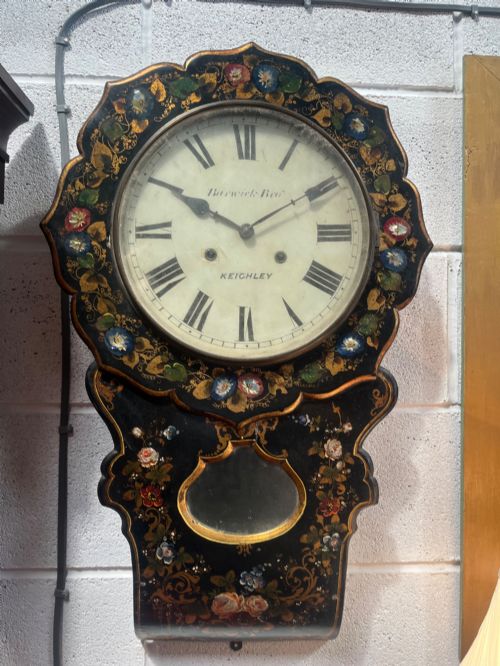
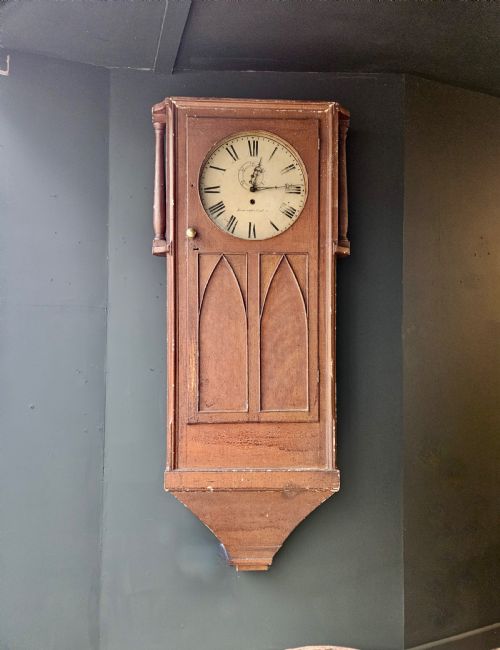


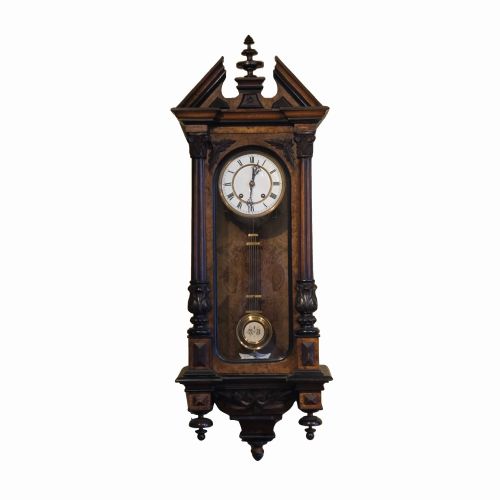

Traditional Drop Trunk Clock
These traditional drop trunk clock pieces are substantial wall timepieces, combining practical timekeeping with striking cabinet work.
Traditional Drop Trunk Clock
A traditional drop trunk clock is a wall timepiece featuring an extended case below the dial to house a pendulum. The pieces on this page span several centuries, with nineteenth-century examples and Victorian designs appearing frequently.
Makers housed these movements in various configurations, including tavern clocks, drop dial wall clocks, and specialised London or regional timepieces. Cabinets range from simple pine and oak builds to refined mahogany, rosewood, and walnut housings.
Most examples originate from English workshops, though German Vienna wall clocks also feature within the selection. Buyers encounter both single and twin fusee movements alongside simpler striking mechanisms.
Distinguishing quality in traditional drop trunk clock pieces
The sophistication of the cabinet work dictates much of the visual distinction, from plain pine tavern cases to highly figured mahogany and rosewood veneers with inlay. Details like chisel bottoms, carved brackets, and original painted decoration elevate the physical presence of the housing.
Movement complexity further separates examples, with twin fusee striking mechanisms and signed dials by known makers representing higher tiers of horological ambition. The survival of original paint, timber patination, and clear dial inscriptions preserves the historical integrity of the timepiece.
Traditional Drop Trunk Clock Retail Price Guide 2026
Typical asking prices for traditional drop trunk clock among the pieces listed under this phrase on Sellingantiques today, from the lower quarter to the upper quarter. They describe what is for sale here now, not the wider market.
Listings feature woods such as mahogany, rosewood, walnut, and pine, alongside periods spanning the Georgian, Regency, and Victorian eras.
Joseph Mansfield·John Thwaites
The Traditional Drop Trunk Clock Glossary
- Drop dial
- A clock face mounted to a compact upper case that extends downward into a trunk to accommodate the pendulum swing. This proportion defined public and domestic wall clocks throughout the nineteenth century.
- Fusee
- A conical pulley connected to the mainspring by a cord or chain, designed to equalise the torque as the spring unwinds. This mechanism improves timekeeping accuracy across the duration of the wind.
- Tavern clock
- A large, long-case wall clock traditionally hung in public houses, coaching inns, and assembly rooms for public timekeeping. They often feature large wooden dials and straightforward striking movements.
- Single fusee
- A movement utilising one fusee cone to power the timekeeping train without a separate striking mechanism. These simpler movements are common in wall-hung timepieces.
- Twin fusee
- A movement incorporating two separate fusee cones and gear trains, allowing the clock to both keep time and strike the hours on a bell or gong. Such mechanisms indicate higher workshop complexity.
Traditional Drop Trunk Clock: Frequently Asked Questions
Where were traditional drop trunk clocks displayed?
These clocks hung in domestic hallways, formal reception rooms, and commercial premises like offices and railway stations.
Their wall-mounted design saved floor space while ensuring the dial remained visible to people moving through the building.
How do I wind a fusee wall clock?
Winding requires inserting a key into the dial aperture and turning it clockwise until resistance halts the motion.
Care must be taken not to overwind the mechanism, ensuring the fusee chain or cord seats properly on the cone.
What is the difference between a timepiece and a striking clock?
A timepiece simply measures and displays the hours and minutes without sounding an audible alert.
A striking clock includes an additional gear train and a bell or gong to announce the hours.
How do I identify a Victorian drop dial clock?
Victorian examples typically exhibit dense timber cases made of mahogany or walnut, often featuring carved side ears or drop trunks.
They frequently house fusee movements behind painted wooden or metal dials enclosed by brass bezels.