
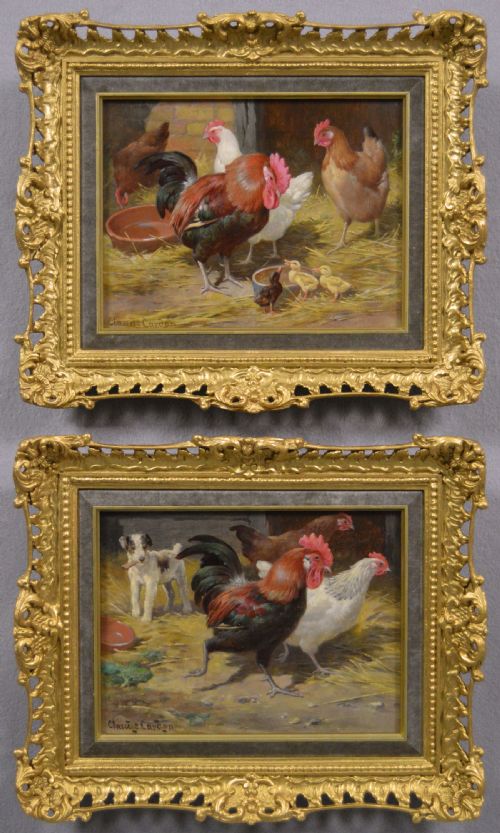


Traditional Dog Canvas Art
Traditional dog canvas art brings the character and sporting heritage of earlier centuries onto stretched fabric through oil paint.
Traditional Dog Canvas Art
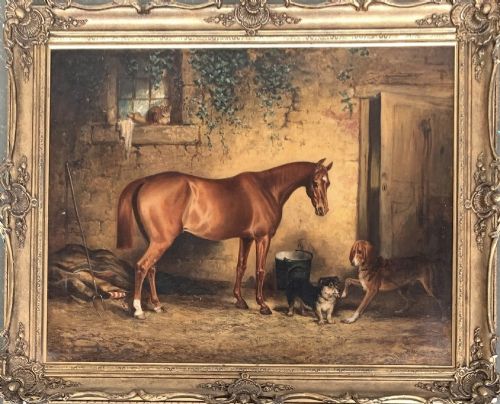
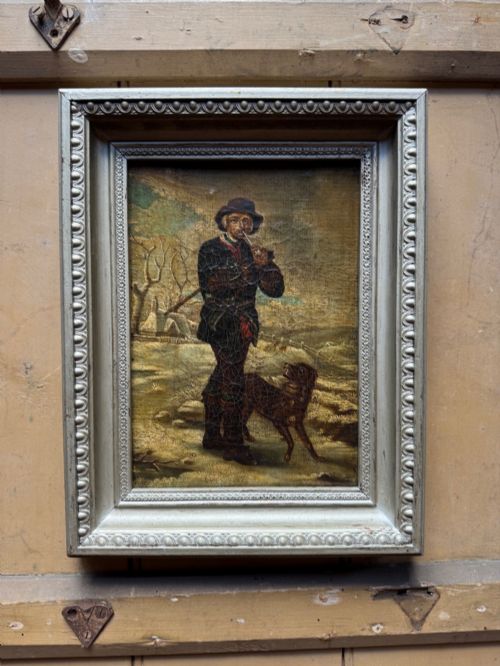
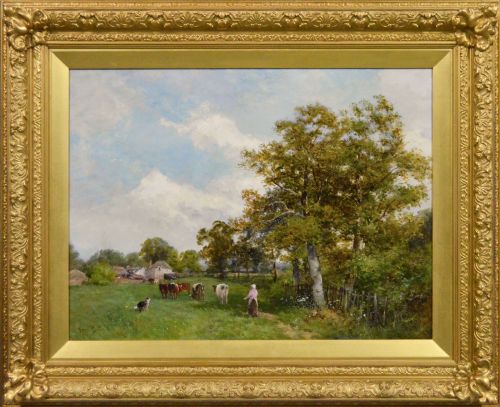
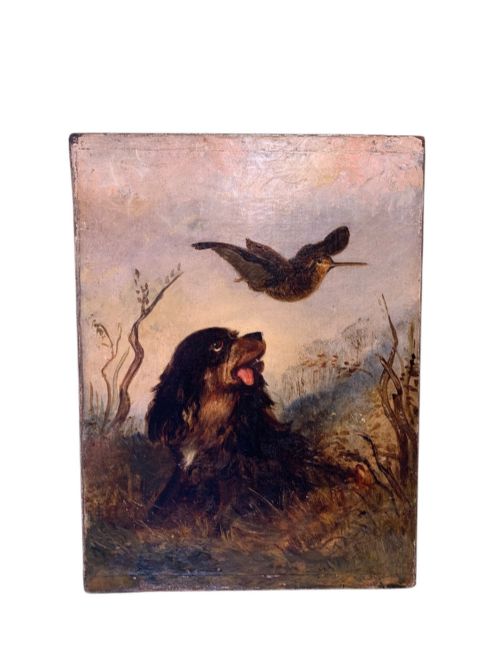
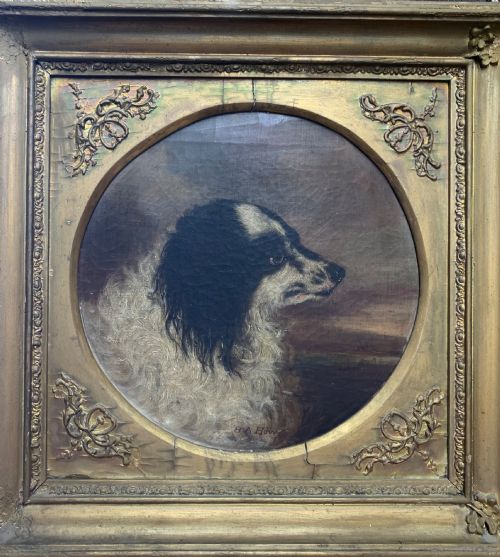
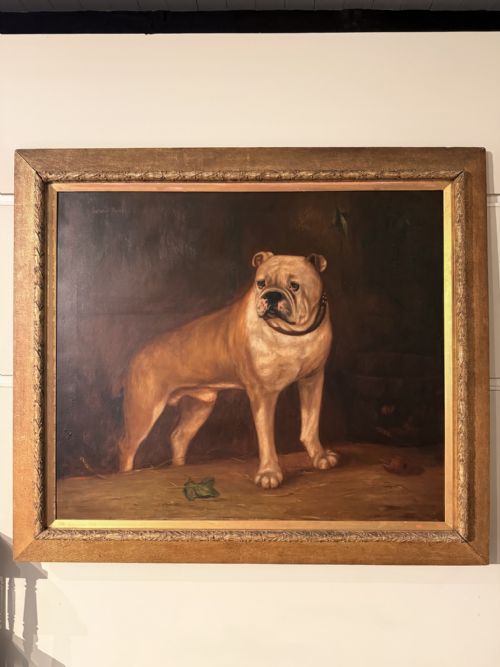
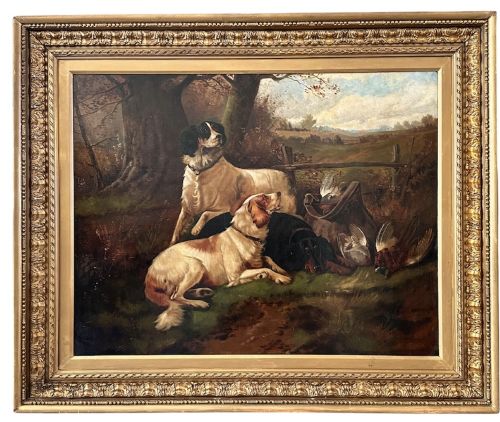
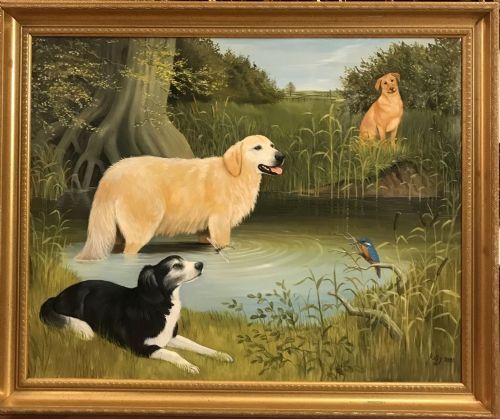
Traditional dog canvas art captures the physical presence and character of spaniels, terriers, greyhounds and gun dogs through historical oil paintings. These pieces range from intimate 19th century portraits of single animals to larger sporting scenes involving hunting hounds and farm dogs.
Most examples found here date from the Victorian era, executed in styles that span detailed realism, pastoral landscapes and British sporting art. Canvases often retain their original giltwood frames, showing the domestic importance placed on these animal subjects by past owners.
Materials and technique
These works rely primarily on oil paint applied to woven canvas stretched over wooden frames, a combination chosen for its durability and capacity to hold rich colour depth. Artists built up the brushwork through layered glazes to render the sheen of a hound's coat, the texture of feathers on woodcocks, and atmospheric background landscapes.
Framing forms an integral part of the physical object, utilising heavy carved giltwood that complements the dark, earthy palettes typical of 19th century and earlier studio painting.
Listings span from the 17th century through the Victorian era into the mid 20th century, using oil on canvas exclusively.
Distinctions in quality
Quality rests upon the artist's command of anatomy, proportion and the expressive intelligence in the animal's eye, distinguishing a master portraitist from a commercial copyist. Stronger compositions place the subject within a coherent, detailed landscape or interior rather than a flat, uninspired backdrop.
Condition also plays a central part, where original unlined canvases and stable paint surfaces with minimal past restoration hold greater integrity than heavily retouched examples.
Henry Barraud·David Bates·John Sargent Noble·Frans Snyders·William Barraud·George E Sharpe·Fannie moody·Colin Graeme Roe·Henri Schouten·Valentine Thomas Garland·George Cole·Charles Bilger Spalding·John Emms·Samuel John Carter·William Albert Clark·Richard Buckner
The Traditional Dog Canvas Art Glossary
- Canvas
- A heavy woven fabric stretched across a wooden frame to form the rigid support for oil painting. It provides the characteristic texture visible beneath historical paint layers.
- Oil paint
- A slow-drying medium made of pigments suspended in drying oils such as linseed. This medium allows artists to blend tones smoothly and build rich surface depth.
- Giltwood
- Wood carved and coated with a thin layer of gold leaf or gilt finish. Frames of this material define the presentation of traditional oil paintings.
- Sporting art
- A genre of painting dedicated to field sports, horses, hunting hounds and working dogs. These works record the rural pursuits of the 18th and 19th centuries.
- Realism
- An artistic movement focused on depicting subjects with truthful accuracy rather than idealised abstraction. In dog painting, this appears in the precise rendering of fur, muscle and expression.
Traditional Dog Canvas Art: Frequently Asked Questions
What subjects appear most often in these paintings?
Spaniels, terriers, hounds and gun dogs dominate the imagery, often shown either individually as cherished pets or working within rural sporting landscapes alongside horses and game.
Some compositions place the dogs inside domestic interiors or walled gardens, reflecting their close integration into the daily lives of their historical owners.
How do I date a 19th century dog canvas?
Dating relies on a combination of stretcher construction, canvas stamps, the style of the clothing or architecture in the background, and the specific pigment composition used by the artist.
Signatures, exhibition labels on the reverse, and the construction methods of the original giltwood frame also provide secure chronological markers.
Where were these dog paintings originally displayed?
These canvases hung primarily in country houses, estate libraries and Victorian drawing rooms, serving as testaments to prized hunting companions, racing champions or beloved family pets.
Their substantial scale and ornate frames were intended to project status and a deep connection to rural sporting traditions.
How should I care for an antique oil painting?
Protect the canvas from direct sunlight, extreme temperature fluctuations and high humidity, which can cause the paint layer to crack or the wooden stretcher to warp.
Dust the surface and frame gently with a soft, dry brush, avoiding water or chemical cleaners that might damage the historical varnish.