
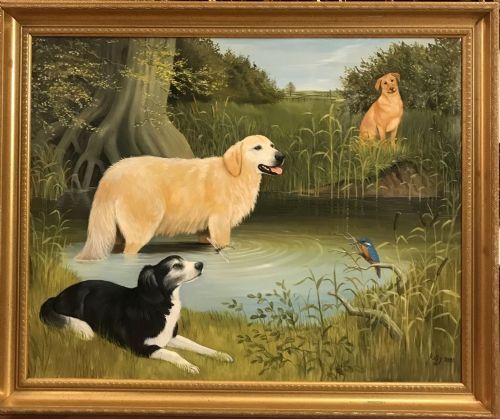
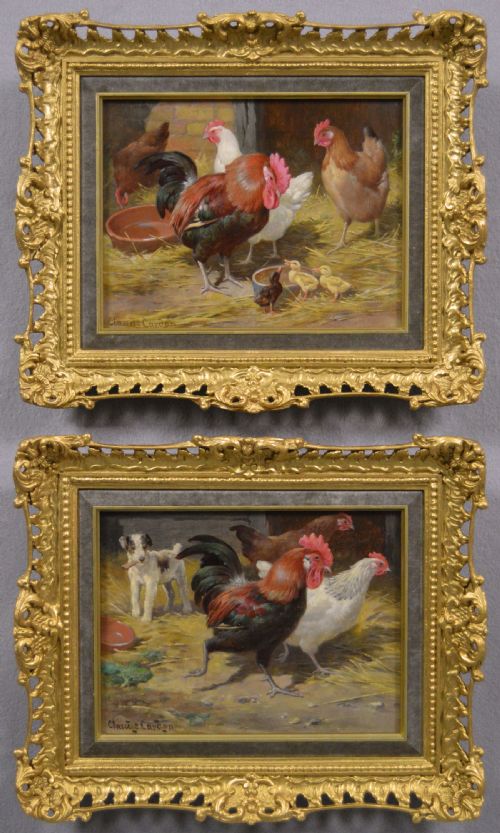


Traditional Dog Artwork
Traditional dog artwork brings the character and loyalty of animals from past centuries into your home through painted and printed portraiture.
Traditional Dog Artwork
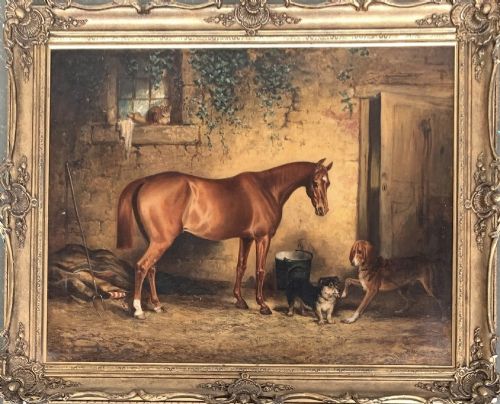
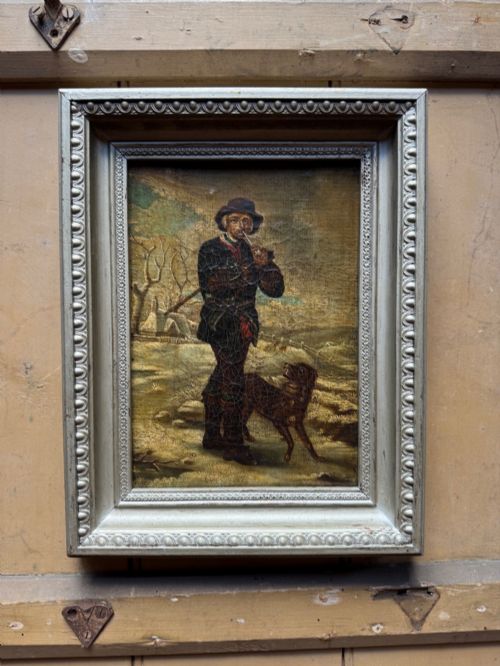
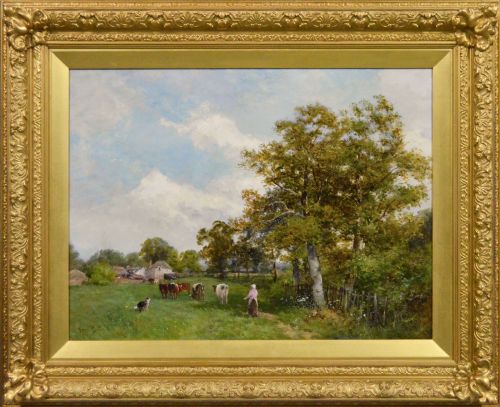
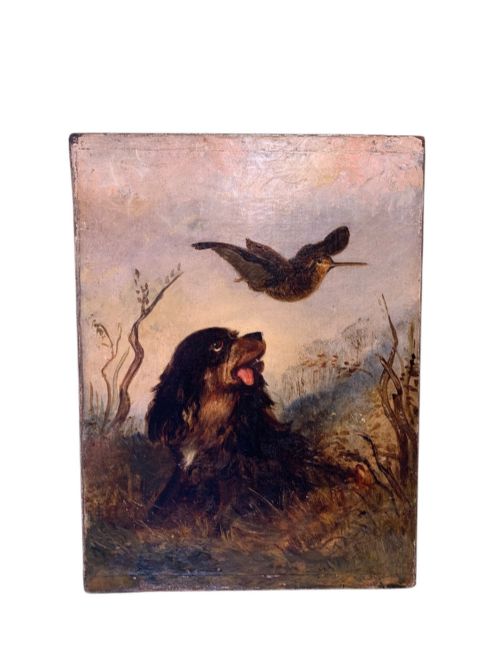
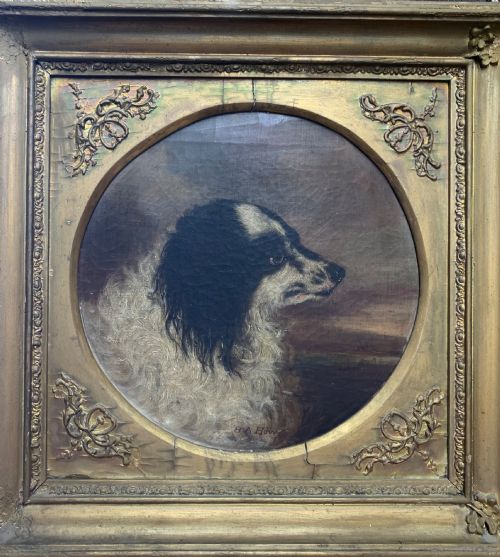
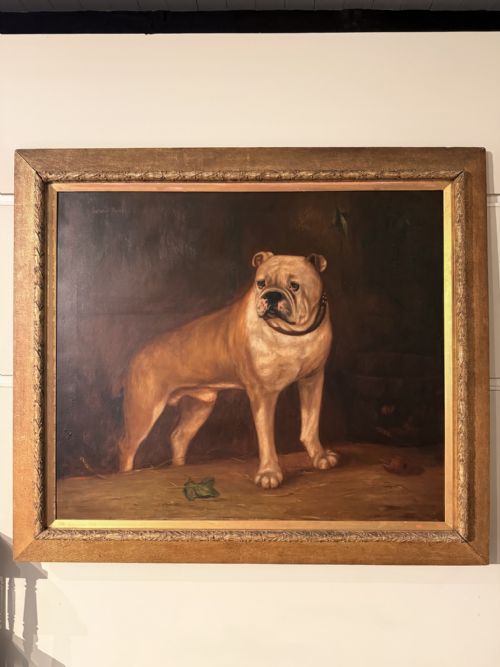
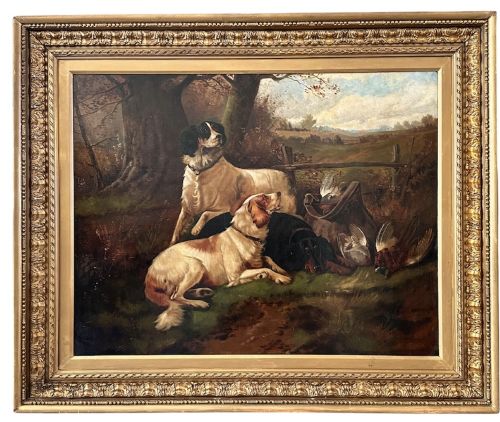
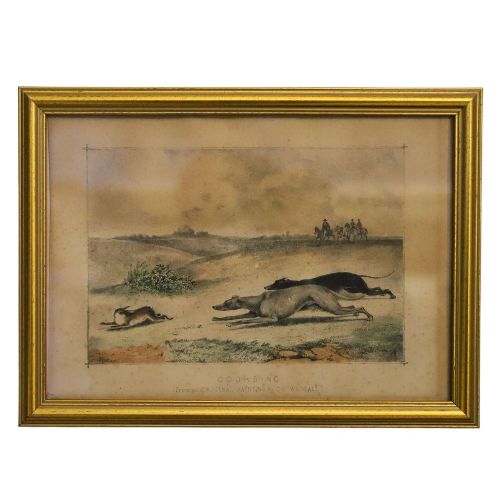
Traditional dog artwork encompasses oil paintings, watercolours, and prints created primarily across the nineteenth and twentieth centuries. These pieces celebrate individual pets, sporting companions, and working hounds in various domestic and rural landscapes.
The selection on this page leans heavily towards nineteenth-century oil paintings on canvas or board. Works range from intimate portraits of named dogs to wider sporting scenes featuring gun dogs and hounds.
How they were made
Artists of these periods utilised oil paint applied to stretched canvas, wooden panels, or heavy board. Many of these works were housed in ornate gilt wood frames that complemented the rich tones of the compositions.
Printmakers employed lithography to reproduce sporting scenes and animal studies for a wider audience. Watercolours on paper also appear, capturing lighter, more fluid moments of animal movement.
Spaniels, terriers, and pugs peer out from these canvases, having successfully diverted attention from their owners for over a century.
What varies in quality
Quality rests upon the artist's ability to render the anatomy, texture, and distinct expression of the animal. Finer works capture the intelligent gaze and individual personality of a specific dog rather than a generic canine shape.
The handling of the surrounding landscape and interior setting also dictates the standard of a piece. Skilled painters integrate the animal naturally into its environment with confident brushwork and balanced light.
Henry Barraud·David Bates·John Sargent Noble·Claude Cardon·Frans Snyders·William Barraud·George E Sharpe·Fannie Moody·Edwin Frederic Holt·Colin Graeme Roe·Henri Schouten·Valentine Thomas Garland·Thomas Blinks·James Ward·Charles Bilger Spalding
The Traditional Dog Artwork Glossary
- Oil on canvas
- Pigments bound in drying oil applied to a woven fabric support stretched across a wooden frame. This remains the primary medium for most nineteenth-century animal portraits.
- Giltwood
- Wood carved and covered with a thin layer of gold leaf or metallic gilt. Frames of this material frequently accompany traditional paintings.
- Lithography
- A planographic printing method using a flat stone or metal plate to reproduce original artworks. It allows for detailed tonal gradations in monochromatic or coloured prints.
- Sporting art
- A genre of painting or drawing dedicated to equestrian subjects, field sports, and hunting dogs. These works record the activities of the landed gentry and their working animals.
- Panel
- A rigid wooden board utilised as a stable support for painting. Artists often preferred panels for smaller cabinet-sized works.
Traditional Dog Artwork: Frequently Asked Questions
What periods do these dog paintings date from?
The available selection spans primarily from the nineteenth century through the mid-twentieth century. Pieces reach back to earlier centuries while also including later Victorian and Edwardian examples.
Most works cluster around the Victorian era, reflecting the period's fondness for animal portraiture and sporting art.
How were these animal portraits originally displayed?
Historic dog paintings typically hung in country houses, estate libraries, and domestic parlours. They honoured prized hunting companions, racing champions, or beloved family pets.
Owners commissioned these works from established animal painters to record the lineage and character of their animals.
Are these works signed by the artists?
Many pieces bear the signature or monogram of the artist, while others remain attributed based on style and subject matter. Named painters in the collection range from noted regional artists to prominent royal exhibitors.
Documentation on the reverse of the canvas or frame often provides further clues regarding the provenance and sitters.