

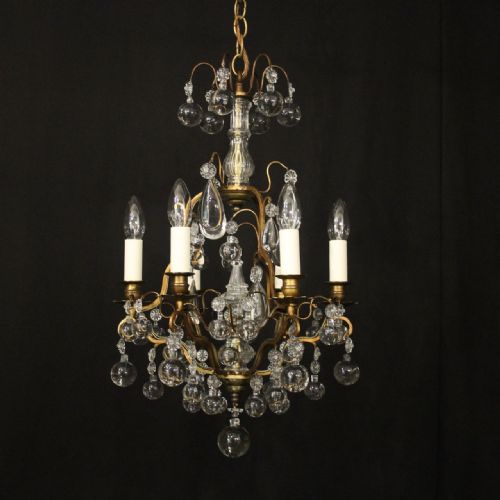

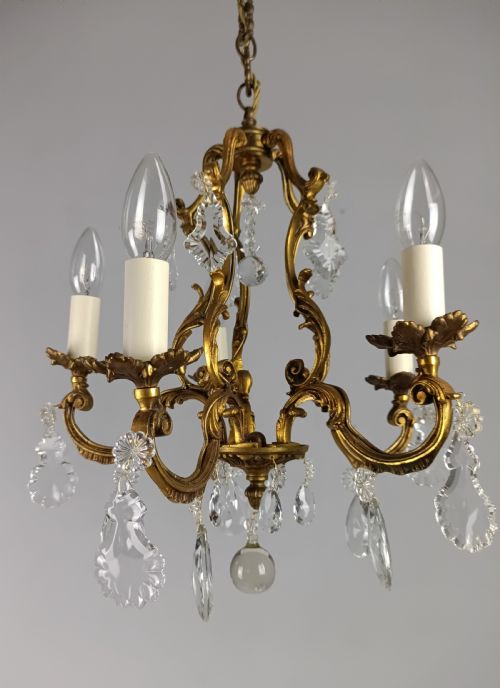
Traditional Crystal Fitting
A traditional crystal fitting is a statement ceiling light that catches the eye and floods a room with refracted light.
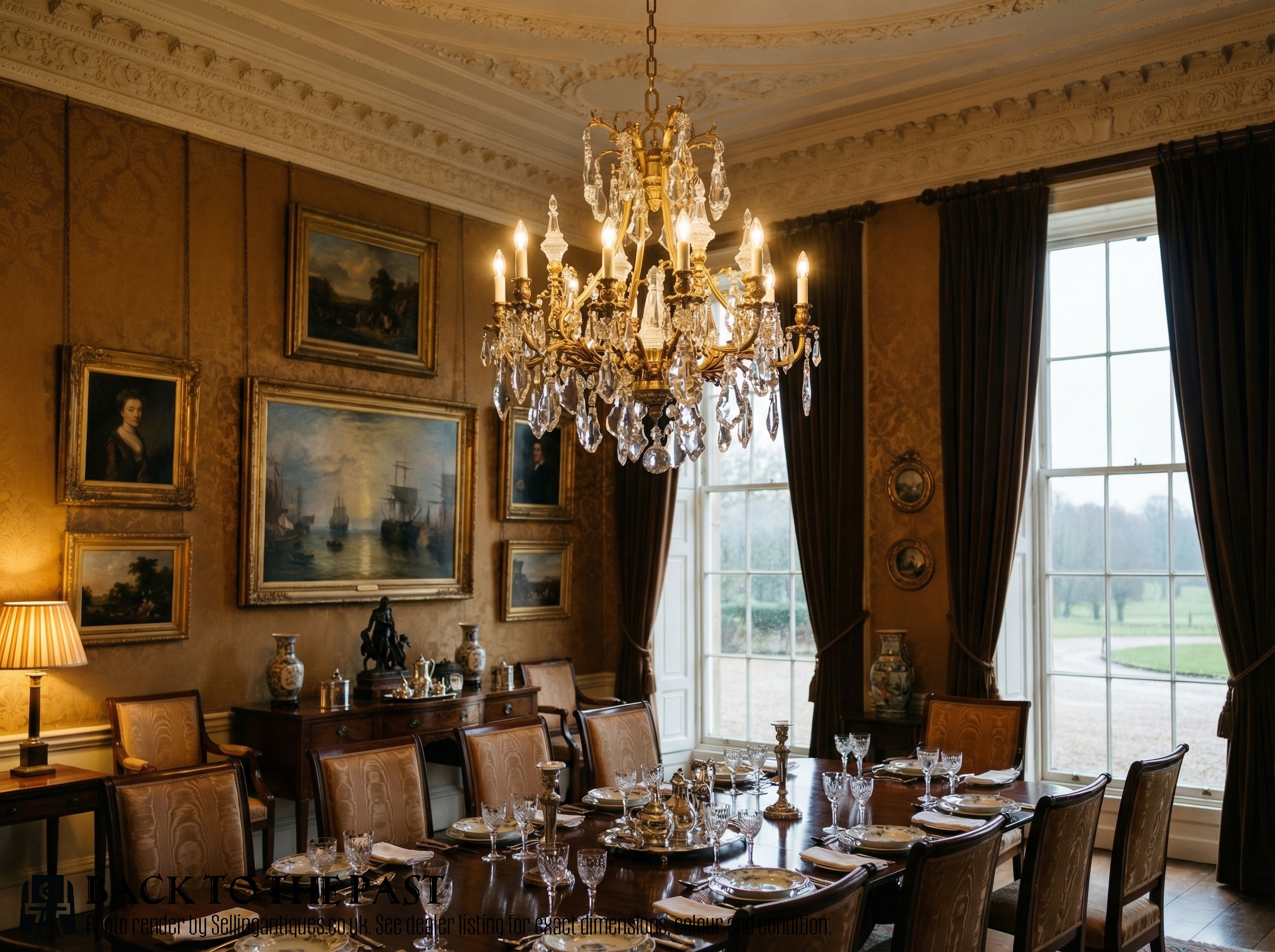
Traditional Crystal Fitting
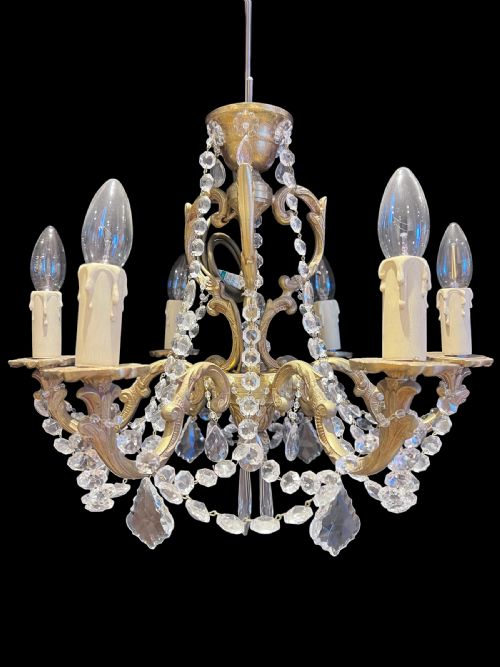
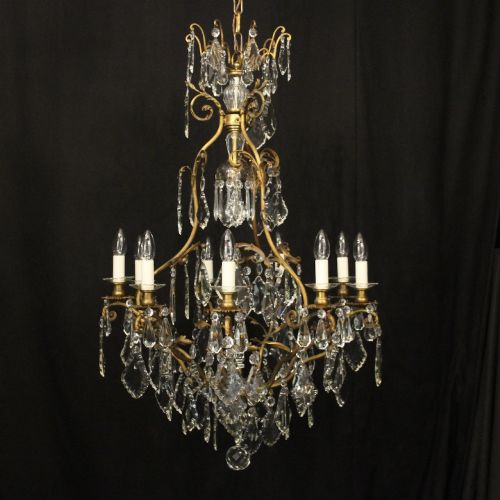
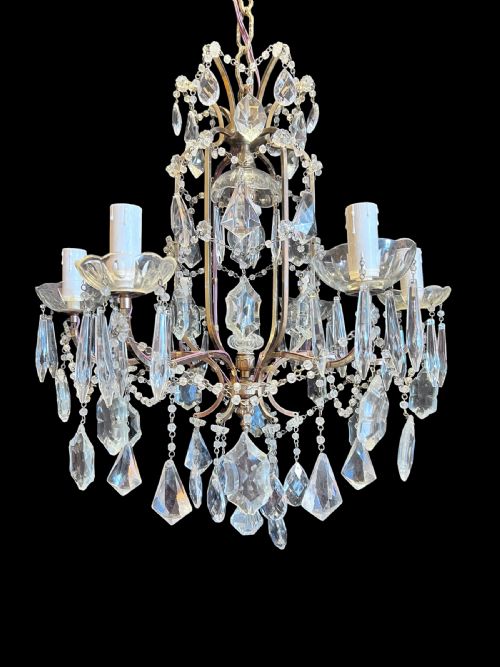
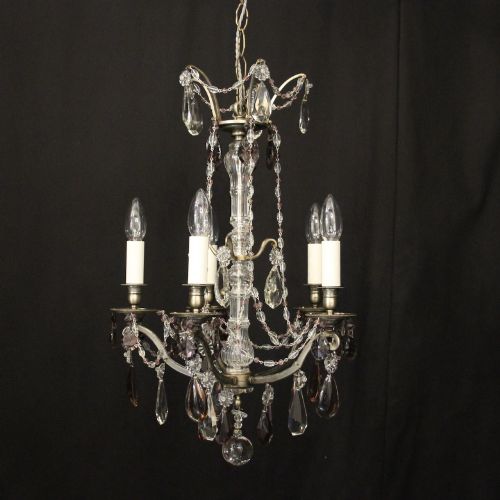
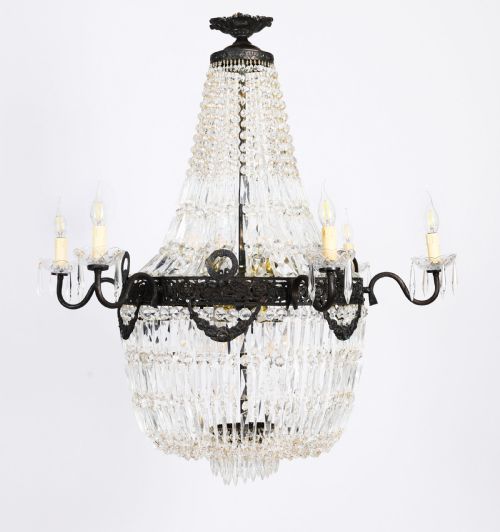
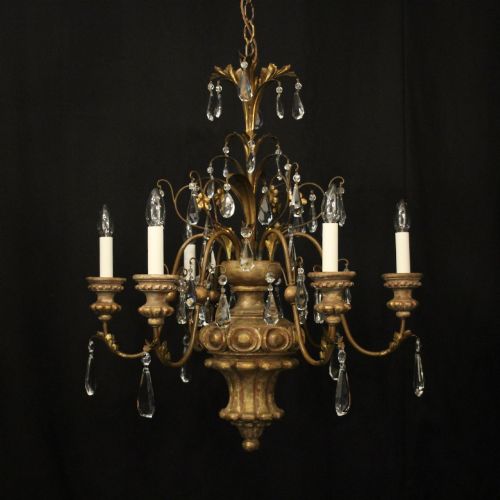
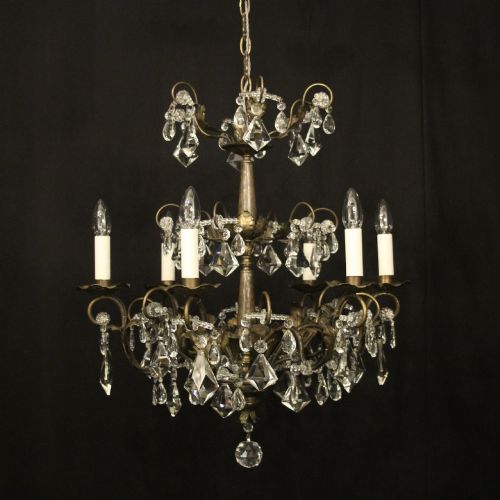
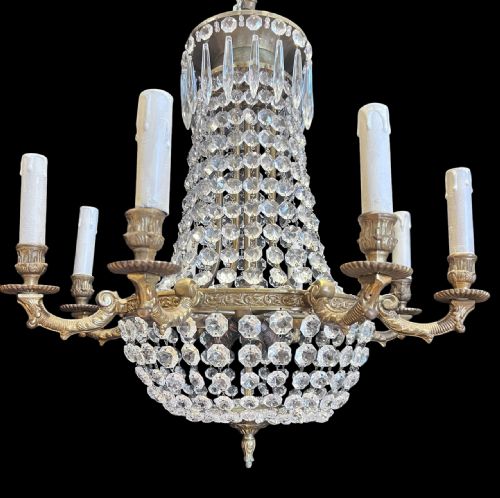
A traditional crystal fitting brings together ornate metal frames and sparkling glass elements to illuminate grand spaces. When searching for a traditional crystal fitting, buyers generally encounter French and Italian designs dating from the late nineteenth century through to the 1930s. These pieces take the form of chandeliers, ceiling lights, and pendant lights suited to formal rooms.
Dating primarily from the 1900s to 1930, these fittings reflect enduring historical revivals spanning Victorian, Edwardian, and earlier classical aesthetics. Metal frames in brass, dark bronze, and gilded finishes support complex cascades of cut glass and crystal drops. Every piece delivers the atmospheric illumination characteristic of early twentieth-century interior lighting.
Materials and construction
Makers constructed the primary framework of these fittings using cast and wrought metals such as brass, bronze, iron, and gilded or silvered variants. These robust armatures support multiple light branches while bearing the considerable weight of suspended glass and crystal elements. Metal components often received decorative surface treatments including gilding, polychrome paint, or patination to complement the chosen style.
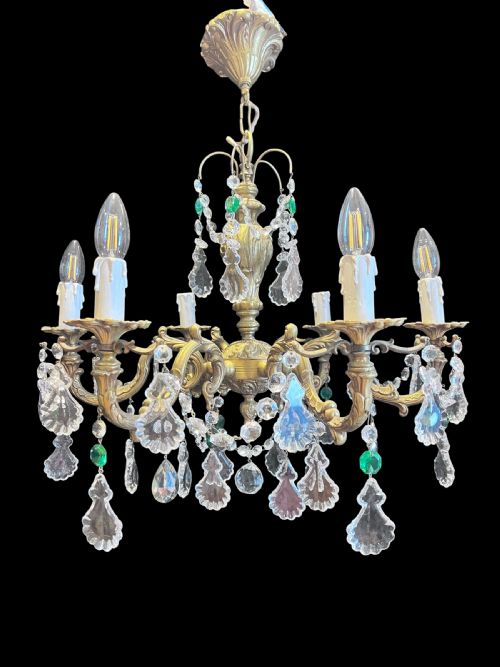
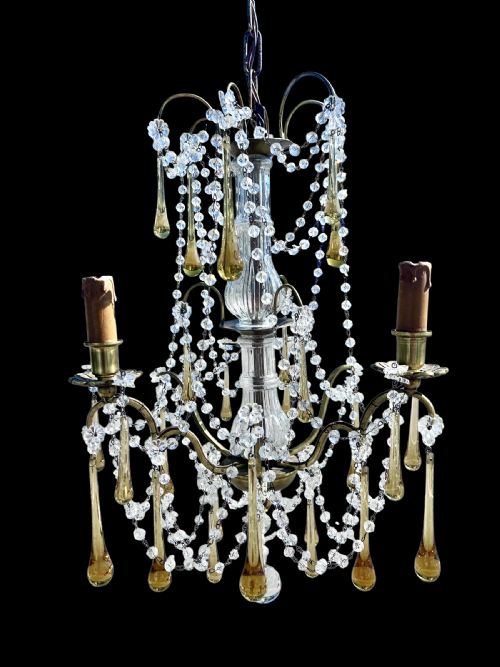
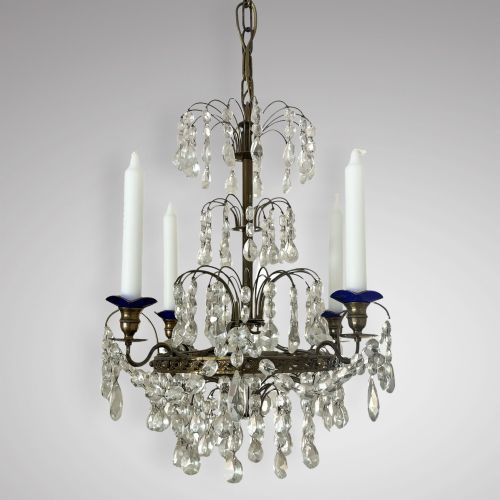
The decorative impact relies on glass and cut crystal shaped into beads, pendants, drops, and beaded arms that catch and scatter light. Individual glass components were wired or pinned to the metal skeleton, forming elaborate tents, cascades, waterfalls, and bag structures. Coloured crystals occasionally provide subtle contrast within the predominantly clear glass compositions.
Some adventurous makers added brightly coloured crystals to traditional brass frames, proving that historical decorators also appreciated a playful twist.
Distinctions in quality
The degree of hand-finishing in the metalwork and the precision of the glass cutting separate exceptional examples from standard production. Superior fittings display crisply cast bronze or brass frames with well-defined chased ornament rather than softly cast or plain metal arms. The optical clarity of the crystal and the complexity of the drop cuts dictate how brilliantly the fixture refracts light.
Scale and structural ambition also define the hierarchy among these chandeliers, from simple single-tier fixtures to multi-tiered installations with dozens of lights. Heavier cast frames allow for larger compositions like grand tent and waterfall configurations that require sophisticated internal engineering. The integration of secondary elements, such as beaded arms and elaborate coronas, points to higher workshop standards.
The Traditional Crystal Fitting Glossary
- Chandelier
- A branched ornamental light fixture suspended from the ceiling. These fixtures hold multiple bulbs or candles across arms arranged in single or multiple tiers.
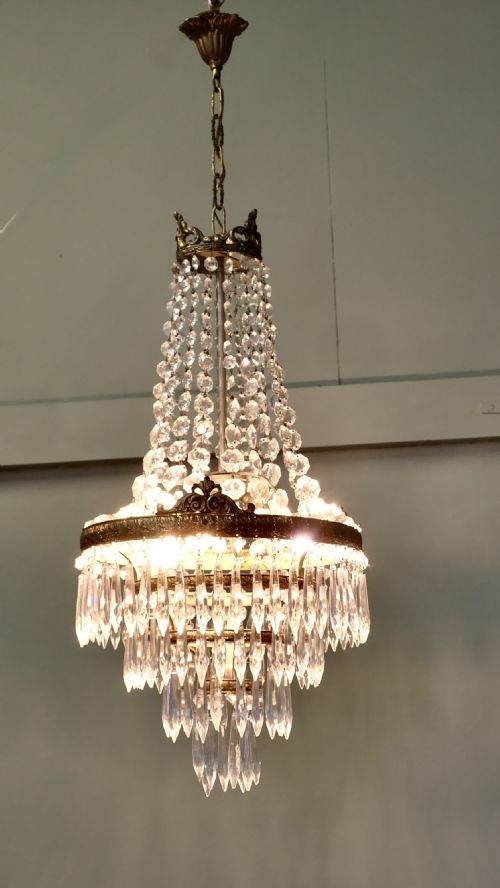
- Tent and waterfall
- A chandelier style featuring a triangular upper canopy of strung beads that flows down into a cascading curtain of crystal drops. This arrangement creates a dense, shimmering profile.
- Bag chandelier
- A lighting form characterised by a flat-backed or basket-shaped lower section filled with closely hung crystal drops. It sits flush or close to the ceiling frame.
- Gilt bronze
- Metalwork coated with a thin layer of gold or gold-coloured alloy to give a rich, permanent metallic sheen. This technique prevents tarnishing and enhances decorative detail.
- Maria Theresa
- A distinct chandelier style named after the Austrian empress, featuring flat metal arms covered with glass plates and secured by rosettes. They often incorporate coloured glass highlights.
Traditional Crystal Fitting: Frequently Asked Questions
How do I choose the right size chandelier?
Consider both the floor area and the ceiling height of the room where the fitting will hang. Larger multi-tier chandeliers require substantial vertical clearance to balance their visual weight properly.
Smaller rooms suit compact pendant lights or bag chandeliers that provide sparkle without dominating the space.
What periods do these chandeliers come from?
The available lighting primarily dates from the late nineteenth century through to the 1930s. This span includes late Victorian, Edwardian, and early twentieth-century interpretations of older French and Italian styles.
Earlier nineteenth-century pieces also appear alongside revivals inspired by Louis XIV, Regency, and Georgian design traditions.
How are crystal fittings wired for modern use?
Most antique fittings are adapted over time to accept standard modern electrical wiring and lamp holders. Professional rewiring ensures the internal channels safely accommodate contemporary electrical standards while preserving the exterior appearance.
It is advisable to have a qualified electrician handle the suspension and connection of heavy metal and crystal fixtures.
What is the difference between glass and crystal?
Traditional crystal contains lead oxide, which increases the weight, density, and refractive index of the material. This high lead content allows crystal drops to scatter light into prismatic rainbow colours.
Standard glass lacks this metallic oxide content, resulting in a lighter weight and less pronounced optical dispersion.