


Traditional Corner Cabinet
A traditional corner cabinet turns awkward domestic angles into useful storage, offering timber craftsmanship from the Georgian and Victorian eras.
Traditional Corner Cabinet
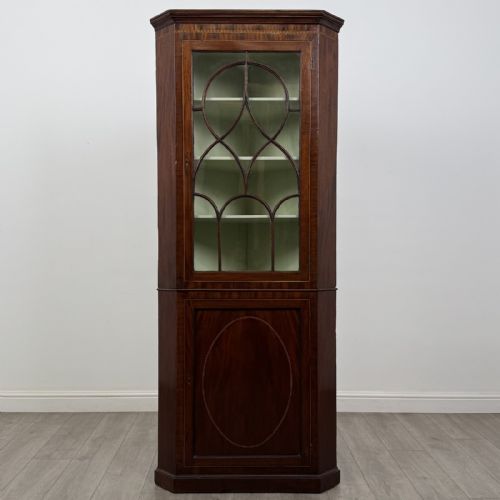
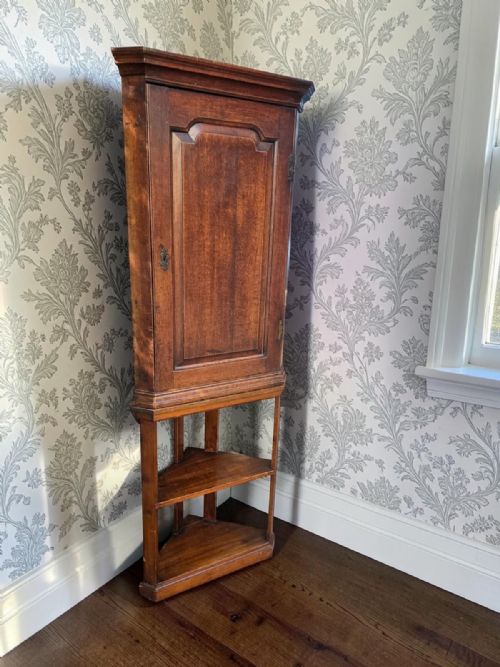
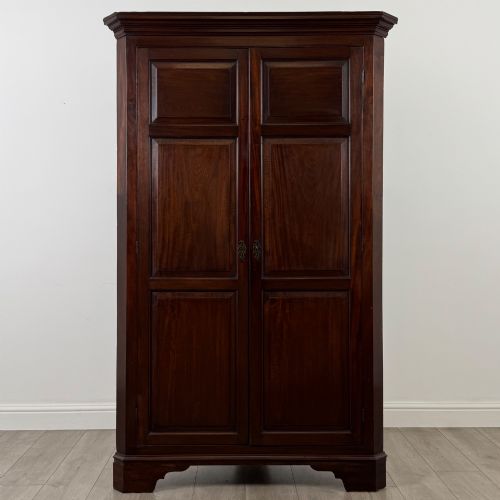
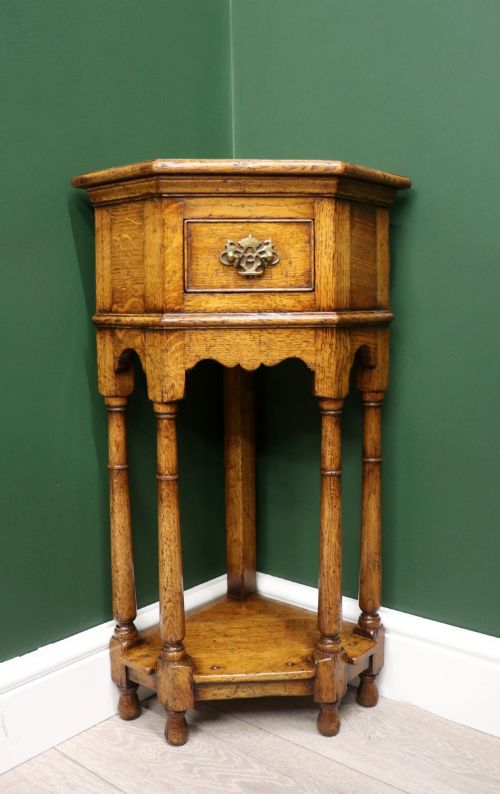
A traditional corner cabinet is a fitted or freestanding storage unit designed specifically to occupy the junction where two walls meet. These pieces make efficient use of unutilised space in parlours, dining rooms and kitchens.
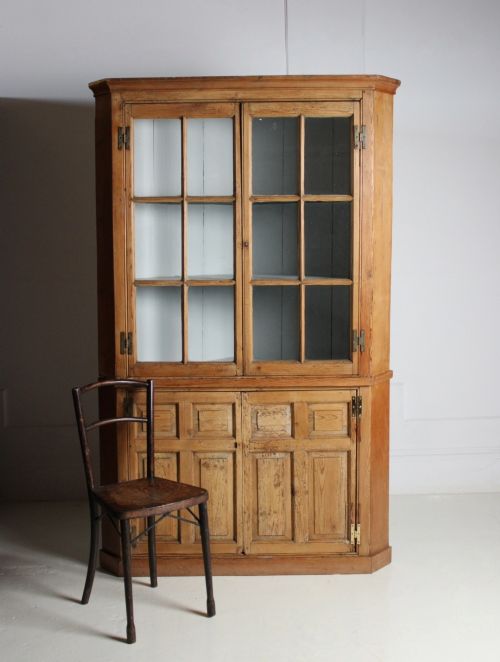
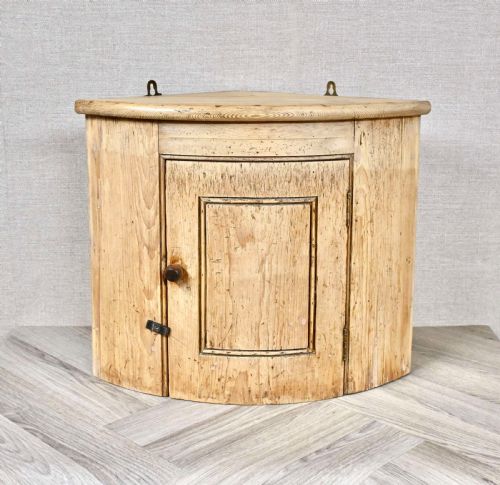
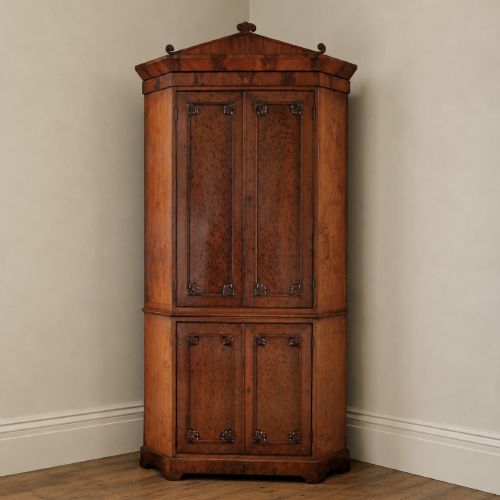
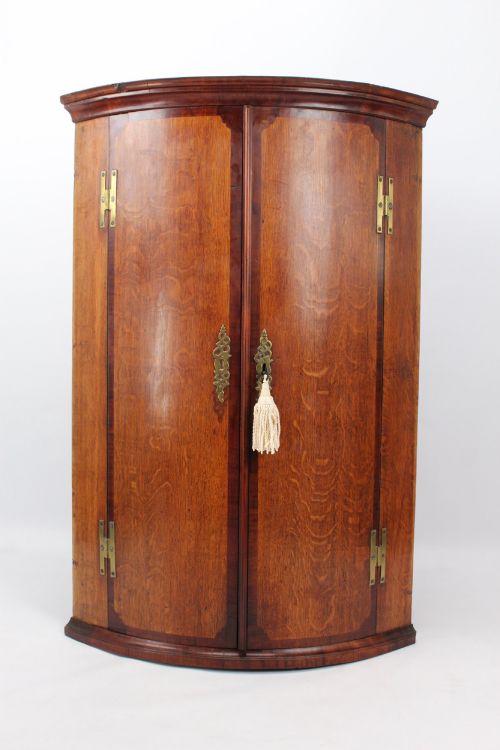
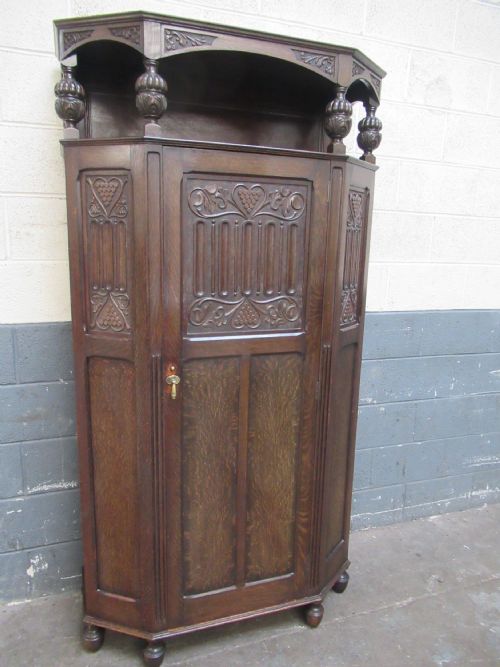
The versions most commonly met on this page date from the Georgian period through to the Victorian era. They appear in both hanging and floor-standing formats, often constructed with single doors or double doors.
How they were made
Cabinet makers built these pieces using solid timbers such as oak, mahogany, and pine, frequently selecting figured grains for prominent surfaces. Panel construction allowed the wood to expand and contract naturally with changes in room humidity.
Joinery techniques relied on traditional methods like mortise and tenon frames, dovetail joints in drawer construction, and pegged joints. Brass hinges, escutcheons, and working iron or brass locks secured the doors.
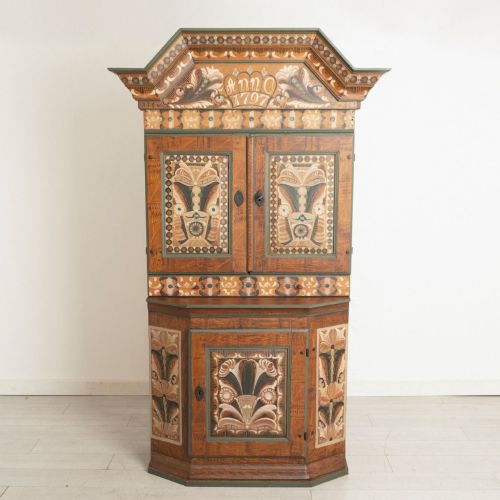
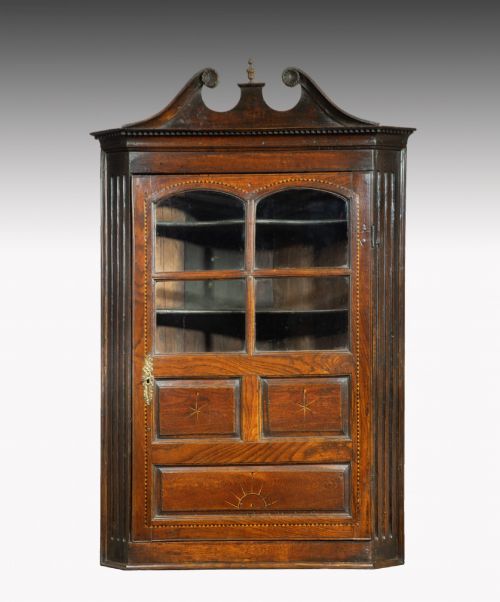
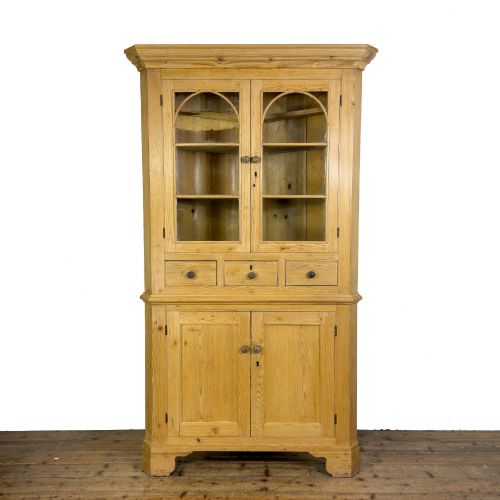
Surfaces received various finishes including clear polish, hand-painting, or red walnut staining. Glazed upper sections utilised wooden glazing bars to hold individual panes of glass.
Listings feature traditional corner cabinets spanning the Georgian, Victorian, and Edwardian periods, constructed primarily in oak, mahogany, and pine.
What varies in quality
The distinction between standard utility cupboards and finer pieces lies in the selection of timber and the sophistication of the joinery. Cabinets featuring figured mahogany, crossbanding, or fine inlay work represent higher levels of workshop skill.
Proportion and architectural detail separate simpler country pieces from refined urban cabinet-making. Mouldings, shaped shelving interiors, and well-executed paneling demonstrate greater care in construction.
The Traditional Corner Cabinet Glossary
- Bow front
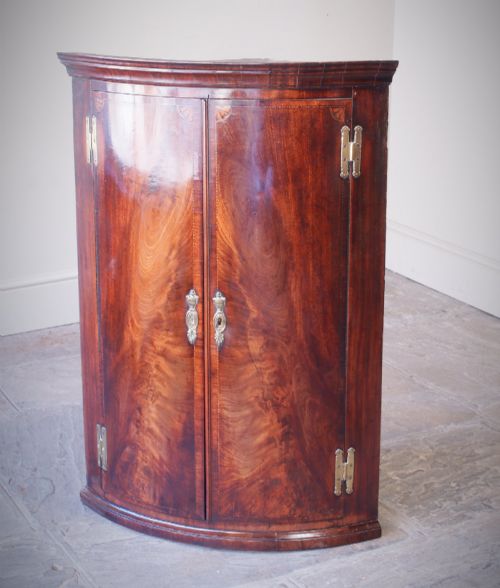
- A convex curved cabinet front that swells outward from the corners. This shape gained popularity during the Georgian period.
- Corner cupboard
- An alternative term for a storage unit designed to fit into a room angle. These can be wall-hanging or floor-standing.
- Glazed
- Fitted with transparent glass panes within the door frame. This allowed the display of porcelain and silverware.
Traditional Corner Cabinet: Frequently Asked Questions
Where should I place a corner cabinet?
These cabinets suit empty room junctions in dining spaces, hallways, or living areas. They make efficient use of dead space while introducing period character.
Ensure the wall angle matches the right-angled or splayed construction of the specific piece before positioning it.
How do I secure a hanging corner cabinet?
Hanging examples require sturdy fixings screwed directly into wall studs or masonry. The weight of solid timber and contents demands robust support.
Professional installation prevents movement and protects historical woodwork from undue stress.
Are these cabinets suitable for small rooms?
Their triangular footprint allows them to tuck into tight spaces where rectangular furniture would block circulation. They draw the eye upward and utilise vertical dimensions.
Selecting a wall-hanging version further preserves floor space underneath the unit.
How do I care for antique timber surfaces?
Maintain the wood by applying natural beeswax periodically and buffing with a soft cloth. Avoid placing cabinets near direct heat sources or strong sunlight.
Stable indoor humidity prevents the solid oak or mahogany panels from splitting over time.