


Traditional Coat Rack Wall
These traditional coat rack wall fixtures bring practical hanging space and period character into a hallway or boot room.
Traditional Coat Rack Wall
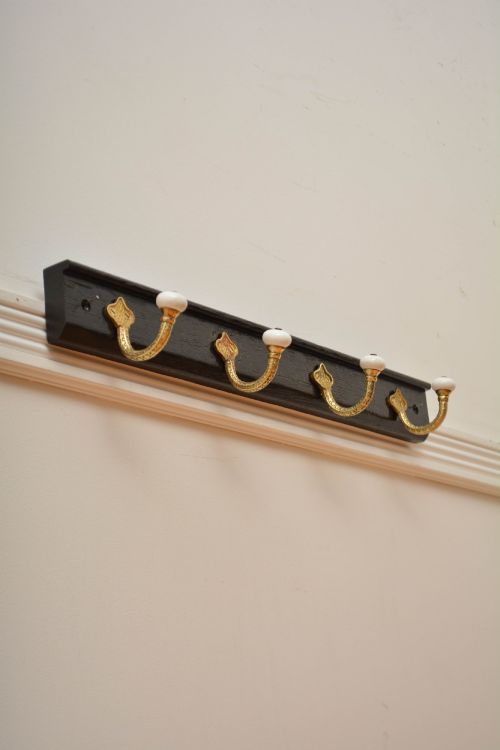
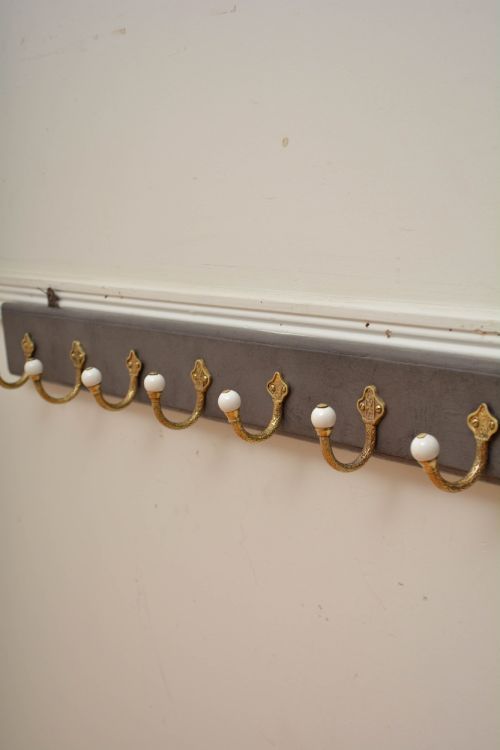
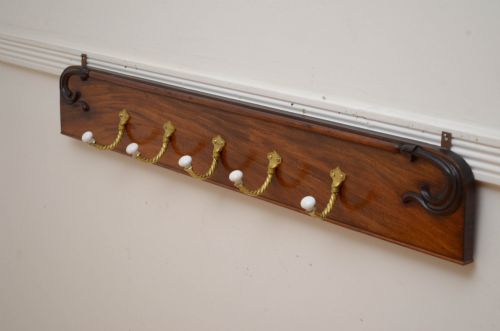
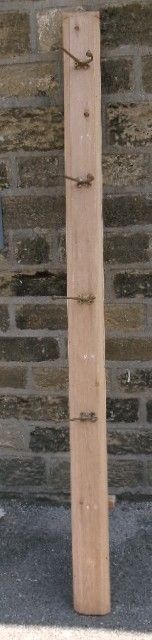
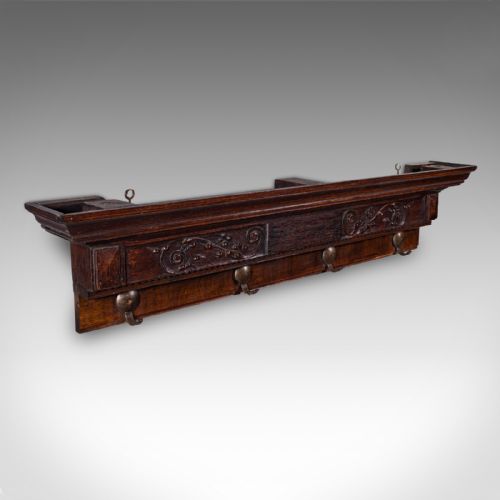
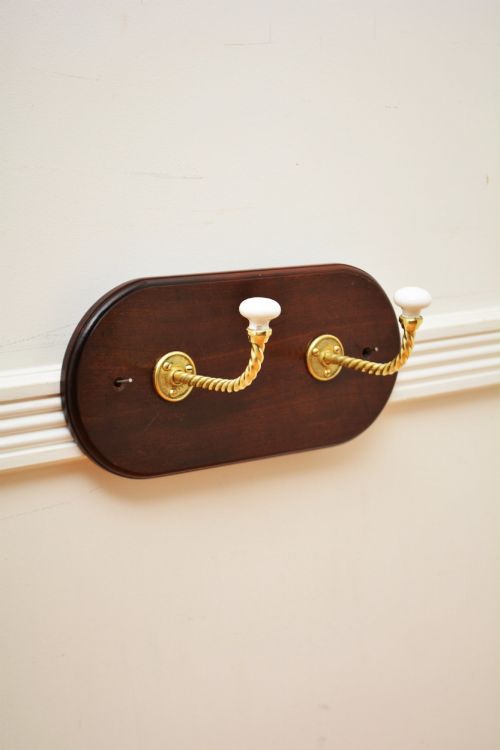
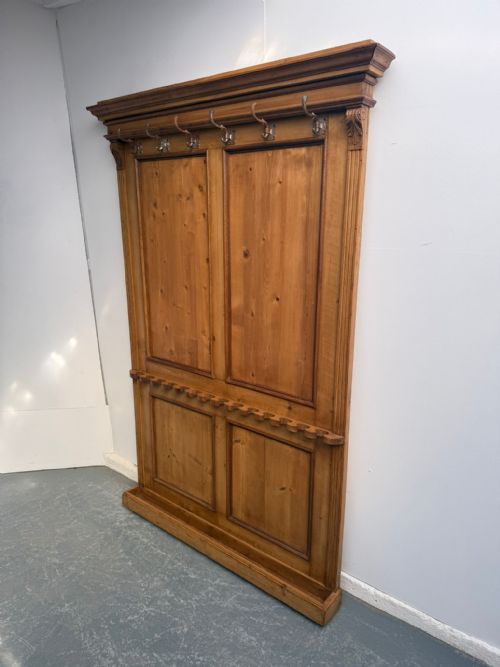
A traditional coat rack wall piece combines a wooden backboard with fitted metal hooks designed for hanging garments in a hallway or entrance. Buyers searching for a traditional coat rack wall often find mounted timber boards fitted with brass, iron, or ceramic hooks.
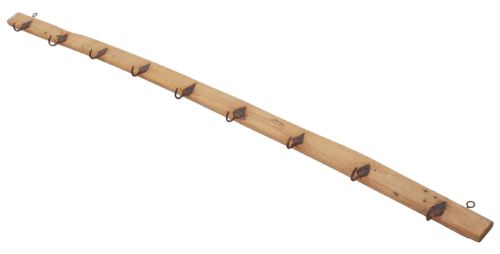
The selections available span multiple periods including Victorian, Edwardian, and Georgian eras, along with earlier oak hanging racks and kitchen game hook racks. Pine, mahogany, and oak serve as the primary timber backings supporting the metal hardware.
Construction and materials
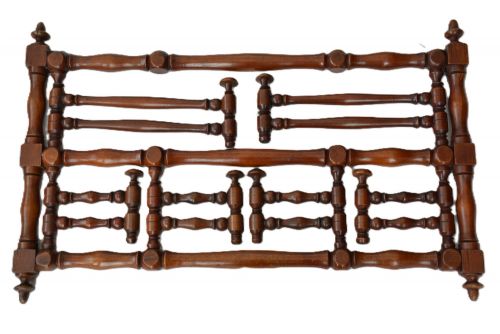
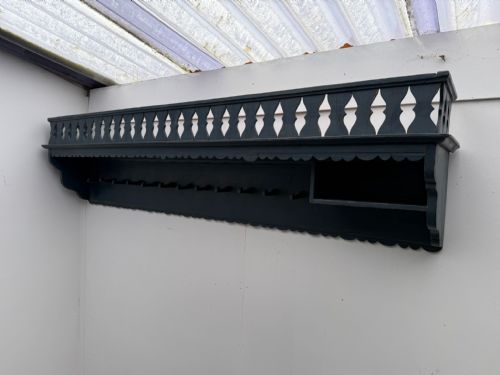
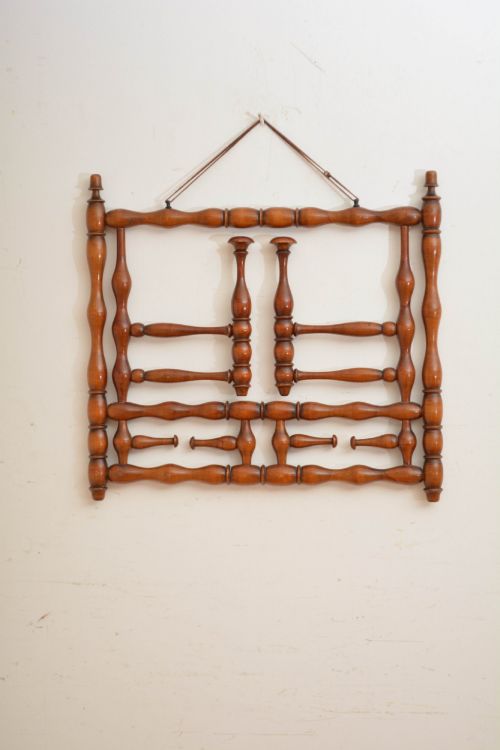
Carpenters utilised solid hardwoods and softwoods such as oak, mahogany, and pine to construct the supporting backboards, occasionally applying paint finishes like blue to the timber. Selected examples incorporate bentwood techniques or twisted rope details carved directly into the wooden structure.
Metalworkers cast brass and iron to form sturdy coat and hat hooks, frequently pairing them with ceramic inserts or white porcelain points. These hooks are screwed or secured directly into the timber backboard to support the weight of heavy garments.
Kitchen game hooks once held dinner while the butler looked away.
Factors of quality
The standard of a piece rests on the integrity of the timber backboard and the original matching of the metal hooks. Solid hardwoods like mahogany and oak generally indicate a finer construction than basic utility boards.
Detailing such as cast brass ornamentation, ceramic button points, and ebonised finishes distinguish superior examples from plain utilitarian workshop pieces.
The Traditional Coat Rack Wall Glossary
- Backboard
- The horizontal timber plank or panel that mounts to the wall and anchors the individual hooks. This wooden foundation provides structural stability for hanging heavy coats.
- Bentwood
- Wood softened by steam and bent into curved structural forms. This technique appears on wall-standing and hanging items.
- Ebonised
- Wood finished with a dark stain or polish to resemble ebony. This treatment gives pine or oak a formal black appearance.
- Game hook
- A rotating or fixed metal hook historically used in kitchens or larders for hanging game birds or meat. These utilitarian fixtures often feature on older rustic racks.
- Hat tree
- A freestanding or wall-mounted framework incorporating multiple tiers of hooks for hats and coats. These fixtures maximise hanging capacity in narrow hallways.
Traditional Coat Rack Wall: Frequently Asked Questions
How do I mount a wall rack securely?
Most traditional coat rack wall boards require direct fixing into wall studs or solid masonry using appropriate screws and wall plugs. Because these timber boards carry the weight of heavy coats, secure anchoring is essential.
Check the spacing of the pre-drilled holes or screw points on the backboard to align with your wall supports. Using sturdy fixings ensures the rack remains stable under daily use.
What woods were commonly used?
Maker workshops utilised local and imported timbers depending on the period and the intended formality of the piece. Pine and oak appear frequently in country and Victorian designs, while mahogany was chosen for more formal settings.
Painted pine surfaces also occur, particularly in regional pieces such as Hungarian country items. The choice of wood generally reflects the domestic architecture of the era.
How do I date a coat rack?
Dating relies on examining the timber preparation, screw types, and the style of the brass or ceramic hooks. Victorian and Edwardian examples often feature turned wooden edges or cast iron brackets characteristic of late nineteenth-century manufacture.
Earlier eighteenth-century pieces display simpler board construction and hand-forged iron hooks. Comparing the hardware style with known period examples helps narrow down the origin.
Are the hooks usually original?
Many surviving pieces retain their original brass or ceramic hooks, fastened with slotted screws. Replacement hooks do occur frequently on older wooden backboards due to centuries of heavy use.
Look for consistent wear patinas across both the timber backboard and the metal hooks. Matching screw slots and uniform patination indicate original assembly.