
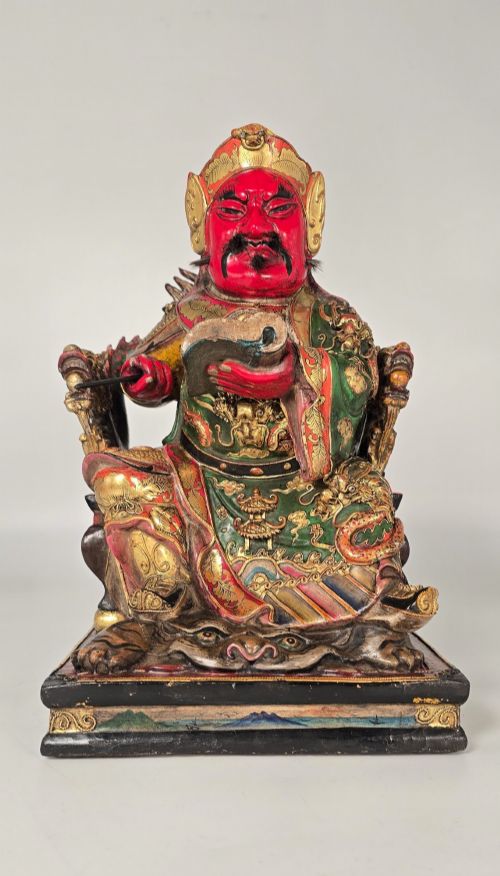


Traditional Chinese Figure Carving
Traditional chinese figure carving brings tangible figures from folklore and daily life into your room through skilled handwork.
Traditional Chinese Figure Carving
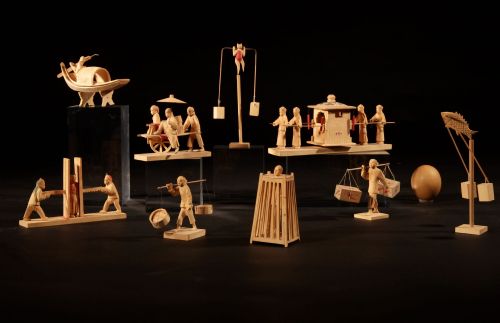
Traditional chinese figure carving encompasses sculptural pieces representing deities, scholars, immortals, and labourers fashioned from various organic and mineral substances. These objects range from freestanding sculptures and temple guards to intricate panels and wall plaques depicting narrative scenes.
The versions you meet most frequently on this page date from the eighteenth century through to the early twentieth century, spanning the Qing period and regional folk traditions. Common subjects include Daoist immortals, Buddhist figures, fishermen, and animals rendered with distinct cultural attributes.
Materials and construction methods
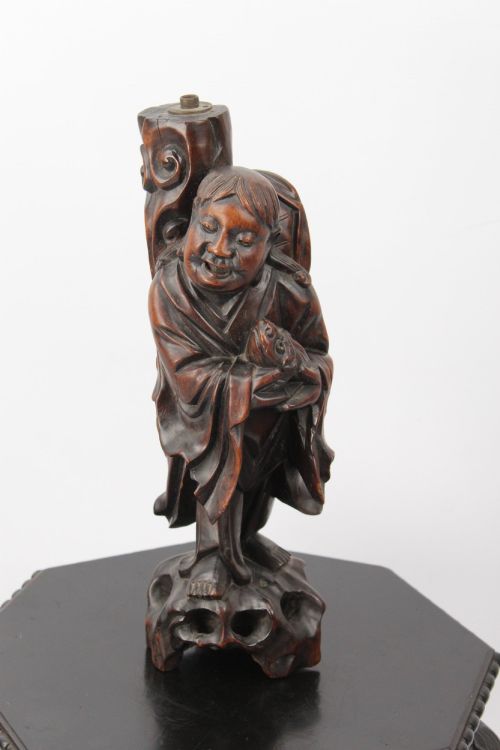
Artisans utilised hardwoods, root wood, bamboo, soapstone, and jade, shaping the raw material to follow its natural grain and contours. Root wood and gnarled branches were cleverly adapted to form the bodies of figures and animals, maintaining the organic shape of the medium.
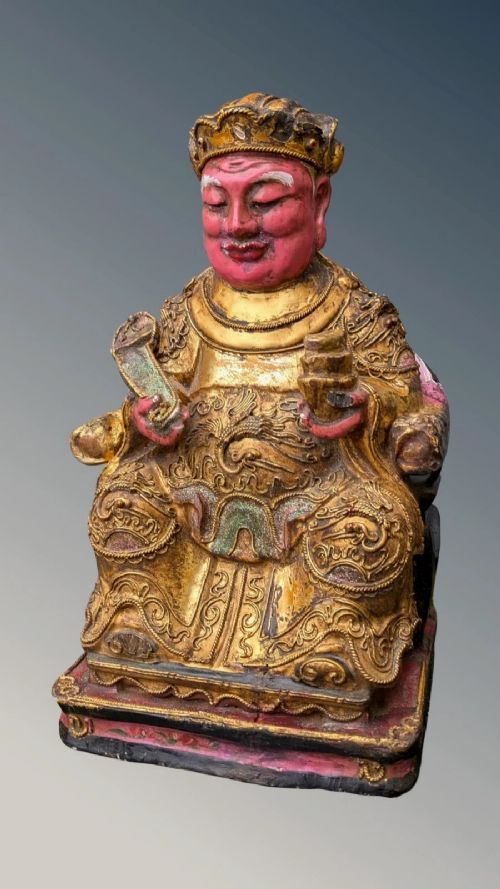
Many wooden pieces received applications of lacquer, gold leaf, gesso, or polychrome paint to add colour and surface detail. Stone carvings relied on precise reduction of soapstone or hardstone to define robes, facial expressions, and accompanying objects.
Listings feature items from the eighteenth century, the nineteenth century, and the early twentieth century, utilising materials such as soapstone, hardwood, root wood, and jade.
Evaluating sculptural distinction
The depth of relief and the integration of natural irregularities in the material separate standard workshop output from exceptional sculpture. Surface finishes like hand-painted polychromy and layered lacquer also distinguish finer examples.
The Traditional Chinese Figure Carving Glossary
- Qing Dynasty
- The final imperial dynasty of China, lasting from 1644 until 1912. Many wooden and stone carvings on this page originate from this extended period of artistic production.
- Soapstone
- A relative soft metamorphic rock composed mainly of talc, frequently utilised for small statues and animal carvings due to its ease of carving.
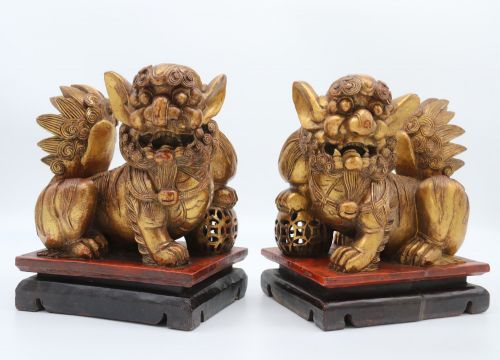
- Dog of Fo
- Traditional guardian figures resembling lions, commonly paired in stone, wood, or ceramic to protect thresholds and sacred spaces.
- Root wood
- The gnarled root system of a tree utilised by carvers who incorporated the natural twists and knots into the design of figures and animals.
- Polychrome
- Decorated in multiple colours, often applied as paint over gesso or wood to highlight the details of garments and faces.
Traditional Chinese Figure Carving: Frequently Asked Questions
What subjects appear in these carvings?
Subjects include Daoist and Buddhist immortals, scholars, fishermen, and mythical animals such as Foo dogs. Figures often carry symbolic objects or interact with children and animals.
Narrative scenes also show daily life and traditional folklore from various Chinese regions across multiple centuries.
Where should I place a statue?
These sculptures suit tabletops, shelves, and dedicated display cabinets where adequate lighting reveals the carved details. Hardwood and stone pieces require stable indoor environments away from direct heat sources.
Smaller figures and panels fit easily into existing room layouts alongside other decorative objects.
How do I care for wooden figures?
Dust wood and lacquer gently with a dry, soft cloth to prevent particulate accumulation. Avoid liquid cleaners and excessive moisture, which can damage lacquer, gold leaf, and gesso.
Maintaining stable humidity protects organic materials like hardwood and root wood from splitting.
How can I tell the period?
Dating relies on stylistic markers associated with the Qing Dynasty, tool marks left by the carver, and the natural ageing of materials like hardwood, soapstone, and lacquer. Examining the wear patterns on the base provides further clues.
Comparing construction techniques helps distinguish nineteenth-century examples from earlier work.