

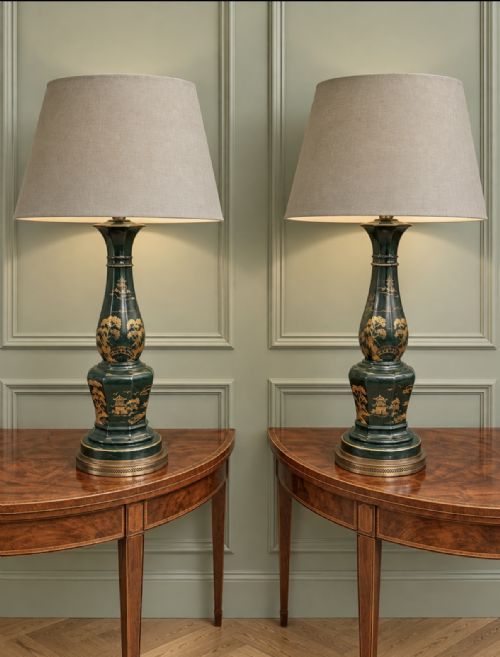


Traditional Ceramic Lamp Base
These traditional ceramic lamp base examples bring centuries of hand-painted porcelain and earthenware into domestic lighting.
Traditional Ceramic Lamp Base
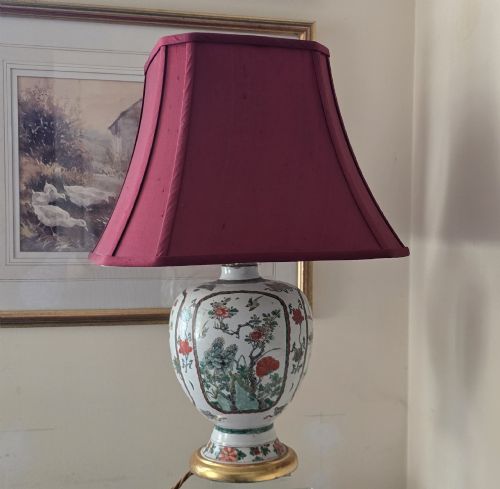
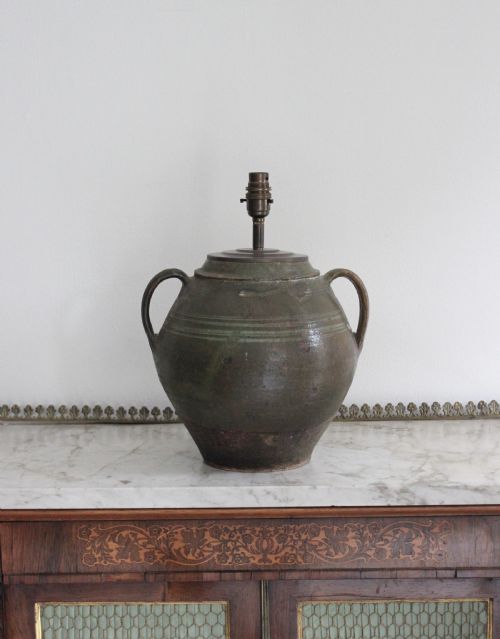
A traditional ceramic lamp base transforms historic porcelain, earthenware, and glazed pottery vessels into functional table lighting. These objects draw heavily from 18th Century and 19th Century production, featuring forms such as ginger jars, baluster vases, and rouleau bodies.
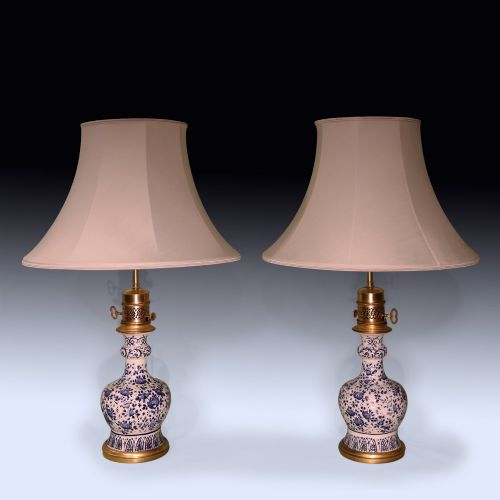
Buyers will most frequently encounter Chinese export styles, including blue and white decoration, Famille Verte, Famille Rose, and Chinoiserie motifs. Japanese Arita Imari and Satsuma porcelain, alongside Dutch Delftware, also appear frequently across the selection.
The corpus spans pieces from the 18th Century, Victorian era, and early 20th Century up to 1920. Many of these items began their lives as vases or jars before conversion into lamps.
Materials and construction methods
Makers utilised ceramic, porcelain, and earthenware bodies as the primary structural element for each lamp. Potters shaped these materials on wheels or within moulds to form traditional vase and jar profiles before applying pigments.
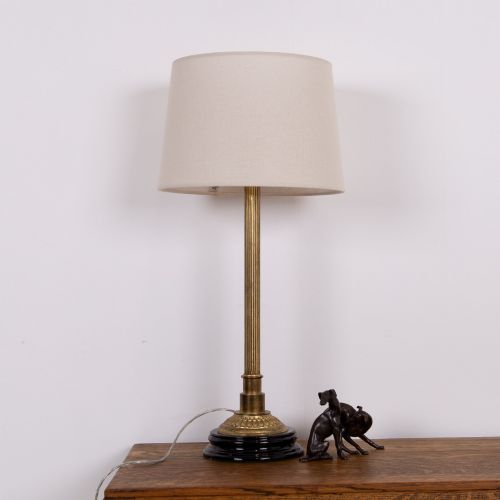
Glazes were hand-painted onto the ceramic surface, often incorporating intricate Chinoiserie or floral patterns, prior to high-temperature kiln firing. Artisans frequently mounted these ceramic bodies onto brass bases to provide stability and additional height.
Conversion into lighting typically involves drilling the original ceramic vessel or fitting hardware to the neck. Fabric and silk shades often complement the mounted porcelain forms.
Traditional Ceramic Lamp Base Retail Price Guide 2026
Typical asking prices for traditional ceramic lamp base among the pieces listed under this phrase on Sellingantiques today, from the lower quarter to the upper quarter. They describe what is for sale here now, not the wider market.
Several monumental ginger jars escaped the pantry entirely to spend their retirement illuminating sideboards as high-voltage aristocrats.
Variations in quality and execution
The finesse of the hand-painted decoration separates standard production from superior examples. Finely detailed brushwork in Famille Rose or blue and white pigments indicates a higher tier of historic craftsmanship.
The integrity of the original ceramic body and the precision of any brass mounts influence the overall standard. Intact antique bodies that retain their rich glaze colour without heavy restoration sit at the upper end of the range.
The Traditional Ceramic Lamp Base Glossary
- Famille Rose
- A palette of opaque enamel colours dominated by pink, introduced in Chinese ceramics during the Qing Dynasty. This style appears frequently on 19th Century lamp conversions.
- Arita Imari
- Japanese porcelain decorated in underglaze blue and overglaze red, gold, and black. Pieces from this tradition were widely exported to Europe.
- Celadon
- A pale green jade-like glaze applied to porcelain or stoneware bodies. It is seen on monumental 19th Century vessels adapted into lighting.
- Baluster
- A vase form with a rounded body that tapers towards a narrow neck, resembling an architectural column. This silhouette is common among the listed lamps.
- Delftware
- Tin-glazed earthenware produced in the Netherlands, typically featuring blue and white designs inspired by imported Asian ceramics. 18th Century examples are recorded in the inventory.
Traditional Ceramic Lamp Base: Frequently Asked Questions
How do I date a ceramic lamp base?
Dating relies upon examining the ceramic body, glaze characteristics, and any painted motifs typical of specific periods like the 18th Century or Victorian era. Stylistic clues such as Qing Dynasty influence or Japanese Satsuma design help narrow the timeframe.
Hardware additions and mounting styles also provide context, though many vessels were converted from vases long after their initial manufacture.
Were these always lamps?
Most of these pieces started as decorative vases, ginger jars, or storage vessels before being converted into table lamps. Artisans adapted existing historic ceramics to serve contemporary lighting needs.
This practice preserves centuries-old porcelain and earthenware by giving them a functional role in modern rooms.
How do I clean a ceramic lamp base?
Maintenance requires gentle dusting with a soft, dry cloth to protect the historic glaze and hand-painted details. Avoid harsh chemical cleaners that might damage antique porcelain or earthenware surfaces.
Brass mounts can be polished carefully while ensuring no moisture reaches the wiring components.
What styles are most common?
Chinese export porcelain dominates the selection, particularly blue and white designs, Famille Rose, and Chinoiserie patterns. Pieces reflecting Japanese Arita Imari and Dutch Delftware traditions also feature prominently.
Forms range from simple glazed pottery vase shapes to monumental celadon jars.