

Traditional Carved Settle
A traditional carved settle offers high-backed wooden seating with built-in storage, designed to keep draughts away from the hearth in historic homes.
Traditional Carved Settle
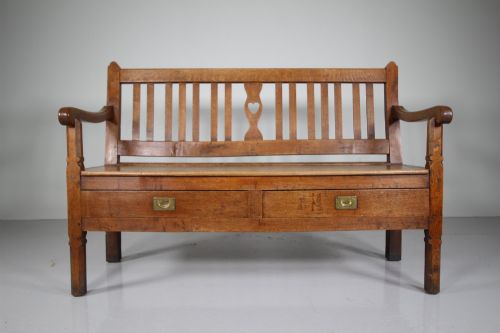
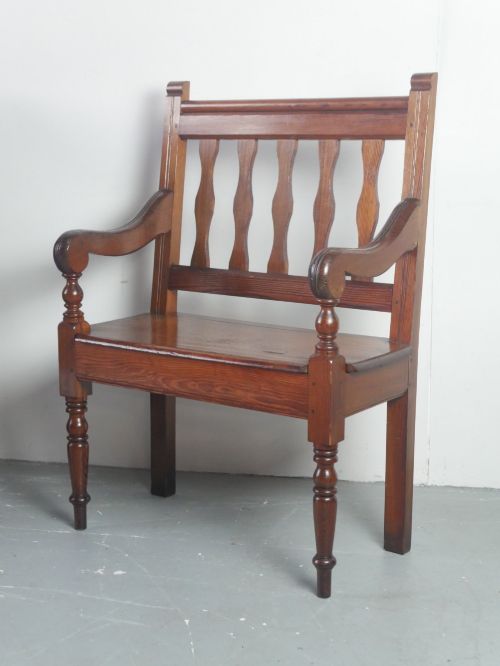
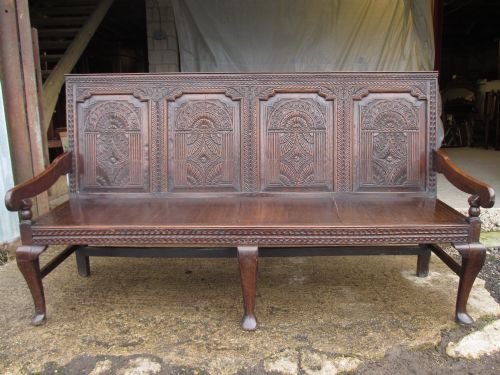
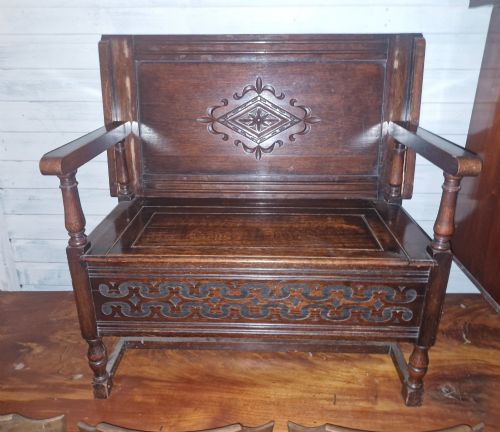
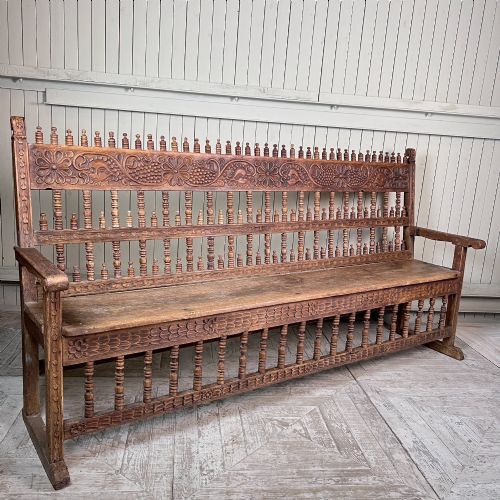
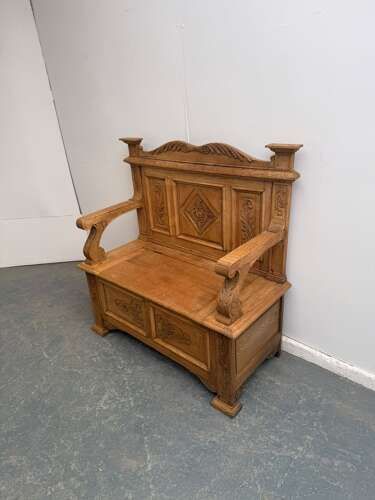
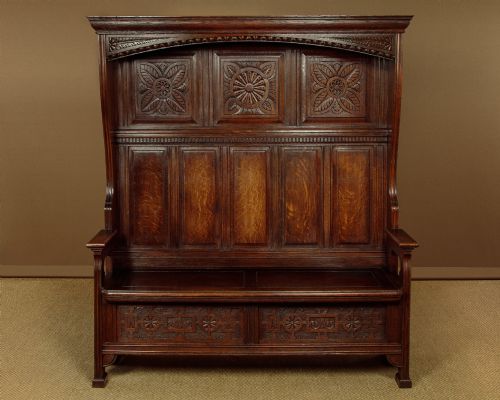
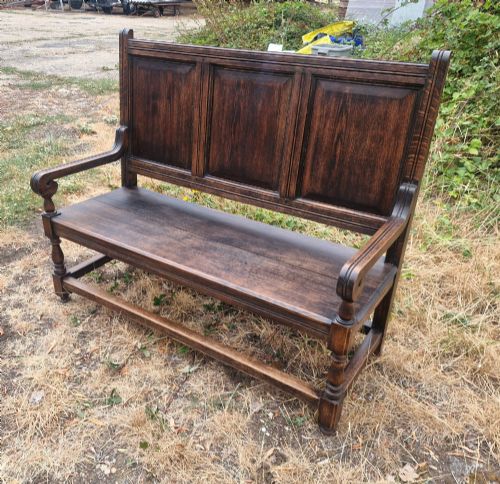
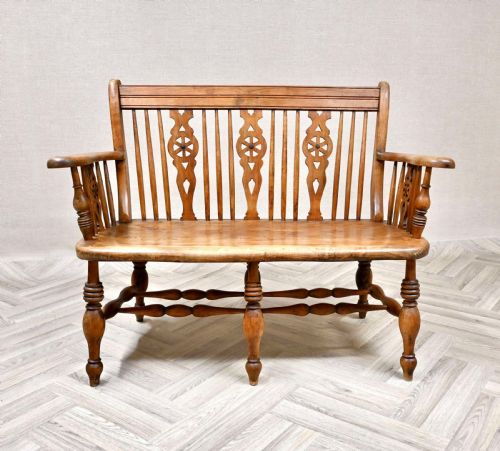
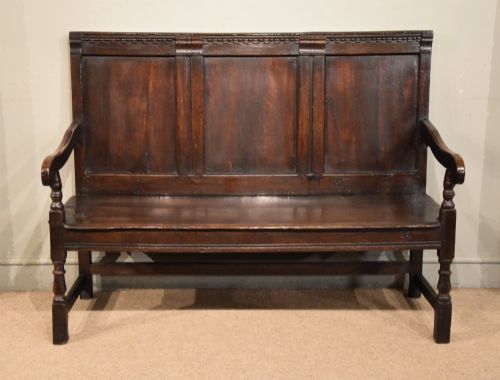
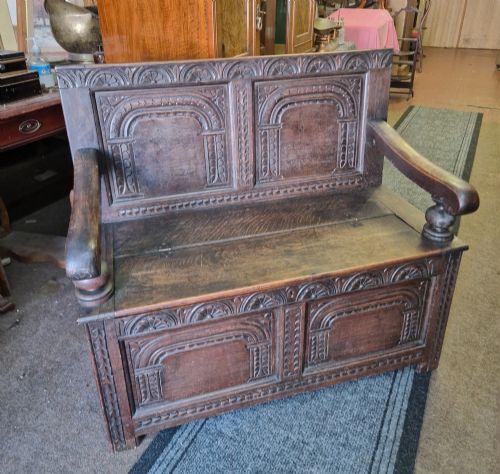
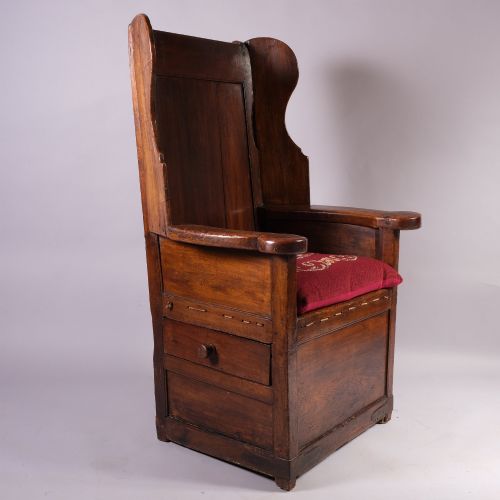
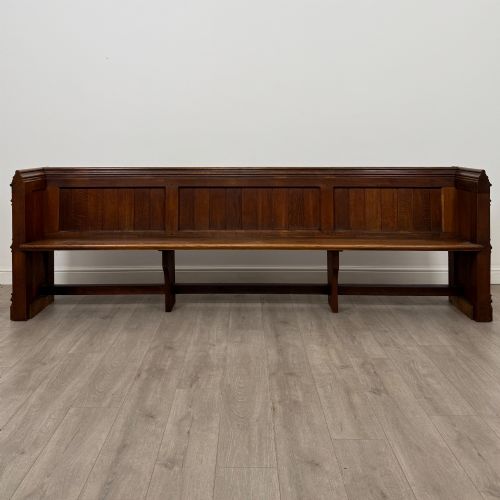
A traditional carved settle is a high-backed wooden bench, frequently found alongside regional variants such as monks benches, hall seats, and lambing chairs. These pieces emerge predominantly in oak, pine, and hardwood across periods ranging from the eighteenth and nineteenth centuries through to the early decades of the twentieth century. The version most commonly met on this page is the oak hall settle or high-back bench, featuring panelled construction and carved wooden details.
Makers and regional craftsmen designed these benches for domestic interiors, utilising sturdy timbers to withstand daily use in hallways, kitchens, and living spaces. Styles span Jacobean revival, Gothic revival, and various country traditions including Welsh, English, and Spanish vernaculars. Buyers searching this phrase look for functional seating that retains historical character and solid timber construction.
How they were made
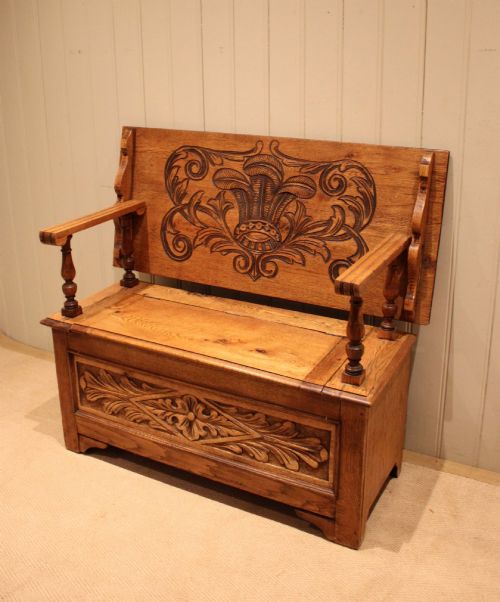
Traditional carved settles rely heavily on solid oak, pine, and hardwood timbers, often assembled using traditional panelled joinery to provide structural rigidity. Workshops employed hand-carving techniques to decorate the high backs and armrests with geometric patterns, florals, or regional motifs.
Surface finishes include traditional wax, paint, and liming, which protected the wood while highlighting the grain and carved details over centuries of use.
Listings span oak, pine, mahogany, and painted finishes across eighteenth, nineteenth, and early twentieth-century periods.
What varies in quality
The standard of a traditional carved settle depends largely on the integrity of the timber and the depth of the carving on the high back. Pieces fashioned from solid oak with well-preserved joinery and integrated storage boxes sit at the upper end of the range.
Proportion and regional character also dictate distinction, with balanced proportions and crisp, hand-cut decorative motifs separating utilitarian workshop output from finer country examples.
The Traditional Carved Settle Glossary
- Settle
- A wooden bench with a high back and solid arms, often featuring a box seat or storage compartment underneath. It was historically positioned near the fire to block cold air.
- Monk's bench
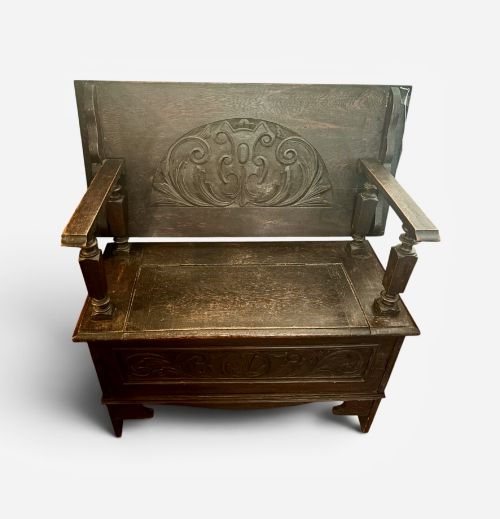
- A multi-functional form featuring a fold-over top that converts the seat back into a table. This clever design suited smaller rooms in period homes.
- Box settle
- A variant incorporating a hinged lift-up seat that opens to reveal storage space inside the base. It combines seating with practical household storage.
- Jacobean revival
- A nineteenth-century stylistic movement that emulates seventeenth-century English design, characterised by dark oak timber, geometric panelling, and deep relief carving.
Traditional Carved Settle: Frequently Asked Questions
Where were settles placed in historic homes?
These benches traditionally stood in the hall or near the kitchen fireplace to shelter inhabitants from cold draughts. Their high solid backs acted as a windbreak in open-plan rooms.
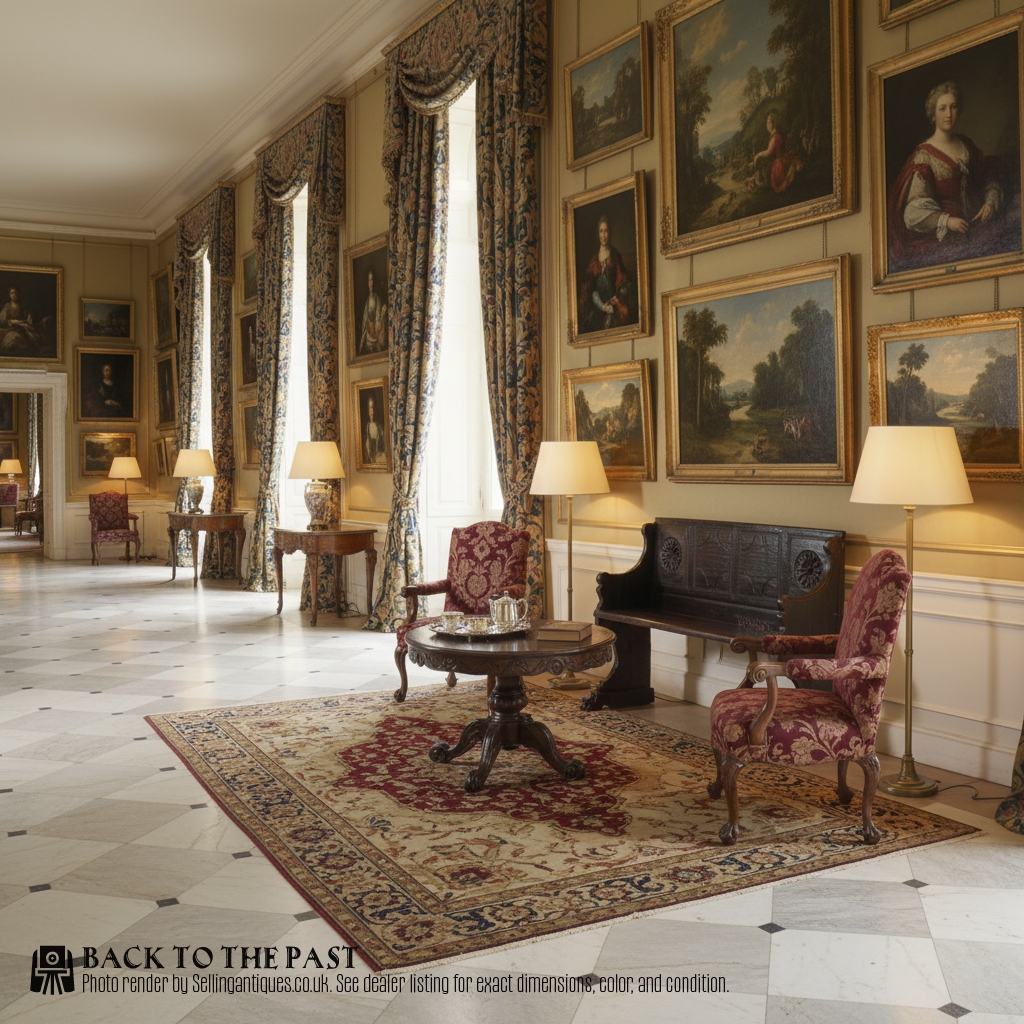
Today, they function well in entrance halls, boot rooms, or large living spaces where their built-in storage proves practical for modern life.
How can I tell an eighteenth-century settle from a later revival piece?
Eighteenth-century examples typically display hand-cut joinery, pegged framing, and timber wear consistent with extended domestic use. The patination develops naturally over generations.
Revival pieces from the Victorian or Edwardian periods often feature machine assistance, cleaner internal joints, or styles that consciously imitate older Jacobean motifs.
Do all traditional settles have storage?
Many examples incorporate a lift-up seat lid revealing a box base, while others are open-frame benches without internal compartments. Both styles serve the broad category of historic seating.
Checking the specific listing details confirms whether a particular piece includes a lift-up lid or a fold-over top.