



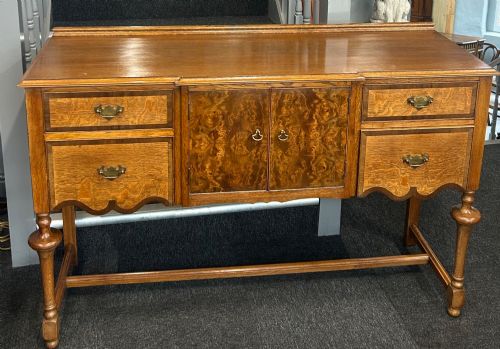
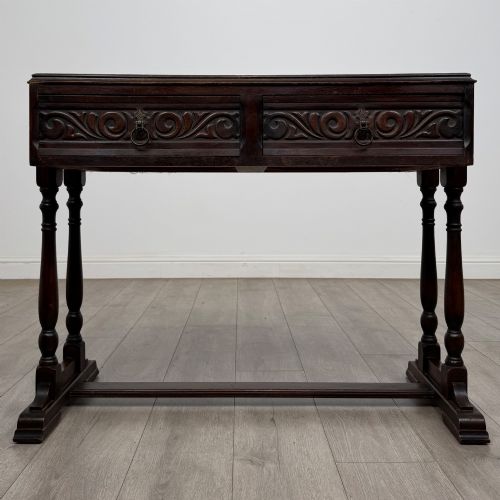
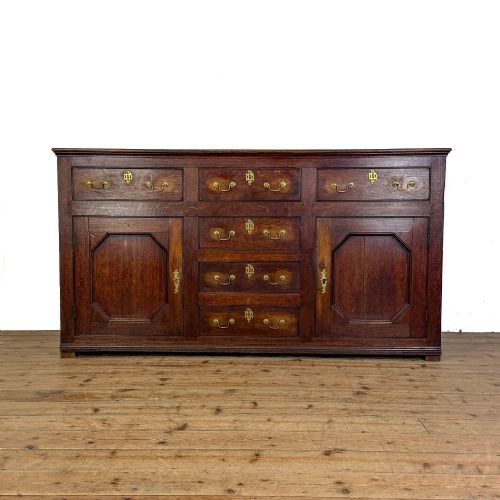
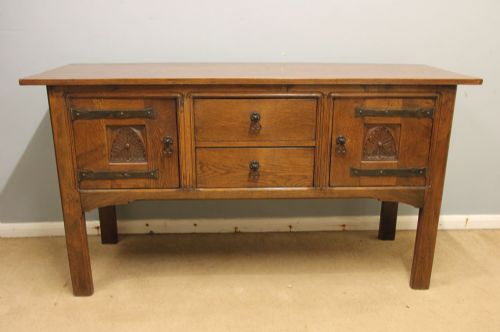
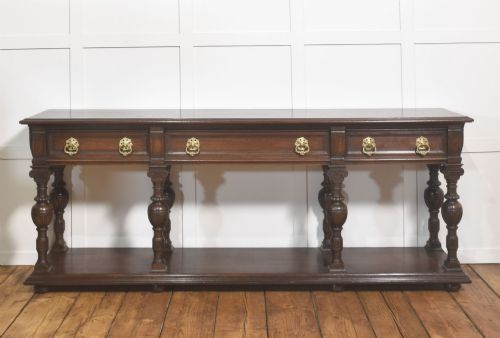

Traditional Carved Oak Server
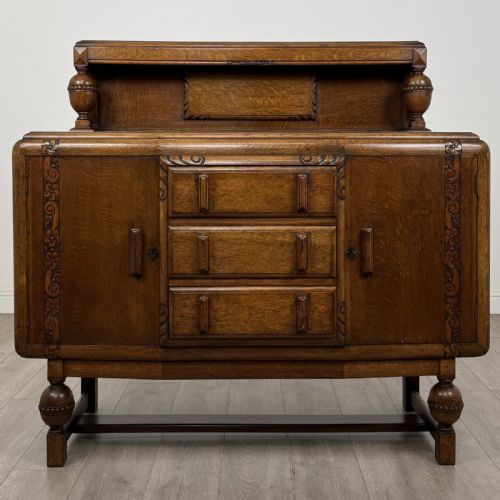
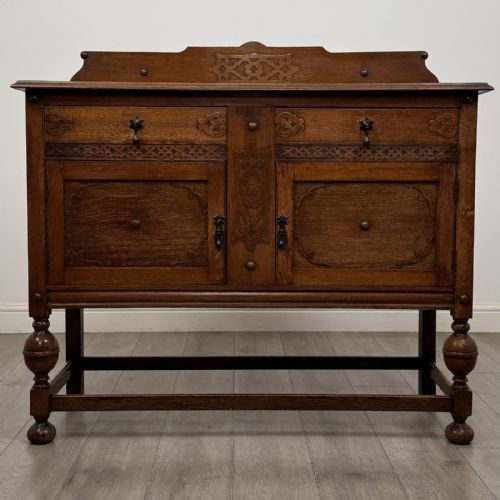
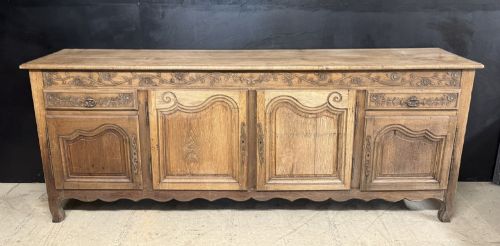
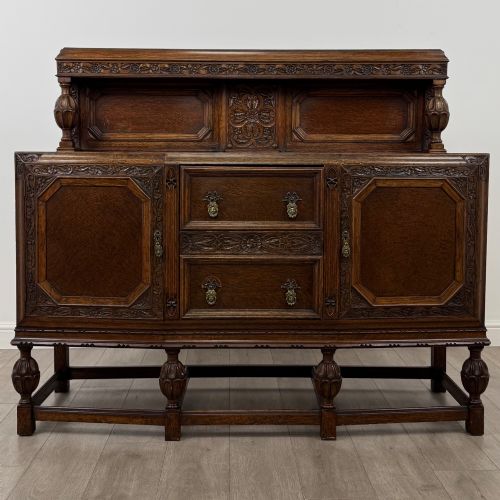
A traditional carved oak server brings robust timber and historic craft directly into a dining room or hallway.
Traditional Carved Oak Server
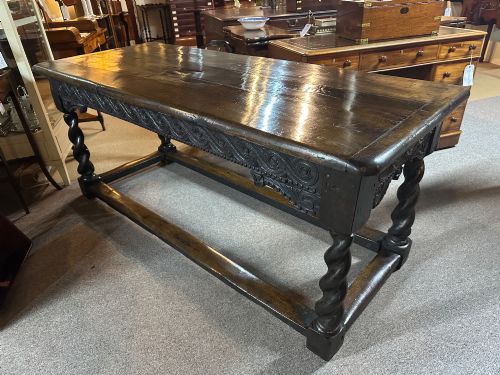
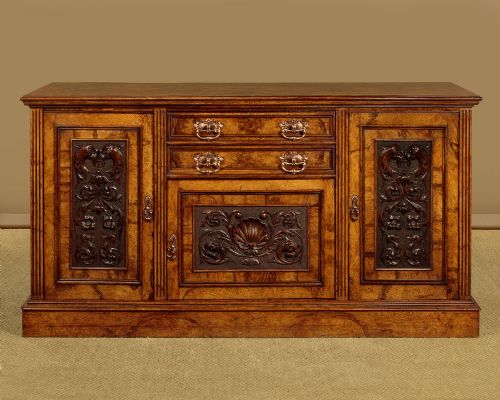
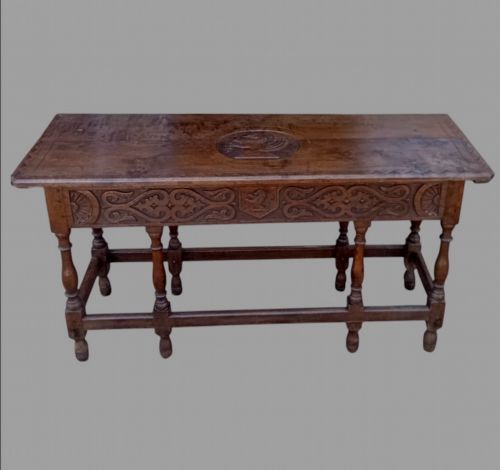
A traditional carved oak server appears primarily in forms such as sideboard dresser bases, court cupboards, and refectory serving tables. These sturdy pieces of furniture surface from periods ranging through the 18th Century, Victorian era, and Edwardian times.
Buyers will most commonly encounter Edwardian and 1920s interpretations alongside 19th Century examples. Styles span from Jacobean Revival and Georgian forms to Arts and Crafts and English Country aesthetics.
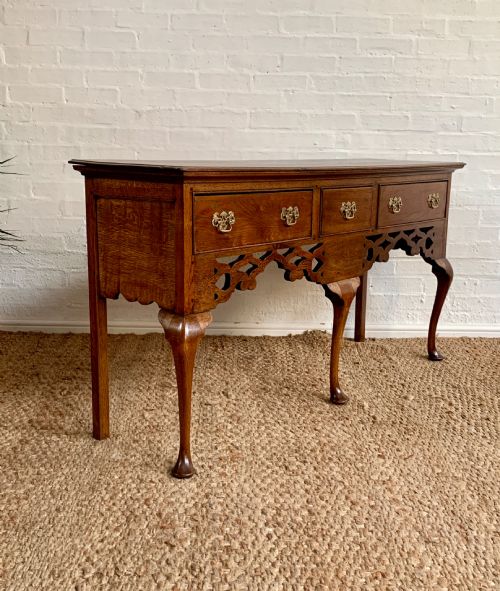
The selection includes lowboys, console tables, and small side cabinets equipped with drawers or potboards. Each variant offers a practical surface for serving food or displaying items while anchoring a room with heavy timber.
Judging quality in oak servers
Quality rests heavily on the depth and crispness of the carving work across the panels, friezes, and doors. Sharp, well-defined motifs executed by skilled hands distinguish finer examples from plain or heavily worn production.
The choice of timber grain and the integrity of the solid oak construction dictate overall durability and visual weight. Examples featuring integrated potboards, balanced proportions, and complementary secondary woods like burr walnut achieve a higher standing.
Traditional Carved Oak Server Retail Price Guide 2026
Typical asking prices for traditional carved oak server among the pieces listed under this phrase on Sellingantiques today, from the lower quarter to the upper quarter. They describe what is for sale here now, not the wider market.
Listings feature oak alongside contrasting materials including brass, iron, glass, burr walnut, fruitwood, and pollard oak.
The Traditional Carved Oak Server Glossary
- Dresser base
- A low wooden cabinet featuring drawers and sometimes a lower shelf, traditionally used for food preparation and serving.
- Court cupboard
- A compact enclosed cabinet with doors, often featuring decorative carved panels and stepped upper sections.
- Potboard
- An open slatted lower shelf fitted beneath a dresser base or serving table, originally intended for storing pots and pans.
- Lowboy
- A small oak or fruitwood table with drawers, standing on relatively tall legs and serving as a side table or low server.
- Jacobean style
- A heavy, ornate decorative manner characterised by geometric moulding, turned legs, and deep strapwork carving.
Traditional Carved Oak Server: Frequently Asked Questions
How do I use a carved oak server today?
These servers function naturally in a dining room to hold tableware, linens, and serving dishes during meals.
In a hallway or living space, they provide a sturdy surface for lamps, books, and decorative objects while offering enclosed storage.
How do I tell an 18th Century piece from an Edwardian copy?
Eighteenth-century examples show hand-cut joinery, timber shrinkage, and wear patterns consistent with centuries of domestic use.
Edwardian interpretations in the Jacobean Revival style often display machine assistance, standardised fittings, and cleaner internal construction.
What is the difference between a sideboard and a dresser base?
A dresser base typically has an open potboard shelf beneath the main body and dates more frequently to earlier centuries.
Sideboards frequently incorporate enclosed cupboards, pedestal ends, or mirror backs, particularly in Victorian and Edwardian iterations.
How do I care for antique oak furniture?
Keep solid oak pieces away from direct heat sources and sudden humidity changes to prevent the timber from splitting.
Apply natural beeswax occasionally to nourish the grain and maintain a soft protective sheen without using harsh chemical polishes.