
Traditional Carved Hall Table
A traditional carved hall table provides a sturdy and handsome surface for post, keys and lamps in an entranceway.
Traditional Carved Hall Table
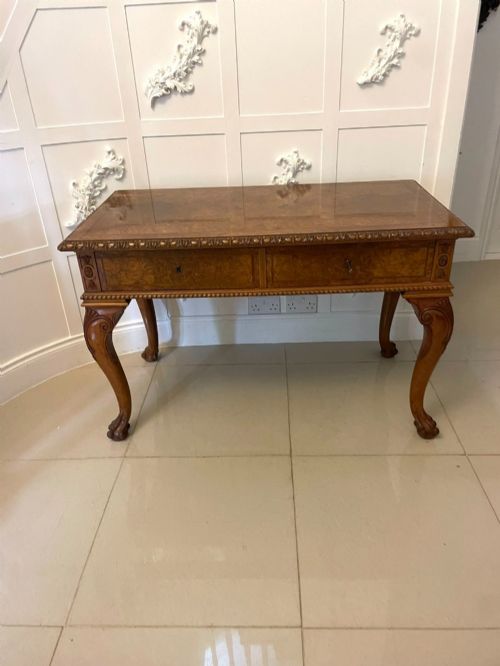
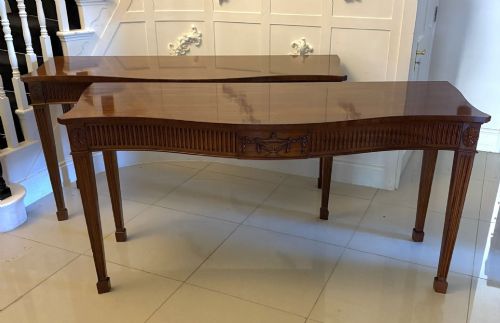
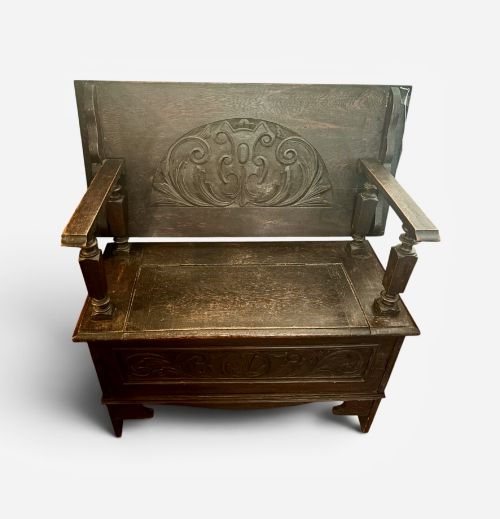
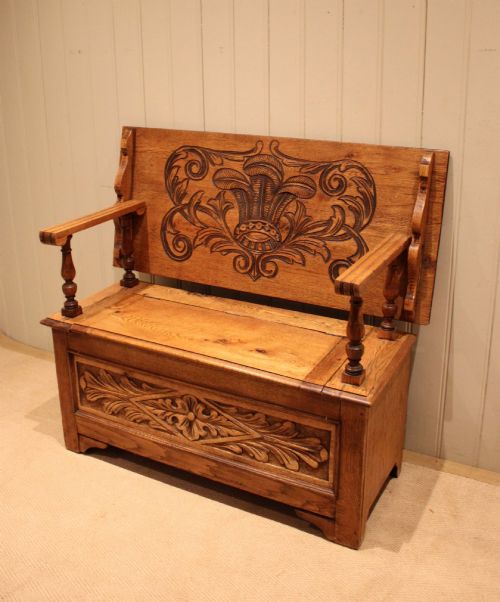
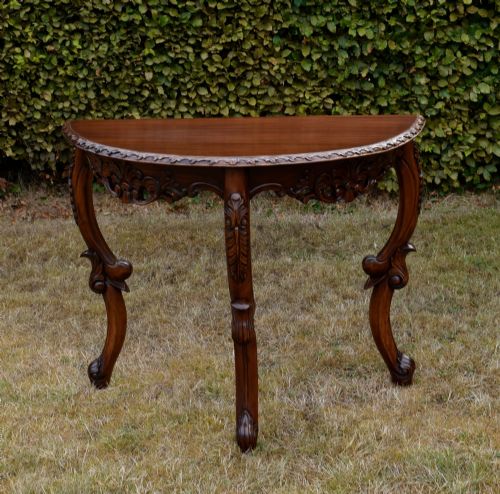
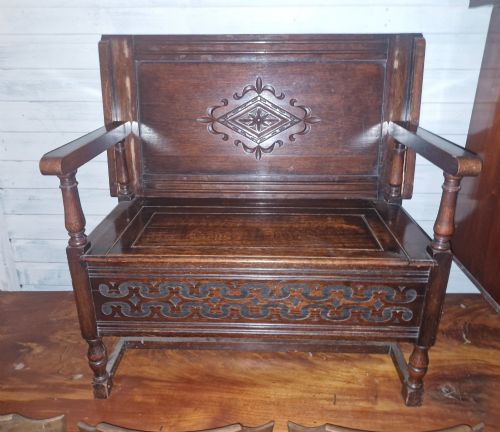
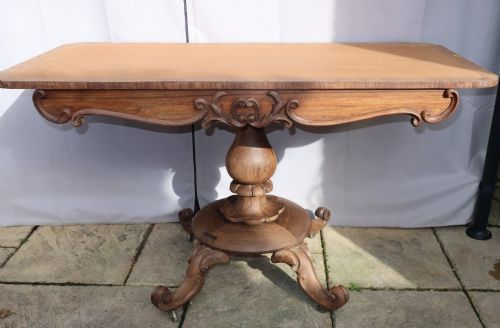
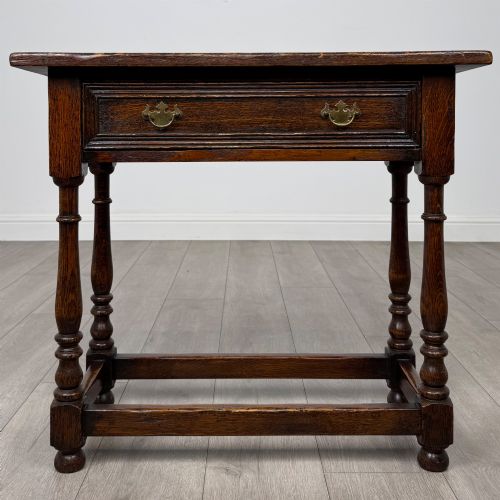
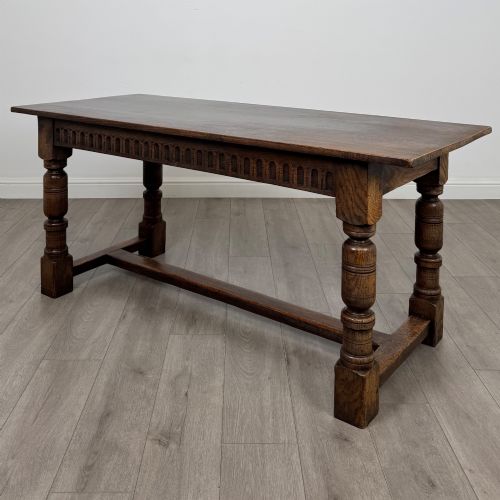
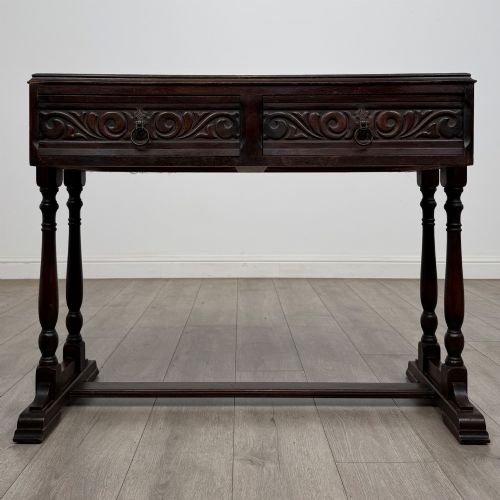
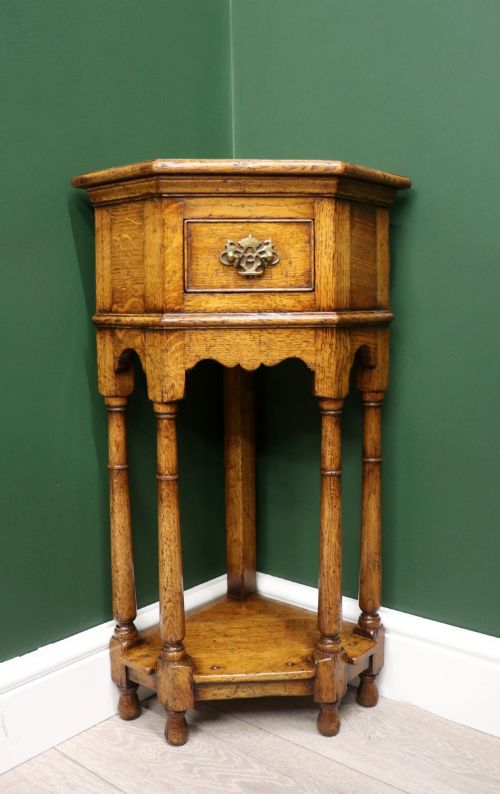
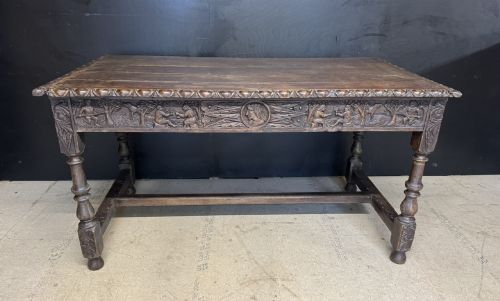
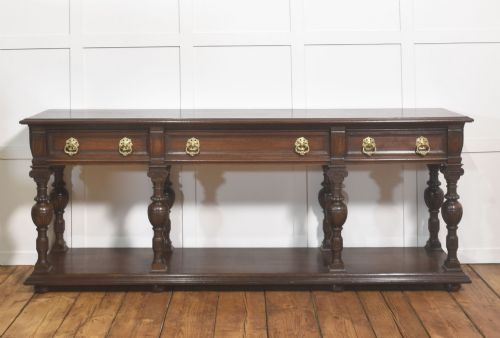
A traditional carved hall table serves as a functional and decorative focal point in entranceways and narrow passages. These pieces take various forms, including console tables, side tables and lowboys, alongside convertible items like monks benches and hall seats.
Oak dominates the selection, joined by mahogany, walnut, burr walnut, elm, rosewood and hardwood. Pieces stretch across multiple periods, with strong representation from the nineteenth century, Victorian era, Edwardian period and the early twentieth century.
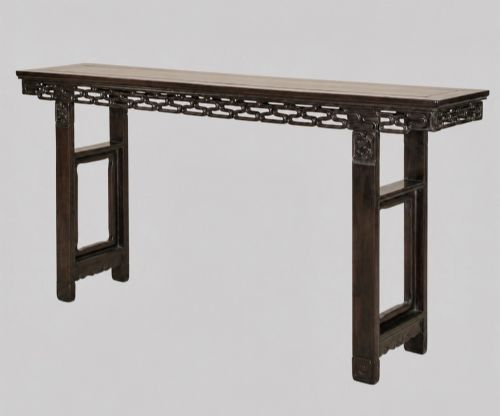
Revival styles heavily influence the designs, showing Jacobean, Queen Anne and Georgian motifs. Alongside these British vernacular and revival pieces, the selection includes Chinese hardwood altar tables, elm side tables and oriental red lacquered writing tables.
How They Were Made
Cabinetmakers utilised solid timbers like oak, mahogany and walnut, often selecting burr walnut veneers for decorative surfaces. Joinery relies on traditional methods suited to heavy daily use in busy hallways.
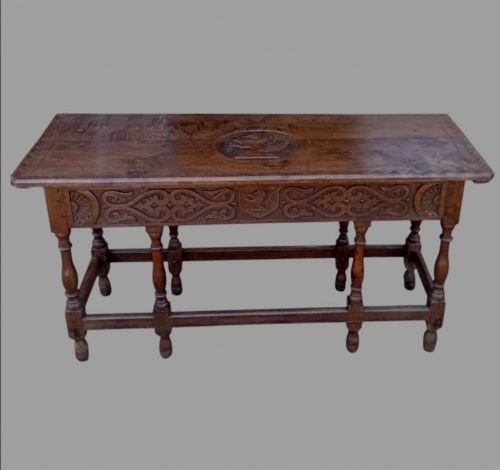
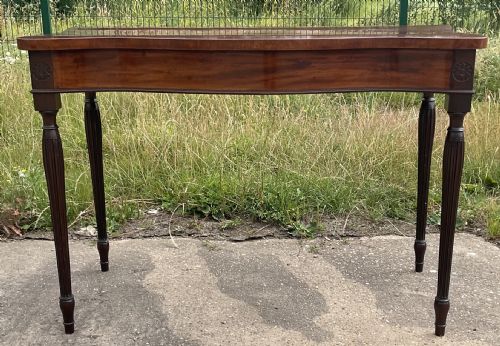
Carving defines the decoration, ranging from crisp geometric linenfold panels and Jacobean motifs to flowing neoclassical flourishes on serpentine mahogany consoles. Iron and brass hardware appears on drawers, drop leaves and folding mechanisms.
Oak and mahogany appear most frequently among the timber choices, spanning nineteenth-century examples and Edwardian production.
What Varies in Quality
The standard of timber selection and figure sets superior examples apart from plain utility items. Dense, well-figured burr walnut or richly grained solid oak indicates a more ambitious commission.
The crispness and depth of hand carving determine the refinement of the piece. Deeply undercut, detailed foliage and cleanly struck mouldings separate skilled joinery from mechanical production.
The Traditional Carved Hall Table Glossary
- Console table
- A table designed to stand against a wall, frequently secured with brackets or supported by front legs. These items often feature serpentine or demi-lune tops suited to shallow hallways.
- Lowboy
- A small kneehole dressing table or side table with drawers, originating in the late seventeenth century. These compact items function well as narrow hall tables.
- Monks bench
- A convertible piece of furniture featuring a hinged top that tilts to form a table back, creating a seat beneath. This dual purpose design suited smaller historical spaces.
- Refractory style
- A heavy, long table design derived from monastic dining boards. These tables use sturdy wooden stretchers to support thick timber tops.
- Linenfold
- A style of wood carving that mimics vertical folds of fabric. This ornamentation appears frequently on panels in revival oak furniture.
Traditional Carved Hall Table: Frequently Asked Questions
Where should I place a hall table?
Position your table against a main entrance wall where it remains clear of door swings while offering a drop surface for everyday items.
Ensure the depth allows comfortable passage in narrow corridors without crowding the floor space.
How do I care for antique wood?
Dust surfaces regularly with a soft, dry cloth and apply quality beeswax periodically to nourish the grain.
Keep wooden furniture away from direct heat sources and strong sunlight to prevent timber warping or cracking.
What is the difference between oak and mahogany?
Oak provides a heavy, visible grain with a rustic or revival character typical of English country and Jacobean styles.
Mahogany offers a denser, finer grain that takes a darker polish well, commonly found in neoclassical and Georgian revival designs.
Can I use a lowboy as a hall table?
Lowboys offer shallow depths and useful drawer storage, making them ideal companions for entranceways.
Their compact proportions fit narrow spaces where standard dining or centre tables prove too wide.