


Traditional Canopy Bedstead
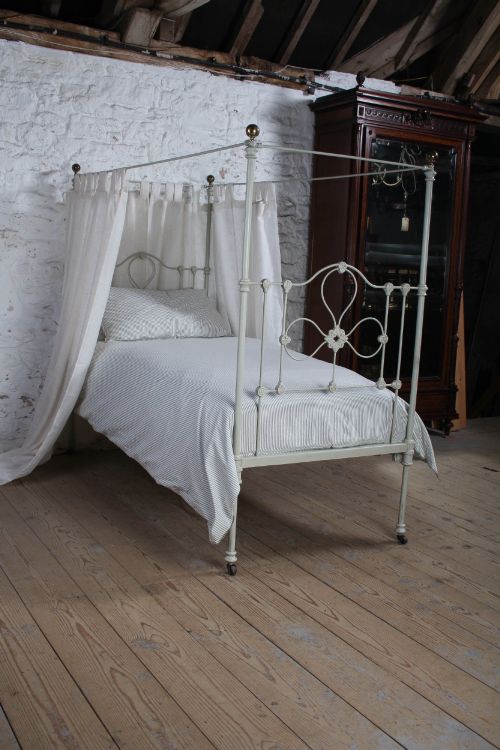
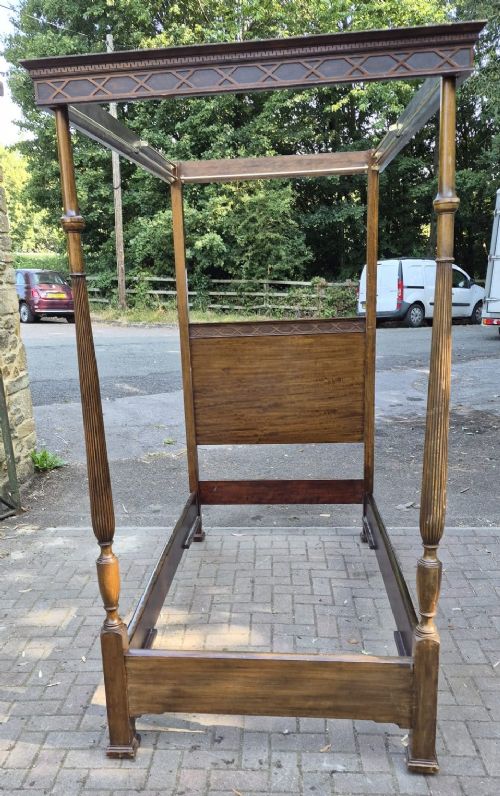
A traditional canopy bedstead brings architectural presence to a room, framing a sleeping space with soaring vertical posts and overhead testers.
Traditional Canopy Bedstead
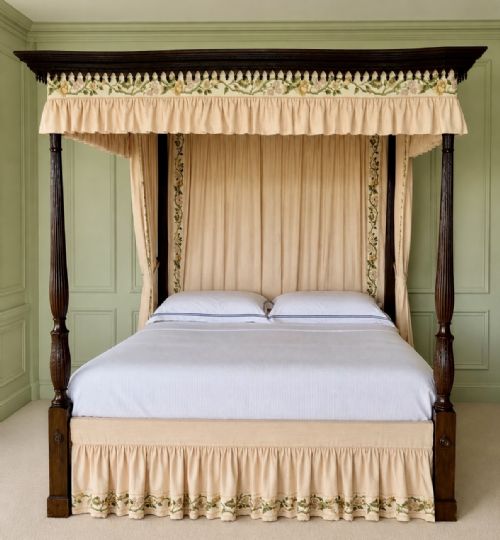
A traditional canopy bedstead is defined by its vertical posts supporting an overhead tester or canopy frame, creating an enclosed and dramatic sleeping berth. Buyers searching for a traditional canopy bedstead encounter grand architectural frames designed to anchor a principal bedroom.
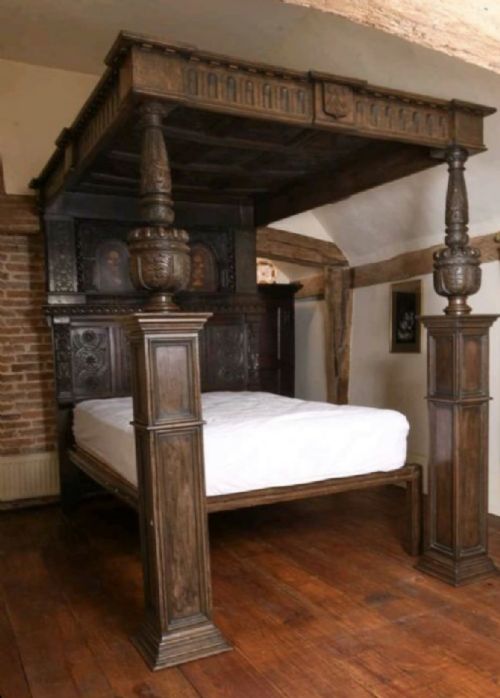
The selections available range from sturdy 17th Century oak joinery to polished Victorian brass and Edwardian mahogany frames. Most examples meet the eye as either full tester beds with complete overhead canopies or half tester beds projecting from the wall.
Originating across different periods, these bedsteads appear in regional timbers like English oak, imported hardwoods, and cast metal configurations. Each variation alters the silhouette, moving from heavy panelled seventeenth-century structures to slender nineteenth-century brass tubing.
How they were made
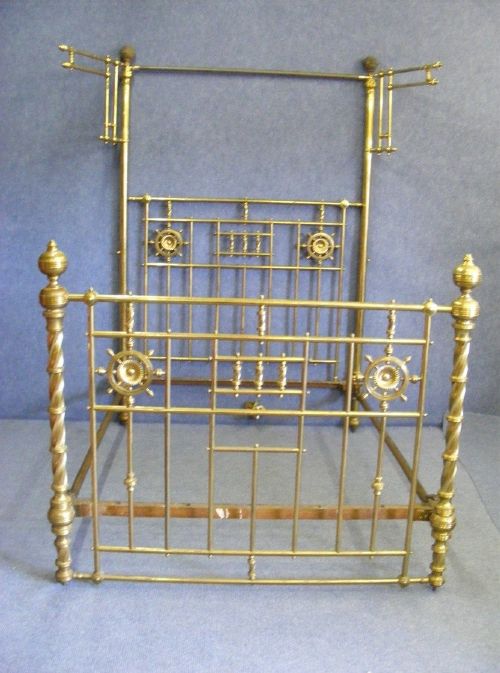
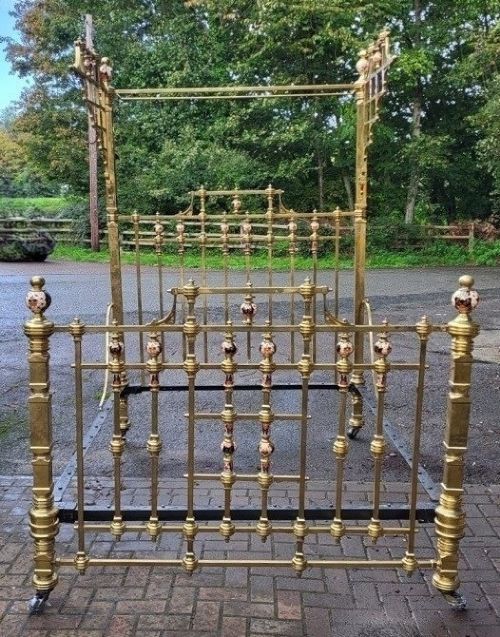
Cabinetmakers and metalworkers utilised solid timber, brass, and cast iron, often combining structural oak or mahogany with intricate fruitwood inlay and painted surfaces. Joinery methods relied on pegged mortise and tenon frames for early wooden structures, while later metal frames employed bolted cast iron and polished brass tubing.
The overhead testers required precise balancing of heavy cornices and fabric canopies upon four vertical supports. Metal founders cast robust brass components and iron frames to support heavy half tester projections without leaning.
Materials span solid oak, mahogany, cast iron, brass, and painted hardwood.
What varies in quality
The distinction between ordinary and exceptional examples rests upon the architectural ambition of the carving, the purity of the timber selection, and the integrity of the original joints. Exhibition quality pieces demonstrate superior proportion in the tester cornices and refined surface patination.
Metal frames vary according to the weight of the brass castings and the crispness of any chased ornamentation upon the headboards and footboards. Superior wooden examples preserve their original proportions and structural joinery without excessive replacement timber.
Heals of London·Howard And Sons·R W Winfield
The Traditional Canopy Bedstead Glossary
- Tester
- The canopy frame suspended above a bedstead, often panelled in wood or hung with fabric. It directs the architectural weight of the bed upward.
- Half Tester
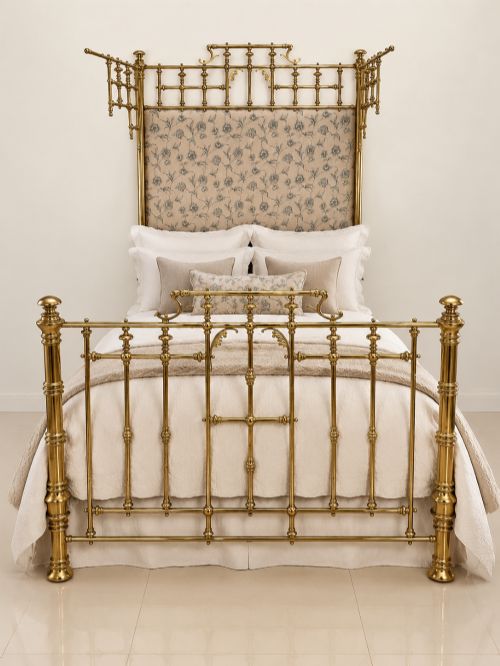
- A wall-mounted or headboard-attached canopy that projects only partway over the length of the mattress. This form became popular during the Victorian period for improved ventilation.
- Four Poster Bed
- A bedstead featuring four vertical corner posts that support an upper framework. These posts anchor the visual mass of the sleeping quarters.
- Fruitwood Inlay
- Decorative wood veneer inserted into a contrasting primary timber to create geometric or floral patterns. It demonstrates fine cabinetmaking skill on early oak frames.
- Cast Iron
- An iron-carbon alloy poured into moulds to create rigid structural frames and decorative bed ends. It provided industrial strength for nineteenth-century metal bedsteads.
Traditional Canopy Bedstead: Frequently Asked Questions
How do I fit a modern mattress?
Many antique bedsteads were constructed for historical mattress sizes which differ from standard modern dimensions. Careful measurement of the internal rails is necessary before sourcing a suitable base.
Custom mattress makers frequently construct bespoke bases to fit the exact interior perimeters of these historic wooden and metal frames.
Are these beds easy to dismantle?
Most traditional canopy bedsteads rely on iron bed bolts or traditional wooden peg joints designed for assembly and dismantling. This modular construction allowed historic households to transport large furniture between rooms.
Careful labelling of components during assembly prevents alignment issues with the overhead tester frame and vertical posts.
How do I style a half tester?
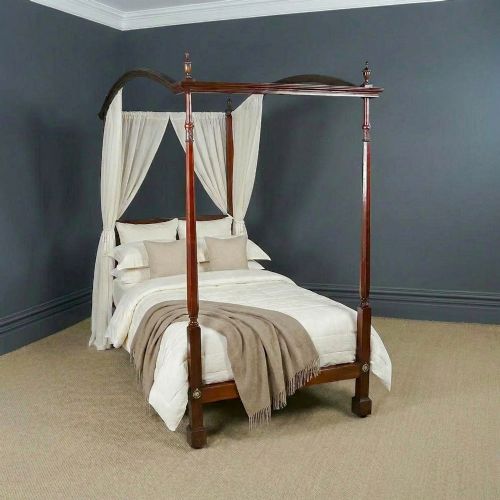
Half tester beds project a decorative canopy over the head of the bed, leaving the foot open. This design suits rooms with lower ceilings where a full overhead tester might overwhelm the space.
Suspended fabrics can hang down from the half tester ring to frame the pillows while keeping the decorative brass or wood headboard visible.
What is the difference between oak and mahogany frames?
Seventeenth-century oak frames display heavy visible grain, pegged joinery, and often carved panel headboards. They project a robust, rustic architectural presence within a room.
Nineteenth-century mahogany frames offer smoother reddish-brown surfaces, polished finishes, and classical revival details influenced by Georgian and Regency design.