




Traditional Caned Armchair
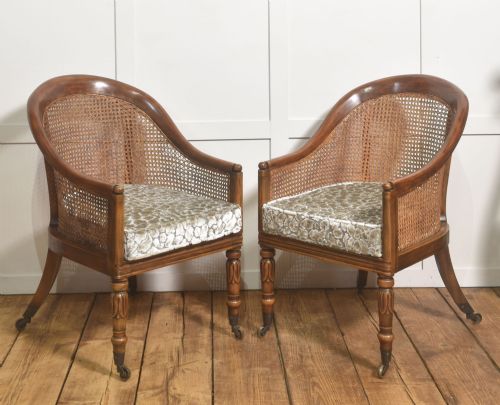
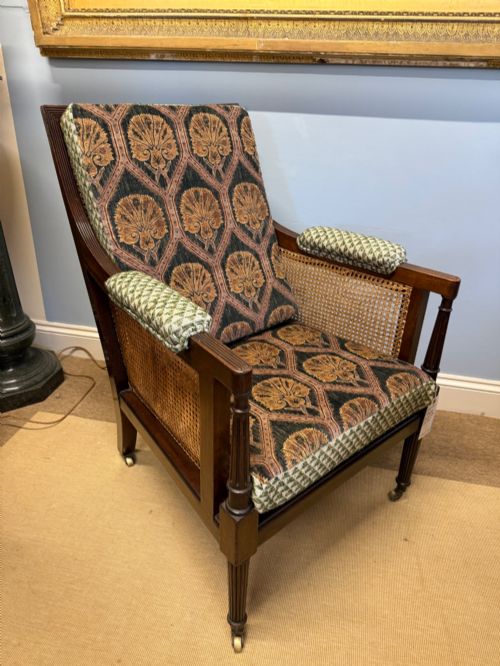
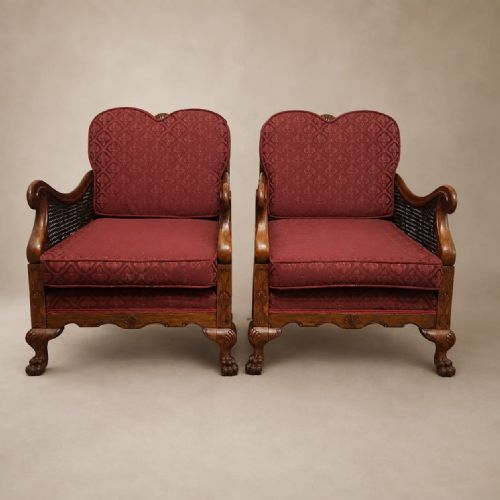
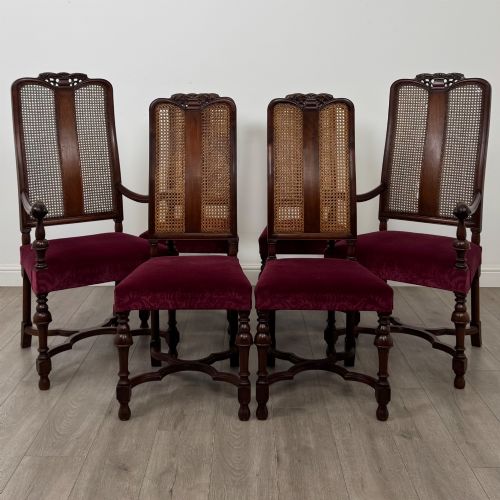
A traditional caned armchair offers woven seating woven from cane panels set into frames of mahogany, walnut, or oak across various historical periods.
Traditional Caned Armchair
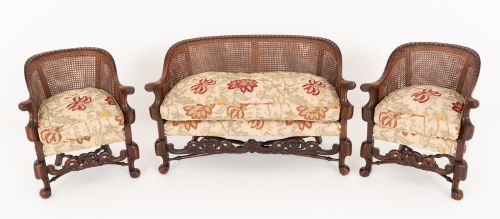
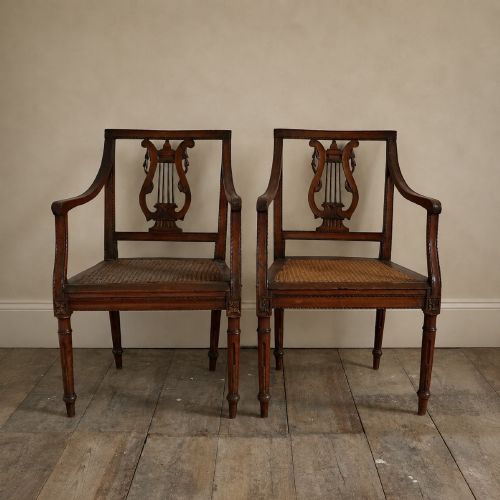
Traditional caned armchairs appear in forms ranging from library bergères and rocking chairs to sets of dining chairs and lounge suites. The selections span the Georgian, Regency, Victorian, and Edwardian eras, alongside later revivals.
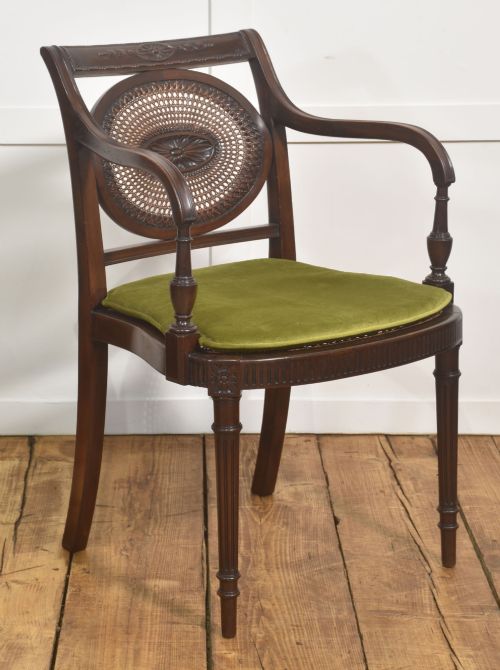
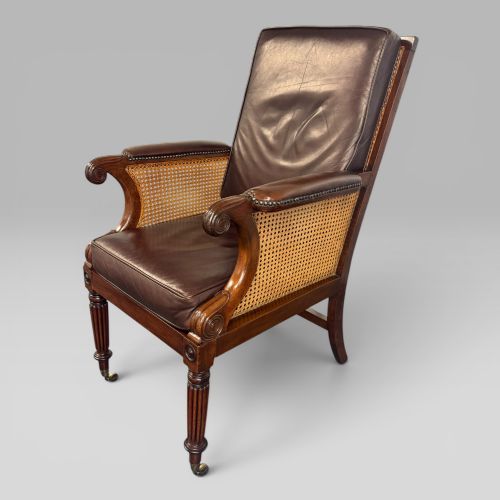
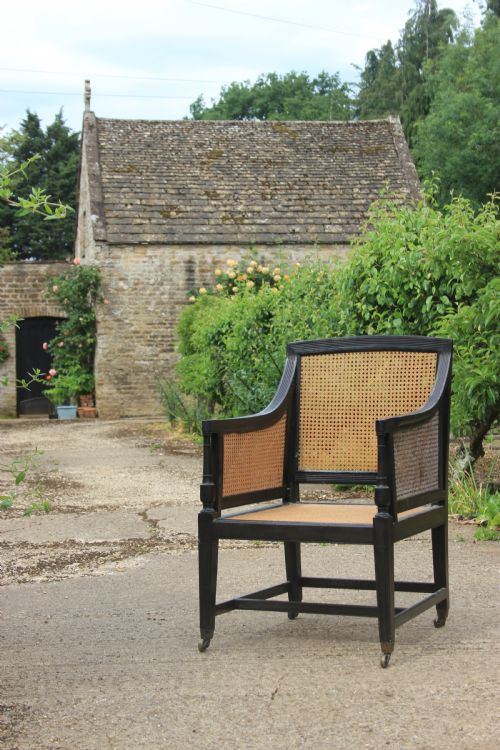
The most common examples on this page are mahogany and oak bergère armchairs dating from the nineteenth and early twentieth centuries. These pieces incorporate woven cane panels to backrests and seats, frequently accompanied by upholstered cushions.
Materials and Construction
Frames take shape in solid hardwoods such as mahogany, walnut, and oak, occasionally finished with ebonisation or brass details. Artisans construct these structures using traditional joinery methods suited to each specific historical style.
Caning employs woven plant material fitted into channeled frames by hand. Additional elements introduce velvet, leather, and fabric for upholstery, alongside bentwood techniques and bobbin-turned framing.
Traditional Caned Armchair Retail Price Guide 2026
Typical asking prices for traditional caned armchair among the pieces listed under this phrase on Sellingantiques today, from the lower quarter to the upper quarter. They describe what is for sale here now, not the wider market.
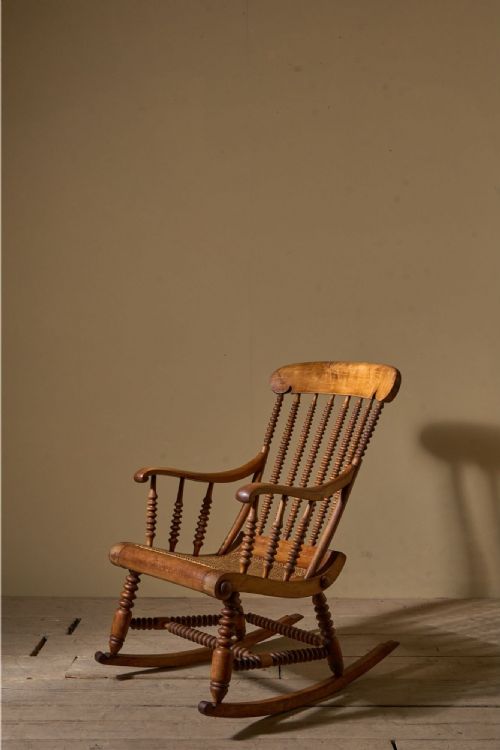
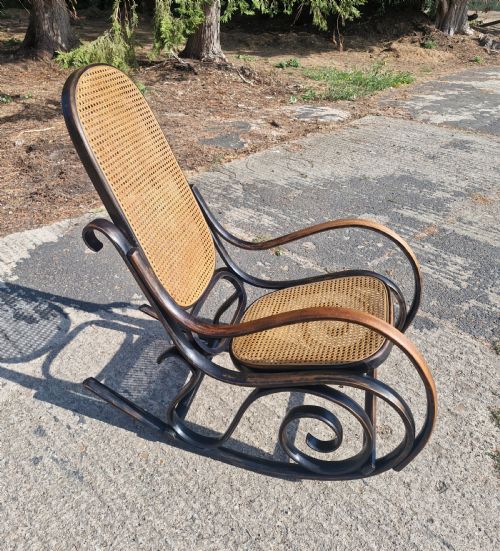
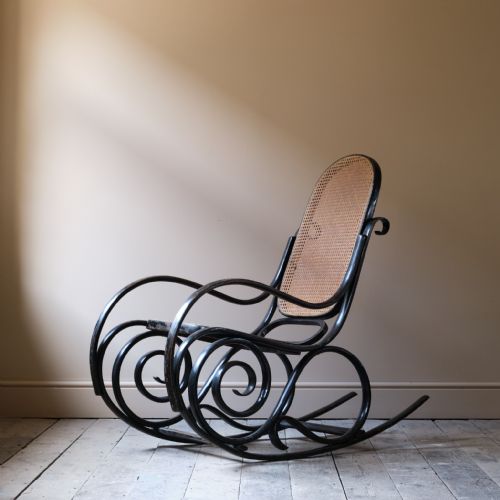
Several armchairs choose to rock gently through the decades.
Design and Execution
Quality rests upon the crispness of the timber carving, the proportion of the frame, and the tightness of the cane weave. Finer examples display carefully figured mahogany or walnut veneers and sophisticated revival details.
Simpler workshop pieces use beech or standard oak with plainer turnings and standard joinery. The complexity of the frame design, from simple bobbin turnings to elaborate library bergère shapes, dictates the standing of the piece.
The Traditional Caned Armchair Glossary
- Bergère
- An enclosed upholstered armchair featuring cane panels to the back and sides. This French form gained popularity in British interiors during the eighteenth century and subsequent revival periods.
- Caning
- A method of weaving plant material into open patterns for chair seats and backs. It provides flexible support while maintaining a light visual profile.
- Bobbin turned
- Furniture legs and stretchers shaped on a lathe to resemble a series of wooden reels or bobbins. This decorative turning appears frequently on seventeenth-century revival seating.
- Bentwood
- Wood softened through steaming and bent into curved structural forms. This technique created lightweight rocking chairs and armchairs during the nineteenth and twentieth centuries.
Traditional Caned Armchair: Frequently Asked Questions
What is the difference between cane and split cane?
Standard caning uses processed rattan peel woven through holes drilled around the seat or back frame. Split cane utilises flat sections of material fitted directly into carved grooves.
Both methods provide flexible support, though split cane creates a more solid border line against the wooden frame.
Are caned armchairs sturdy for daily use?
Solid hardwood frames of mahogany and oak offer high structural stability for everyday seating. The cane panels provide surprising resilience when tension is evenly distributed.
Using fitted cushions helps protect the woven surface from direct pressure points during regular sitting.
Which periods do these armchairs come from?
The listings span from the Georgian and Regency periods through the Victorian and Edwardian eras into the early twentieth century. Revivals of seventeenth-century Carolean and Jacobean styles also appear frequently.
Each period brings distinct wood choices, such as heavy oak or figured mahogany, alongside characteristic turning and carving details.