
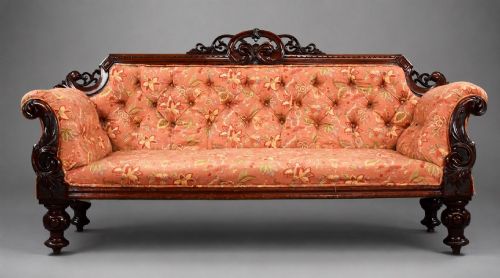
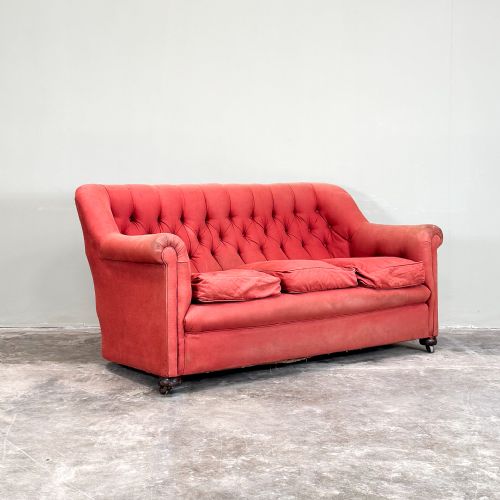


Traditional Button Back Sofa
A traditional button back sofa brings deep cushioning and enduring form to a room, offering the character built across the nineteenth and twentieth centuries.
Traditional Button Back Sofa
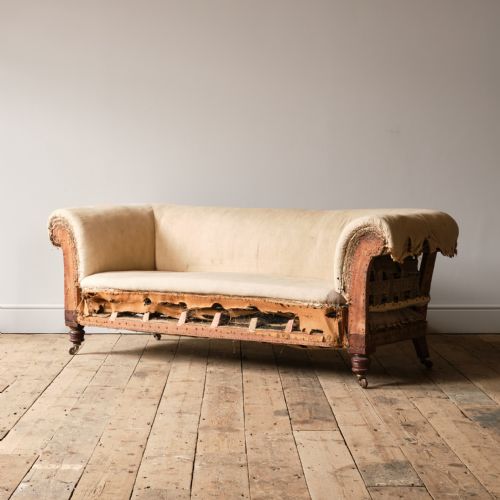
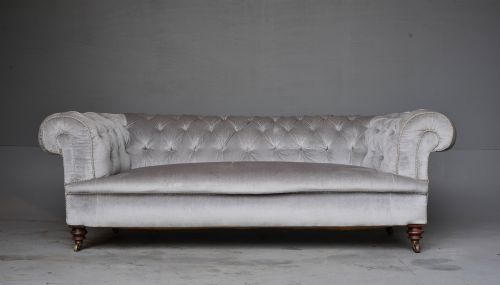
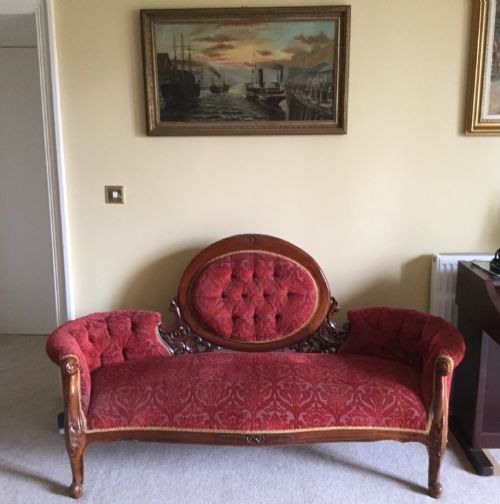
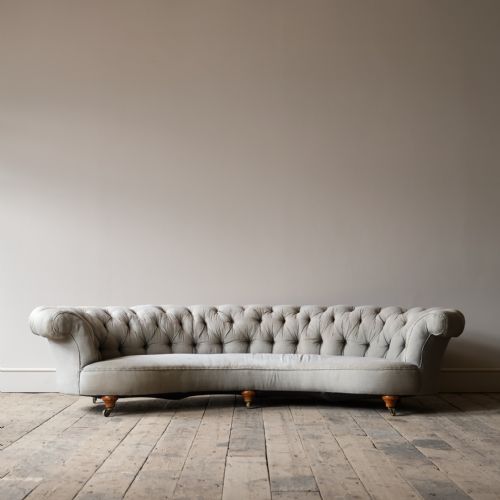
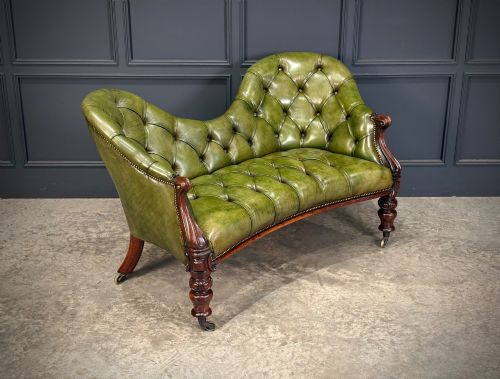
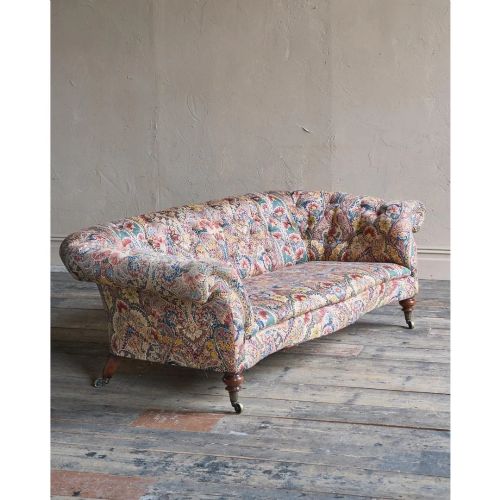
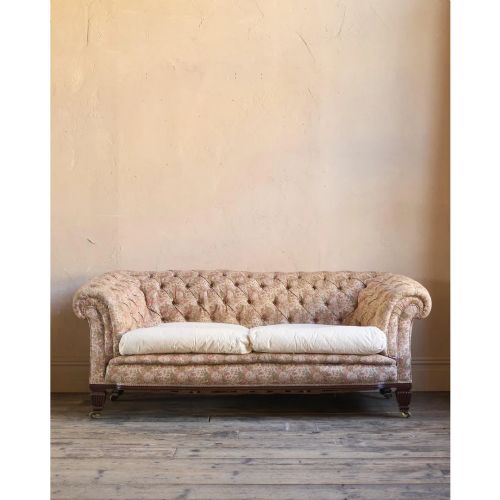
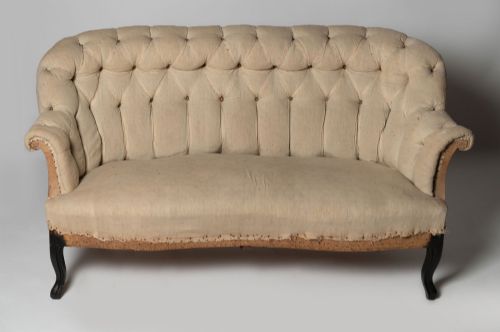
A traditional button back sofa centres on deep buttoning across the backrest, creating a rhythmic pattern of folds in the material. These pieces span the nineteenth and early twentieth centuries, taking forms such as the classic Chesterfield, double spoon-back designs, and elegant chaises longues.
Victorian and Edwardian workshops produced the majority of these examples, alongside pieces influenced by French country and Regency styles. Buyers encounter sturdy mahogany frames, walnut supports, and expansive seating designed for formal reception rooms and libraries alike.
The selection ranges from large leather Chesterbacks to intimate two-seat settees upholstered in velvet or brocade. Each variation demonstrates the shift in domestic comfort across different decades.
Materials and construction
Makers constructed the foundational frames using dense hardwoods like mahogany, walnut, and general timber to ensure structural longevity under heavy sprung upholstery. Brass accents and detailed carved woodwork frequently finish the exposed structural elements.
Upholstery relies on traditional horsehair stuffing and intricate hand-tied sprung bases paired with supple leather or woven fabrics. Deep tufting secures the upholstery through the padding to the wooden frame, holding the characteristic dimpled surface in place.
Listings feature pieces spanning the nineteenth century through the 1930s, utilising materials such as mahogany, brass, leather, and velvet.
Distinctions in craftsmanship
The integrity of the internal wooden frame and the precision of the hand-tied springs determine the baseline durability of each piece. Superior examples maintain firm structural support without excessive sagging in the seat base.
The grade of the leather or textile covering dictates the tactile experience, ranging from raw hides intended for hand-dyeing to deep-pile brocade and velvet. Finer pieces exhibit meticulous alignment in the button tufting and careful finishing around the structural trim.
Howard and Sons·Hampton and Sons of Pall Mall·Gillows
The Traditional Button Back Sofa Glossary
- Chesterfield
- A large upholstered sofa with arms and back of the same height, featuring deep button tufting. This form remains a staple of traditional British seating.
- Chaise longue
- An upholstered long chair or daybed allowing the occupant to recline with legs extended. These often feature an asymmetric backrest and carved wooden legs.
- Brocade
- A rich shuttle-woven fabric often featuring raised patterns in silk or synthetic threads. It provides a textured finish on period parlor furniture.
- Spoon-back
- A padded chair or sofa back shaped like the bowl of a spoon, typically edged in exposed polished wood. This design appeared frequently on Victorian parlour seating.
Traditional Button Back Sofa: Frequently Asked Questions
How do I style a traditional button back sofa?
Pair the sofa with neutral walls and traditional wooden furniture to let the deep buttoning and rich leather or fabric textures stand out as the primary focal point in the room.
Layer with simple wool or linen textiles to soften the heavy woodwork and substantial profile of nineteenth-century frames.
Are these sofas comfortable for daily lounging?
Many period pieces offer deep seating and robust sprung bases designed for prolonged relaxation, though older padding may feel firmer than modern foam.
Testing the seat height and depth helps determine whether a specific model suits everyday living requirements.
How do I identify a Victorian sofa?
Victorian examples frequently utilise dark hardwoods like mahogany or walnut, paired with ornate carvings and traditional buttoned leather or velvet upholstery.
Construction methods typically involve hand-tied springs and dense horsehair stuffing hidden beneath the primary fabric layer.
Can I reupholster an antique sofa?
Reupholstering is common for pieces that retain a sound hardwood frame and solid internal springs, allowing buyers to select fresh leather or fabric finishes.
Consulting a specialist ensures the traditional tufting technique is preserved during the restoration process.