





Traditional British Still Life
A traditional british still life brings domestic quietness and natural colour into a room with careful brushwork.
Traditional British Still Life
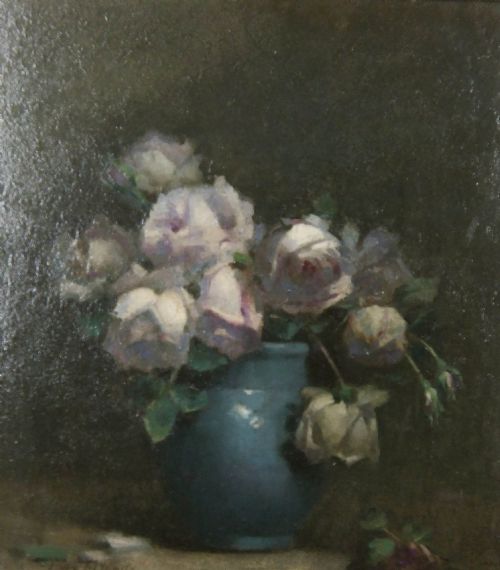
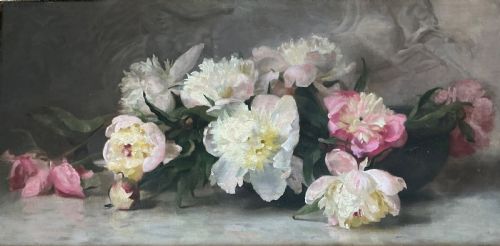
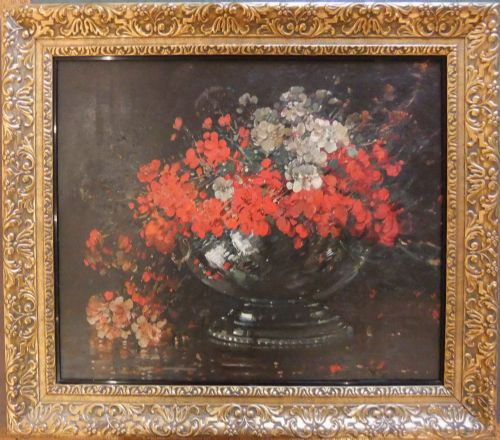
A traditional british still life captures domestic and natural subjects, most often floral arrangements or arrangements of fruit, across canvas, wood, and paper. These works span the nineteenth century, the Edwardian period, and the nineteen-thirties, reflecting changing tastes in British art.
The versions most commonly met on this page are oil paintings and watercolours depicting seasonal flowers like roses, peonies, and anemones, alongside fruit and occasional birds. Painters working in British Impressionism and Victorian realism dominate the selection.
Examples range from detailed Victorian compositions involving fruit, glassware, and game to looser Edwardian and nineteen-thirties interpretations of garden blooms. Each piece records a distinct moment in British painting history through the choice of subject and application of paint.
How they were made
Artists painted primarily in oil on canvas or wood panels, and occasionally in watercolour on paper, building up the surface with successive layers of pigment. Gesso and gold leaf frequently appear in the preparation and framing of these works.
The technique relies on the careful management of light and shadow to give depth to fruit, petals, and glass, whether rendered with the tight realism of the nineteenth century or the softer brushwork of British Impressionism.
Traditional British Still Life Retail Price Guide 2026
Typical asking prices for traditional british still life among the pieces listed under this phrase on Sellingantiques today, from the lower quarter to the upper quarter. They describe what is for sale here now, not the wider market.
Listings span four distinct decades and centuries, incorporating canvas, wood, paper, oil, and watercolour.
What varies in quality
Quality rests upon the artist's command of tone, composition, and the handling of the medium, distinguishing ambitious gallery pieces from simpler decorative works. The observation of natural textures, from soft petals to hard fruit rind, dictates the success of the painting.
The integration of light across the canvas and the harmony of the palette separate accomplished works by named painters from anonymous examples produced within the same periods.
William Thomas Wood·Gertrude Hayes·Owen Bowen·William Edward Fox·Edward Ladell·Margaret Evangeline Wilson·George Lance·Kershaw Schofield
The Traditional British Still Life Glossary
- Oil painting
- A work executed with pigments bound in a drying oil, typically applied to canvas or wood. This medium allows for rich colour depth and blended tones.
- Watercolour painting
- A picture created using water-soluble pigments on paper, valued for its luminous transparency and delicate effects.
- Gesso
- A plaster-like mixture applied to wood or canvas as a base for painting, or used in relief on frames. It provides a smooth, stable surface for the pigments.
- Victorian realism
- An artistic approach focused on accurate, detailed depiction of the visible world without idealisation. In still life, this style records textures and objects with photographic precision.
Traditional British Still Life: Frequently Asked Questions
How do I hang a still life?
Hang the painting at eye level in a space with balanced ambient light to appreciate the detail and brushwork. Avoid direct, harsh sunlight to protect the pigments on canvas or paper over time.
Pair the frame securely with appropriate wall fixings suited to the weight of the wood and gesso structure. A quiet corner or a dining room often suits the domestic subject matter of these works.
How do I date these paintings?
Examine the style of brushwork, the framing materials, and the canvas or paper support. Victorian realism leans toward tight detail, whereas nineteen-thirties pieces often show freer impressionistic handling.
Signatures, inscriptions on the reverse, and recorded dates for artists like Owen Bowen or Edward Ladell provide further confirmation of the period.
Are these works painted on canvas?
Many are painted on canvas stretched over wooden frames, while others utilise wood panels or paper supports for watercolours. Each surface interacts differently with oil paint and gesso grounds.
The choice of support often aligns with the period, with canvas dominating nineteenth-century and Edwardian works.
What subjects are most common?
Floral arrangements featuring roses, peonies, camellias, and anemones appear frequently across the selections. Fruit, glassware, and occasional wildlife also form traditional compositions.
These subjects reflect the domestic and horticultural interests of British households during the nineteenth and early twentieth centuries.