


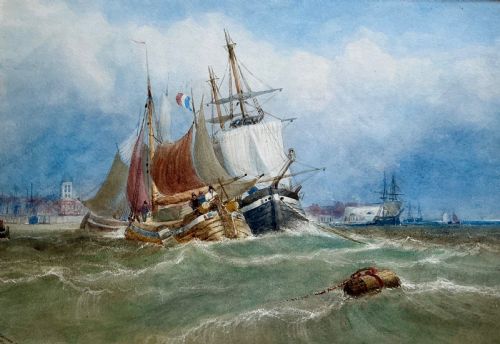


Traditional British Seascape
Traditional British seascape paintings capture the maritime life and coastal towns of the islands across the nineteenth and twentieth centuries.
Traditional British Seascape
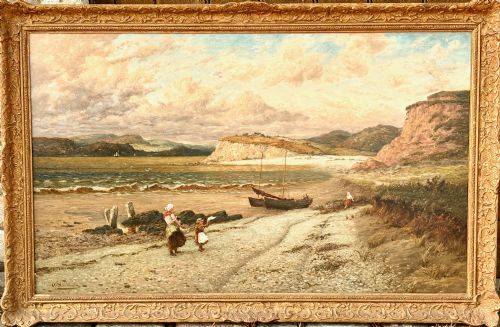
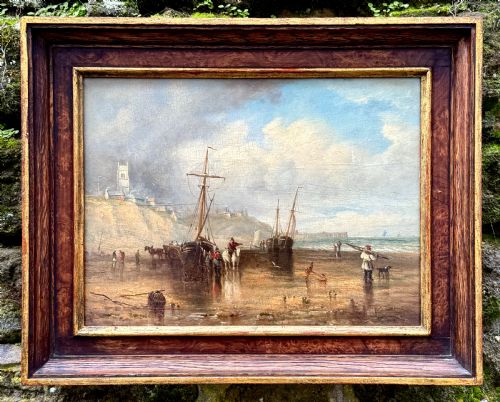
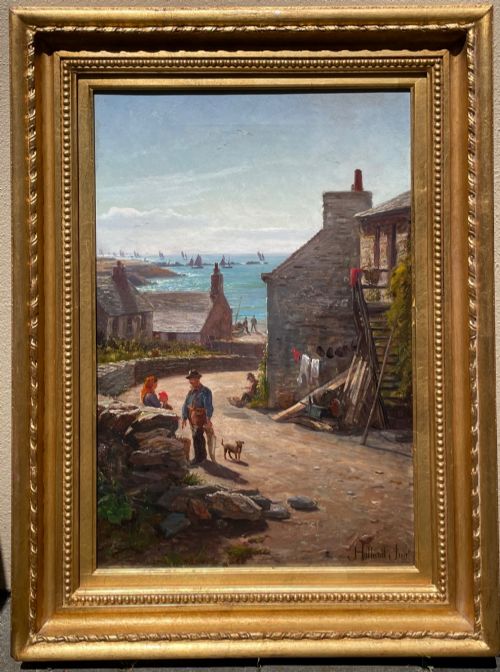
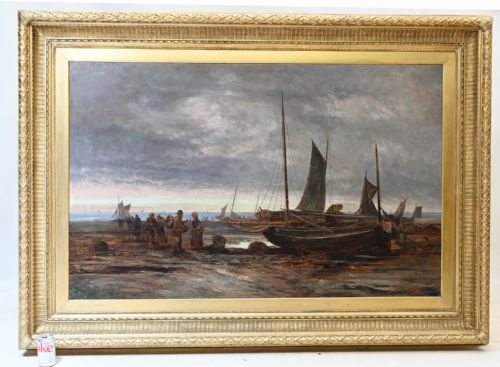
Traditional british seascape paintings record harbours, fishing boats, and coastal views from locations such as Cornwall, the Isle of Man, and Scarborough. These works capture the changing light and maritime industry of the British Isles through the nineteenth and twentieth centuries.
The most common formats on this page are oil paintings on canvas and watercolours on paper. Many are framed in giltwood, reflecting the Victorian and Edwardian periods in which a large portion of these works were produced.
Subjects range from busy village harbours and beach scenes with fisher folk to quiet coastal landscapes and shipping off major ports. Artists often sign their works and frequently specify the exact geographical location within the title.
Materials and technique
Painters used oil paint on canvas or watercolour on paper to record coastal subjects. Canvas supports allowed for large compositions with rich pigment layers, while watercolour permitted finer detail on paper.
Wood provided the primary material for stretchers and the substantial frames, often finished with giltwood to house the finished maritime artworks.
Listings feature works spanning the nineteenth and twentieth centuries, using oil paint, watercolour, canvas, paper, and giltwood.
Judging quality
Quality rests upon the artist's handling of light, atmosphere, and maritime activity within the composition. Works by established named painters command greater attention than anonymous studio pieces.
Condition of the canvas or paper surface, stability of the paint layers, and the originality of the frame influence the standing of each piece.
Edward Mills·William Banks Fortescue·Thomas Creswick·John Holland·Henry Barlow Carter·Stanley Leader·John McDougal·George Henry Knight·Thomas Rose Miles·Owen Bowen·Herbert James·William Edward Webb·Walter Holmes·George Smith·John James Wilson·Edward Fletcher·William Shayer·James Aitken·J De Breanski·Joseph West
The Traditional British Seascape Glossary
- Seascape
- A work of art depicting the sea, coast, or marine subjects. These paintings often include vessels, harbours, and coastal cliffs.
- Giltwood
- Wood carved and covered with a thin layer of gold leaf or gilt pigment. It is commonly found on the ornate frames enclosing nineteenth-century oil paintings.
- Watercolour
- A painting method where water-soluble pigments are suspended in a water-based solution on paper. This medium was frequently utilised for detailed coastal sketches.
- Oil on canvas
- Pigments bound in a drying oil applied to a stretched woven fabric support. This combination underpins the durable large marine paintings of the Victorian era.
Traditional British Seascape: Frequently Asked Questions
How do I date a traditional british seascape?
Dating relies on stylistic evidence, artist signatures, and the materials used in the stretcher and frame. Victorian works often feature heavier giltwood frames and distinct realist or impressionist brushwork.
Inscriptions on the reverse of the canvas or on the paper mount frequently supply specific dates, locations, or the artist's full name.
What subjects appear in these paintings?
Artists focused on working harbours, fishing boats, merchant shipping, and specific coastal landmarks around Britain. Scenes frequently document daily maritime labour, such as gathering kelp or unloading the catch.
Locations range from Cornish fishing villages to Scottish borders and London river views near Tower Bridge.
Are watercolours as durable as oils?
Watercolours on paper require protection behind glass to prevent fading from light and damage from moisture. Oil paintings on canvas are more robust but still benefit from stable indoor environments.
Both mediums have survived well from the nineteenth century when properly framed and conserved.