





Traditional British Countryside Oil
Traditional British countryside oil paintings capture rural rivers, rolling farmland and pastoral scenes through the brushwork of nineteenth and twentieth century artists.
Traditional British Countryside Oil
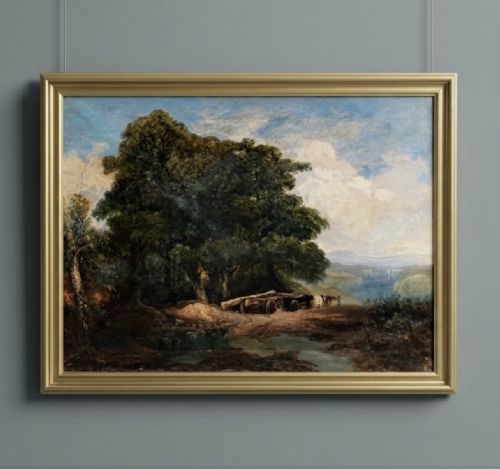
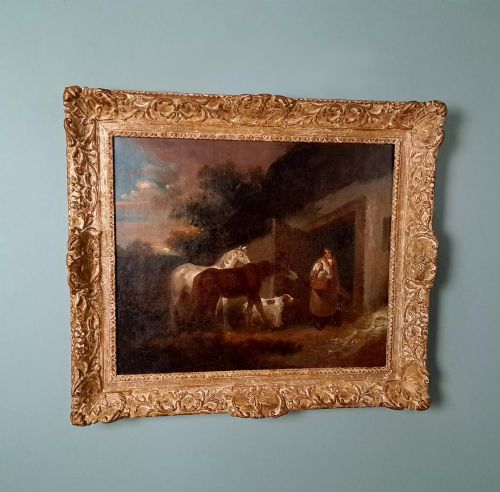
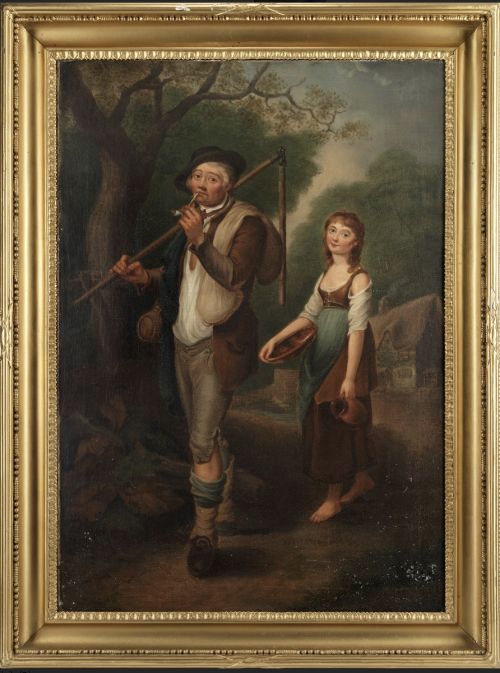
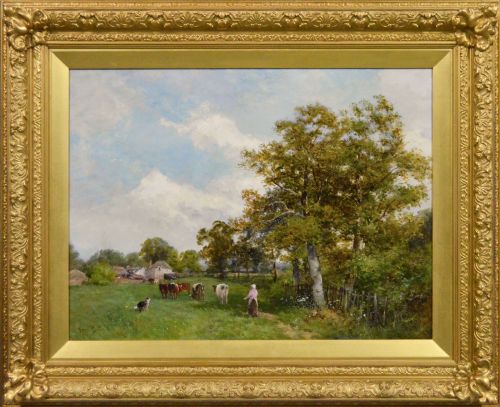
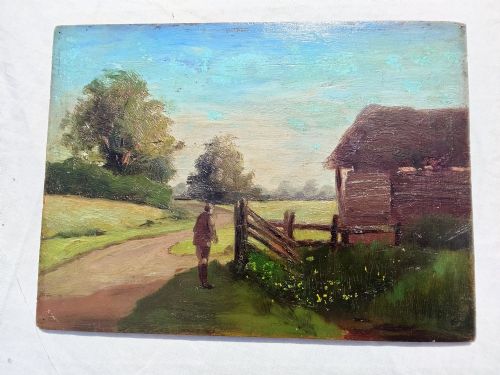
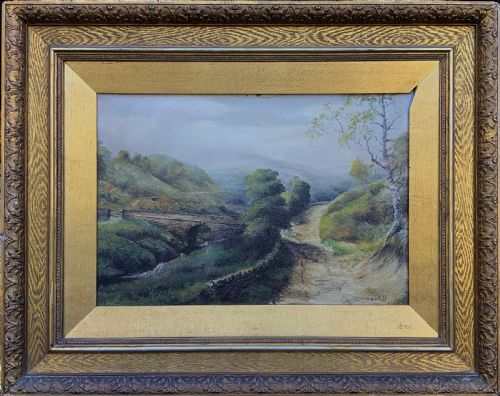
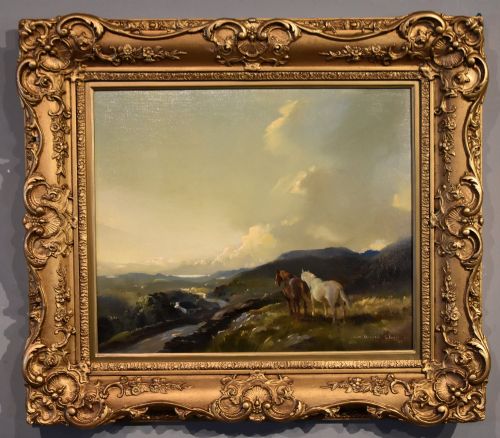
When buyers search for a traditional british countryside oil, they are looking at framed canvases and wood panels depicting pastoral river valleys, harvest fields, and cottages across England and Wales. The pieces on this page span from the Victorian period through the mid-twentieth century, capturing rural life in oils.
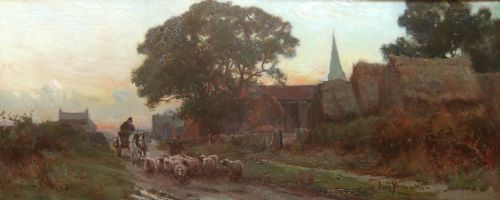
Most works represent nineteenth-century pastoral traditions or early twentieth-century British Impressionism and realism. Subjects range from cattle grazing near woodlands to figures tending sheep in Yorkshire, Devon, and North Wales.
Framed in period giltwood or gesso mouldings, these fine art paintings reflect the changing light of rural seasons. The selection includes works by named British painters as well as English School pieces.
Materials and Technique
Artists painted primarily with oil paint on stretched canvas or prepared wooden boards, building up layers of pigment to capture the texture of fields, water, and skies. Canvas supports allowed for larger romantic landscapes, while wood panels suited smaller plein-air river views.
The frames are constructed from wood finished with gesso and gilt, adding traditional decorative weight to the artwork. Pigments were applied using varying brush techniques, from the tight detail of nineteenth-century pastoral scenes to the looser brushwork of later British Impressionism.
Listings feature works from the 19th Century, Victorian era, and 1910 through 1960, utilising oil paint on canvas and wood.
Quality and Execution
Quality in these paintings rests on the artist's command of light, atmospheric depth, and naturalistic proportion within the landscape. Superior works manage colour and shadow to create genuine spatial perspective rather than flat topographical recording.
The handling of secondary elements, such as cattle, figures, or foliage, distinguishes accomplished academic hands from lesser provincial copyists. Original period framing also contributes to the integrity of the piece.
Richard Sebastian Bond·William H Myers·George Graham·William Joseph Shayer Senior·Thomas Barker of Bath·David Bates·Vernon DeBeauvoir Ward·John Horace Hooper·Hubert Wellington·Owen Bowen·Charles Walter Simpson·William Henry Mander·Herbert Royle·John Sanderson Wells·Reginald Grange Brundrit·Alfred Augustus Glendening Jnr·William Sydney Cooper·Thomas Spinks·Robert John Hammond·William Greaves·William Mellor·Walter J Watson·Robert Finley McIntyre·James Gunson Atkinson·James William Booth
The Traditional British Countryside Oil Glossary
- Oil on Canvas
- Pigment mixed with drying oil applied to a woven fabric stretched across a wooden frame. This surface provides traditional texture for nineteenth-century landscape painting.
- Giltwood
- Wood carved and covered with a thin layer of gold leaf or gold-coloured metal. It is commonly found on traditional frames from the Victorian and Edwardian eras.
- Gesso
- A plaster-like mixture applied to wood or canvas as a base for painting or frame moulding. It creates a smooth surface for subsequent gilding and decoration.
- British Impressionism
- A painting style emerging in the late nineteenth and early twentieth centuries focusing on everyday subjects and light. Artists used visible brushstrokes to capture fleeting effects in the countryside.
- English School
- A designation for works produced by British artists sharing stylistic traditions without belonging to a formal academy. This term helps identify regional landscapes of the nineteenth century.
Traditional British Countryside Oil: Frequently Asked Questions
How do I date an antique countryside oil painting?
Dating relies on the style of the canvas stretcher, framing materials, and artist signatures recorded in historical records. Victorian works often feature tighter brushwork, while twentieth-century pieces adopt looser impressionistic application.
Examining the back of the canvas or wood panel frequently reveals old exhibition labels, dealer stamps, or handwritten titles that confirm the period of creation.
Where were most British pastoral landscapes painted?
Artists traditionally sought out picturesque river valleys, rural farmland, and coastal regions across England and Wales. Popular locations include the River Severn, North Wales, Yorkshire, and Kent.
Painters travelled to these rural spots to sketch local cottages, harvest fields, and livestock in natural settings.
How should I care for an oil painting on canvas?
Keep paintings away from direct sunlight, high humidity, and rapid temperature fluctuations to prevent the canvas from sagging and the oil paint from cracking. Dust the surface gently with a soft, dry brush without applying pressure.
Avoid using water or chemical cleaners on the paint layer or the giltwood frame.
What is the difference between canvas and wood panel paintings?
Canvas provides a flexible, textured surface suitable for larger landscape compositions that could be easily transported and stretched. Wood panels offer a rigid support favoured for smaller, direct outdoor sketches.
Both materials were standard in British studios throughout the nineteenth and twentieth centuries.