

Traditional British Country Painting
Traditional British Country Painting captures rural life, rolling landscapes and agricultural scenes across the nineteenth and twentieth centuries.
Traditional British Country Painting
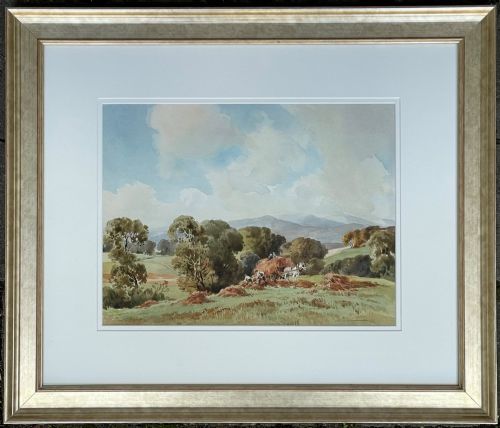
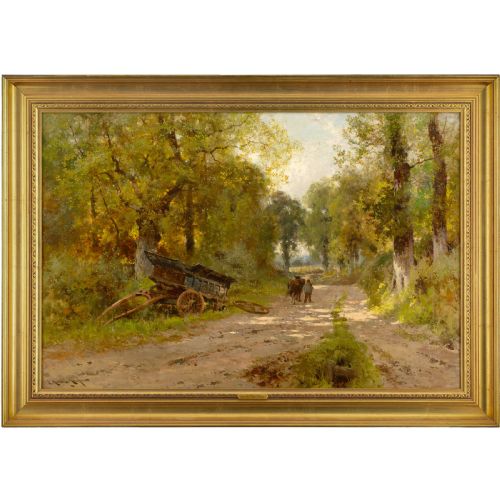
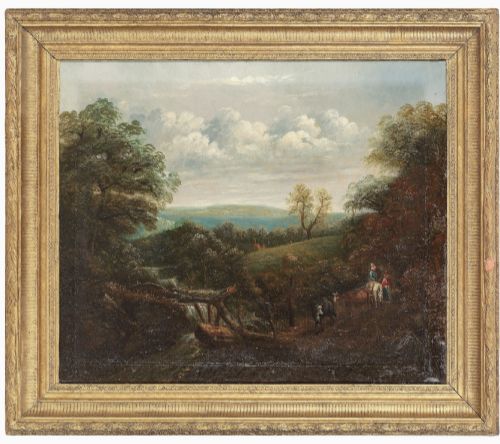
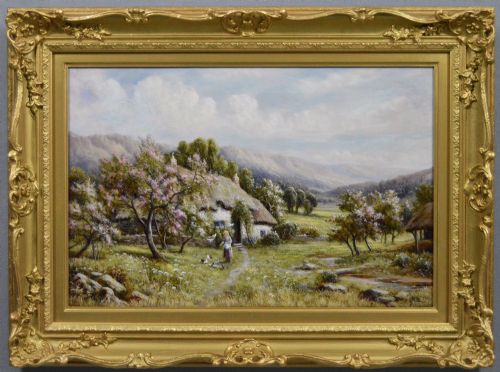
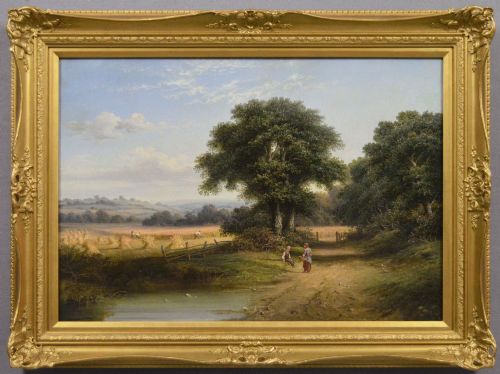
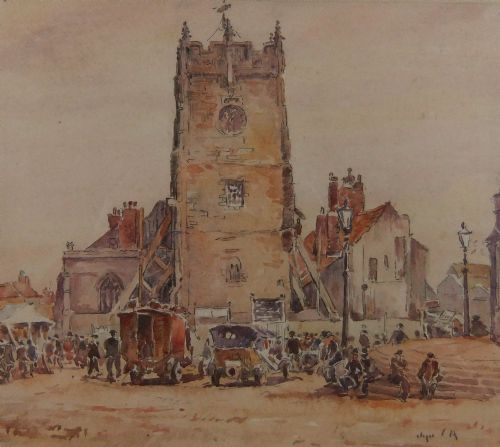
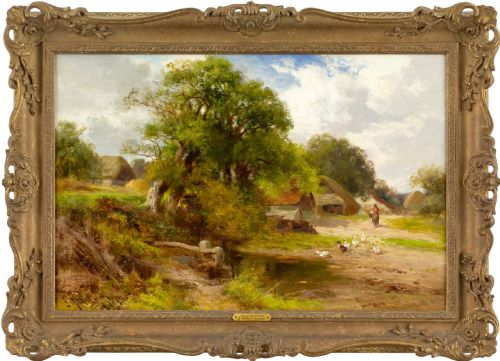
Traditional British country painting encompasses rural scenes, agricultural life, river landscapes and sporting subjects created across the nineteenth and twentieth centuries. These works record regional topography, village cottages, livestock and figures engaged in daily country pursuits.
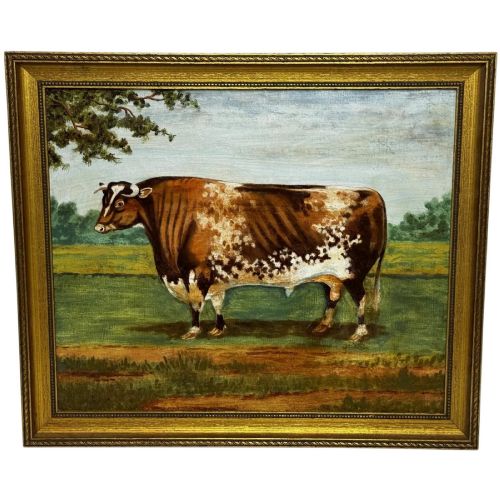
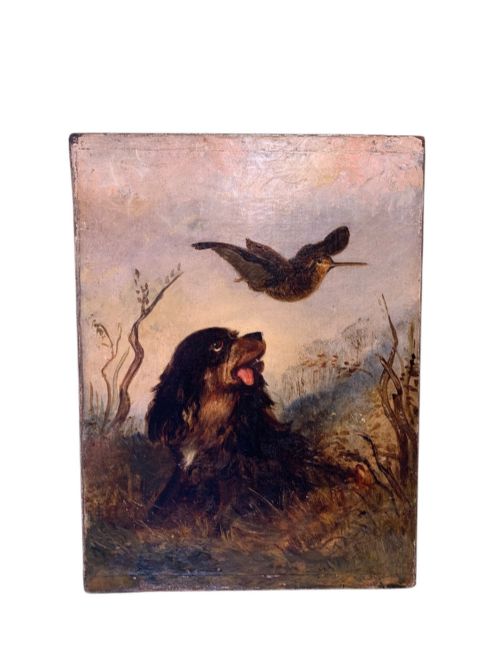
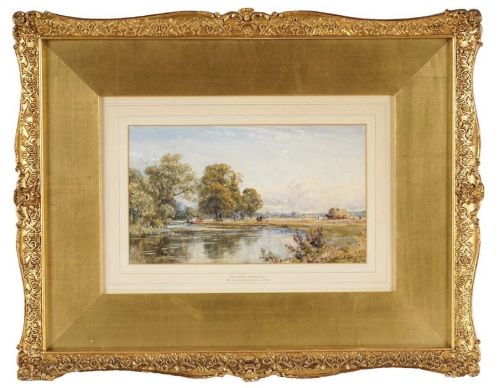
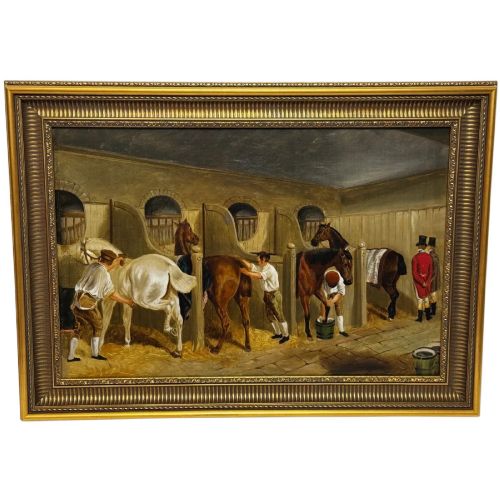
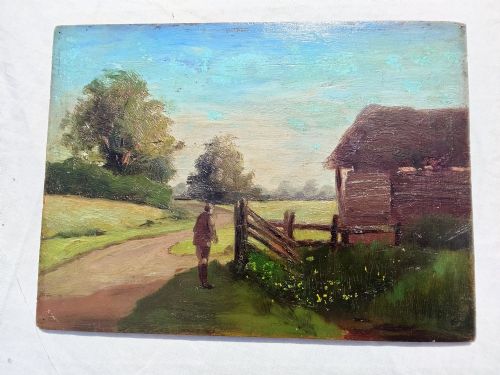
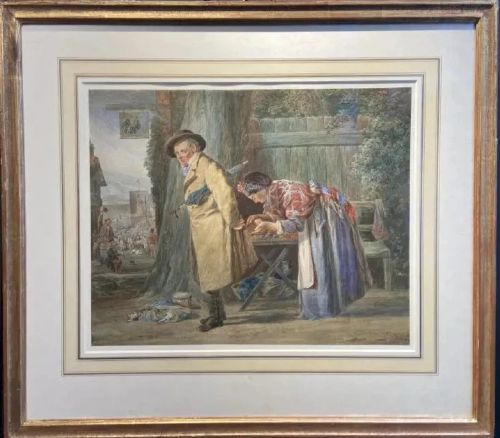
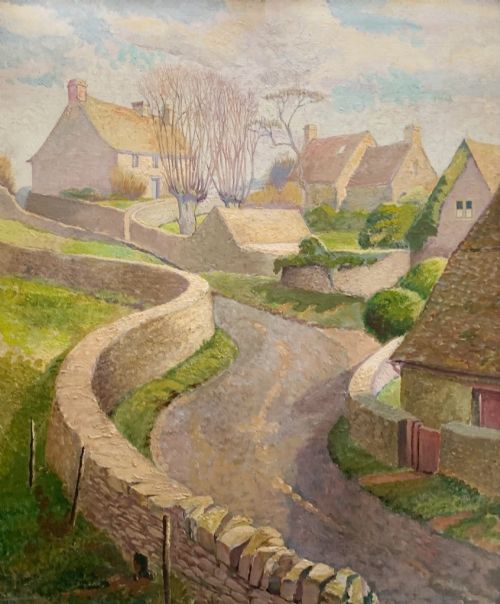
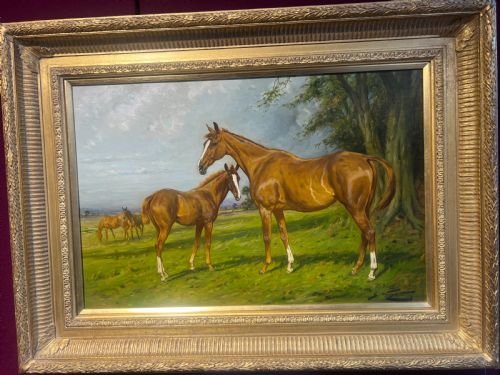
The pieces appearing on this page range from Victorian pastoral canvases and Edwardian watercolours to mid-twentieth-century oil paintings on panel and board. Rural landscapes dominate the selection, alongside equestrian studies and depictions of local fauna.
Makers represented span named artists of the English School and regional painters working from the Georgian period through to the nineteen-sixties. Buyers encounter both signed cabinet pieces by established practitioners and atmospheric works by uncredited regional hands.
Materials and technique
Artists painted primarily in oil on canvas, wooden panel or board, alongside watercolours executed on paper. Giltwood and gilt frames frequently accompany these works, providing period housing that complements the palette of the rural subject matter.
Brushwork varies from the tight realism of Victorian sporting art to the looser handling found in British Impressionism and twentieth-century regional landscapes. Pigments were applied with varying impasto, depending on whether the artist worked en plein air or finished the canvas within a studio.
Listings span the nineteenth and twentieth centuries, featuring oil on canvas, watercolour and wood panel supports.
Distinctions in quality
Quality rests upon the sureness of draughtsmanship, the atmospheric handling of light and weather, and the structural integrity of the painted surface. Superior examples demonstrate a confident command of perspective and naturalistic colour harmony rather than formulaic composition.
The handling of specific elements such as livestock anatomy, foliage texture and water reflections separates accomplished works from routine topographical production. Frame suitability and preservation of the original support further distinguish the upper tier of works.
Percy Lancaster·William Howard Hardy·John Horace Hooper·Robert John Hammond·Walter Heath Williams·Robert Thorne Waite·John Smith Atherton·Joseph H Barnes·George Wright·William Albert Clarke·Carl Whitfield·A M Gauci·Hubert Wellington·Owen Bowen·Charles Walter Simpson·John Arthur Lomax·Robert Little·Henry John Kinnaird·Henry John Yeend King·Philip Henry Rideout·George Armfield·J Phipps·George Hilditch
The Traditional British Country Painting Glossary
- Oil on Canvas
- A painting medium where pigments bound in oil are applied to stretched woven fabric. This surface provides flexibility and allows for rich colour layering.
- Watercolour
- A painting method where fine pigment particles are suspended in a water-soluble binder on paper. It creates translucent washes suited to atmospheric landscape effects.
- Giltwood
- Wood carved and coated with a thin layer of gold leaf or metallic powder. It forms the decorative framing typical of nineteenth-century fine art.
- English School
- A classification for artists trained or working primarily within Britain. It groups stylistic traditions rather than a single formal academy.
- Impasto
- Paint applied thickly to a canvas or panel so that the brush or palette knife marks remain visible. This technique adds tactile depth to the surface.
Traditional British Country Painting: Frequently Asked Questions
What subjects appear in these paintings?
The works depict rural topography, harvest fields, thatched cottages, livestock, rivers and hunting scenes across Britain.
Artists focused on recording the changing seasons, local characters and the agricultural landscape of their respective counties.
How do I date a landscape painting?
Dating relies upon costume details of any figures present, agricultural equipment shown, framing style and the canvas or board support.
Signatures, artist registry dates and stretcher construction further help narrow the period of execution.
Are watercolours as durable as oils?
Watercolours on paper require protection from direct sunlight and moisture to prevent fading and foxing over time.
Oils on canvas or panel offer greater resilience, though both mediums benefit from stable indoor humidity and professional framing.
What defines the English School style?
The English School encompasses a naturalist approach to landscape and genre painting developed through observation of domestic scenery.
It reflects shifting attitudes towards rural life, picturesque topography and plein air sketching across successive centuries.