





Traditional Brass Umbrella Stand
These traditional brass umbrella stand designs bring practical organisation to an entrance hall while grounding the room in heavy metal and rich timber.
Traditional Brass Umbrella Stand
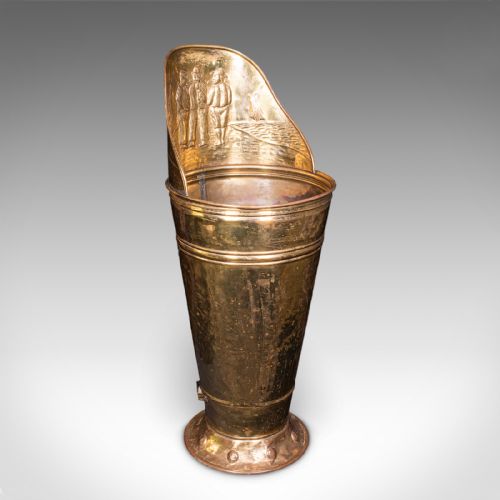
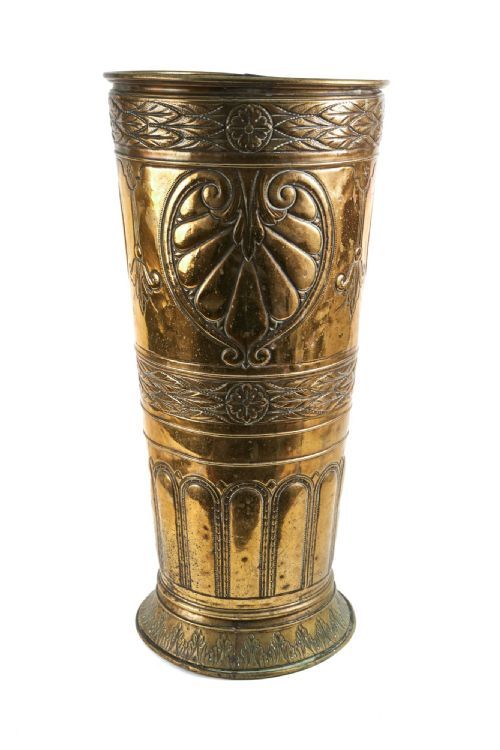
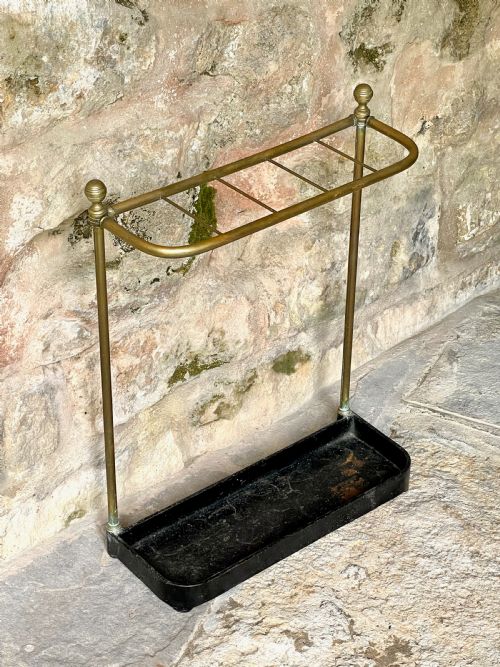
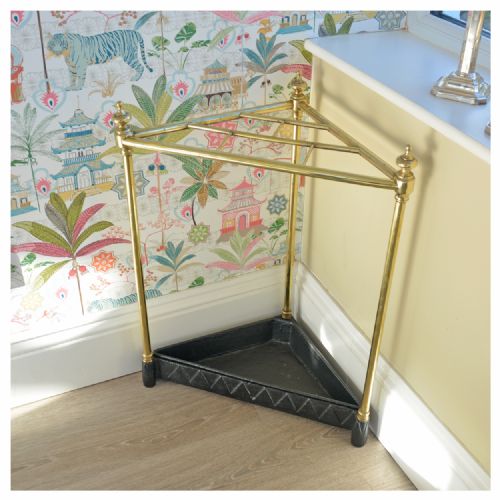
A traditional brass umbrella stand serves as a hall furnishing designed to hold walking sticks, canes and wet umbrellas. You will frequently encounter forms combining gleaming metal with dark timber bodies, alongside standalone cast iron and brass configurations.
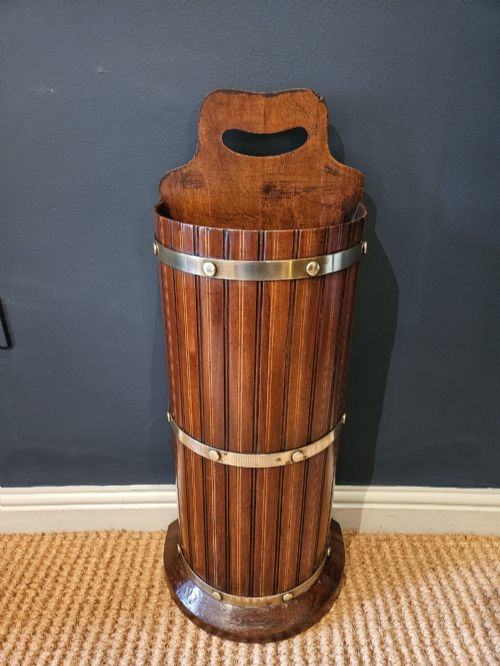
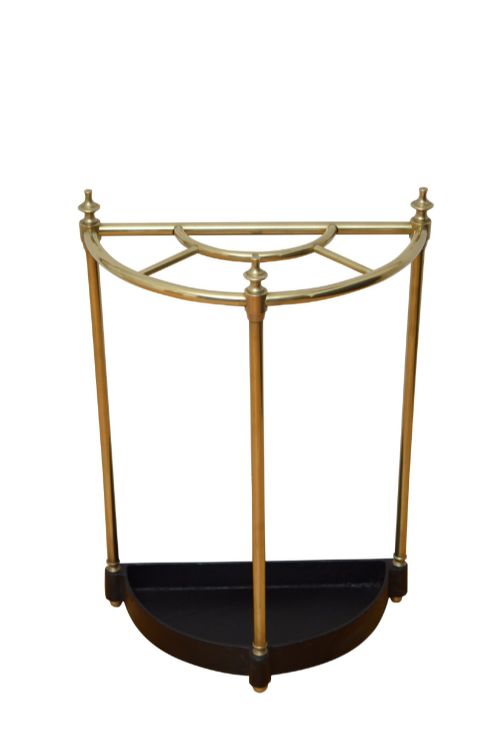
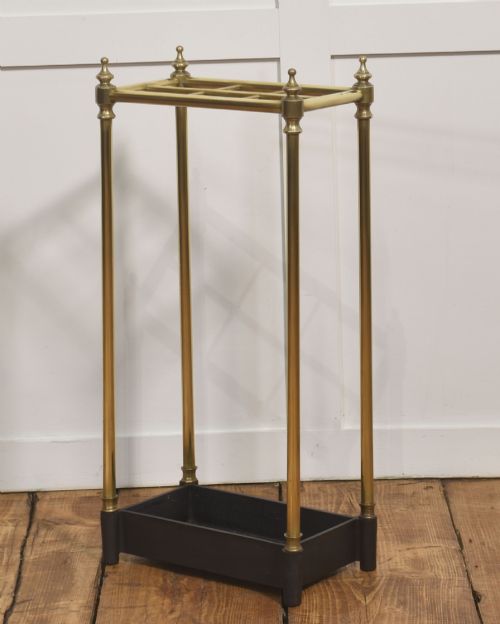
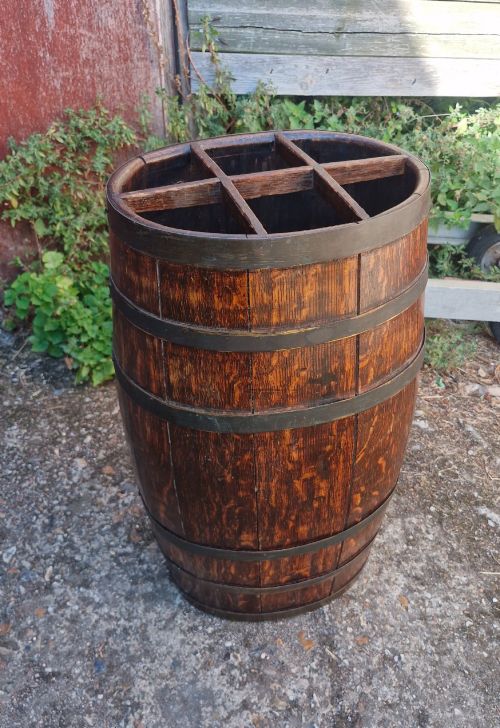
The selections visible here span the Victorian era, the Edwardian period and the early twentieth century. Pieces range from semi-lune wall-hugging shapes to deep corner units and coopered barrels bound with metal bands.
English Country and Dutch Traditional aesthetic influences appear across the inventory. These domestic vessels demonstrate how everyday utilitarian hallway items received careful decorative attention during the nineteenth and twentieth centuries.
How they were made
Maker methods rely heavily on the combination of turned or coopered timbers like oak, mahogany and walnut with durable metal fittings. Coopers constructed barrel forms using staves held tightly together by heavy metal hoops.
Foundries cast iron and brass into structural frames and decorative trays designed to catch rainwater from wet sticks. Rivets, screws and bindings secure the metal components to the wooden staves and frames.
Traditional Brass Umbrella Stand Retail Price Guide 2026
Typical asking prices for traditional brass umbrella stand among the pieces listed under this phrase on Sellingantiques today, from the lower quarter to the upper quarter. They describe what is for sale here now, not the wider market.
Many of these stands spent over a century catching rain from dripping umbrellas before ever entering the antique market.
What varies in quality
Quality rests in the weight of the metal and the selection of timber used for the body. Dense mahogany, walnut and quarter-sawn oak distinguish finer examples from simpler utilitarian vessels.
The refinement of the casting and the crispness of any applied decoration separate ordinary hall items from more ambitious country house pieces. Substantial gauge brass and robust cast iron bases provide enduring stability.
The Traditional Brass Umbrella Stand Glossary
- Demi Lune
- A half-moon shape allowing the stand to sit flush against an entrance hallway wall. This profile makes efficient use of narrow spaces.
- Coopered
- Built from wooden staves joined vertically and bound with encircling metal bands, mirroring traditional cask-making techniques. This method provides immense structural strength.
- Cast Iron
- Molten iron poured into a mould to form rigid, heavy structural bases and frames. It prevents the stand from tipping under the weight of wet umbrellas.
- Stick Stand
- An alternative term for an umbrella stand, often highlighting accommodation for walking canes and riding crops. These items share identical forms.
- Oak
- A durable hardwood featuring prominent grain patterns, frequently utilised for coopered barrels and frames. It resists moisture well when properly treated.
Traditional Brass Umbrella Stand: Frequently Asked Questions
Where should I place an umbrella stand?
These items belong in an entrance hall, porch or boot room where guests arrive and depart. Positioning them near the front door catches dripping rain before moisture reaches interior floorboards.
Ensure there is adequate clearance around the piece so walking sticks and canes can be removed easily without disturbing surrounding furniture.
How do I clean brass and wood?
Dust wooden surfaces gently with a dry cloth and feed the timber occasionally with appropriate wax to preserve the finish. Avoid harsh chemical polishes on the brass if you wish to maintain an aged patina.
Dry the metal framework thoroughly after removing any standing water from the base tray to prevent corrosion over time.
Can these hold heavy walking canes?
The substantial weight of cast iron and thick timber frames provides a stable base for heavy walking sticks and agricultural canes. The sturdy construction prevents tipping when multiple items are loaded into the vessel.
Narrow corner formats and deep barrels distribute weight efficiently toward the floor, keeping taller items secure.
How do I identify a Victorian piece?
Victorian examples often feature rich mahogany or walnut timbers combined with heavy brass bindings and deep cast iron drip trays. Look for robust construction methods typical of nineteenth-century domestic workshop production.
Stylistic cues draw upon English Country and Dutch Traditional design vocabulary common during the reign of Queen Victoria.