
Traditional Brass Chandelier Light
Traditional brass chandelier light fixtures bring substantial weight and warm metal tones to high ceilings, offering enduring illumination.
Traditional Brass Chandelier Light
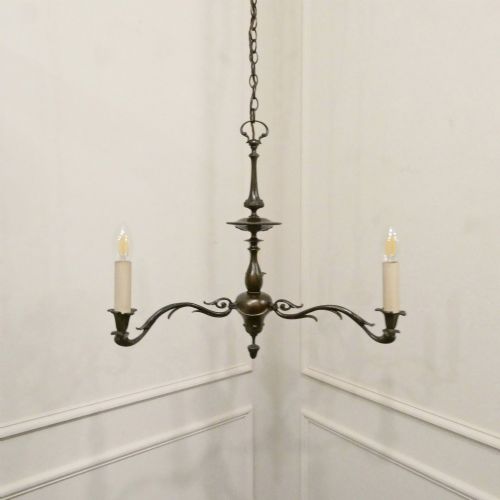
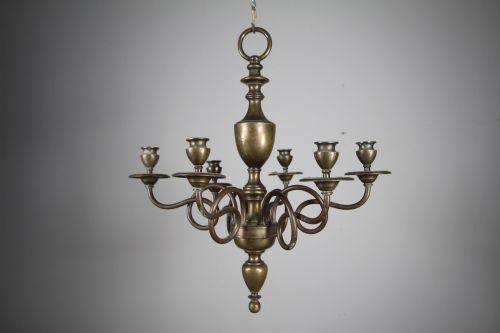
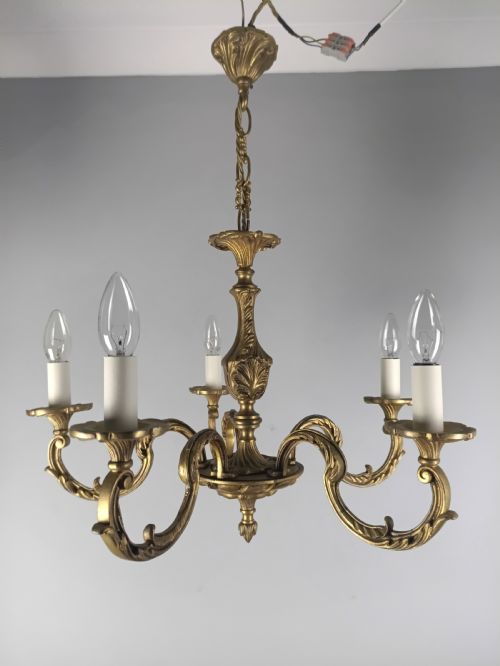
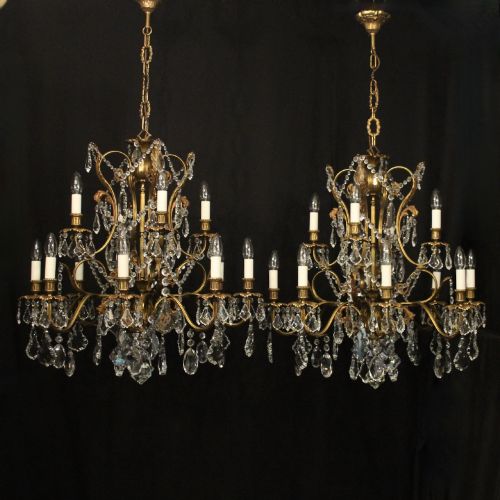
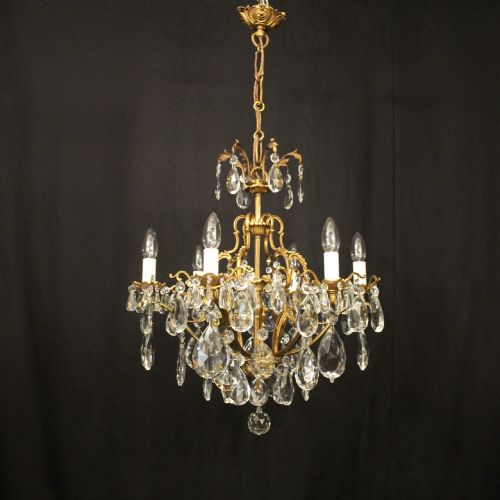
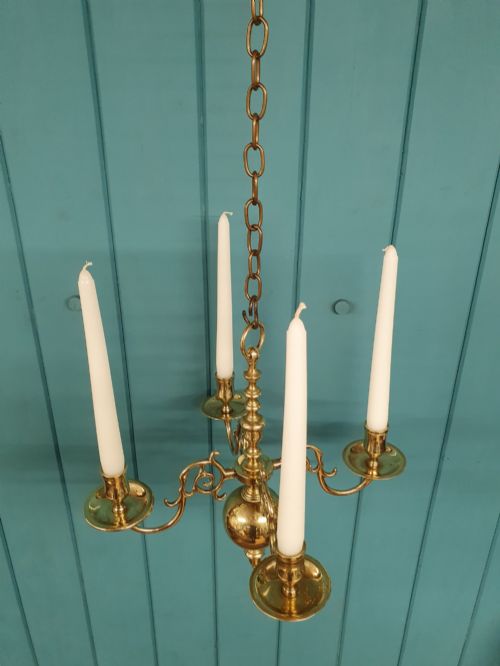
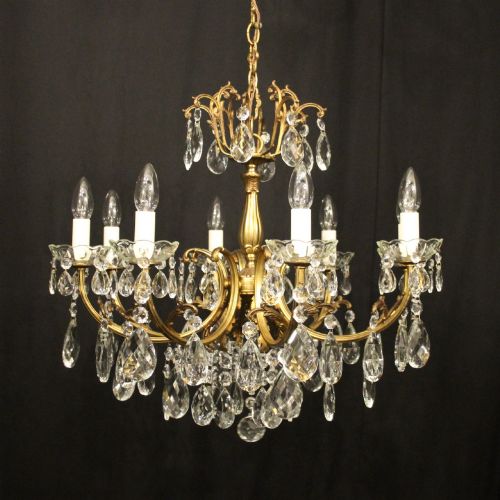
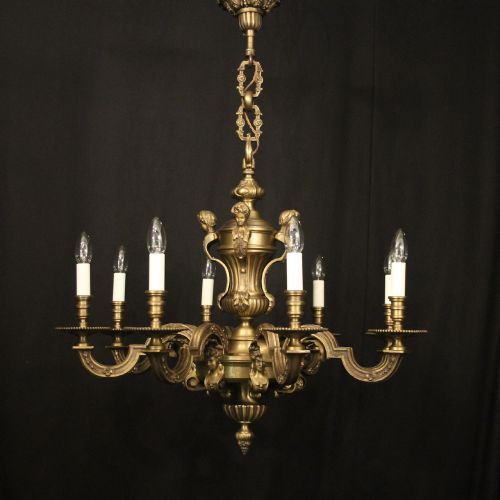
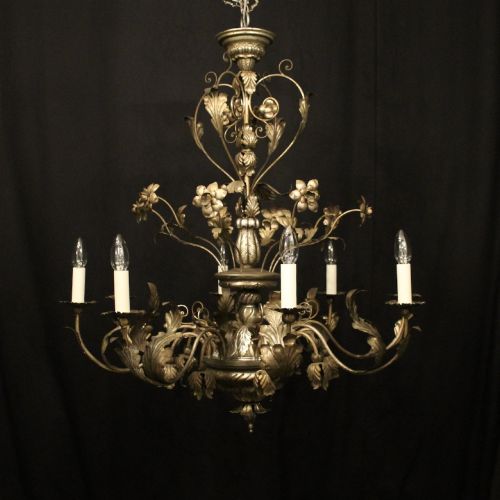
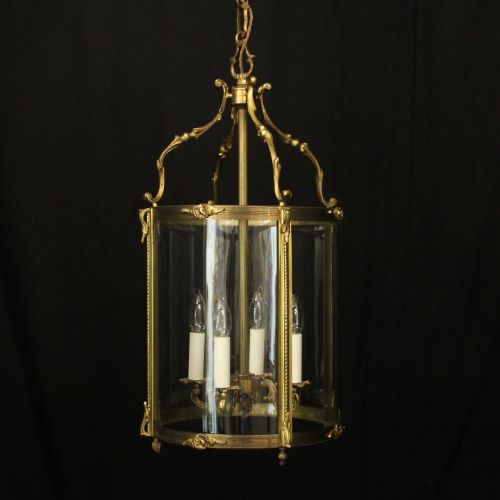
A traditional brass chandelier light serves as a primary ceiling-hung focal point, drawing the eye upward with multi-armed or lantern formations. When exploring this selection, buyers encounter brass structures originating across the nineteenth and early twentieth centuries, spanning Edwardian, Victorian, and various revival aesthetics.
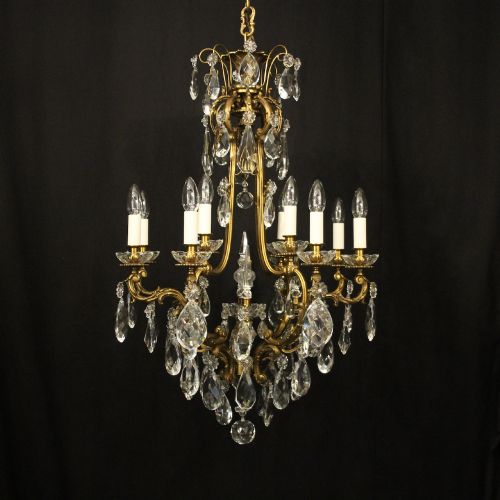
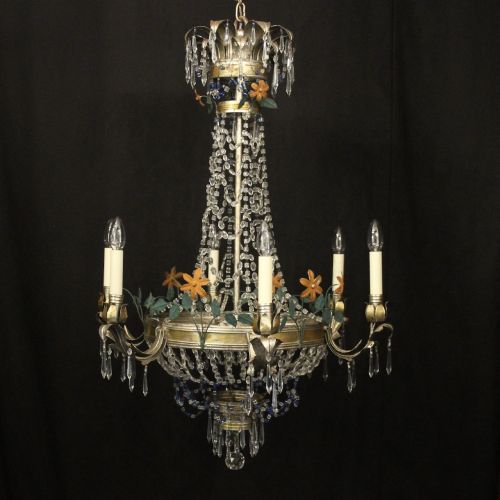
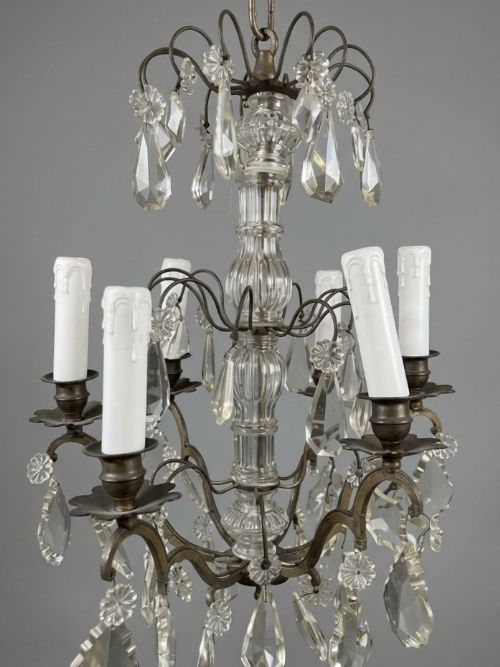
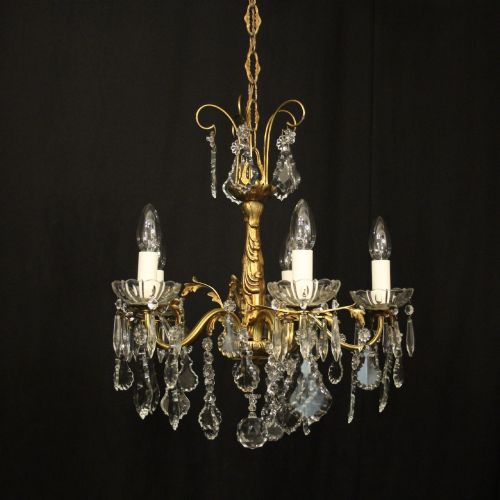
The objects take several distinct structural forms, most notably multi-light candelabra chandeliers, enclosed hall lanterns, and pendant ceiling lights. French château, Rococo, and Empire designs appear frequently alongside English and Italian interpretations, often incorporating numerous candle arms.
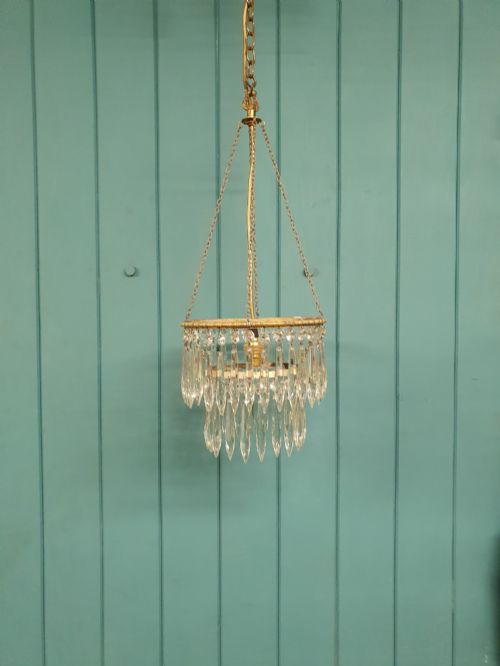
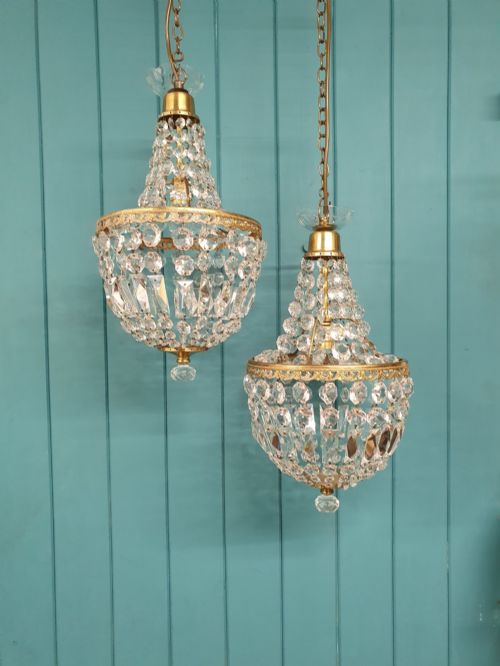
Pieces frequently integrate hanging crystal lustres, glass drops, or waterfall configurations that refract light across a room. Buyers are most likely to meet multi-armed brass fixtures dating from the early decades of the twentieth century, particularly nineteen-twenty and nineteen-thirty productions.
Materials and construction methods
Makers utilised cast and sheet brass, frequently applying gilt, ormolu, or dark bronze finishes to the primary metal framework. Copper and gesso elements also appear alongside the dominant brass components, providing structural variety and contrasting metallic accents within specific regional styles.
Transparency and sparkle are achieved through the integration of cut glass and crystal, suspended from the metal frames using wire loops or pins. These glass drops, beads, and waterfall formations require careful manual assembly to complement the supporting brass armature.
Some Edwardian hall lanterns hide tiny convex mirrors designed to bounce candlelight into dark Victorian hallways before electricity took over.
What separates the finest examples
Quality rests in the crispness of the brass casting and the depth of the applied gilding or bronze patination. Finer examples display sharply defined ornamentation, substantial metal weight, and harmonious proportions between the branching arms and the central stem.
The standard of the glass and crystal components further divides the range, where hand-cut facets, clarity, and completeness of original lustres elevate a piece. Superior fixtures maintain integrated wiring methods that respect the historic metal body without compromising structural integrity.
The Traditional Brass Chandelier Light Glossary
- Chandelier
- A branched, decorative ceiling-hung lighting fixture designed to hold multiple lamps or candles. These pieces form the centrepiece of formal rooms.
- Lustre
- A cut glass or crystal pendant suspended from a lighting fixture to refract and enhance illumination. They catch and scatter light across surrounding walls.
- Ormolu
- Gilded bronze or brass applied to decorative objects and furniture mounts. This finish provides a rich, golden metallic lustre.
- Plafonnier
- A flush-mounted or semi-flush ceiling light bowl sitting close to the plaster. These suit rooms with restricted vertical clearance.
- Tent and waterfall
- A specific crystal arrangement featuring an upper canopy of strings forming a tent shape above a cascading drop of beads. This configuration defines grand Empire and neo-classical styling.
Traditional Brass Chandelier Light: Frequently Asked Questions
How do I hang a heavy brass chandelier safely?
Hanging a heavy brass chandelier requires securing the fixture directly into ceiling joists or installing a heavy-duty metal ceiling box capable of supporting the combined weight of the metal and crystal.
Professional electrical installation is strongly advised to ensure the internal wiring safely handles the load of multiple lamp holders.
How do I clean crystal lustres without damaging the frame?
Crystal lustres should be gently wiped by hand using a mild solution of warm water and a gentle cleaning agent while still attached, or carefully removed for individual washing.
Avoid spraying liquid directly onto the brass frame to prevent moisture damage to historical patination and electrical components.
What is the difference between an Empire revival and a French Rococo light?
Empire revival lighting relies on symmetrical neo-classical motifs, military-inspired laurel wreaths, and structured crystal waterfall configurations that project architectural dignity.
French Rococo designs favour asymmetrical scrollwork, naturalistic leaf motifs, and flamboyant curves that project organic movement.
Can these antique lights accommodate modern electrical bulbs?
Most antique fixtures accept standard modern candle bulbs, provided the internal lampholders match contemporary sizing and voltage requirements.
Rewiring is commonly updated by specialists to meet current safety standards while preserving the exterior historic appearance.