
Crystal Drop Pendant Fitting
A crystal drop pendant fitting brings hanging illumination and refractive sparkle to a room, drawing the eye upwards with glass and metal.
Crystal Drop Pendant Fitting
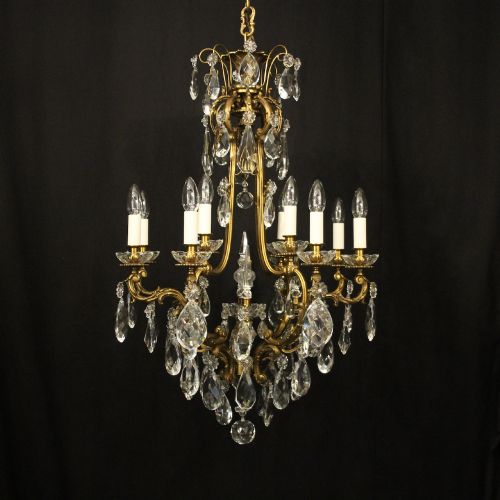
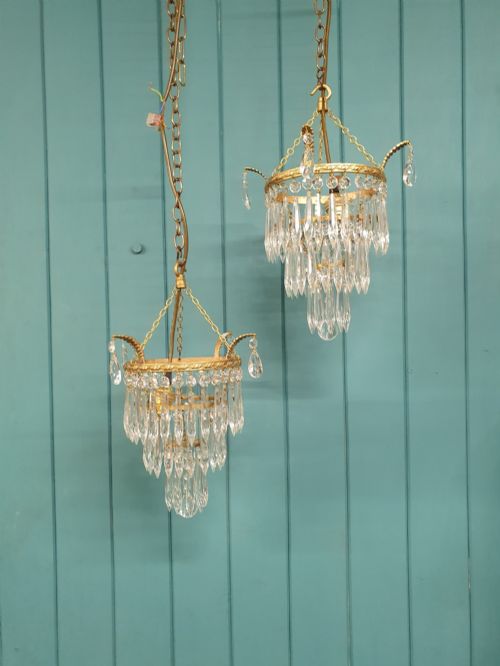
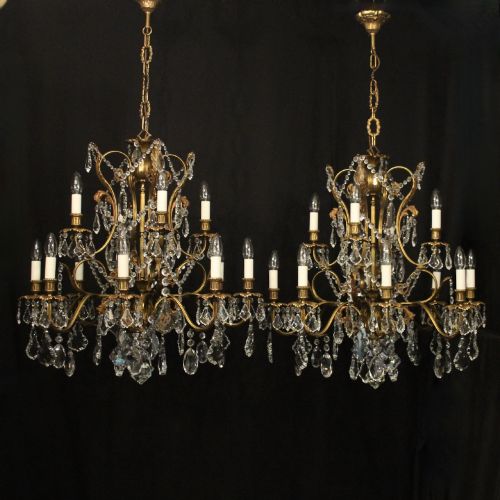
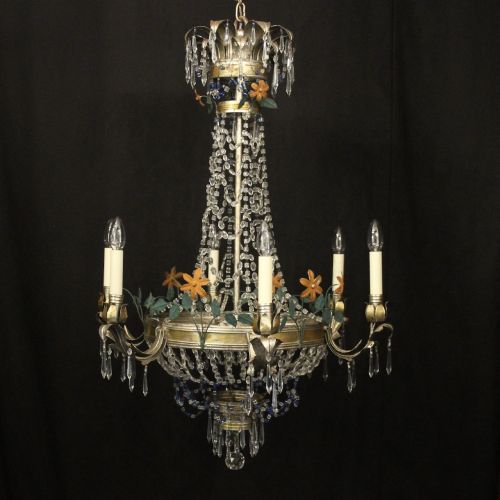
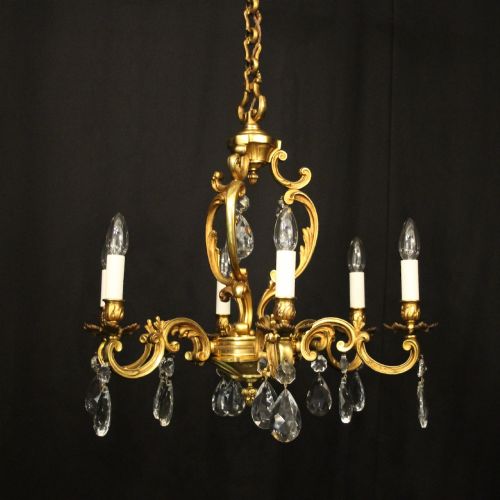
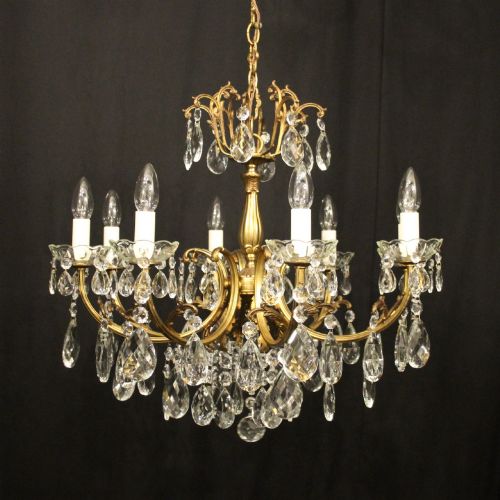
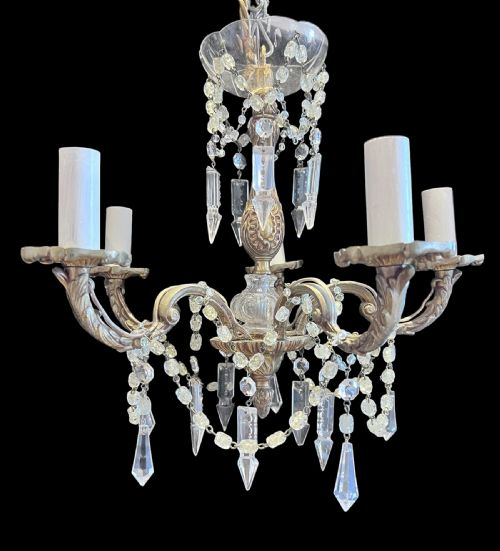
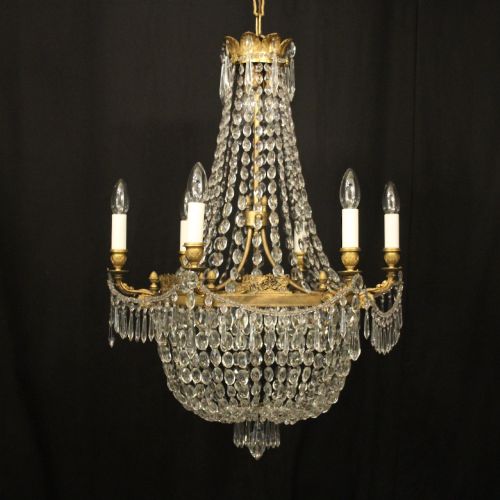
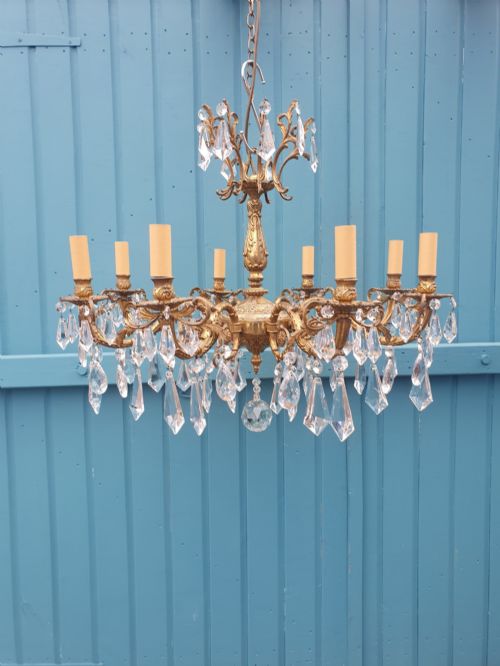
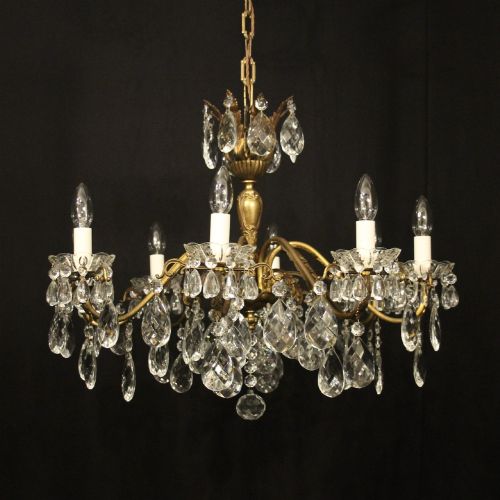
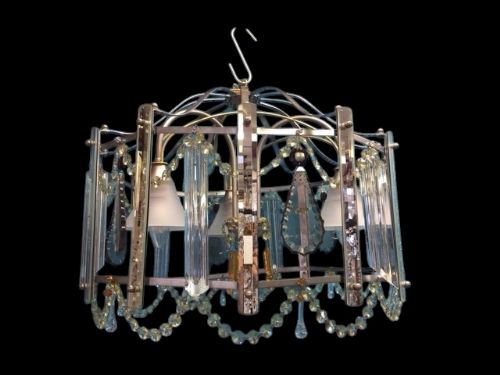
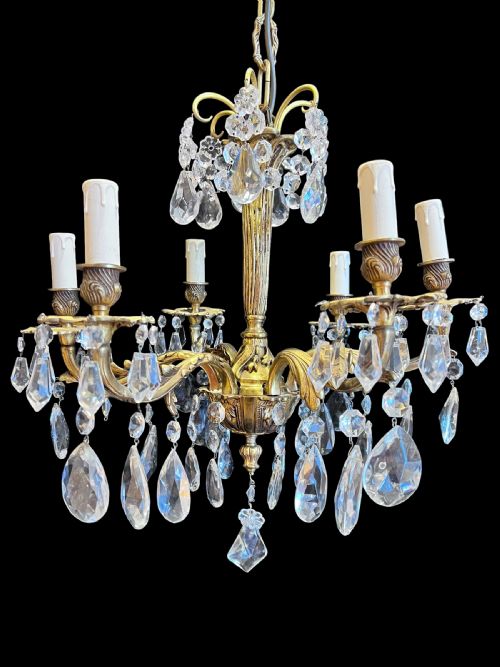
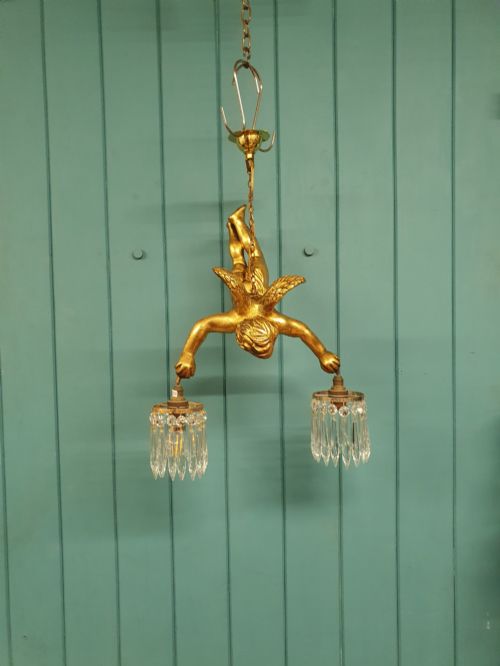
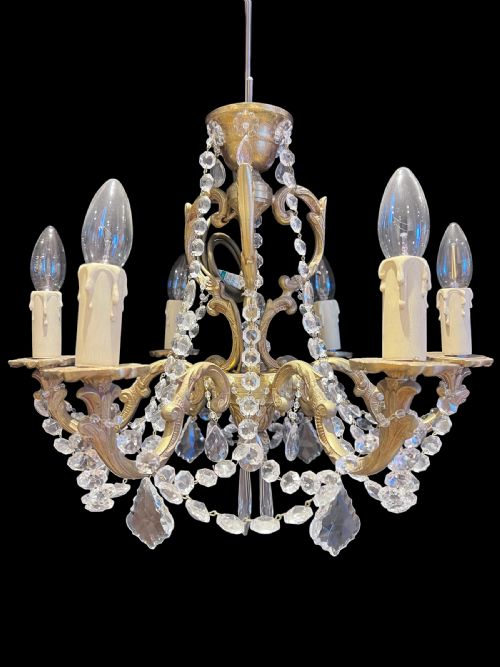
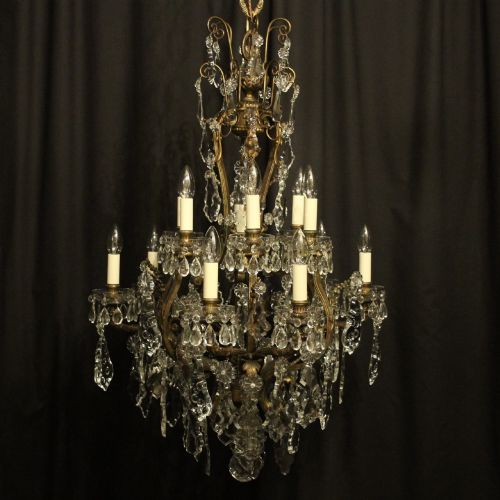
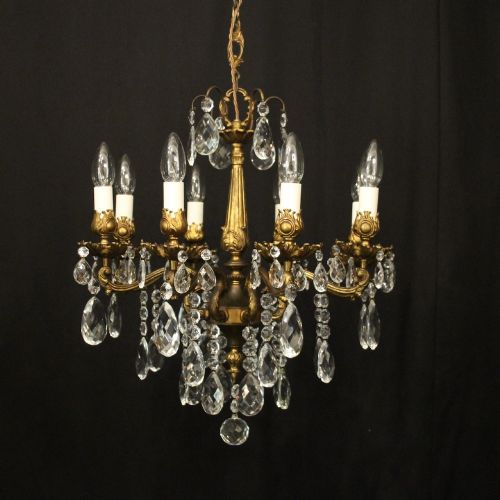
When you search for a crystal drop pendant fitting, you encounter ceiling fixtures and chandeliers designed to suspend illumination while dispersing light through glass elements. These pieces span periods from the nineteenth century through the Edwardian era and into the nineteen-thirties, encompassing styles from French Empire and Rococo to Art Deco. You are most likely to meet multi-light chandeliers and smaller pendant lights featuring arrangements of cut glass drops, spikes, and prisms.
The physical forms include tent and waterfall designs, bag chandeliers, and simple single-light fixtures suspended on chains or mounts. Origins trace predominantly to French workshops and Italian makers, alongside Swedish and English examples recorded in the evidence. Materials range from solid brass and gilded bronze to wrought iron and toleware, all supporting extensive glass crystal ornamentation.
How they were made
Makers constructed the structural frames of these pendant fittings using cast brass, gilded bronze, spelter, and wrought iron to bear the weight of numerous light branches and glass components. Metalwork involved casting, gilding, and silvering, providing rigid armatures shaped into floral, scroll, or architectural motifs depending on the stylistic period.
Glass elements were shaped through cutting, moulding, and polishing to create individual drops, prisms, spikes, and coffin beads that scatter illumination. Craftsmen wired these components onto the metal frames using brass pins and wire loops, assembling complex tent and bag configurations by hand.
Periods represented span from the nineteenth century through the Edwardian era to the nineteen-thirties.
What varies in quality
The distinction between tiers of quality rests upon the precision of the metal casting and the clarity of the glass work. Superior examples exhibit finely chiselled bronze or heavy brass mounts with crisp detailing, whereas simpler pieces utilise lighter stamped or cast metal frames.
Quality also shows in the depth and sharpness of the cut glass drops and prisms. High-grade crystal displays clean facets that refract light sharply, while standard production relies on simpler pressed glass with softer edges.
The Crystal Drop Pendant Fitting Glossary
- Tent and waterfall
- A chandelier design featuring an upper canopy of glass beads strung in a tent shape, dropping down into a tiered waterfall of crystals.
- Prism
- A cut glass pendant designed to refract light into spectral colours. These hang from the arms and rings of the fitting.
- Spelter
- A zinc alloy used as a substitute for bronze in metalwork and decorative figures. It is typically painted or gilded to simulate richer metals.
- Bag chandelier
- A fixture shaped like a tapered bag or basket constructed from fine glass beadwork enclosing the internal lights.
- Gilt bronze
- Bronze metal treated with a thin layer of gold applied through fire-gilding or electroplating. It provides a durable metallic surface finish.
Crystal Drop Pendant Fitting: Frequently Asked Questions
How do I hang a heavy crystal chandelier?
Suspension requires locating a ceiling joist or installing a structural metal bracket capable of supporting the full weight of the metal and glass components. Electrical connection must be routed through the central mounting canopy to the internal wiring.
Professional installation is recommended for larger multi-light fixtures to ensure the ceiling box and hanging chain safely bear the load without shifting over time.
What periods do these chandeliers come from?
The available lighting spans from the nineteenth century through the Edwardian era up to the nineteen-thirties. Styles reflect these eras through French Empire, Rococo, and Art Deco design influences.
Design characteristics shift from ornate gilded bronze tent frames of the eighteen-hundreds to cleaner early twentieth-century brass and glass combinations.
How do I clean a crystal pendant fitting?
Dusting requires gentle wiping of the glass drops and metal arms with a soft dry cloth or a feather duster. For deeper cleaning, remove individual crystals and wash them in warm soapy water before drying thoroughly.
Avoid harsh chemical cleaners on gilded or silvered metal surfaces to prevent stripping the historic finish from the frame.
Are these fittings wired for modern electricity?
Most surviving fixtures have been adapted or rewired at some point in their history to accept standard contemporary bulbs and voltage. Rewiring ensures the internal circuits meet current safety standards for domestic installation.
Checking the existing lamp holders and wire condition upon acquisition confirms whether professional electrical updates are required before mounting.