



Traditional Boudoir Chair
These traditional boudoir chair examples are low, upholstered seats designed for dressing rooms and intimate parlours, offering both period charm and comfortable seating.
Traditional Boudoir Chair
When you search for a traditional boudoir chair, you encounter low-slung seating designed primarily for dressing rooms and bedrooms. The selection here spans Victorian and French Napoleon III styles alongside French Empire pieces.
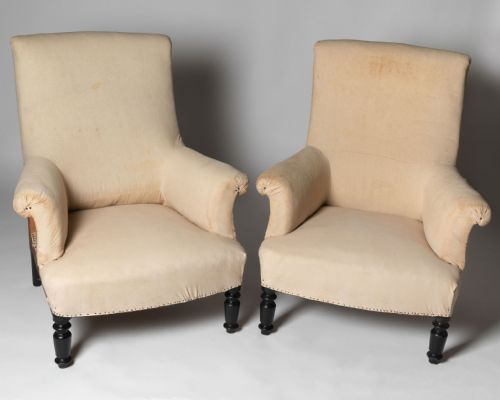
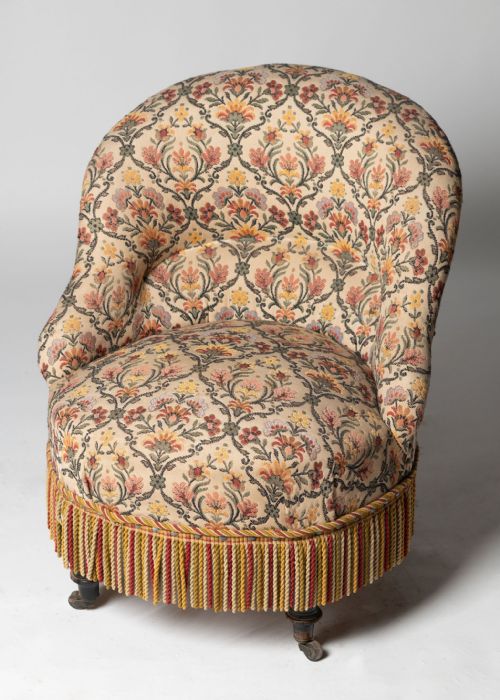
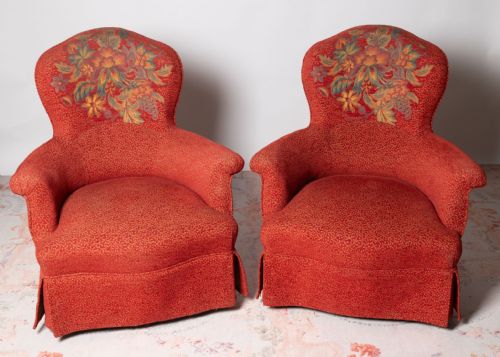
The forms you are most likely to meet on this page include slipper chairs, accent chairs, and armchairs. Many arrive upholstered in calico, linen, hessian, or fabric, ready for recovering.
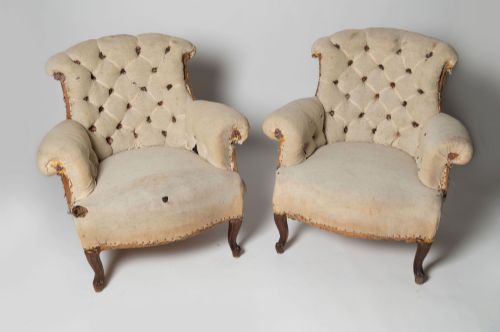
The periods represented stretch across the nineteenth century, including items dated around eighteen-fifty and nineteen hundred. Pairs feature alongside single chairs, offering matching options for a room.
How traditional boudoir chair examples were made
Construction relies upon timber and mahogany frames that provide sturdy foundations beneath deep padding. Wood forms the visible structure on scroll back armchairs and Empire models.
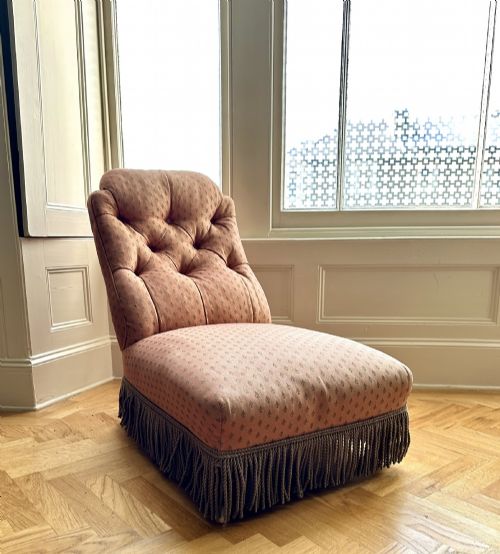
Internal support and foundational layers utilise hessian and calico to hold the padding in place before the final textile layer is applied. Cotton, linen, and assorted fabrics finish the exterior, often complemented by fringe trimming.
Traditional Boudoir Chair Retail Price Guide 2026
Typical asking prices for traditional boudoir chair among the pieces listed under this phrase on Sellingantiques today, from the lower quarter to the upper quarter. They describe what is for sale here now, not the wider market.
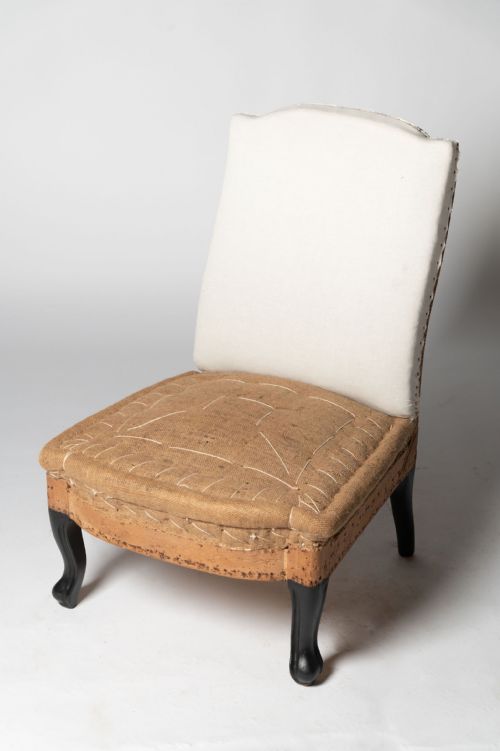
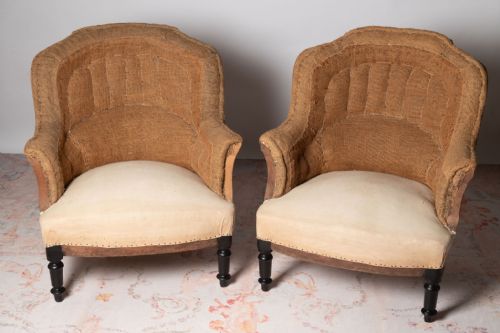
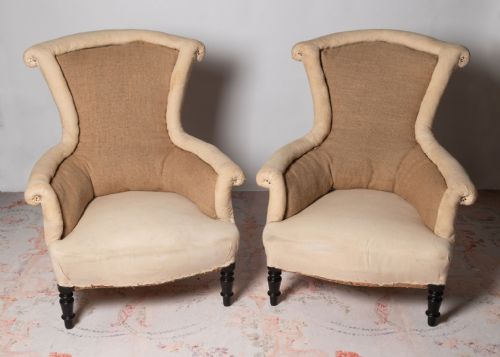
Several chairs wait patiently in bare calico and hessian, resembling well-dressed upholstery ghosts hoping for a colourful new outfit.
What varies in quality across traditional boudoir chair stock
The distinction between standard examples and finer pieces lies in the sophistication of the timber framing and the integrity of the original wood structure. Scroll backs and carved details demand greater joinery skill than plain frames.
Condition varies significantly regarding upholstery, with some pieces retaining historic fabric while others are offered explicitly for recovering. Frames requiring complete reupholstery present different considerations compared to intact period items.
The Traditional Boudoir Chair Glossary
- Slipper chair
- A low-set upholstered chair traditionally used in bedrooms for putting on shoes. These pieces sit close to the floor without arms.
- Hessian
- A coarse woven fabric utilised as foundational wadding support in traditional upholstery. It holds internal stuffing securely within the wooden frame.
- Calico
- A plain-woven cotton fabric employed as an under-layer beneath the final decorative textile. It provides a tight surface for padding.
Traditional Boudoir Chair: Frequently Asked Questions
What is a traditional boudoir chair?
A traditional boudoir chair is a low-seated piece historically kept in a private dressing room or bedroom for personal grooming and relaxation.
These chairs sit closer to the floor than standard parlour seating and often feature supportive upholstered backs without heavy wooden arms.
How were these chairs used historically?
Occupants utilised them in dressing rooms while attending to hair, garments, and footwear during the nineteenth century.
Their compact scale allowed them to fit easily into private sleeping quarters and intimate sitting spaces.
Why do some chairs need upholstery?
Many period pieces survive with worn fabric or exposed calico because previous owners stripped the outer textile for replacement.
This leaves the wooden frame and foundational hessian exposed, allowing buyers to finish the piece in a fabric of their choice.
How do I identify a French Napoleon III chair?
French Napoleon III pieces from the nineteenth century display eclectic revival ornamentation and curved wooden frames.
Details often include scroll backs and shapes designed for comfort in formal or private rooms.