


Traditional Blue White Ceramic
Traditional blue white ceramic pieces combine cobalt pigment and pale earthenware or porcelain to bring enduring pattern into domestic rooms.
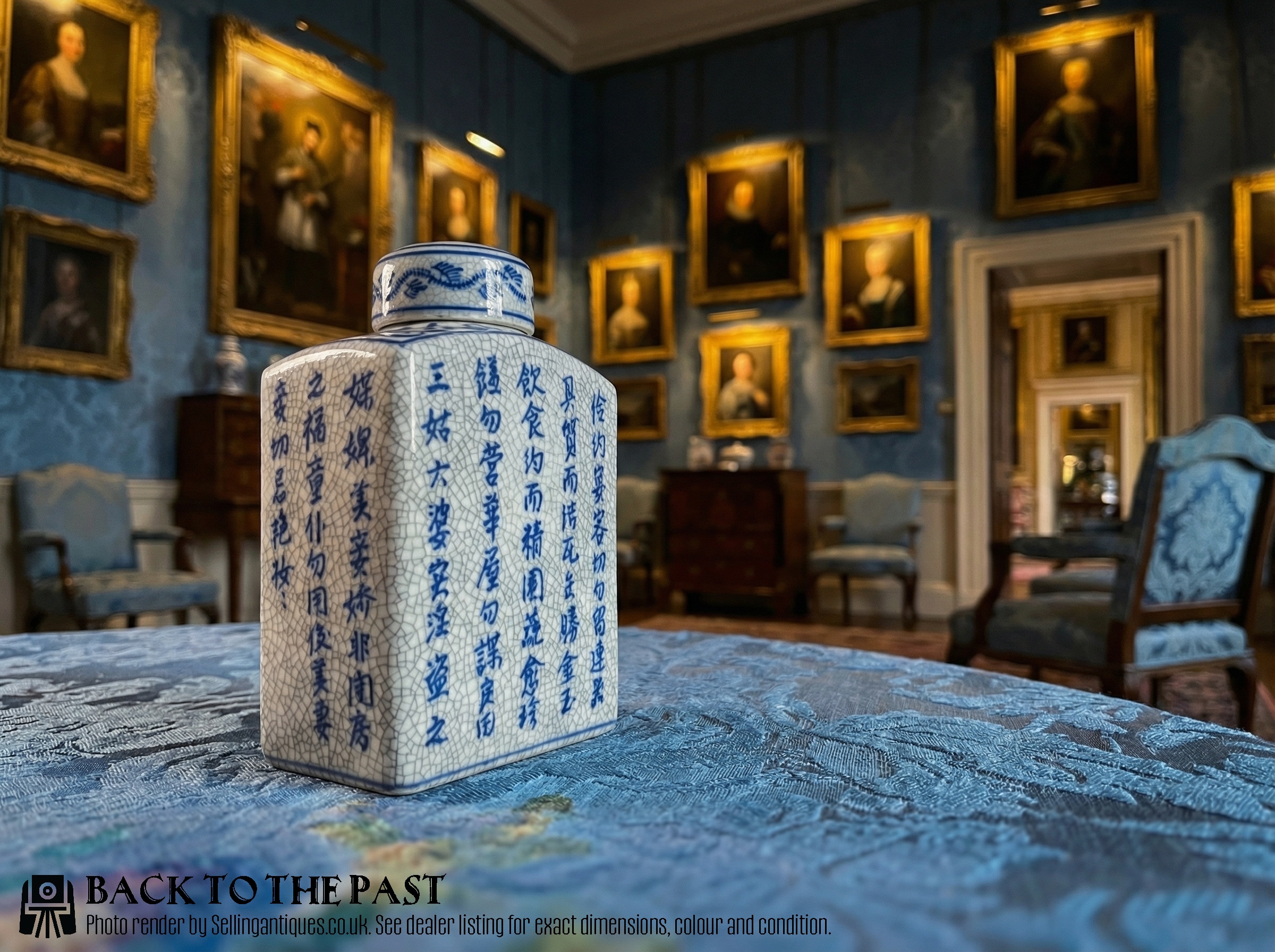
Traditional Blue White Ceramic
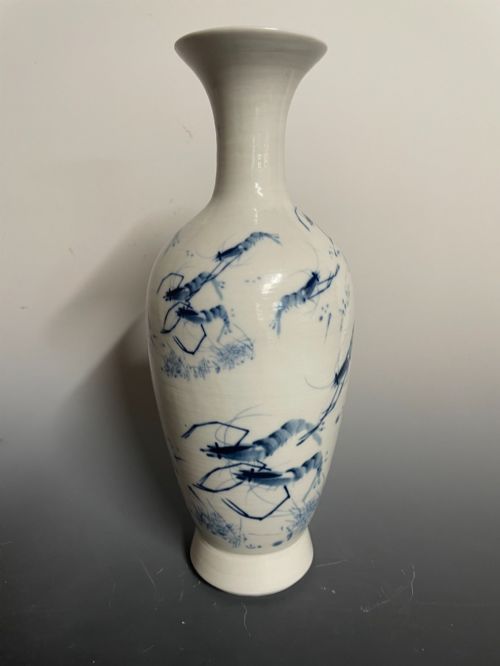
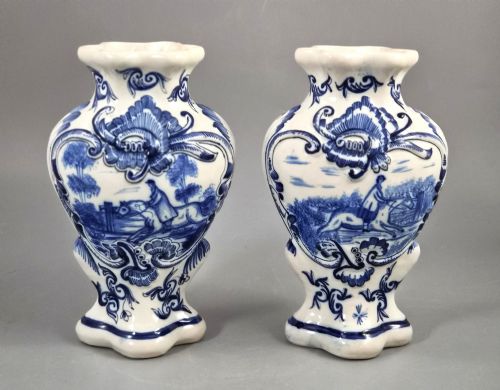
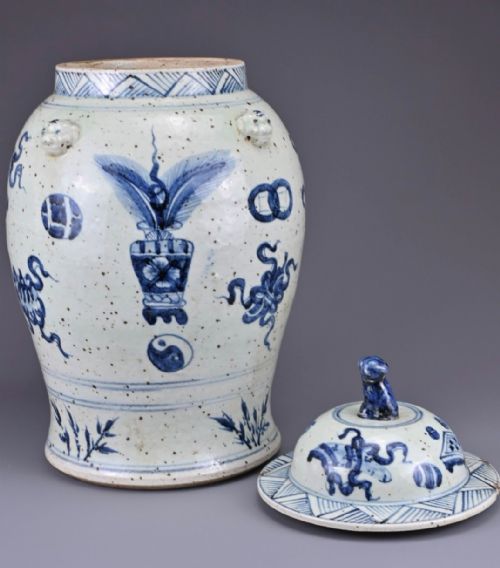
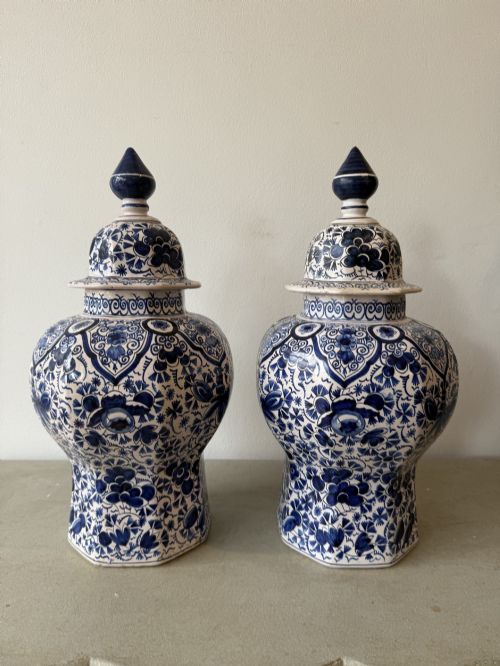
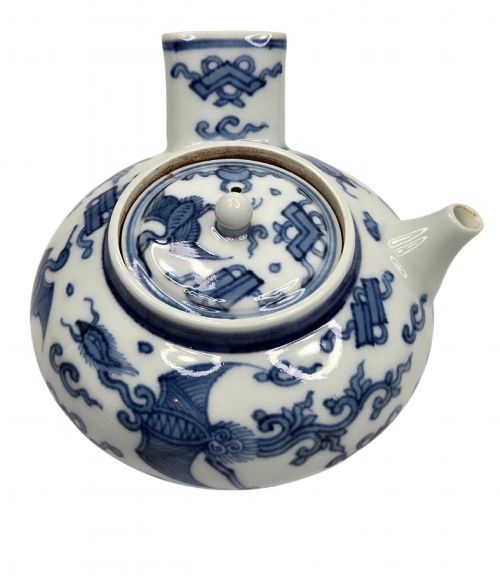
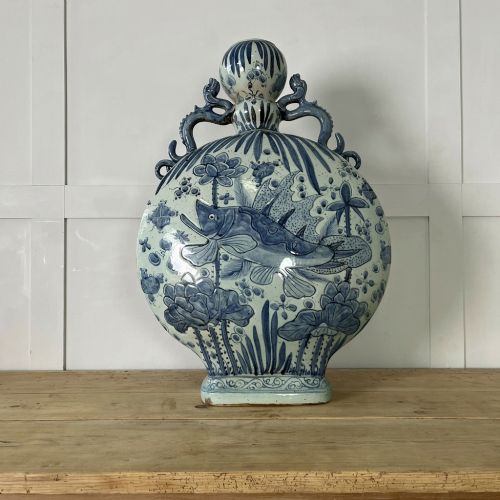
Traditional blue white ceramic encompasses vessels and objects created across centuries, ranging from Chinese export wares to Dutch Delftware and Victorian transfer-printed household items. Buyers exploring this category encounter vases, lidded jars, tableware, and desk accessories marked by contrasting cobalt decoration against pale grounds.
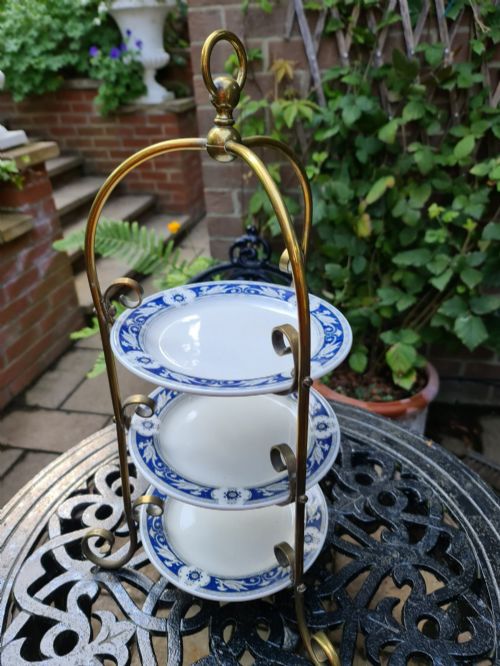
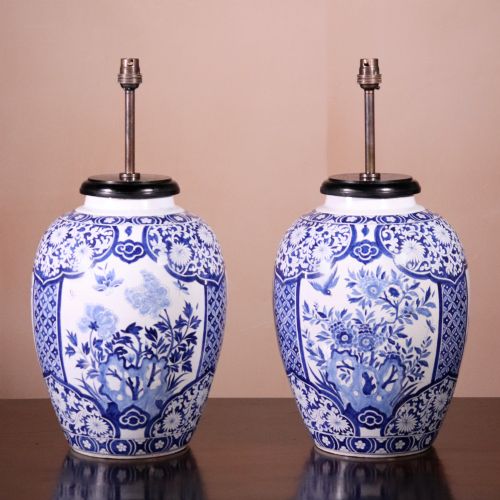
The selection on this page leans heavily toward nineteenth-century production alongside eighteenth-century examples and Edwardian domestic objects. Forms vary from monumental ginger jars and bottle vases to cake stands, meat platters, and fitted inkstands.
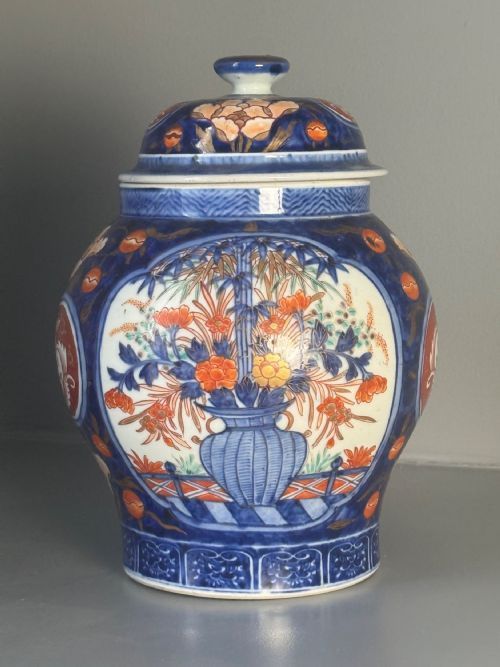
Origins span diverse workshops in China, Japan, England, and the Netherlands, reflecting global trade routes and local adaptations of Asian porcelain motifs. Buyers often select these pieces to anchor a room with historic pattern and enduring material quality.
Materials and methods
Makers utilised porcelain, earthenware, and tin-glazed faience as the primary body materials for traditional blue white ceramic. Cobalt glaze was applied directly to the surface or beneath a clear protective coat before high-temperature firing fixed the pigment.
Transfer printing emerged during the nineteenth century to apply intricate patterns mechanically onto ironstone and earthenware surfaces. Hand-painted examples demonstrate brushwork applied directly to the clay body or over an opaque tin glaze.
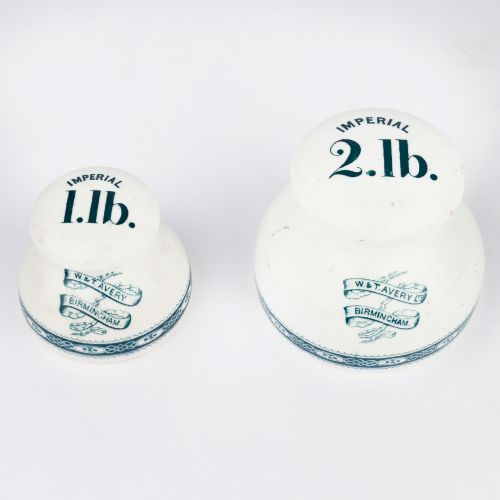
The selection includes functional objects such as inkstands, cake stands, toilets, and scale weights alongside decorative vases.
Distinguishing quality
Quality in traditional blue white ceramic rests on the clarity of the cobalt pigment and the precision of the underlying glaze. Superior examples display deep, controlled brushwork or crisp transfer lines without blurring or pooling.
The refinement of the clay body and the balance of the vessel form separate standard utilitarian items from finer decorative pieces. Condition of the glaze and integrity of the original ceramic body determine the standing of each object.
Fourmaintraux Courquin·W and T Avery·T G Green·Minton
The Traditional Blue White Ceramic Glossary
- Cobalt glaze
- A metallic oxide pigment applied to ceramics that fires to a characteristic deep blue colour under high heat. This mineral compound remains stable at extreme temperatures, producing the sharp contrast seen on historical vessels.
- Tin-glazed earthenware
- Pottery coated with an opaque white glaze containing tin oxide to mask inferior clay bodies. This technique provides a smooth white ground suited for hand-painted blue decoration.
- Transfer printing
- A mechanical method for applying engraved patterns onto ceramic surfaces using paper tissue transfers. This technique allowed factories to produce intricate pictorial scenes efficiently across tableware.
- Meiping
- A traditional Chinese vase form characterised by a narrow neck, broad shoulders, and a tapering base. Originally designed for plum branches, these vessels display balanced proportions and refined silhouettes.
- Faience
- European tin-glazed earthenware produced across France, the Netherlands, and other regions. The porous clay body receives an opaque white glaze before cobalt painting.
Traditional Blue White Ceramic: Frequently Asked Questions
How do I date an antique blue and white vase?
Dating relies on examining the characteristics of the footrim, glaze texture, and cobalt hue. Variations in potting technique and base markings provide further clues to the period of production.
Earthenware bodies and tin glazes often point to European factories, while finer porcelain structures connect to Asian export traditions. Comparing form and stylistic motifs against documented pieces helps narrow the decade of origin.
Are these ceramic pieces suitable for daily use?
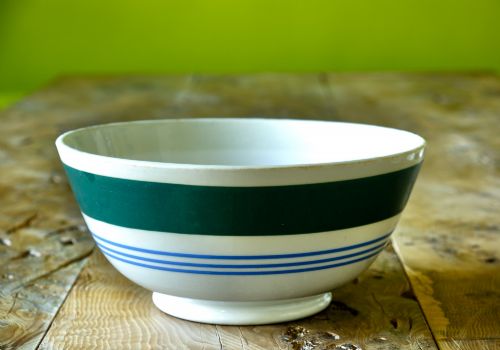
Many items, such as platters, bowls, and cake stands, were created for domestic service and function reliably in modern settings. Hand washing preserves the historic glazes and prevents thermal shock to older materials.
Fragile decorative jars and antique vases benefit from placement away from heavy traffic areas. Assessing the internal condition and structural stability guides how each piece participates in daily life.
What is the difference between Delftware and Chinese export porcelain?
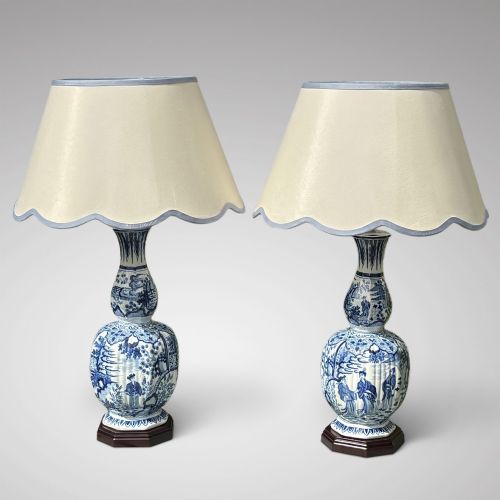
Delftware employs a porous earthenware body covered in an opaque tin glaze, whereas Chinese export pieces utilise a dense, vitrified porcelain body. European potteries developed Delft techniques to imitate the imported Asian wares entering trade ports.
Weight, translucency, and ring tone when tapped distinguish the two material types. Brushwork execution also differs between Dutch workshops and Eastern kilns.
How should I display blue and white ceramics?
Grouping objects by tone or form creates visual balance across mantels, sideboards, and open shelving. Pairing varied heights, such as tall bottle vases alongside low bowls, adds depth to a display.
Lighting plays a key role in highlighting cobalt pigment details against neutral walls. Stable surfaces protect heavier vessels and large chargers from accidental knocks.