




Traditional Bell Clock
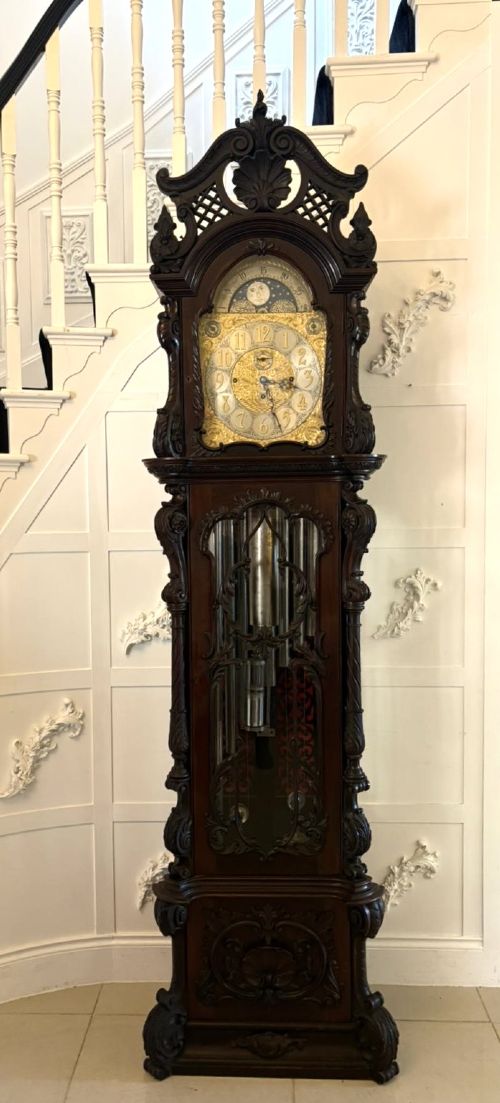
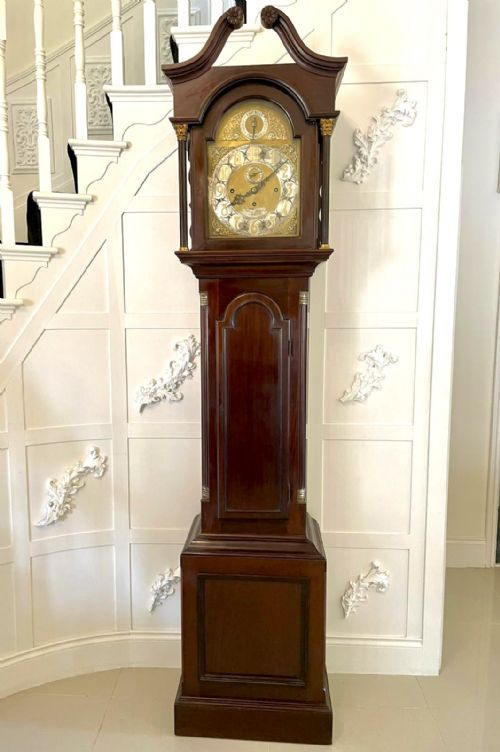
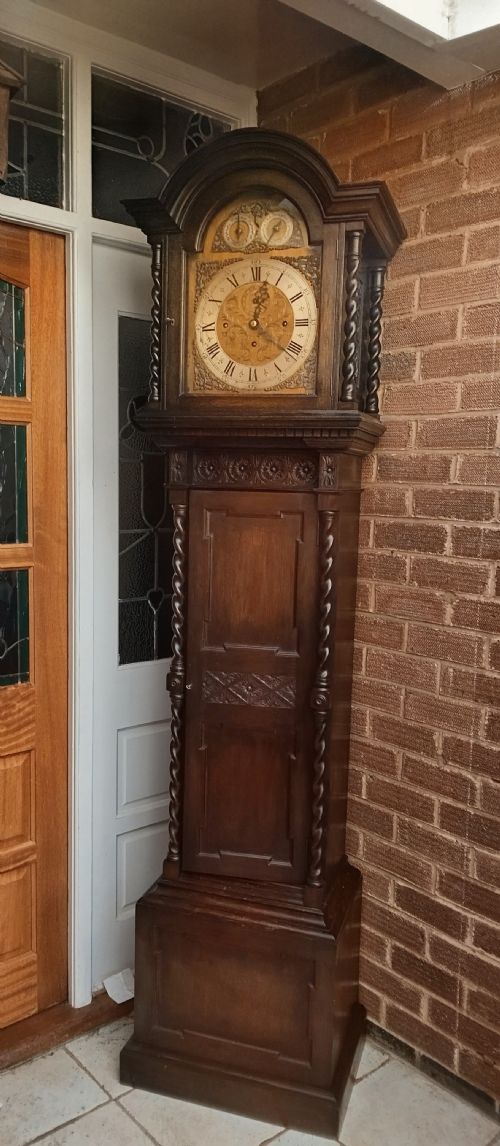
These traditional bell clock pieces bring together period brass, rich timber cases and mechanical bell striking.
Traditional Bell Clock
When you search for a traditional bell clock, you encounter a variety of forms including tall longcase clocks, wall-hung drop-dial pieces, mantel clocks and table brackets. The inventory ranges from brass lantern clocks to grander mahogany and burr walnut grandfather clocks.
Most examples you meet here date from the Georgian, Victorian and early twentieth century periods, reflecting traditional English horology. These pieces utilise mechanical striking on bells to mark the hours or quarters.
The styles span traditional, Gothic Revival, Queen Anne style, English Baroque and Victorian Revival. This diversity means you can find everything from a simple brass lantern clock to an eight-bell musical grandfather clock.
Materials and construction
Makers constructed the cases using durable timbers such as oak, mahogany, flame mahogany, rosewood and burr walnut, often complemented by brass and glass elements. Some dials feature mother of pearl detailing or intricate inlay work.
The internal mechanics rely on robust brass movements, twin or triple fusee systems and striking mechanisms that sound against one, two, eight or nine bells. Clockmakers housed these movements in sturdy wall-mounted or floor-standing enclosures designed to protect the delicate gears.
Traditional Bell Clock Retail Price Guide 2026
Typical asking prices for traditional bell clock among the pieces listed under this phrase on Sellingantiques today, from the lower quarter to the upper quarter. They describe what is for sale here now, not the wider market.
Judging quality in horology
The distinction between standard pieces and the finest examples lies in the complexity of the movement and the choice of case materials. Triple fusee systems and multi-bell striking arrangements represent a higher level of horological ambition than single-bell models.
Cabinetry also dictates standing: a heavily figured burr walnut or flame mahogany case with precise inlay shows greater craftsmanship than a plain timber housing. The crispness of the brass casting on lantern clocks and dial surrounds further separates ordinary items from superior ones.
George Wadham Bath·Winsor Bishop Norwich·Elliott·Grey of Edinburgh·Peerless Mathias Bauerle
The Traditional Bell Clock Glossary
- Fusee
- A conical pulley used in spring-driven clocks to equalise the power of the mainspring as it unwinds. This mechanism ensures more consistent timekeeping throughout the running cycle.
- Grandfather clock
- A tall, free-standing clock enclosed in a wooden case with a pendulum swinging inside the trunk. These floor-standing pieces are also known as longcase clocks.
- Drop-dial wall clock
- A timepiece featuring a circular dial face mounted above an elongated wooden case that houses the pendulum. This form became popular in public spaces and domestic halls during the nineteenth century.
Traditional Bell Clock: Frequently Asked Questions
What is a traditional bell clock?
These timepieces are mechanical clocks that utilise bells to strike the hours or quarters. They include wall-hung dial clocks, table brackets and tall grandfather clocks.
The category spans simple brass lantern clocks to complex musical movements featuring multiple bells.
How do I date a grandfather clock?
Dating relies on examining the timber used for the case, the style of the dial and the sophistication of the movement. Periods such as the Georgian and Victorian eras exhibit distinct design traits.
Cabinet woods like flame mahogany or burr walnut often point towards specific decades of construction.
Where were lantern clocks placed?
Lantern clocks were traditionally hung on walls or placed on dedicated wall brackets to keep them safe and clear of damp floors. Their open fretwork allowed the sound of the bell to travel effectively.
They represent some of the earliest portable domestic timekeeping devices in English homes.
How do fusee movements work?
A fusee movement uses a spiked cone and a cord or chain to regulate the pull of the mainspring. As the spring loses tension, the chain moves to a wider part of the cone.
This clever mechanical adjustment maintains an even force on the gear train for accurate timekeeping.