


Traditional Balloon Back Seating
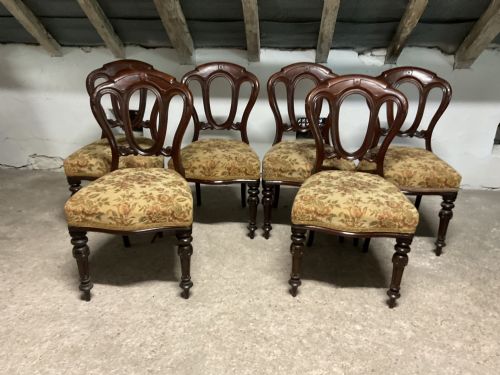
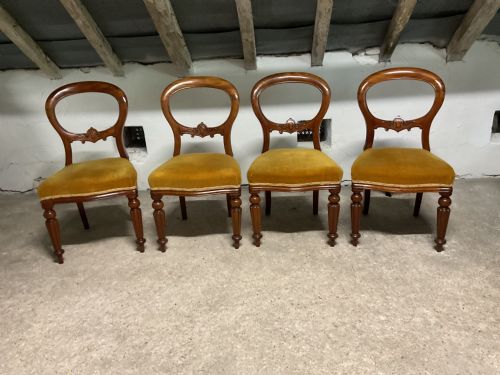
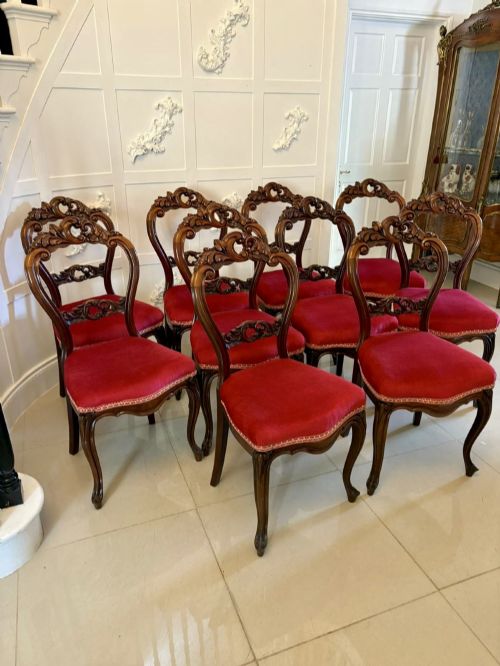
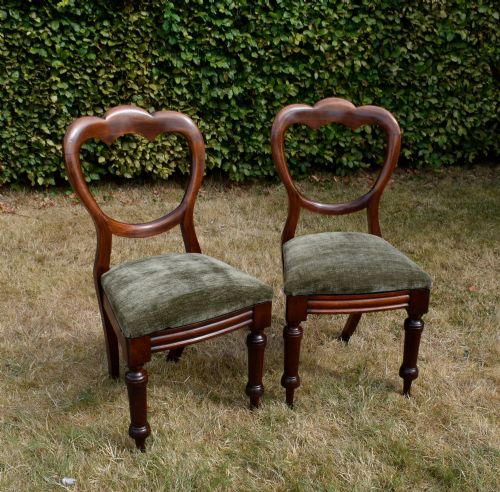
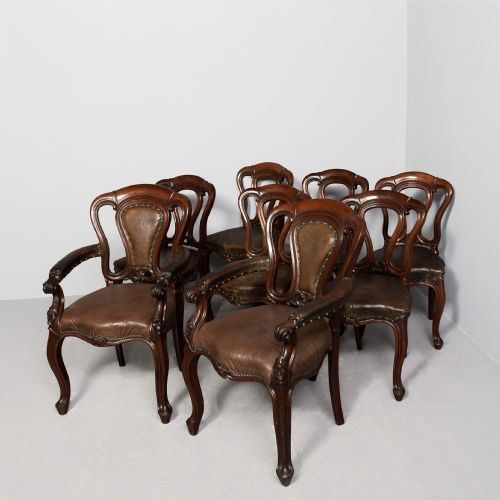
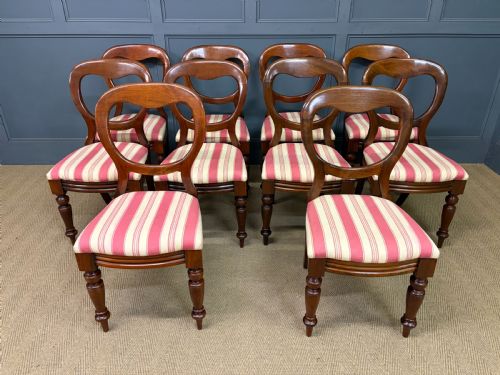
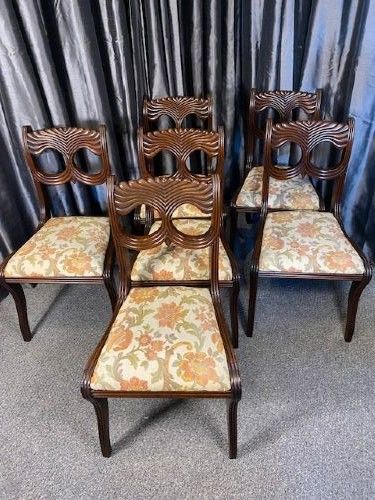
Traditional balloon back seating comprises nineteenth-century dining chairs and salon pieces defined by their rounded backs, offering both historic character and robust support for the modern dining table.
Traditional Balloon Back Seating
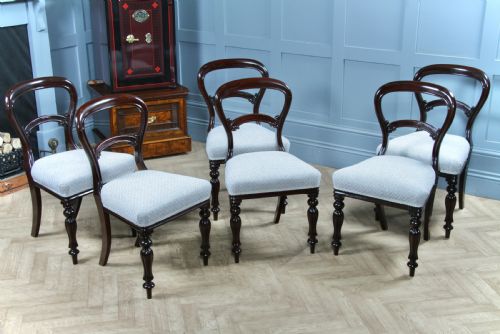
Traditional balloon back seating principally appears as sets of dining chairs alongside occasional side chairs, armchairs, and salon suites originating across the nineteenth century. Buyers searching for traditional balloon back seating meet pieces predominantly from the Victorian era, particularly dating through the middle decades from eighteen-fifty to eighteen-eighty.
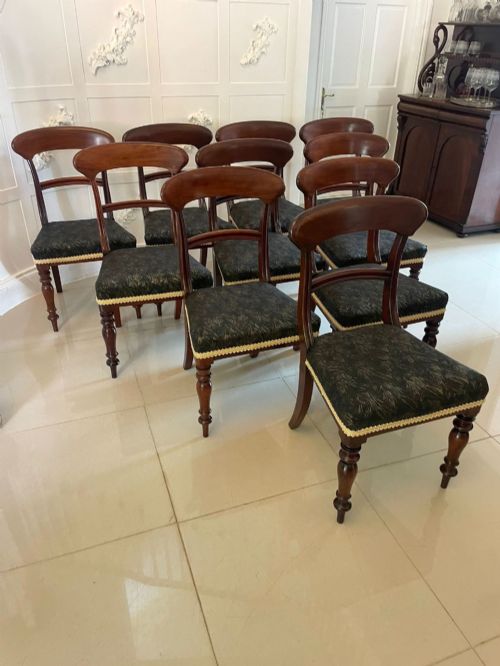
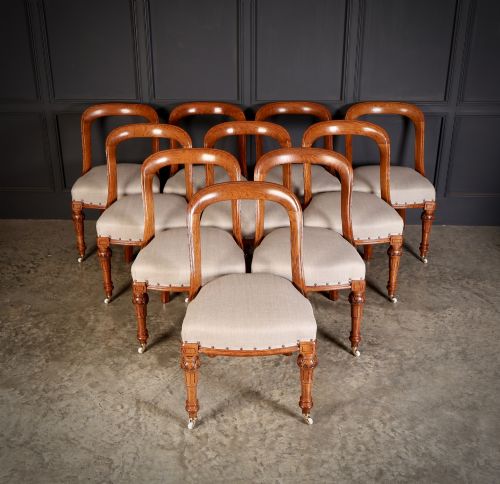
The inventory ranges from single occasional chairs to large sets numbering up to ten or twelve dining chairs, occasionally including matching carvers with armrests. Alongside standard dining formats, the selection incorporates distinct regional variations such as golden oak chairs originating from Scotland, as well as related salon seating.
The overarching design centres on the signature curved top rail resembling a balloon, which evolved through various regional interpretations and stylistic revivals. These pieces served formal dining rooms and drawing rooms throughout the nineteenth century and continue to function in contemporary interiors.
Materials and Technique
Cabinet makers constructed traditional balloon back seating primarily using dense hardwoods such as mahogany, walnut, and rosewood, supplemented by occasional examples in oak. Timber selection dictated the strength of the slender curved back rail, which required careful grain alignment to endure daily use without fracturing.
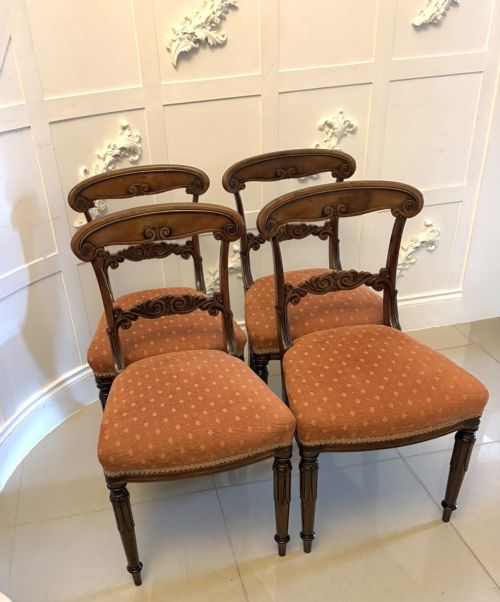
Makers shaped the characteristic rounded frames through steam-bending or by sawing solid timber blanks to the desired contour, often reinforced with pegged mortise and tenon joints. Carved details along the back splat and crest rail were executed by hand, displaying floral motifs, scrolls, or spear point patterns.
Upholstery completed the seats, utilising traditional stuffing materials secured over webbing before finishing with modern or period-appropriate fabrics such as velvet. Drop-in seat frames or fixed upholstered pads allowed for diverse textile applications ranging from patterned damasks to branded designer velvets.
Listings span the Regency, William IV, and Victorian periods, showcasing woods from mahogany and walnut to golden oak.
Judging Quality
Quality in traditional balloon back seating rests on the density and figuring of the timber, with richly grained mahogany, burr walnut, and figured rosewood commanding greater attention. The crispness of hand-carved ornamentation on the splat and the structural integrity of the curved back rail further distinguish superior examples from plain utility models.
The size of the matching set heavily influences desirability, as assembling or preserving large uniform groups of ten or twelve chairs requires exceptional survival rates. Construction methods, such as robust joinery hidden beneath the seat frames, determine whether a chair retains its rigidity over decades of sitting.
John Taylor and Son
The Traditional Balloon Back Seating Glossary
- Balloon back
- A chair design featuring a rounded, oval-shaped backrest resembling a blown balloon. This form gained immense popularity during the Victorian period across dining and salon chairs.
- Splat
- The vertical central strip of wood within a chair back connecting the seat to the top rail. In balloon back seating, the splat often carries intricate carved decoration.
- Carver
- An armchair designed to match a set of single dining chairs, traditionally placed at the head of the dining table. These feature integrated armrests matching the style of the set.
- Salon suite
- A matched set of upholstered seating comprising a sofa or settee and several armchairs or side chairs. These pieces were designed for formal entertaining in the nineteenth-century drawing room.
- Mortise and tenon
- A traditional woodworking joint where a projecting tongue fits snugly into a matching cavity. This method provides the primary structural strength in nineteenth-century chair frames.
Traditional Balloon Back Seating: Frequently Asked Questions
How do I date traditional balloon back seating?
Dating relies on timber choice, carving styles, and construction clues left by nineteenth-century cabinet makers. Earlier Regency and William IV precursors show heavier proportions, while mid-Victorian pieces embrace slender curves and walnut.
Secondary indicators include the presence of hand-cut screws, the type of secondary wood used underneath, and documented maker labels. Comparing the turning on the front legs with established stylistic timelines helps narrow the decade of manufacture.
Are these chairs comfortable for daily dining?
Most traditional balloon back seating provides upright and supportive posture suited for formal meals rather than lounging. The curved backrest offers natural lumbar support when properly proportioned.
Comfort largely depends on the firmness of the modern upholstery webbing and padding beneath the fabric. Many buyers retain the antique frames while updating the internal stuffing for contemporary seating preferences.
Can I mix these chairs with a modern table?
Pairing nineteenth-century mahogany or walnut chairs with a contemporary dining table creates a striking contrast of textures and eras. The narrow footprint of balloon back seating allows them to tuck neatly beneath most modern table heights.
Proportion remains the main consideration when combining historical seating with a modern table design. Ensuring sufficient leg clearance beneath the table apron guarantees comfortable seating for guests.
What is the difference between a side chair and a carver?
Side chairs lack armrests and were designed to line the sides of a dining table or sit against drawing room walls. Their compact dimensions allowed numerous chairs to fit comfortably around standard dining tables.
Carvers include supportive armrests and traditionally stood at the head and foot of the table for the host and hostess. They share the same balloon back silhouette and leg styling as the accompanying side chairs in a set.