


Traditional Animal Wall Decor
Traditional animal wall decor brings classic sporting oils and farmyard portraits into the home, offering character and centuries of British artistic heritage.
Traditional Animal Wall Decor
Traditional animal wall decor comprises oil paintings and decorative shields capturing subjects from the natural and domestic worlds. Buyers seeking this category encounter Victorian sporting canvases, rural scenes, and individual animal portraits.
The pieces appearing on this page span several centuries, reaching from Georgian depictions of horses through to mid-century works. Canvases featuring dogs, horses, farmyard poultry and cats dominate the selection, alongside sculptural shields.
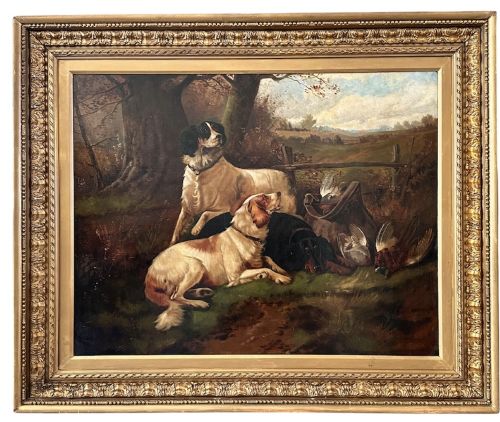
Works range from intimate portrayals of individual pets to larger sporting compositions involving gun dogs and stags. Each piece reflects the persistent British fascination with animals, rendered in oil on canvas, board, or panel.
How they were made
Painters applied oil paint to stretched canvas, wooden panels, or prepared boards to achieve depth and texture in animal coats and plumage. Artists built up layers of pigment to capture the light in a horse's eye or the softness of a kitten's fur.
Frames often complement the paintings using timber, gesso, and gilded wood. Gilt wood frames provide a traditional surround that enhances the richness of the oil pigments within.
Several canvases capture dogs sitting patiently beside the day's hunting bag, waiting for the artist to finish.
What varies in quality
Anatomy and expression separate the finest animal paintings from simpler decorative works. Master painters render bone structure, muscle tone, and the individual character of a dog or horse with convincing accuracy.
The handling of light and background detail also determines distinction. Superior canvases integrate the animal naturally into its surroundings, whereas lesser works treat the background as a flat backdrop.
John Sargent Noble·John Frederick Herring Jnr·John Emms·Edgar Hunt
The Traditional Animal Wall Decor Glossary
- Oil painting
- A work created using pigments bound with a medium of drying oil. This medium allows for rich colour blending and fine detail.
- Gesso
- A plaster-like mixture applied to wood frames as a base for gilding. It provides a smooth surface for decorative moulding.
- Gilt wood
- Timber treated with gold leaf or gold paint. This finish creates a reflective, ornate border common in period framing.
- Canvas
- Heavy woven fabric stretched across a wooden frame to serve as a painting surface. It remains the standard support for historical oil works.
Traditional Animal Wall Decor: Frequently Asked Questions
What periods do these paintings cover?
The pieces span from the Georgian era through the Victorian period and into the mid-twentieth century. This timeline covers shifting styles in British sporting and rural art.
Earlier works often lean towards classical sporting compositions, while later Victorian and Edwardian pieces frequently focus on domestic pets and farmyard life.
How should I hang heavy oil paintings?
Secure fixings directly into wall studs or use appropriate masonry anchors depending on your wall type. Heavy gilt frames require robust picture wire and sturdy wall hooks.
Ensure the hanging height places the centre of the canvas at eye level for comfortable viewing within the room.
How do I care for antique oil canvases?
Keep paintings away from direct sunlight and sources of extreme heat to prevent the canvas and paint from cracking. Maintain stable room humidity to protect both the wooden stretcher and the paint layer.
Dust the surface and frame gently with a soft, dry brush without applying pressure to the paint film.
What subjects are most common?
Dogs, horses, and farmyard poultry appear most frequently across these historical works. Sporting dogs, working hunters, and domestic pets reflect the priorities of past commissioners and artists.
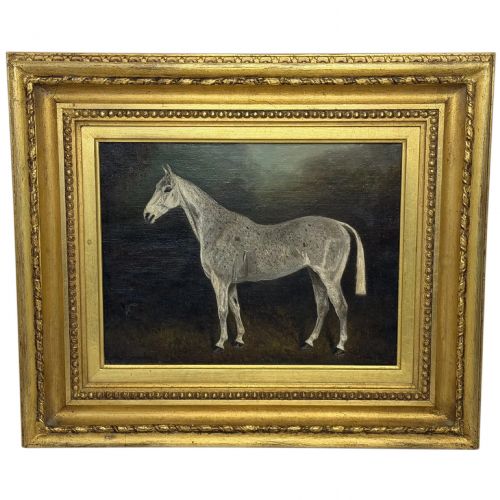
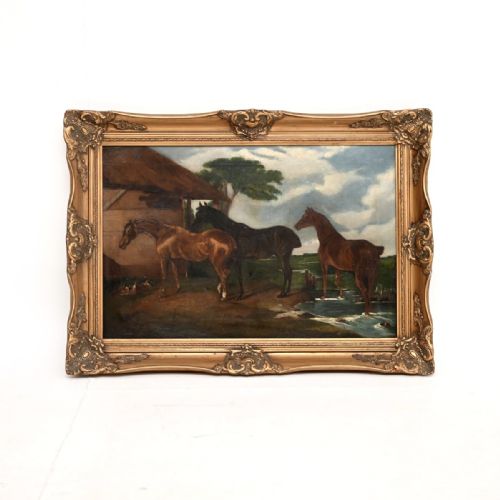
Scenes range from solitary portraits of prize animals to lively farmyard groupings with ducks, chickens, and chicks.