





Tortoiseshell and Gold
Tortoiseshell and gold items unite organic mottled shell with precious metal inlay, bringing distinct warmth and lustre to period interiors and personal adornment.
Tortoiseshell and Gold
When you search for tortoiseshell and gold, you enter a sphere of nineteenth-century decorative arts and jewellery where rich organic shell meets precious metal inlay. The pieces on this page span several distinct categories, ranging from substantial furniture like side cabinets and pier cabinets to small decorative items and personal ornaments.
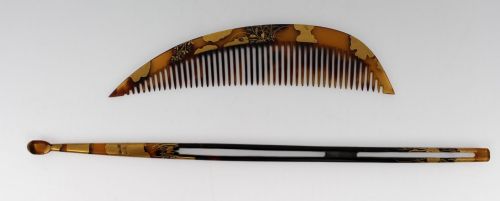
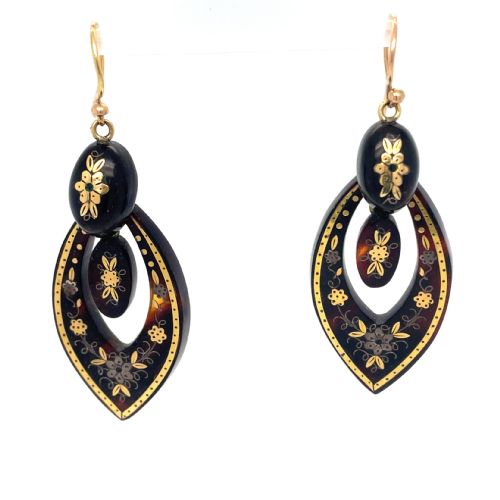
The furniture pieces mostly adopt boulle work, pairing dark ebonised wood and tortoiseshell backgrounds with shimmering brass and ormolu mounts. Smaller personal items appear frequently, including snuff boxes, earrings, brooches, pendants, and hair ornaments created during the Georgian and Victorian eras.
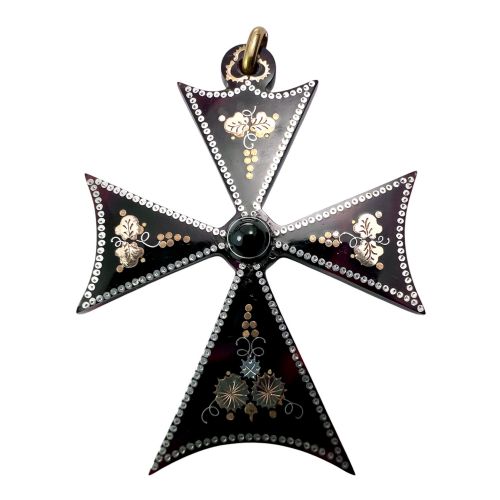
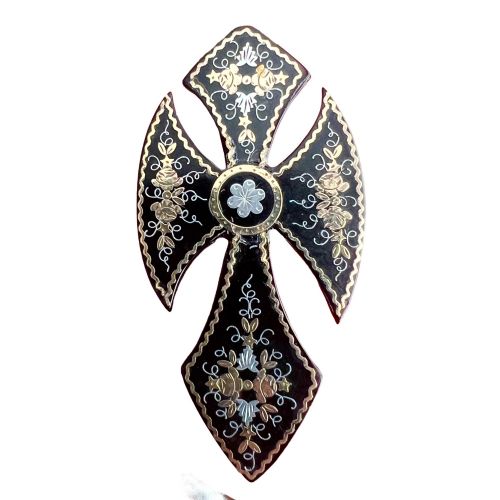
Origin points cluster around French Napoleon III workshops, Victorian Britain, and the Meiji period in Japan. Buyers meet everything from large serpentine credenzas to minute pique work crosses and hoop earrings.
Materials and construction
Makers utilised genuine tortoiseshell, often paired with ebonised wood or blonde shell variations as a dark or translucent foundation. This organic material provides the characteristic mottled warmth that underpins the entire group.
Gold and silver inlay, alongside brass and ormolu, form the decorative patterns embedded directly into the shell surface. Techniques like piqué work involve heating and pressing tiny pins of gold or silver into the shell to create intricate motifs.
Cabinets incorporate complex marquetry and Ormolu mounts cast in bronze and then gilded, while clock cases combine glass, brass, and timber frames. Jewellers fashioned earrings, pendants, and hair ornaments using thin sheets of gold alongside silver settings.
Tortoiseshell and Gold Retail Price Guide 2026
Typical asking prices for tortoiseshell and gold among the pieces listed under this phrase on Sellingantiques today, from the lower quarter to the upper quarter. They describe what is for sale here now, not the wider market.
Snuff boxes in blonde tortoiseshell let the morning light straight through the gold inlay.
Factors that separate the tiers
Quality rests heavily on the precision and density of the metal inlay within the shell. Finer examples display tightly registered piqué work or boulle marquetry with minimal gaps between the metal and the surrounding material.
The sophistication of the bronze ormolu mounts and clock movements distinguishes superior items from standard production. Master clockmakers like Samuel Marti or William Hardy produced mechanisms that elevate the status of a clock housing.
The natural variation of the tortoiseshell itself, such as deep amber translucency or striking blonde patterning, influences the visual impact of the piece. Intact structures with minimal warping or shrinkage in the organic shell command greater appreciation.
James de Rijk·Samuel Marti·William Hardy London
The Tortoiseshell and Gold Glossary
- Boulle work
- A form of marquetry using brass and tortoiseshell inlaid into wood, developed in France during the reign of Louis XIV. It creates a striking contrast between the dark shell and gleaming metal.
- Piqué
- A technique where tiny pins or strips of gold or silver are inlaid directly into tortoiseshell. Artisans heated the metal to press it securely into the softened shell matrix.
- Ormolu
- Gilded bronze mounts applied to furniture and clock cases during the eighteenth and nineteenth centuries. The process gives a rich gold finish to cast metal decorative elements.
- Fusee
- A conical pulley used in antique clocks to maintain even tension on the mainspring as it unwinds. This mechanism improves the timekeeping accuracy of antique timepieces.
Tortoiseshell and Gold: Frequently Asked Questions
What is tortoiseshell piqué work?
Tortoiseshell piqué work is a decorative technique where artisans inlay fine points and strips of gold or silver into the surface of the shell. The metal is heated and carefully pressed into pre-cut channels or holes in the organic material.
This method creates detailed geometric or floral patterns that shimmer against the dark mottled background of the tortoiseshell. It appears frequently on Victorian brooches, crosses, and snuff boxes.
How do I care for antique tortoiseshell?
Antique tortoiseshell requires stable environmental conditions away from direct sunlight, extreme heat, and high humidity to prevent warping or cracking. The organic material responds to moisture changes and benefits from gentle handling with clean hands.
Avoid using modern chemical cleaners, harsh solvents, or abrasive cloths on the surface. A soft, dry cloth is sufficient to maintain the polish of both the shell and the gold inlay.
What is a boulle cabinet?
A boulle cabinet is a piece of furniture decorated with intricate marquetry consisting of tortoiseshell and brass, typically mounted on an ebonised wood carcass. This style draws its name from André-Charles Boulle, the master cabinetmaker who perfected the technique under Louis XIV.
These cabinets often feature ornate ormolu mounts at the corners and feet. They served as grand display furniture in nineteenth-century drawing rooms and salons.
How do I date these items?
Dating relies on stylistic clues, construction methods, and mechanical signatures found within the pieces. Georgian examples like snuff boxes often show lighter, simpler gold inlay, while Victorian items lean towards elaborate piqué crosses and heavier ormolu mounts.
Clock movements bearing maker signatures or specific regional styles also help anchor pieces to periods such as the mid-nineteenth century or the late Victorian era.