




Tooled Leather Top Table
A tooled leather top table brings a tactile writing surface and rich timber framing to a room, offering both practical utility and period character.
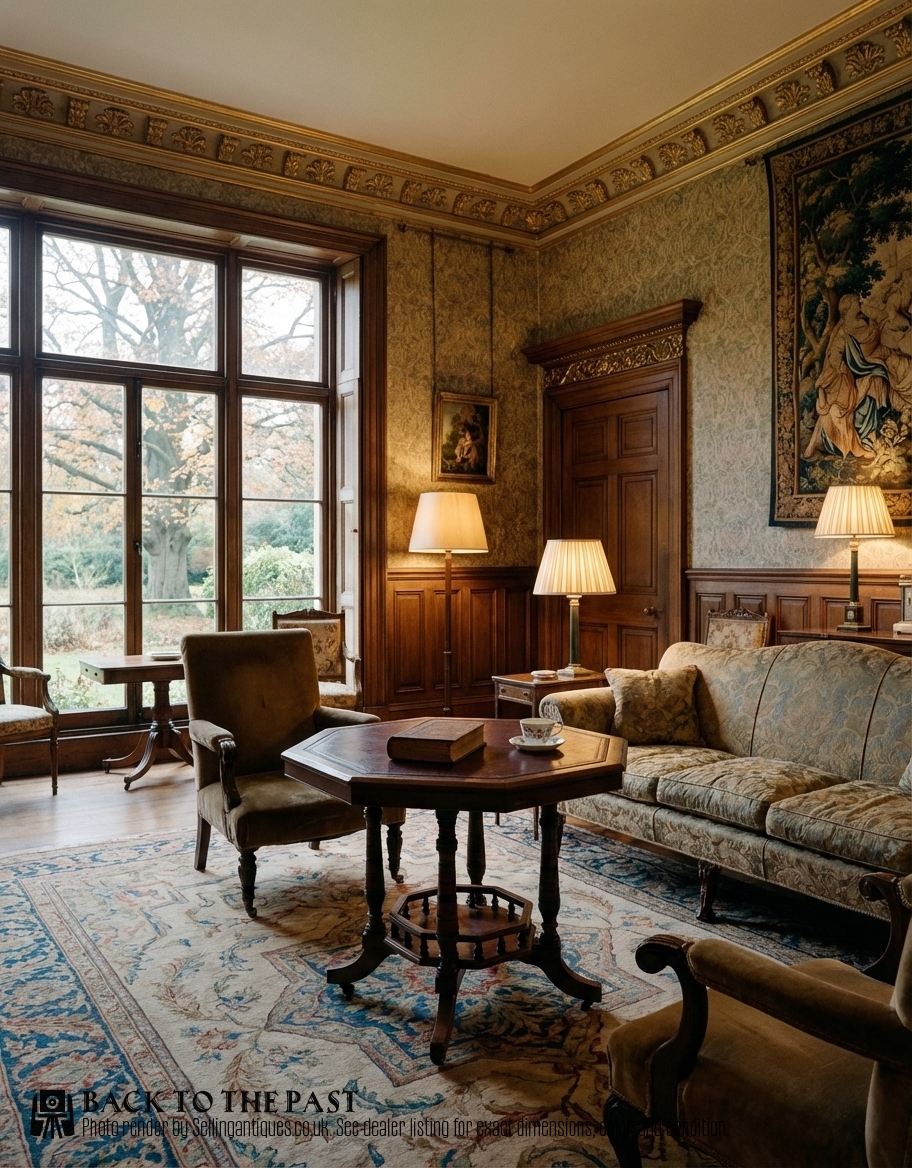
Tooled Leather Top Table
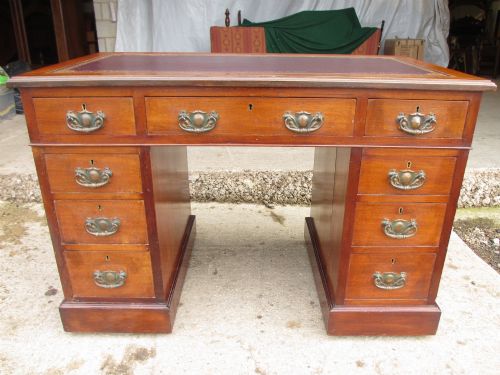
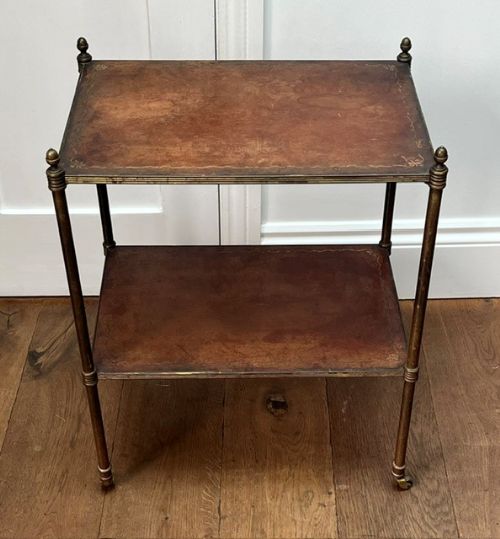
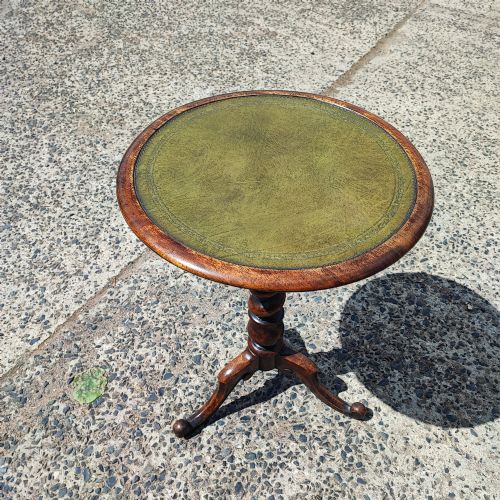
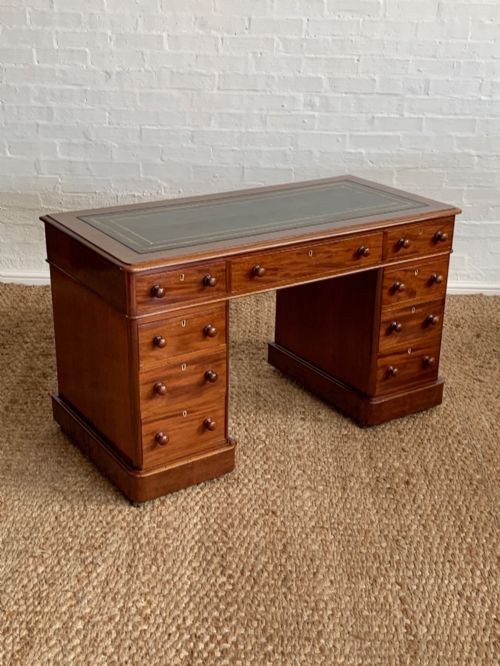
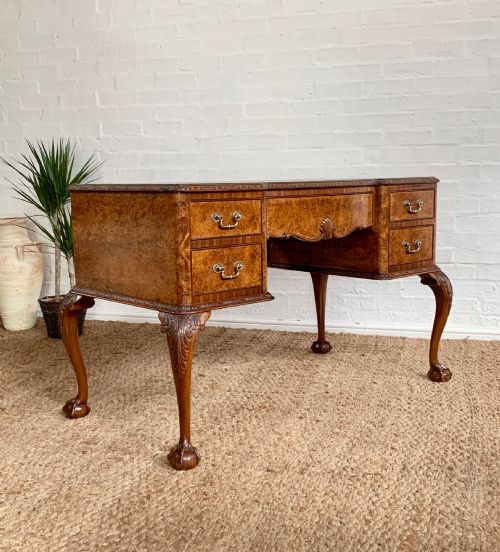
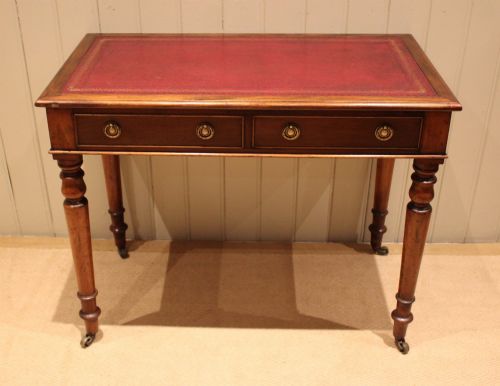
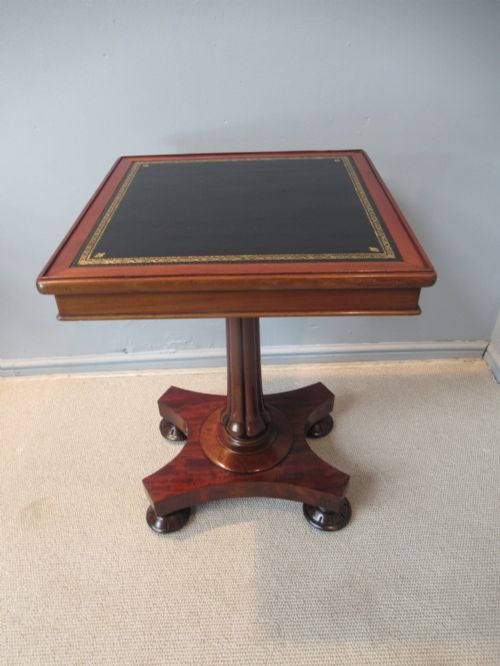
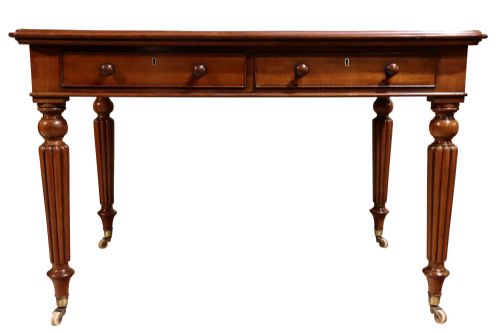
A tooled leather top table combines a firm writing or display surface with robust timber construction, serving as a functional centrepiece for a study or library. You will encounter various forms here, ranging from compact occasional tables and lamp tables to substantial pedestal desks and writing tables.
The selections span multiple periods, with Victorian and nineteenth-century examples appearing alongside Edwardian and twentieth-century interpretations. Timbers such as mahogany, walnut, and oak form the structural framework, supporting inset leather surfaces decorated with blind and gilt tooling.
Makers and designers adapted the form across diverse styles, including Georgian revivals, Arts and Crafts, and Reformed Gothic. Whether configured as a kneehole desk, a side table, or a nest of tables, each piece integrates leatherwork directly into the wooden top.
Materials and Construction
Cabinet makers utilised dense hardwoods such as mahogany, walnut, and oak to build the structural frames, legs, and drawers. These timbers were often polished to a deep lustre or ebonised for specific aesthetic effects.
The inset writing surfaces utilise leather, frequently dyed in tones of green or brown, secured within recessed wooden borders. Craftsmen applied blind tooling and gold leaf highlights by hand around the perimeter of the leather to create decorative geometric or floral borders.
One unusual survivor is an early twentieth-century French book-table that conceals a silk-work top beneath a leather-bound binding.
Assessing Quality
The refinement of the timber carving and the precision of the joinery distinguish finer examples from standard workshop production. Superior pieces display carefully selected wood grain, well-fitted drawers, and durable structural joints.
The crispness and depth of the gold leaf or blind tooling on the leather surface indicate the skill of the artisan. Original leathers retaining their tooling with minimal disruption hold greater integrity than later replacements.
Maple and Co·Mallett of London
The Tooled Leather Top Table Glossary
- Tooled leather
- Leather decorated with pressed patterns, often highlighted with gold leaf using heated metal tools. This technique creates decorative borders around the edge of the writing surface.
- Pedestal desk
- A heavy freestanding desk comprising two supporting banks of drawers beneath a large top. The top surface typically incorporates a central inset of tooled leather.
- Kneehole desk
- A compact desk featuring a central recess for the user's legs, flanked by pedestals of drawers. These often feature inset leather writing surfaces.
- Library table
- A large freestanding table designed for central room placement, used for reading and writing. They frequently incorporate inset leather tops and drawers within the frieze.
- Frieze
- The horizontal band of timber directly beneath the table top, often housing one or more drawers. It provides structural stability to the frame.
Tooled Leather Top Table: Frequently Asked Questions
What is a tooled leather top table?
A tooled leather top table is a piece of furniture featuring a flat wooden surface inset with leather that has been decorated with pressed patterns and gold leaf.
These tables were designed primarily for writing, reading, and administrative tasks in studies, libraries, and drawing rooms.
How do I care for the leather?
The leather surface benefits from gentle dusting and occasional specialist conditioning to prevent the material from drying out or cracking.
Avoid placing direct heat sources or liquids near the table, as moisture and excessive warmth can damage both the leather and the gold leaf tooling.
Are these tables suitable for daily use?
Solid timber construction and durable leather writing surfaces make these tables well-suited for everyday work and display purposes.
Using blotters or writing pads helps protect the historic leather surface from excessive friction and ink stains during regular use.
How can I tell the period of the table?
The secondary timbers, drawer construction methods, and overall stylistic motifs provide the primary indicators of a table's age and origin.
Victorian and nineteenth-century pieces often display heavier mahogany or walnut frames, while Edwardian examples show lighter construction and different aesthetic influences.