



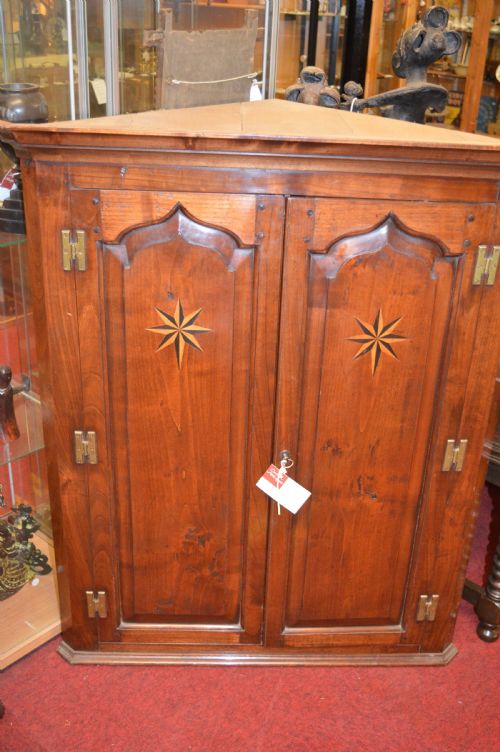


Timber Wall Cabinet
A timber wall cabinet solves the storage of smaller rooms by lifting storage off the floor entirely.
Timber Wall Cabinet
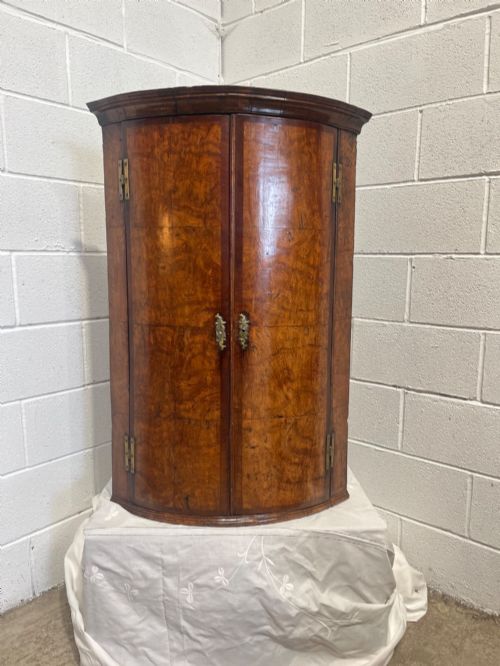
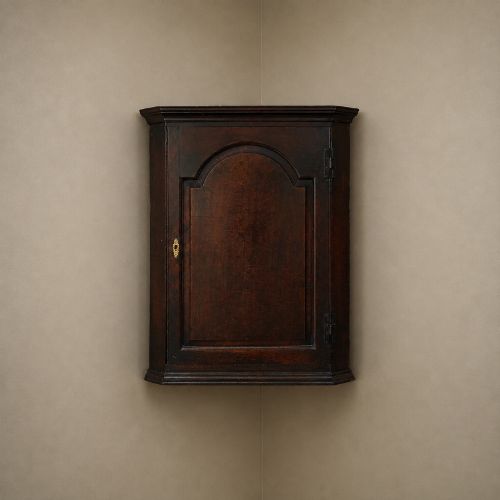
When buyers search for a timber wall cabinet, they look at hanging corner cupboards, flat wall displays, and small architectural cupboards spanning from the seventeenth century through to the early twentieth century. The selection leans heavily towards Georgian and Victorian corner cupboards, often built to fit neatly into domestic angles and save valuable floor space.
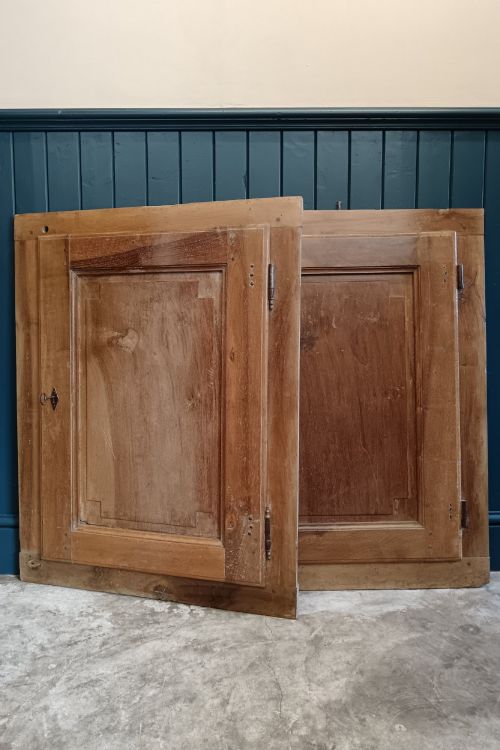
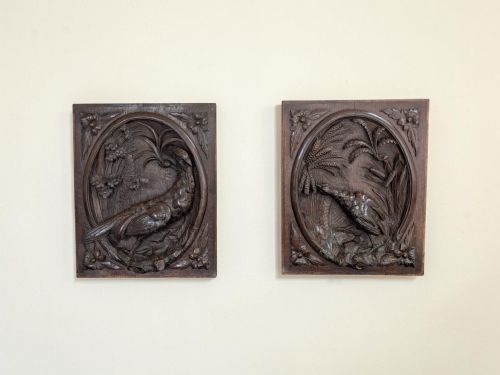
Most examples meet the eye in oak, mahogany, or walnut, ranging from rustic French provincial manoir pieces to refined Sheraton revival glazed cabinets with satinwood inlay. Buyers also encounter architectural salvage, such as carved oak door panels and cupboard doors, alongside small specialty pieces like spice cupboards and pigeon holes.
How they were made
Cabinet makers relied on solid timbers like oak, mahogany, fruitwood, and yew, frequently pairing them with brass hinges, iron hardware, and glazed doors to showcase the contents within. Construction methods include pegged joints, hand-cut dovetails, and panelled door frames designed to accommodate the natural movement of timber over centuries.
Surface finishes vary from polished mahogany and decorated painted satinwood to rustic untreated French oak and old paint. Details such as delicate satinwood stringing, architectural cornices, and hand-carved panels demonstrate the range of skill applied by provincial and metropolitan workshops alike.
The timber wall cabinet selection spans eight distinct styles, moving from early seventeenth-century rustic oak to Arts and Crafts and Sheraton Revival designs.
What varies in quality
Quality rests upon the selection of timber figures, the crispness of hand-carving, and the integrity of the original construction rather than mere age alone. Pieces featuring figured burr oak, dense mahogany, or finely grained walnut display a superior visual depth that elevates them above plain utility items.
Consideration also extends to hardware and glazing, where original brasses, hand-blown glass panes, and well-fitted panel doors maintain the historical authenticity of the cabinet. Finer examples retain their original backboards, hanging brackets, and internal shelving without extensive structural intervention.
The Timber Wall Cabinet Glossary
- Corner Cupboard
- A cabinet specifically constructed with an angled back to fit neatly into the corner of a room. This form was especially popular during the Georgian period for dining rooms and parlours.
- Satinwood
- A light, hard timber native to Ceylon and India, prized for its golden sheen and smooth texture. It saw frequent use during the Sheraton period for fine inlay and veneers.
- Glazed Door
- A door fitted with glass panes to display contents while protecting them from dust. These often feature wooden glazing bars arranged in geometric patterns.
- Stringing
- A narrow strip of contrasting wood inlaid into the surface of a piece of furniture as a decorative border. It is commonly found on late eighteenth-century mahogany cabinetry.
- Architectural Salvage
- Building elements rescued from older structures, such as carved panels and cupboard doors, adapted for decorative display or interior integration.
Timber Wall Cabinet: Frequently Asked Questions
How do I hang a heavy timber wall cabinet?
Most antique wall cabinets rely on robust internal fixing battens or heavy-duty brass brackets screwed directly into the back frame.
It is essential to secure the cabinet to structural wall studs or use appropriate masonry fixings to safely bear the weight of the timber and its contents.
Were corner cupboards built for specific rooms?
Georgian and Victorian corner cupboards were primarily designed for dining rooms, drawing rooms, and parlours to store ceramics, glassware, and spices.
Their enclosed shelves kept valuable tableware clean and secure while making efficient use of awkward corner space in smaller domestic interiors.
How do I identify a Georgian wall cabinet?
Georgian pieces typically display characteristic proportions, hand-cut dovetail joints, and traditional timber choices such as mahogany or oak.
Look for period details like H-brass hinges, architectural cornices, and hand-blown glass within the door panels rather than modern machine-cut elements.
Can I use a spice cupboard in a modern kitchen?
Small antique spice cupboards and pigeon hole units adapt readily to modern spaces for organising small daily items or displaying collections.
Their shallow depth allows them to sit comfortably above kitchen counters or in hallways without obstructing walking space.