




Timber Tea Chest
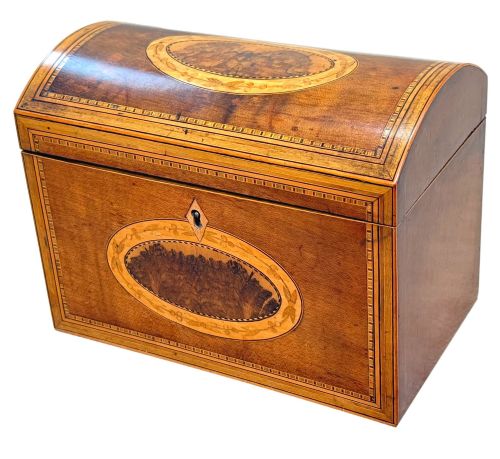
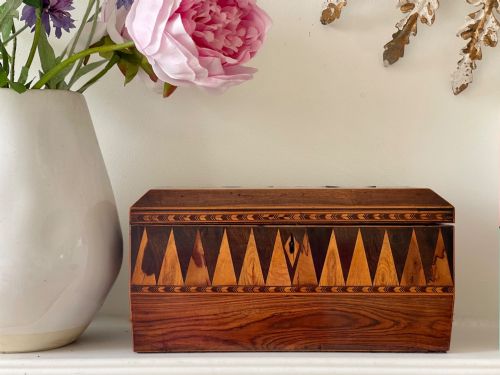
These timber tea chests are functional storage vessels for dry leaf, appearing most frequently in Georgian mahogany, Regency rosewood and Tunbridge Ware.
Timber Tea Chest
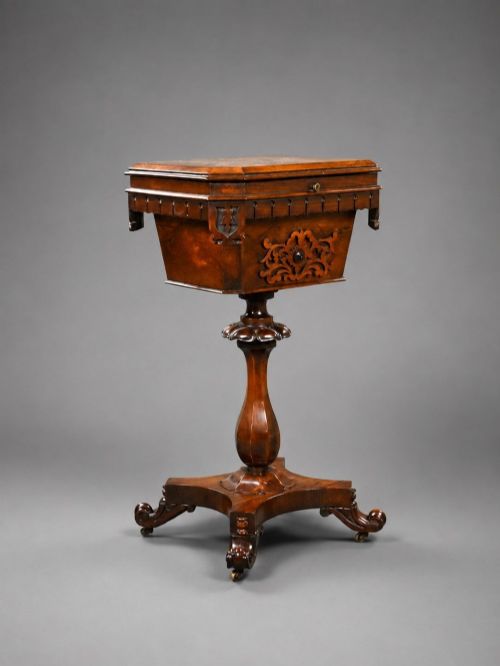
A timber tea chest is a specialised storage container designed to protect expensive dry leaves from moisture and light in historic domestic interiors. When exploring this selection, buyers encounter various forms including traditional tea caddies, larger tea poys, and adaptable keepsake boxes intended for personal valuables.
The objects span multiple centuries, with significant representation from the Georgian and Regency eras through to Victorian examples and later Art Deco interpretations. Most pieces on this page utilise durable hardwoods configured into rectangular, octagonal, or table-mounted configurations.
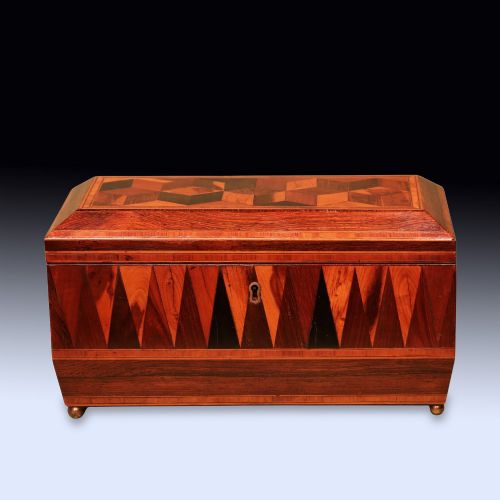
Makers utilised distinct regional styles, ranging from classic Chippendale mahogany designs to intricate Victorian Tunbridge Ware and geometric parquetry patterns. These pieces reflect the evolving social rituals of tea consumption and domestic organisation across British history.
How they were made
Construction relies on solid hardwoods and delicate veneers applied over a stable timber carcase, utilising materials such as mahogany, rosewood, walnut, and partridge wood. Artisans selected these dense timbers to ensure the interior remained airtight, preserving the aromatic qualities of the stored contents.
Decoration often involves contrasting stringing, bone escutcheons, and elaborate shell or geometric inlays executed in boxwood, satinwood, and amboyna. Metal elements such as brass hinges and internal foil linings appear frequently across the periods to reinforce structural joints and provide functional utility.
Timber Tea Chest Retail Price Guide 2026
Typical asking prices for timber tea chest among the pieces listed under this phrase on Sellingantiques today, from the lower quarter to the upper quarter. They describe what is for sale here now, not the wider market.
Listings feature woods spanning mahogany, rosewood, walnut, partridge wood, amboyna, boxwood, and satinwood across multiple centuries.
What varies in quality
The refinement of the surface veneer and the complexity of the inlay work distinguish standard production from superior examples. Finely executed parquetry, intricate Tunbridge Ware micro-mosaics, and well-preserved original surface patination elevate a piece significantly.
Interior organisation also dictates grade, with superior boxes retaining fitted compartments, mixing bowls, and original bone or ivory furnishings. The structural integrity of the timber carcase and the precision of the joints determine longevity and long-term stability.
Henry Hollamby
The Timber Tea Chest Glossary
- Tea caddy
- A small box or chest designed specifically for storing loose tea leaves securely. These containers often featured lockable lids to restrict access to valuable commodities.
- Tea poy
- A pedestal table fitted with a storage box for tea, standing on a central pillar or multiple legs. This form gained popularity during the Regency and Victorian periods.
- Parquetry
- Geometric mosaic woodwork formed by small pieces of various timbers fitted together to create patterned surfaces. This technique appears frequently on Regency and Victorian boxes.
- Tunbridge Ware
- A distinct type of decorative woodwork characterised by intricate mosaic designs made from many tiny pieces of naturally coloured woods. This style originated in Kent during the nineteenth century.
- Escutcheon
- A protective plate surrounding the keyhole of a box, typically fashioned from brass or bone. It prevents the surrounding timber from sustaining damage during daily use.
Timber Tea Chest: Frequently Asked Questions
What is a timber tea chest?
A timber tea chest is a lidded container historically used to store dry tea leaves safely away from dampness and light. These vessels range from simple desktop caddies to substantial pedestal tea poys.
They reflect the high value placed on tea when the commodity was first imported into Britain. Today, collectors value them for their cabinet-making skill and decorative woodwork.
How were timber tea chests used?
Historically, homeowners used these boxes to keep precious tea leaves locked away from domestic staff and guests. The mistress of the house typically held the key to regulate daily consumption.
Many examples feature internal compartments or foil linings to keep different leaf varieties separated and fresh. Over time, many were repurposed to hold stationery, jewellery, or keepsakes.
How do I care for a timber tea chest?
Keep these boxes away from direct sunlight and sudden temperature shifts to prevent the timber and delicate veneers from warping or cracking. Maintaining a stable indoor environment preserves the original polish and structural joints.
Apply a traditional wax polish occasionally to nourish the hardwood surface without damaging historic finishes. Avoid using liquid cleaners or placing damp items inside the historic compartments.
How do I date a timber tea chest?
Dating relies on identifying the primary wood species, construction techniques, and decorative styles characteristic of specific historical periods. For example, Georgian pieces frequently utilise solid mahogany or simple stringing, while Regency and Victorian items often feature rosewood, coromandel, or complex parquetry.
Examine the hardware, interior fittings, and locks, as hand-cut screws and forged hinges differ significantly from later mass-produced components.