


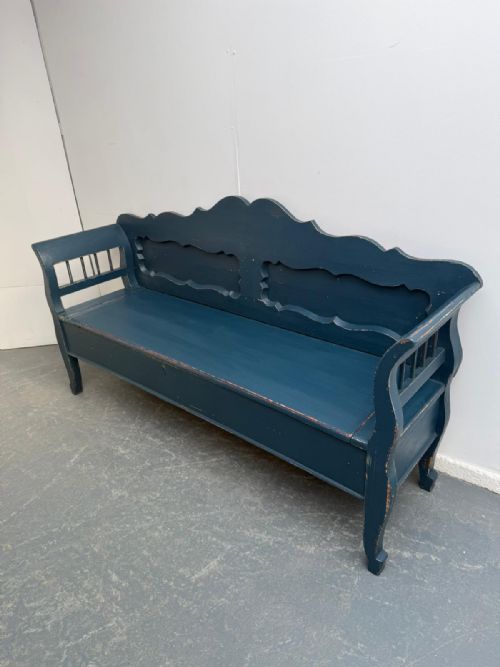


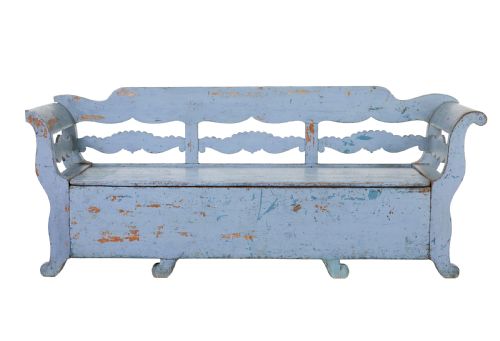


Timber Storage Bench
These timber storage bench examples combine practical seating with concealed compartments, offering traditional utility and robust construction for modern interiors.
Timber Storage Bench
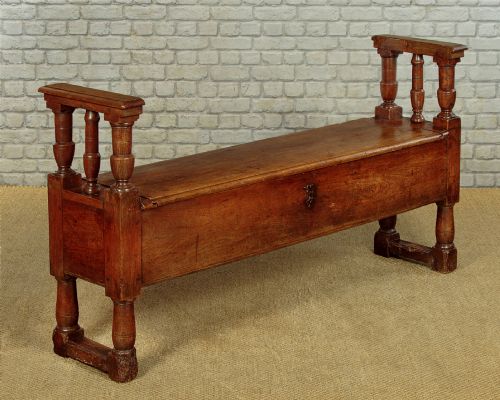
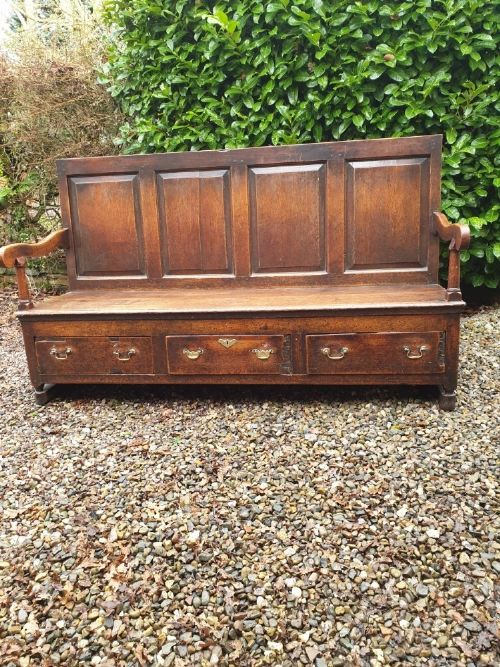
When you search for a timber storage bench, you encounter robust seating forms designed with integrated compartments beneath the seat. These pieces include box seats, settles, and hall benches originating from various periods such as the seventeenth, eighteenth, and nineteenth centuries.
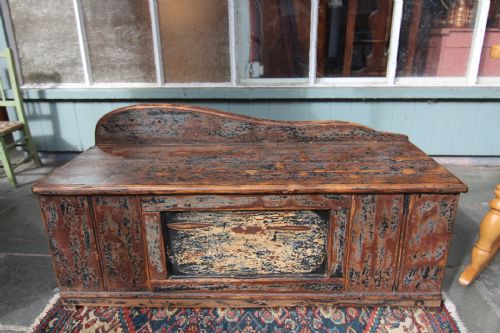
The selections available here predominantly feature regional and vernacular styles like rustic farmhouse, folk art, and Georgian country. Examples range from simple pine and elm constructions to painted Swedish and Hungarian pieces.
Makers utilised durable woods like oak, walnut, elm, and fruitwood to build furniture that served daily domestic functions in hallways, taverns, and country houses. Buyers frequently find lift-up lids and specialised compartments, such as shoe storage in hall benches.
How they were made
Craftsmen built these items using solid timbers such as oak, pine, elm, and fruitwood, often joining panels with traditional carpentry methods. Surfaces were finished with wax, left as plain wood, or decorated with paint and polychrome finishes.
Hardware such as iron and brass appears on hinges and fixings to support the heavy lift-up lids of box settles and storage benches. Carved details adorn panels and backs on specific regional variations, ranging from English oak to Brazilian mahogany and Oriental hardwood.
Timber Storage Bench Retail Price Guide 2026
Typical asking prices for timber storage bench among the pieces listed under this phrase on Sellingantiques today, from the lower quarter to the upper quarter. They describe what is for sale here now, not the wider market.
Some hall benches include dedicated shoe storage compartments beneath the seat, proving that muddy footwear management troubled nineteenth-century households just as much as modern ones.
What varies in quality
The quality of a timber storage bench depends on the integrity of the original timber and the survival of early finishes like old paint or wax. Pieces retaining their original hardware and unaltered structural elements command greater interest.
Refinement in carving and joinery distinguishes standard vernacular items from finer country house examples. The choice of wood, ranging from common pine to harder woods like oak, walnut, and fruitwood, dictates the density and longevity of the piece.
The Timber Storage Bench Glossary
- Settle bench
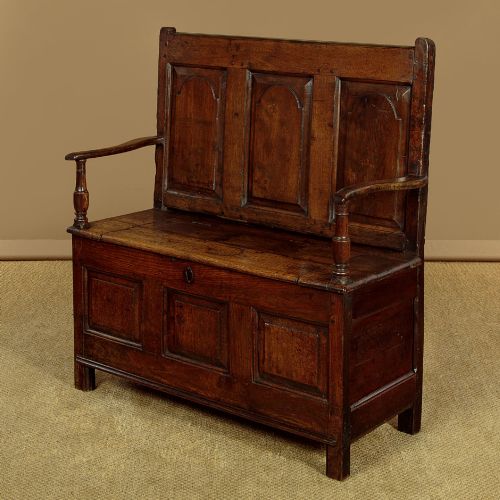
- A wooden bench with a high back, solid arms, and a box seat compartment underneath. This form kept draughts away from people seated near fires.
- Box seat
- A hinged seat top opening to reveal a storage cavity for household items. It forms the defining characteristic of these benches.
- Vernacular furniture
- Everyday objects made by local craftsmen using regional materials rather than following strict high-style metropolitan designs. These pieces reflect local traditions.
- Polychrome
- Decoration employing multiple colours, often found on painted folk art and European country furniture. This finish survives on nineteenth-century examples.
- Fruitwood
- Dense timber derived from fruit-bearing trees like apple or pear, utilised by traditional makers. It provides a fine grain and warm tone.
Timber Storage Bench: Frequently Asked Questions
How were timber storage benches used?
These benches provided dual functionality as seating and enclosed storage for blankets, boots, or household provisions in domestic spaces. Placed in halls, kitchens, or taverns, their high backs also helped block cold draughts.
In modern settings, they serve similar practical purposes while adding traditional character to entryways and living areas.
What woods were used for these benches?
Makers relied on locally available timber, resulting in benches constructed from pine, oak, elm, walnut, and fruitwood. Softer woods like pine were frequently painted, while hardwoods like oak and elm were often waxed to highlight the grain.
Exotic materials such as Brazilian mahogany and Oriental hardwoods also appear in specific regional or later examples.
How do I date a timber storage bench?
Dating relies on examining construction methods, tool marks, timber shrinkage, and style indicators associated with periods like the Georgian or Victorian eras. Original fixings and surface patination provide further clues to age.
Changes in fashion and regional design trends help narrow down the decade or century of manufacture.
How do I care for a painted finish?
Original painted surfaces require gentle dusting with a dry cloth and protection from direct sunlight and excessive moisture. Avoid harsh modern cleaning agents that can strip fragile historic pigments.
Maintaining a stable room temperature prevents the underlying timber from expanding and causing paint to crack or flake.