



Timber Entry Chairs
These timber entry chairs are robust wooden seats designed for hallways and vestibules, offering both sturdy function and striking period design.
Timber Entry Chairs
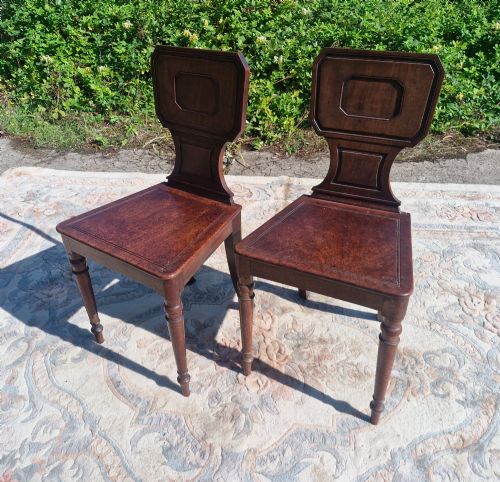
The recorded forms span single seats, pairs, and larger matched sets featuring solid wood construction. Makers designed these pieces to be visually commanding yet space-efficient against hallway walls.
Materials and Construction
Makers utilised dense hardwoods including mahogany, oak, and walnut, frequently selecting solid planks for carved backs and seats. These durable timbers supported intricate relief carving without compromising the structural integrity required for heavy daily use.
Joinery methods relied on sturdy mortise and tenon framing to withstand the rigours of domestic entrances. Certain examples incorporated brass fittings or ceramic elements to accent the primary timber structure.
Listings span several centuries, with mahogany and oak as the predominant materials across Georgian, Regency, and Victorian periods.
Assessing Quality
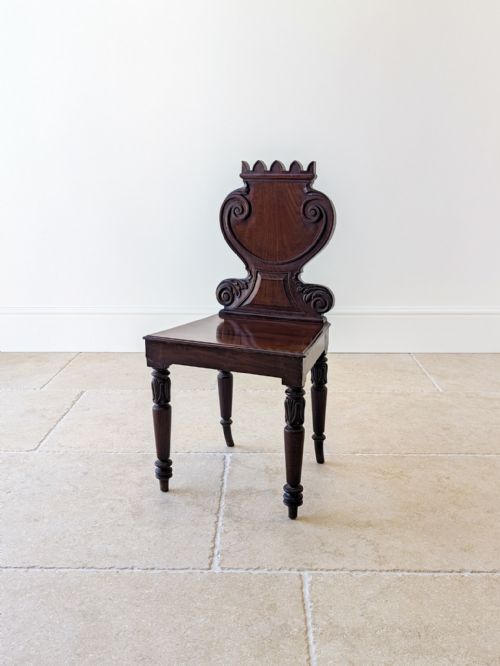
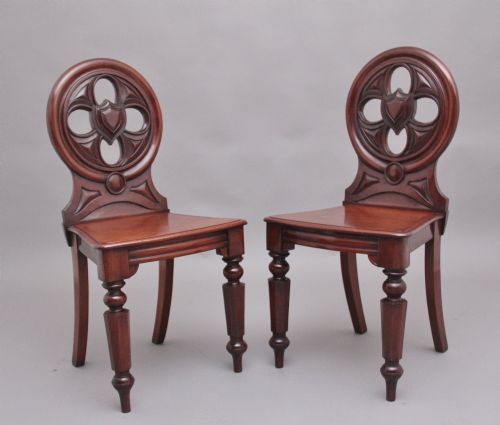
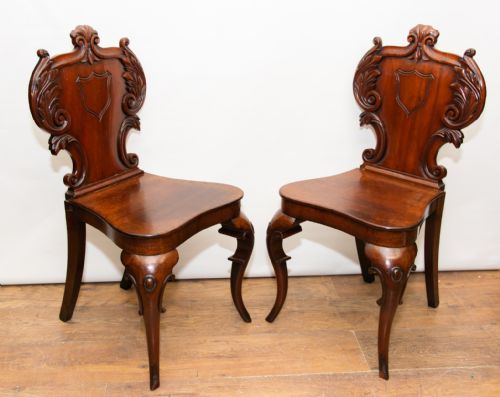
Quality rests primarily in the depth, crispness, and ambition of the carved ornament on the backrest and legs. Examples displaying sculptural shell motifs, intricate shield designs, or detailed Gothic Revival tracery demonstrate superior craftsmanship.
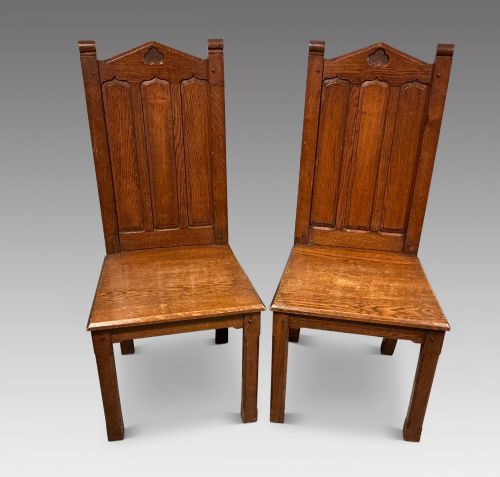
The selection of the timber grain, such as figured mahogany or golden oak, dictates the visual richness of the surface. Matched sets and pairs demand higher regard than single pieces due to the survival rate across centuries.
Holland & Sons·Gillows
The Timber Entry Chairs Glossary
- Hall chair
- A rigid wooden seat placed in an entrance hall, rarely upholstered, featuring a decorative carved back often displaying a family crest or motif.
- Shield back
- A chair back shaped like a heraldic shield, popular in Georgian and Regency design.
- Gothic Revival
- A style drawing on medieval architecture, seen in pointed arches and heavy carved tracery.
- Figured mahogany
- Timber exhibiting a decorative, wavy grain pattern that catches the light.
Timber Entry Chairs: Frequently Asked Questions
Where should I place a timber entry chair?
These chairs suit narrow spaces like hallways, entryways, and landings where deep upholstery is impractical.
Their upright postures and shallow depths allow them to sit flush against walls while maintaining a strong visual presence.
Were these chairs used for sitting long periods?
Historical hall seating was intended for brief waits rather than extended lounging.
Guests or couriers sat upon them momentarily, which explains the rigid wooden seats and supportive upright backs.
How do I distinguish Regency from Victorian examples?
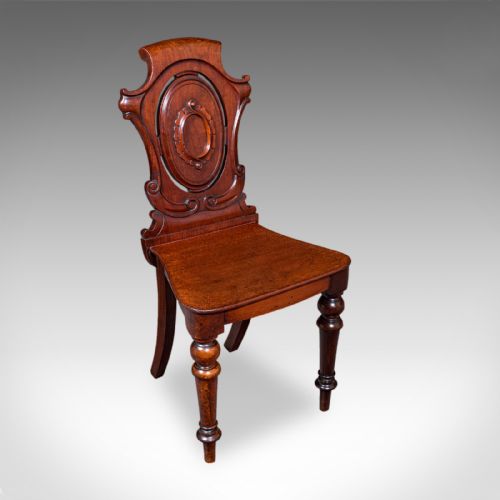
Regency models tend to show neoclassical restraint with cleaner lines, oval backs, and classical motifs.
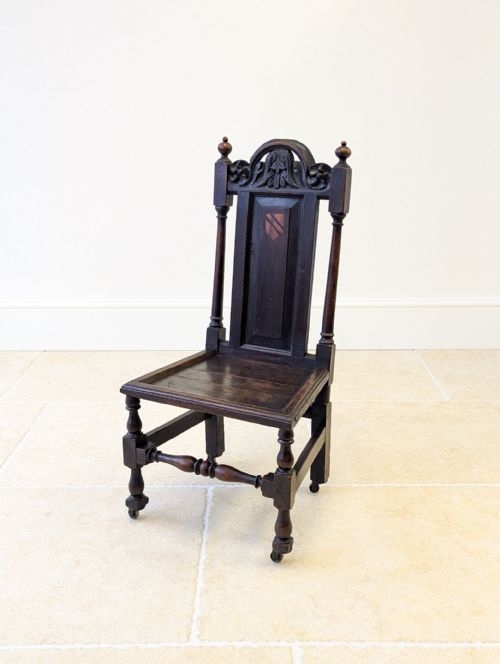
Victorian pieces often embrace heavier proportions, revival styles like Gothic or Jacobean, and deeply carved ornamentation.
How do I care for antique hall chairs?
Maintain the timber by dusting regularly with a soft cloth and applying a quality wax periodically to nourish the grain.
Keep the wood away from direct heat sources and dramatic humidity shifts to prevent splitting.