





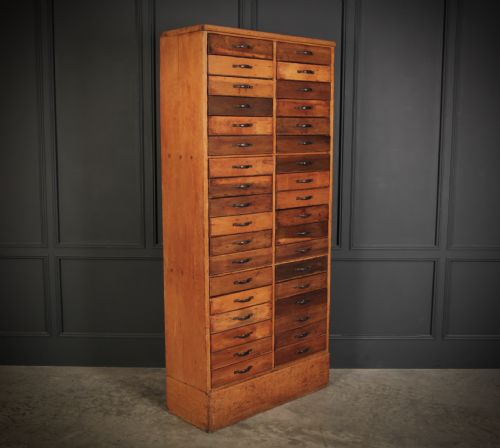
Timber Drawer Unit
A timber drawer unit offers robust storage built from honest woods like mahogany, oak, and pine across centuries of varied domestic and commercial use.
Timber Drawer Unit
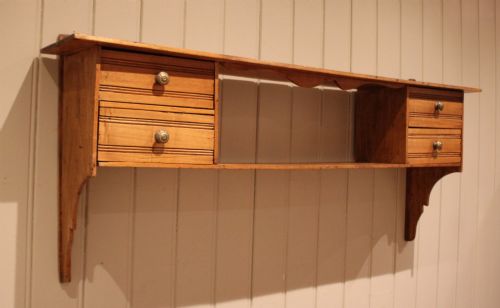
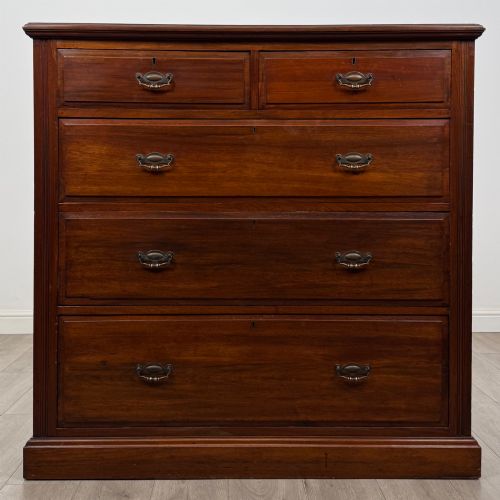
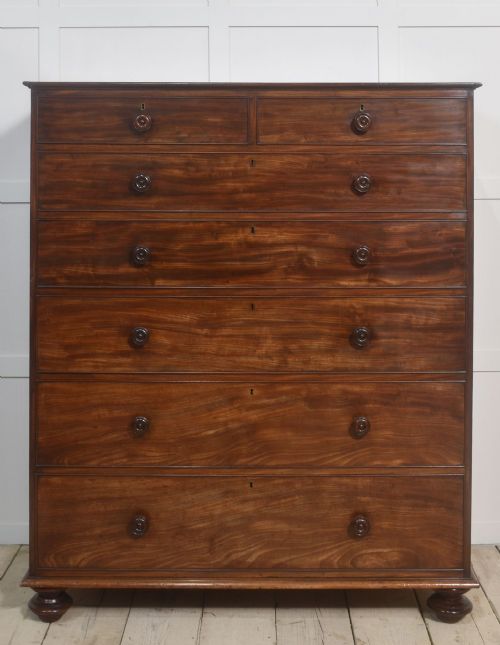
When searching for a timber drawer unit, buyers encounter a diverse selection of storage forms spanning the eighteenth, nineteenth, and early twentieth centuries. These pieces range from domestic chests of drawers and dressing tables to commercial shop counters, haberdashery cabinets, and banks of drapers drawers.
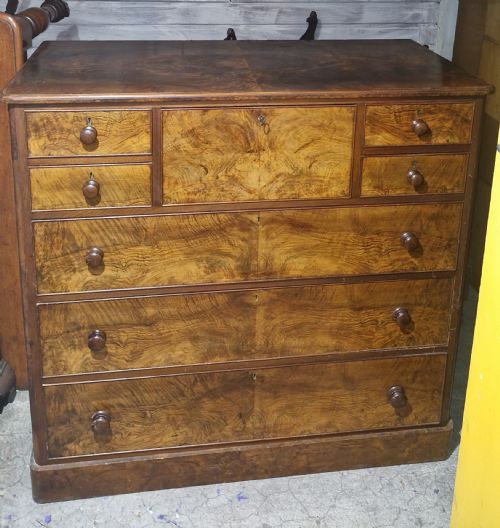
The versions most commonly met on this page include tall mahogany and walnut chests from the Victorian and Edwardian eras, alongside utilitarian oak and fruitwood shop fittings. Domestic examples typically feature multi-drawer configurations like two over three, while commercial variants offer numerous smaller compartments.
Origins vary across British, French, and Dutch traditions, incorporating regional stylistic traits such as Georgian proportions, French provincial painted finishes, Dutch marquetry, and industrial ironmongery details.
Construction materials and techniques
Makers utilised solid hardwoods including mahogany, walnut, oak, fruitwood, and pine as the structural foundation for these units, often applying wood veneers for decorative surfaces. Burr walnut and marquetry provide elaborate grain patterns and inlaid pictorial designs on select surfaces.
Functional metal hardware such as brass handles, escutcheons, and iron fittings were integrated to operate heavy drawers and secure doors on cabinets and side units. Structural integrity relied on traditional joinery applied to domestic furniture and heavy commercial shop fixtures alike.
Timber Drawer Unit Retail Price Guide 2026
Typical asking prices for timber drawer unit among the pieces listed under this phrase on Sellingantiques today, from the lower quarter to the upper quarter. They describe what is for sale here now, not the wider market.
Ironmongers and drapers once kept their tiny screws and ribbons secure inside these very drawers.
Factors distinguishing quality
Superior examples demonstrate meticulous selection of timber species and grain alignment, particularly evident in figured mahogany, burr walnut, and rich fruitwood surfaces. Finer pieces maintain balanced proportions and authentic period hardware that complement the original design integrity.
Domestic chests display refined cabinet-making in their drawer construction and dovetailing, whereas commercial units derive their merit from honest industrial utility, robust timber thickness, and intact multi-drawer organisation.
Trussant And Cie
The Timber Drawer Unit Glossary
- Haberdashery Cabinet
- A multi-drawer storage unit originally designed for retail shops to display and organise small sewing goods or textiles. These pieces feature numerous shallow drawers, sometimes with glass fronts.
- Bank of Drawers
- A large, multi-drawer assembly built for commercial or institutional use to store documents, hardware, or stock items. They offer exceptional storage capacity through dense arrangements of smaller compartments.
- Burr Walnut
- A specialised wood cut from the burl growth of a walnut tree, producing swirling, intricate grain patterns prized for decorative furniture facades. It was frequently utilised on high-status Victorian pieces.
- Marquetry
- The art of applying pieces of veneer to a structure to form decorative patterns and pictures. Dutch examples on this page frequently display elaborate floral and figural marquetry.
- Butchers Block
- A heavy, solid timber work surface designed for food preparation, often supported by a robust wooden base with integrated storage drawers. They utilise dense woods capable of withstanding heavy impact.
Timber Drawer Unit: Frequently Asked Questions
What is a timber drawer unit used for?
These units serve as practical storage furniture for clothing, linens, and household items in domestic settings. Commercial variants provide organised compartmentalization for collections or accessories.
Larger banks of drawers and haberdashery cabinets offer deep utility in modern living spaces as focal storage points with distinctive historical character.
How do I date a timber chest of drawers?
Dating relies on observing structural characteristics, timber choices, and stylistic cues present in the piece. Eighteenth-century examples often display subtle Georgian proportions and distinct dovetail construction.
Victorian and Edwardian pieces incorporate denser hardwoods like mahogany and walnut, whilst commercial shop fixtures reflect utilitarian design from the late nineteenth and early twentieth centuries.
Where were these drawer units made?
The pieces originate from various European cabinet-making traditions, predominantly British, French, and Dutch workshops. Regional aesthetics dictate the decorative details, from Dutch marquetry to French provincial painted finishes.
Both domestic domestic furniture workshops and commercial outfitters contributed to the diverse range of surviving forms.
How do I care for antique timber furniture?
Maintain timber drawer units by keeping them away from direct heat sources and extreme humidity fluctuations to prevent wood splitting. Regular gentle dusting preserves the natural finish of the wood.
Applying suitable wax periodically nourishes the grain of hardwoods like mahogany, walnut, and oak without building up harmful residues.